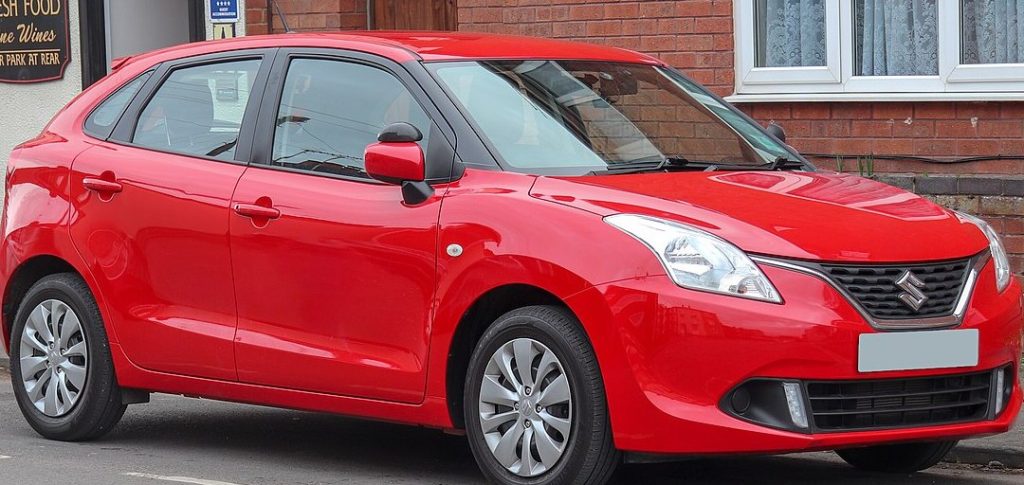
The Suzuki Baleno I (WB) 1.2 DUALJET (90 Hp) CVT, produced from October 2015 to January 2019, represents an entry-level offering within the first generation of the revitalized Baleno hatchback. Positioned as a fuel-efficient and affordable option, this variant aimed to attract buyers seeking a practical and economical city car. It was part of the broader WB series, which signified a return to the Baleno nameplate after a hiatus, built on Suzuki’s Heartect platform – a lightweight chassis designed to improve fuel economy and handling. This specific configuration, pairing the 1.2-liter DualJet engine with a continuously variable transmission (CVT), was a key component of Suzuki’s strategy to offer a diverse range of Baleno models to cater to varying customer preferences.
Powertrain & Engine Architecture
The heart of the Baleno 1.2 DUALJET (90 Hp) CVT is the K12C engine, a 1.2-liter inline-four cylinder gasoline engine. This engine utilizes a multi-point fuel injection system, delivering fuel directly into the intake ports. The “DUALJET” designation refers to the engine’s two fuel injectors per cylinder, a technology designed to improve combustion efficiency and reduce emissions. The engine boasts a relatively high compression ratio of 12.5:1, contributing to its fuel efficiency. It features a dual overhead camshaft (DOHC) valvetrain with four valves per cylinder, optimizing airflow for improved performance. The engine produces 90 horsepower at 6000 rpm and 120 Nm (88.51 lb-ft) of torque at 4400 rpm.
The transmission is a CVT (Continuously Variable Transmission). Unlike traditional automatic transmissions with fixed gear ratios, a CVT utilizes a belt and pulley system to provide a seamless and theoretically infinite number of gear ratios within its operating range. This allows the engine to operate at its most efficient rpm for any given speed, maximizing fuel economy. The CVT in the Baleno is tuned for smooth operation and fuel efficiency rather than sporty acceleration. The front wheels are driven, as this model is front-wheel drive.
Engine Code & Specifics
The K12C engine code is central to understanding this variant. Suzuki’s K-series engines are known for their reliability and efficiency. The DUALJET system, specific to this engine, is a key differentiator. The engine’s relatively small displacement and high compression ratio require premium fuel in some markets to prevent knocking, although it is generally compatible with regular unleaded gasoline.
Driving Characteristics
The Baleno 1.2 DUALJET (90 Hp) CVT delivers a driving experience focused on comfort and fuel economy. Acceleration is modest, with a 0-62 mph (0-100 km/h) time of 12.3 seconds. The CVT transmission contributes to smooth acceleration, but it can sometimes feel less responsive than a traditional automatic or manual transmission, particularly during quick overtaking maneuvers. The engine’s peak torque is available at 4400 rpm, meaning that drivers need to maintain a reasonable engine speed to access optimal power. The CVT’s programming prioritizes fuel efficiency, often resulting in the engine holding lower RPMs during cruising, which can sometimes feel sluggish when requesting sudden acceleration.
Compared to potential higher-output variants (which were not widely available in all markets), this 90 hp version offers a more relaxed driving experience. A manual transmission option, where available, would have provided quicker acceleration and a more engaging driving feel, but at the expense of some convenience. The CVT’s smooth operation makes it well-suited for city driving and commuting.
Equipment & Trim Levels
The Baleno 1.2 DUALJET (90 Hp) CVT typically served as the base or mid-range trim level, depending on the specific market. Standard equipment generally included air conditioning, power windows, central locking, and an audio system with USB connectivity. Safety features such as ABS (Anti-lock Braking System) were standard. Interior upholstery was typically cloth, with a functional and durable design. Dashboard configuration was straightforward, prioritizing ease of use.
Optional extras often included alloy wheels, a touchscreen infotainment system with smartphone integration (Apple CarPlay and Android Auto), rear parking sensors, and a navigation system. Higher trim levels, if offered, might have added features like automatic climate control, fog lamps, and upgraded interior trim.
Chassis & Braking
The Baleno I (WB) utilizes a McPherson strut suspension system at the front, providing a comfortable ride and predictable handling. The rear suspension is a semi-independent coil spring setup, which is a cost-effective solution for a vehicle in this segment. Front brakes are ventilated discs, offering good stopping power, while rear brakes are drums. This combination is typical for a vehicle in this price range and weight class. Electric power steering provides light and easy steering, making it ideal for urban driving. The ride height (ground clearance) is 120 mm (4.72 inches), sufficient for most road conditions.
Stabilizer bars are present on both the front and rear axles, helping to reduce body roll during cornering. Tire sizes typically ranged from 175/65 R15 to 185/55 R16, depending on the trim level and market.
Market Reception & Comparison
The Suzuki Baleno 1.2 DUALJET (90 Hp) CVT was generally well-received by critics as a practical and economical city car. Its fuel efficiency was a major selling point, with the Euro 6 emission standard demonstrating Suzuki’s commitment to environmental responsibility. However, some reviewers noted the engine’s lack of outright power and the CVT’s sometimes sluggish response. Compared to other trims in the Baleno lineup (if available), this variant offered the best fuel economy but the lowest performance. Competitors in the same segment included the Toyota Yaris, Honda Jazz (Fit), and Volkswagen Polo, all of which offered similar levels of practicality and fuel efficiency.
In terms of reliability, the K12C engine and the CVT transmission have generally proven to be reliable, although regular maintenance is crucial. The Baleno’s lightweight construction also contributes to its longevity.
Technical Specifications
| Body Type | Hatchback, 5 Doors, 5 Seats |
| Engine Type | Petrol (Gasoline) |
| Engine Displacement | 1242 cm3 (75.79 cu. in.) |
| Number of Cylinders | 4, Inline |
| Power | 90 Hp @ 6000 rpm |
| Torque | 120 Nm @ 4400 rpm (88.51 lb.-ft. @ 4400 rpm) |
| Fuel Injection | Multi-port manifold injection |
| Compression Ratio | 12.5:1 |
| Transmission | CVT (Continuously Variable Transmission) |
| Drive Wheels | Front Wheel Drive |
| Acceleration 0-100 km/h | 12.3 sec |
| Acceleration 0-62 mph | 12.3 sec |
| Maximum Speed | 180 km/h (111.85 mph) |
| Fuel Tank Capacity | 37 l (9.77 US gal | 8.14 UK gal) |
| Length | 3995 mm (157.28 in.) |
| Width | 1745 mm (68.7 in.) |
| Height | 1470 mm (57.87 in.) |
| Wheelbase | 2520 mm (99.21 in.) |
| Trunk Space (min/max) | 355 l / 1085 l (12.54 cu. ft. / 38.32 cu. ft.) |
Legacy
The Suzuki Baleno I (WB) 1.2 DUALJET (90 Hp) CVT has established itself as a reliable and affordable used car option. The K12C engine is known for its durability, and the CVT transmission, while not the most exciting, has proven to be relatively trouble-free with proper maintenance. The Baleno’s lightweight construction and fuel efficiency continue to appeal to buyers seeking a practical and economical city car. In the used car market, this variant typically commands a reasonable price, making it an attractive option for first-time buyers or those seeking a budget-friendly vehicle. Its reputation for reliability and low running costs ensures its continued presence on roads today.