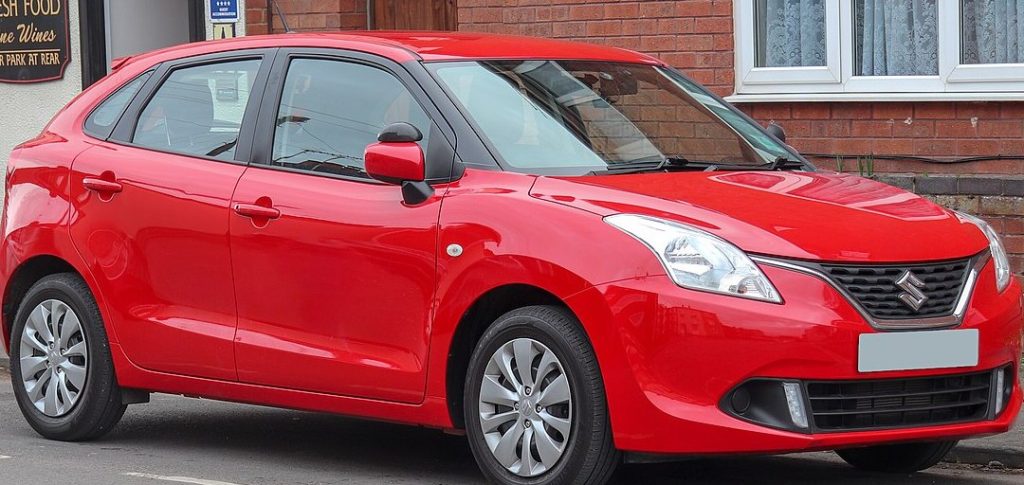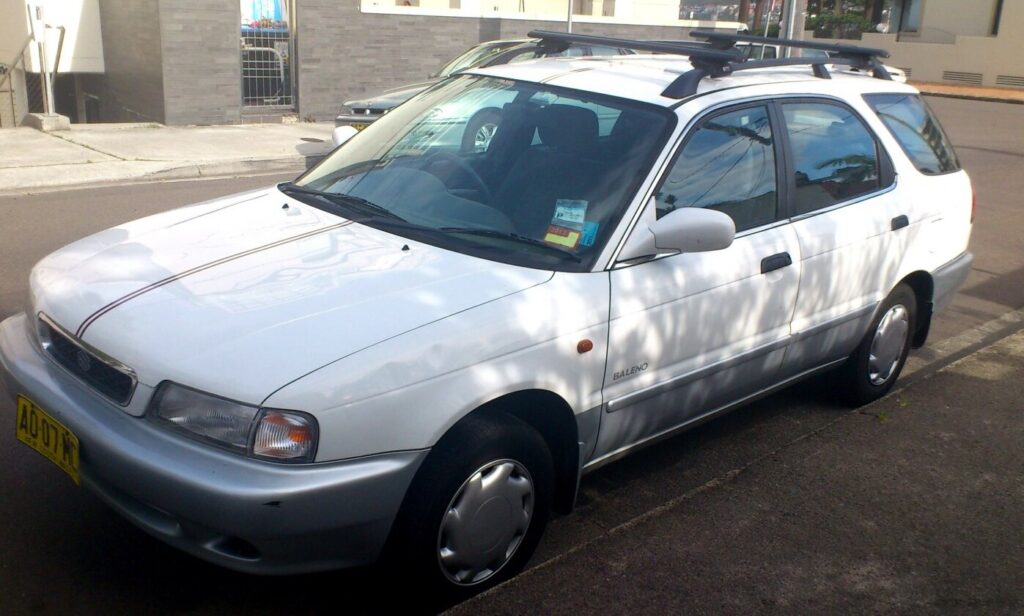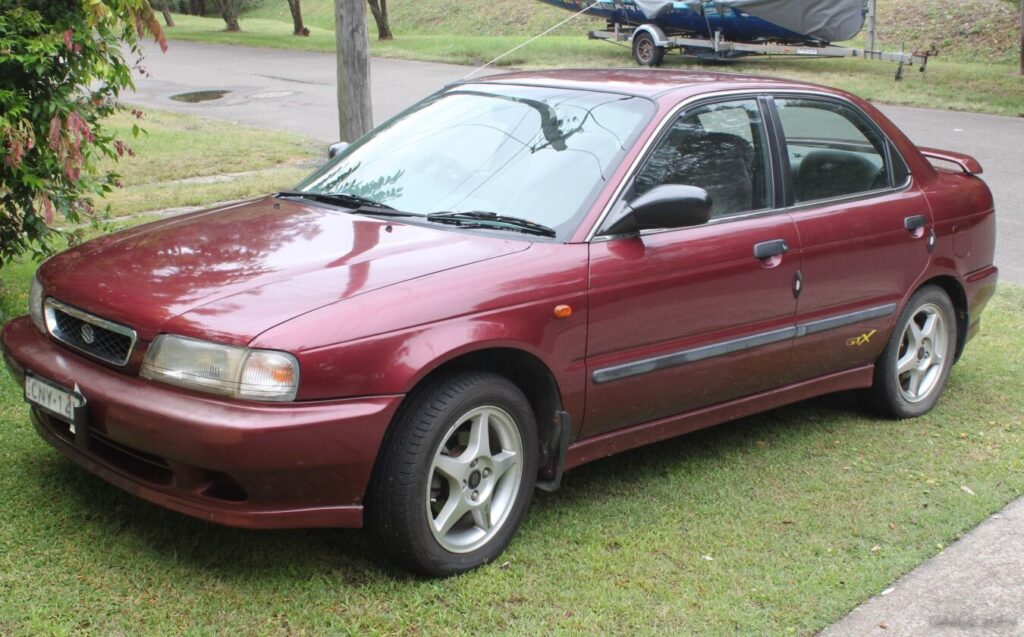
The Suzuki Baleno II 1.5L (105 hp) represents a significant iteration of Suzuki’s globally recognized hatchback, introduced in January 2022. This variant is part of the second generation of the Baleno, internally designated as the second generation model, and built on Suzuki’s Heartect platform. Positioned as a mainstream offering within the Baleno II lineup, it aimed to provide a balance of fuel efficiency, practicality, and affordability for a broad customer base. The 1.5L engine and five-speed manual transmission combination was a core component of the Baleno II’s appeal in many international markets, offering a step up in performance from potential lower-displacement engine options while remaining accessible in price.
Powertrain & Engine Architecture
At the heart of the Baleno II 1.5L is the K15B engine, a 1.5-liter (1462 cm3 or 89.22 cu. in.) inline-four cylinder gasoline engine. This engine utilizes a naturally aspirated configuration and employs a multi-port fuel injection system. The K15B boasts a bore of 74 mm (2.91 in.) and a stroke of 85 mm (3.35 in.), resulting in a compression ratio of 10.5:1. The engine features four valves per cylinder, contributing to its breathing efficiency. Maximum power output is rated at 105 hp (71.8 hp/l) at 6000 rpm, with peak torque of 138 Nm (101.78 lb.-ft.) delivered at 4400 rpm. The engine is transversely mounted in the front of the vehicle.
The Baleno II 1.5L is paired with a five-speed manual transmission. This transmission was chosen for its simplicity, durability, and cost-effectiveness. While an automatic transmission was offered in some markets, the manual version was a common configuration, particularly in regions where fuel economy and driver engagement were prioritized. The transmission’s gear ratios are tuned to provide a balance between acceleration and highway cruising efficiency.
Engine Oil and Coolant
The K15B engine requires 3.6 liters (3.8 US qt | 3.17 UK qt) of engine oil, with specific oil specifications varying by region. The cooling system capacity is 4.3 liters (4.54 US qt | 3.78 UK qt). The engine also incorporates a Start & Stop System, designed to improve fuel economy by automatically shutting off the engine when the vehicle is stationary.
Driving Characteristics
The Baleno II 1.5L offers a practical and reasonably responsive driving experience. Acceleration from 0 to 100 km/h (0-62 mph) takes approximately 11.2 seconds, while 0-60 mph is achieved in around 10.6 seconds. The maximum speed is rated at 175 km/h (108.74 mph). The engine delivers adequate power for everyday driving situations, including city commutes and highway merging. However, it’s not designed for particularly spirited performance. The five-speed manual transmission allows for a degree of driver control, enabling precise gear selection to optimize power delivery. Compared to potential lower-powered engine options in the Baleno II range, the 1.5L provides noticeably more punch, especially when fully loaded or tackling inclines. The weight-to-power ratio of 9.1 kg/Hp and weight-to-torque ratio of 6.9 kg/Nm contribute to its manageable performance.
Equipment & Trim Levels
The Baleno II 1.5L typically came equipped with a standard set of features designed to appeal to a broad audience. These generally included air conditioning, power windows, central locking, and a basic audio system. Interior upholstery was typically cloth, with a functional and durable design. Dashboard configuration was straightforward and user-friendly. Optional extras varied by market but could include alloy wheels, a touchscreen infotainment system with smartphone integration, rear parking sensors, and additional safety features. Higher trim levels within the Baleno II range often added features like automatic climate control, upgraded audio systems, and more sophisticated interior trim materials.
Chassis & Braking
The Baleno II utilizes a front-wheel-drive configuration. The front suspension employs an independent McPherson strut setup, providing a comfortable ride and reasonable handling characteristics. The rear suspension utilizes a torsion beam axle, a cost-effective and space-efficient solution. The braking system consists of ventilated discs at the front and drum brakes at the rear. Anti-lock Braking System (ABS) is a standard safety feature. The steering system is a rack and pinion type with electric power steering, offering light and responsive steering feel. Standard tire size is 185/65 R15 or 195/55 R16, depending on the trim level and market.
Market Reception & Comparison
The Suzuki Baleno II 1.5L was generally well-received by automotive critics as a practical and affordable hatchback. Its fuel efficiency was a key selling point, and its interior space was considered generous for its class. Critics noted that the engine, while adequate, wasn’t particularly powerful, and the driving experience was more focused on comfort and practicality than sporty performance. Compared to other trims in the Baleno II lineup, the 1.5L offered a good balance between performance and fuel economy. It was often positioned as the sweet spot for buyers who wanted more power than the base engine but didn’t want to pay the premium for higher-spec models. Reliability was generally considered good, consistent with Suzuki’s reputation for building durable vehicles.
Technical Specifications
| Brand | Suzuki |
| Model | Baleno |
| Generation | Baleno II |
| Type (Engine) | 1.5L (105 Hp) |
| Start of production | January, 2022 |
| Powertrain Architecture | Internal Combustion engine |
| Body type | Hatchback |
| Seats | 5 |
| Doors | 5 |
| Fuel Type | Petrol (Gasoline) |
| Acceleration 0 – 100 km/h | 11.2 sec |
| Acceleration 0 – 62 mph | 11.2 sec |
| Acceleration 0 – 60 mph | 10.6 sec |
| Maximum speed | 175 km/h (108.74 mph) |
| Weight-to-power ratio | 9.1 kg/Hp |
| Weight-to-torque ratio | 6.9 kg/Nm |
| Power | 105 Hp @ 6000 rpm |
| Power per litre | 71.8 Hp/l |
| Torque | 138 Nm @ 4400 rpm (101.78 lb.-ft. @ 4400 rpm) |
| Engine layout | Front, Transverse |
| Engine Model/Code | K15B |
| Engine displacement | 1462 cm3 (89.22 cu. in.) |
| Number of cylinders | 4 |
| Engine configuration | Inline |
| Cylinder Bore | 74 mm (2.91 in.) |
| Piston Stroke | 85 mm (3.35 in.) |
| Compression ratio | 10.5:1 |
| Number of valves per cylinder | 4 |
| Fuel injection system | Multi-port manifold injection |
| Engine aspiration | Naturally aspirated engine |
| Engine oil capacity | 3.6 l (3.8 US qt | 3.17 UK qt) |
| Coolant | 4.3 l (4.54 US qt | 3.78 UK qt) |
| Kerb Weight | 955-980 kg (2105.41 – 2160.53 lbs.) |
| Max. weight | 1430 kg (3152.61 lbs.) |
| Max load | 450-475 kg (992.08 – 1047.2 lbs.) |
| Trunk (boot) space – minimum | 314 l (11.09 cu. ft.) |
| Trunk (boot) space – maximum | 1057 l (37.33 cu. ft.) |
| Fuel tank capacity | 37 l (9.77 US gal | 8.14 UK gal) |
| Length | 3990 mm (157.09 in.) |
| Width | 1745 mm (68.7 in.) |
| Height | 1500 mm (59.06 in.) |
| Wheelbase | 2520 mm (99.21 in.) |
| Drivetrain Architecture | Front wheel drive |
| Number of gears and type of gearbox | 5 gears, manual transmission |
Legacy
The K15B engine, as found in the Baleno II 1.5L, has proven to be a reliable and durable powertrain. Its relatively simple design and robust construction contribute to its longevity. In the used car market, the Baleno II 1.5L is generally considered a sensible and affordable option. Maintenance costs are typically reasonable, and parts availability is good. While not a performance standout, its practicality, fuel efficiency, and reputation for reliability make it a popular choice for budget-conscious buyers seeking a dependable hatchback.