
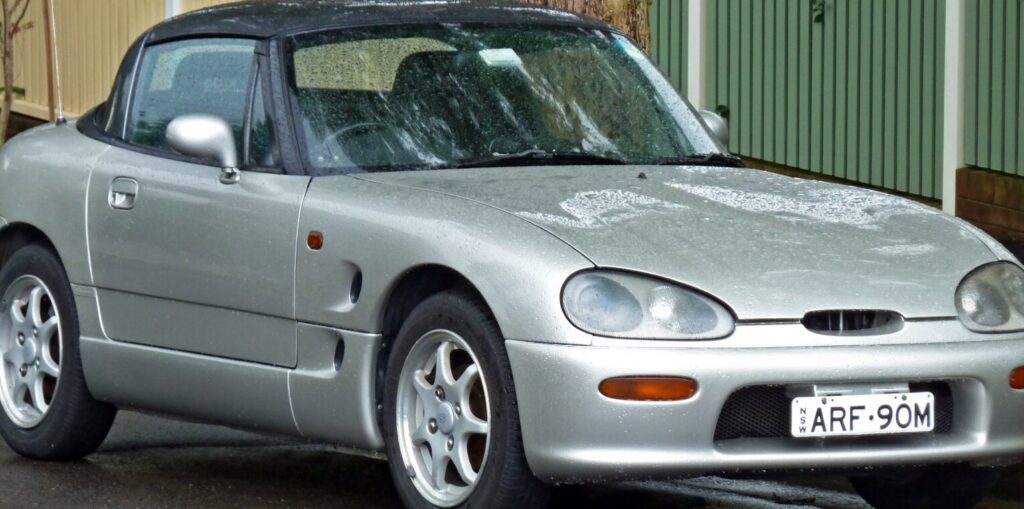
The Suzuki Cappuccino is a two-seater, front-engine, rear-wheel drive sports car produced by Suzuki from 1991 to 1998. It was conceived as part of a series of small, affordable sports cars aimed at the Japanese domestic market, alongside the Honda Beat and the Autozam AZ-1. The 0.7 i 12V Turbo variant, producing 64 horsepower, represented the standard engine option throughout the Cappuccino’s production run. It occupied the entry-level position within the Cappuccino lineup, offering a balance of performance and affordability. The Cappuccino was built on a dedicated platform, eschewing shared components with other Suzuki models, and was notable for its removable hardtop roof panels, offering a unique open-air driving experience.
The 0.7 i 12V Turbo: A Detailed Overview
The 0.7 i 12V Turbo variant is defined by its 658cc, three-cylinder, turbocharged engine. This engine, designated F6A, was a key element of the Cappuccino’s design philosophy – to provide a lightweight, engaging sports car experience. The “i” in the designation refers to the multi-point fuel injection system. The 12V designation indicates the engine’s four valves per cylinder configuration, contributing to its relatively high power output for its displacement. The Cappuccino’s compact dimensions and light weight (approximately 700 kg or 1543 lbs) were crucial in maximizing the performance of this small engine.
Powertrain & Engine Architecture
The F6A engine is a longitudinal inline-three cylinder unit. It utilizes a single overhead camshaft (SOHC) design, operating four valves per cylinder (DOHC). The turbocharger is a small unit, designed to provide boost quickly and minimize turbo lag, which is critical in a car of this size and weight. Fuel delivery is managed by a multi-point fuel injection system, ensuring precise fuel metering for optimal combustion and efficiency. The engine’s compression ratio is 8.4:1. The engine oil capacity is 3.4 liters (3.59 US quarts / 2.99 UK quarts), and the cooling system holds 4 liters (4.23 US quarts / 3.52 UK quarts). While a five-speed manual transmission was the most common pairing, an optional three-speed automatic transmission was available, though significantly less common and impacting performance.
Driving Characteristics
The 64 hp, 78.18 lb-ft of torque output of the 0.7 i 12V Turbo engine, while modest by modern standards, provided surprisingly lively performance in the Cappuccino. The car’s low weight and short wheelbase contributed to nimble handling and a responsive feel. The turbocharger provided a noticeable boost in power at around 3500 rpm, offering a surge of acceleration. The five-speed manual transmission allowed drivers to keep the engine in its optimal power band. The automatic transmission, while offering convenience, resulted in a noticeable decrease in performance and responsiveness. Gear ratios were closely spaced to maintain engine speed and maximize acceleration. The rear-wheel drive configuration further enhanced the driving experience, providing a balanced and engaging feel. Top speed was approximately 93.21 mph (150 km/h).
Equipment & Trim Levels
The Suzuki Cappuccino, even in its base 0.7 i 12V Turbo form, was relatively well-equipped for a car of its size and price point. Standard features included power steering, ventilated disc brakes on the front wheels, and disc brakes on the rear. The interior featured simple, functional instrumentation and comfortable, albeit basic, seating for two. The Cappuccino’s defining feature was its removable hardtop roof panels, which could be stowed in the trunk, transforming the car from a coupe to a targa top in a matter of minutes. Optional extras included air conditioning, upgraded audio systems, and various cosmetic enhancements. Interior upholstery was typically cloth, with limited options for leather or other premium materials. The dashboard layout was straightforward, prioritizing functionality over luxury.
Chassis & Braking
The Cappuccino’s chassis was designed to be lightweight and rigid, contributing to its excellent handling characteristics. The suspension utilized coil springs on both the front and rear axles. The front suspension featured independent coil springs, while the rear suspension was a solid axle configuration with coil springs. The braking system consisted of ventilated discs on the front wheels and solid discs on the rear wheels. An Anti-lock Braking System (ABS) was included as standard equipment, enhancing safety and control. The steering system was a rack and pinion type with hydraulic power assistance, providing precise and responsive steering feel. Tire size was 165/65 R14, mounted on 14-inch steel wheels.
Market Reception & Comparison
The Suzuki Cappuccino was generally well-received by automotive critics in Japan. It was praised for its engaging driving dynamics, lightweight construction, and unique styling. The 0.7 i 12V Turbo variant was considered a good balance of performance and affordability. Compared to its rivals, the Honda Beat and the Autozam AZ-1, the Cappuccino offered a more conventional driving experience, with a slightly less radical design. The Beat was known for its high-revving engine and mid-engine layout, while the AZ-1 featured gullwing doors and a more futuristic aesthetic. In terms of fuel economy, the Cappuccino achieved approximately 5.4 liters per 100 kilometers (43.5 mpg), which was competitive for a sports car of its era. Reliability was generally good, although the turbocharger could be a potential source of maintenance issues if not properly maintained.
Technical Specifications
| Engine Type | 658 cc Inline-3, Turbocharged |
| Engine Code | F6A |
| Power Output | 64 hp @ 6500 rpm |
| Torque Output | 106 Nm @ 3500 rpm (78.18 lb-ft @ 3500 rpm) |
| Compression Ratio | 8.4:1 |
| Fuel Injection | Multi-point |
| Valvetrain | DOHC, 4 valves per cylinder |
| Transmission | 5-speed Manual (Optional 3-speed Automatic) |
| Drivetrain | Rear-Wheel Drive |
| Kerb Weight | 700 kg (1543.24 lbs) |
| Fuel Tank Capacity | 30 liters (7.93 US gal / 6.6 UK gal) |
| Length | 3295 mm (129.72 in) |
| Width | 1395 mm (54.92 in) |
| Height | 1185 mm (46.65 in) |
| Wheelbase | 2060 mm (81.1 in) |
| Tires | 165/65 R14 |
Legacy
The Suzuki Cappuccino, particularly the 0.7 i 12V Turbo variant, has gained a cult following among enthusiasts. Its unique combination of lightweight construction, turbocharged engine, and removable hardtop roof panels has made it a desirable classic car. The F6A engine, while small, proved to be relatively durable and reliable when properly maintained. Today, Cappuccinos in good condition command a premium in the used car market. The car’s rarity outside of Japan further contributes to its collectibility. The Cappuccino represents a unique chapter in automotive history, showcasing Suzuki’s willingness to experiment with innovative designs and offer affordable sports cars to a wider audience. The 0.7 i 12V Turbo remains the most common and accessible variant, making it the entry point for many enthusiasts looking to experience the joy of this iconic Japanese sports car.
