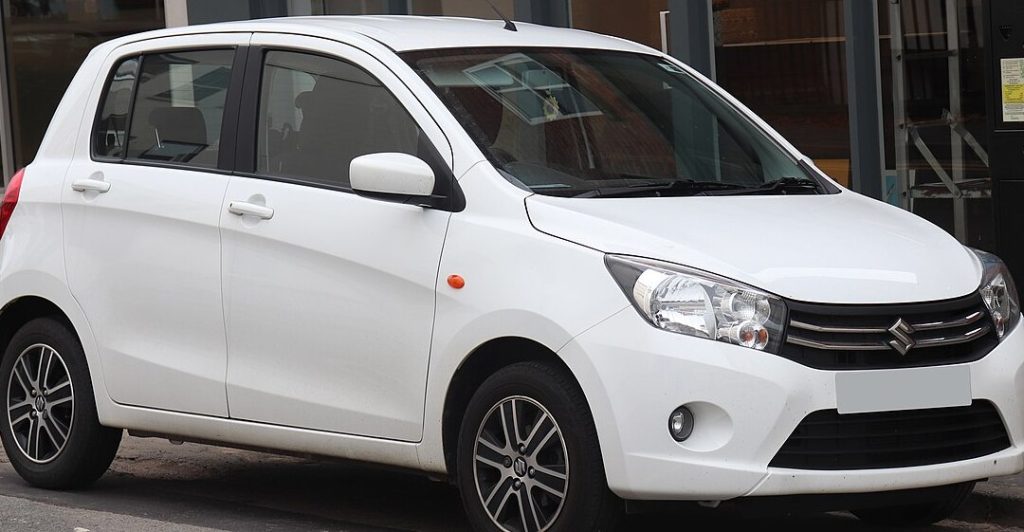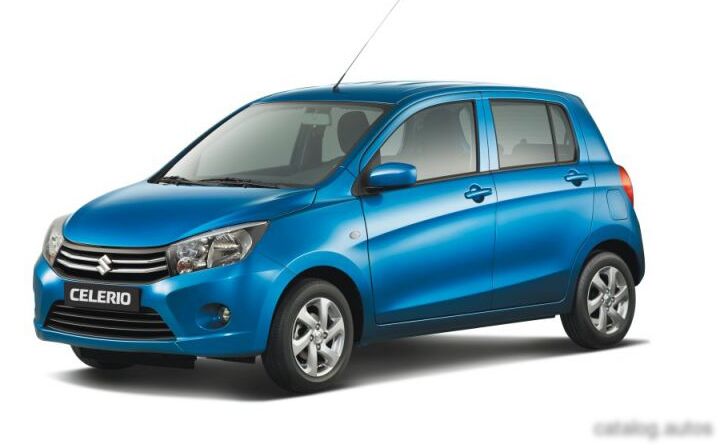
The Suzuki Celerio II 1.0 (68 hp) is a subcompact hatchback produced by Suzuki from February 2014 to November 2021. Representing the second generation of the Celerio, this variant served as the entry-level model within the lineup, focusing on affordability and fuel efficiency. It was primarily marketed towards urban commuters and first-time car buyers seeking a practical and economical vehicle. The Celerio II was built on Suzuki’s HEARTECT platform, a lightweight yet rigid chassis designed to enhance fuel economy and safety. This generation marked a significant departure from the previous Celerio (produced from 2008-2014), offering a more modern design and improved interior space.
Powertrain & Engine Architecture
The Celerio II 1.0 is powered by the K10B engine, a 998 cc inline-three cylinder gasoline engine. This engine is characterized by its compact size and lightweight construction, contributing to the vehicle’s overall efficiency. The K10B utilizes a multi-point fuel injection system, delivering fuel directly to the intake ports. The engine features four valves per cylinder (DOHC) and a compression ratio of 11:1. The engine produces a maximum power output of 68 horsepower at 6000 rpm and 90 Nm (66.38 lb-ft) of torque at 3500 rpm. The engine’s power-to-liter ratio is 68.1 hp/liter.
The Celerio II 1.0 was primarily offered with a five-speed manual transmission. While an automated manual transmission (AMT) was available in some markets, the standard transmission for the base model was the manual. The AMT, marketed as an “Auto Gear Shift” (AGS) system, offered a degree of automation without the complexity and cost of a traditional automatic transmission. The manual transmission features gear ratios optimized for fuel economy and urban driving conditions. First gear is relatively short for easy acceleration from a standstill, while higher gears are geared for efficient cruising.
Engine Code & Specifications
The K10B engine code is central to understanding this variant. Suzuki has used this engine in various models, refining it over time for improved efficiency and emissions compliance. The engine is known for its relative simplicity, making it easier and less expensive to maintain compared to more complex engine designs. The engine oil capacity is 2.8 liters (2.96 US qt / 2.46 UK qt), and the coolant capacity is 3.3 liters (3.49 US qt / 2.9 UK qt). The engine meets Euro 6 emission standards.
Driving Characteristics
The Suzuki Celerio II 1.0 (68 hp) delivers modest performance, prioritizing fuel economy over outright speed. Acceleration from 0 to 100 km/h (0-62 mph) takes approximately 13.5 seconds, while 0-60 mph is achieved in around 12.8 seconds. The top speed is limited to 155 km/h (96.31 mph). The engine feels responsive at lower RPMs, making it suitable for city driving. However, acceleration becomes noticeably slower when climbing hills or overtaking at higher speeds. The five-speed manual transmission allows drivers to maintain optimal engine RPMs for efficiency or performance, depending on driving conditions. The AMT version provides a smoother driving experience in stop-and-go traffic, but it can sometimes exhibit hesitant shifts.
The Celerio’s lightweight construction helps to mitigate the effects of the relatively low horsepower output. The car feels nimble and easy to maneuver in urban environments. The suspension is tuned for comfort, absorbing bumps and imperfections in the road surface reasonably well. However, the ride can become somewhat unsettled on rougher roads.
Equipment & Trim Levels
The Celerio II 1.0, as the entry-level trim, typically came equipped with basic features. Standard equipment generally included power steering, central locking, electric front windows, and a basic audio system with USB connectivity. Safety features included ABS (Anti-lock Braking System) and dual front airbags. Interior upholstery was typically a simple cloth material.
Optional extras varied depending on the market but could include air conditioning, alloy wheels, a more advanced audio system, and body-colored door handles and mirrors. Higher trim levels, not covered in this article, added features such as a touchscreen infotainment system, rear power windows, and additional safety equipment.
Chassis & Braking
The Celerio II utilizes a McPherson strut front suspension with a coil spring and anti-roll bar. The rear suspension is a semi-independent coil spring setup. This configuration provides a balance between ride comfort and handling stability. The front brakes are ventilated discs, while the rear brakes are drums. This combination is typical for vehicles in this weight class, offering adequate stopping power for everyday driving. The steering system is a rack and pinion type, providing precise and responsive steering feel. The Celerio II rides on 165/65 R14 79S tires mounted on 5J x 14 inch wheel rims.
Market Reception & Comparison
The Suzuki Celerio II 1.0 was generally well-received by critics for its affordability, fuel efficiency, and practicality. It was often praised as an ideal city car for those seeking a low-cost and economical mode of transportation. However, some reviewers criticized its lack of power and basic interior appointments. Compared to other trims in the Celerio lineup, the 1.0-liter version offered the lowest price point but also the least amount of performance. The higher-output variants, while more expensive, provided a more refined driving experience and were better suited for highway driving.
In terms of fuel economy, the Celerio II 1.0 excelled, achieving a combined fuel consumption of 4.3 l/100 km (54.7 US mpg / 65.7 UK mpg). This made it one of the most fuel-efficient vehicles in its class. Reliability was also a strong point, with the K10B engine proving to be durable and relatively trouble-free.
Technical Specifications
| Brand | Suzuki |
| Model | Celerio |
| Generation | Celerio II |
| Type (Engine) | 1.0 (68 Hp) |
| Start of production | February, 2014 |
| End of production | November, 2021 |
| Powertrain Architecture | Internal Combustion engine |
| Body type | Hatchback |
| Seats | 5 |
| Doors | 5 |
| Fuel consumption (urban) | 5.1 l/100 km (46.1 US mpg / 55.4 UK mpg) |
| Fuel consumption (extra urban) | 3.7 l/100 km (63.6 US mpg / 76.3 UK mpg) |
| Fuel consumption (combined) | 4.3 l/100 km (54.7 US mpg / 65.7 UK mpg) |
| CO2 emissions | 99 g/km |
| Fuel Type | Petrol (Gasoline) |
| Acceleration 0 – 100 km/h | 13.5 sec |
| Acceleration 0 – 62 mph | 13.5 sec |
| Acceleration 0 – 60 mph | 12.8 sec |
| Maximum speed | 155 km/h (96.31 mph) |
| Emission standard | Euro 6 |
| Weight-to-power ratio | 12.9 kg/Hp |
| Weight-to-torque ratio | 9.8 kg/Nm |
| Power | 68 Hp @ 6000 rpm |
| Torque | 90 Nm @ 3500 rpm (66.38 lb.-ft. @ 3500 rpm) |
| Engine layout | Front, Transverse |
| Engine Model/Code | K10B |
| Engine displacement | 998 cm3 (60.9 cu. in.) |
| Number of cylinders | 3 |
| Engine configuration | Inline |
| Cylinder Bore | 73 mm (2.87 in.) |
| Piston Stroke | 79.5 mm (3.13 in.) |
| Compression ratio | 11:1 |
| Number of valves per cylinder | 4 |
| Fuel injection system | Multi-port manifold injection |
| Engine aspiration | Naturally aspirated engine |
| Engine oil capacity | 2.8 l (2.96 US qt | 2.46 UK qt) |
| Coolant | 3.3 l (3.49 US qt | 2.9 UK qt) |
| Kerb Weight | 880 kg (1940.07 lbs.) |
| Max. weight | 1260 kg (2777.82 lbs.) |
| Max load | 380 kg (837.76 lbs.) |
| Trunk (boot) space – minimum | 254 l (8.97 cu. ft.) |
| Trunk (boot) space – maximum | 726 l (25.64 cu. ft.) |
| Fuel tank capacity | 35 l (9.25 US gal | 7.7 UK gal) |
| Length | 3600 mm (141.73 in.) |
| Width | 1600 mm (62.99 in.) |
| Height | 1540 mm (60.63 in.) |
| Wheelbase | 2425 mm (95.47 in.) |
| Front track | 1420 mm (55.91 in.) |
| Rear (Back) track | 1410 mm (55.51 in.) |
| Ride height (ground clearance) | 145 mm (5.71 in.) |
| Minimum turning circle (turning diameter) | 9.4 m (30.84 ft.) |
| Drivetrain Architecture | Front wheel drive |
| Number of gears and type of gearbox | 5 gears, manual transmission |
| Front suspension | Independent, type McPherson with coil spring and anti-roll bar |
| Rear suspension | Semi-independent, coil spring |
| Front brakes | Ventilated discs |
| Rear brakes | Drum |
Legacy
The Suzuki Celerio II 1.0 (68 hp) has proven to be a reliable and economical vehicle, particularly in emerging markets. Its simple engine design and robust construction contribute to its long-term durability. On the used car market, these models are generally affordable and represent a good value for buyers seeking a basic and fuel-efficient city car. While not known for its performance or luxurious features, the Celerio II 1.0 remains a practical and dependable option for those prioritizing affordability and low running costs. The K10B engine, in particular, has a reputation for being relatively trouble-free, making these Celerios a sensible choice for budget-conscious buyers.