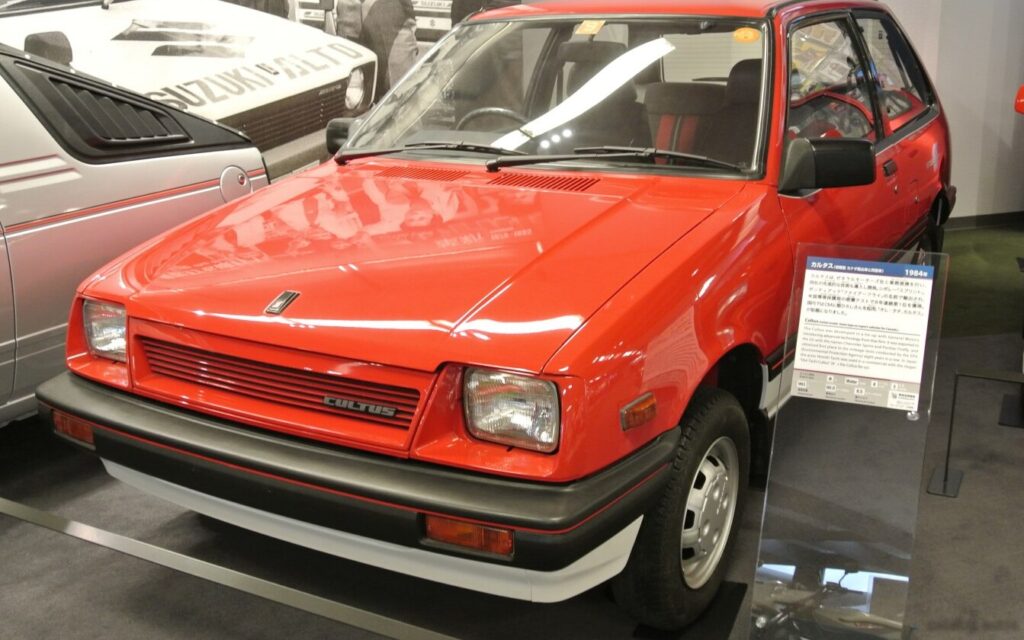
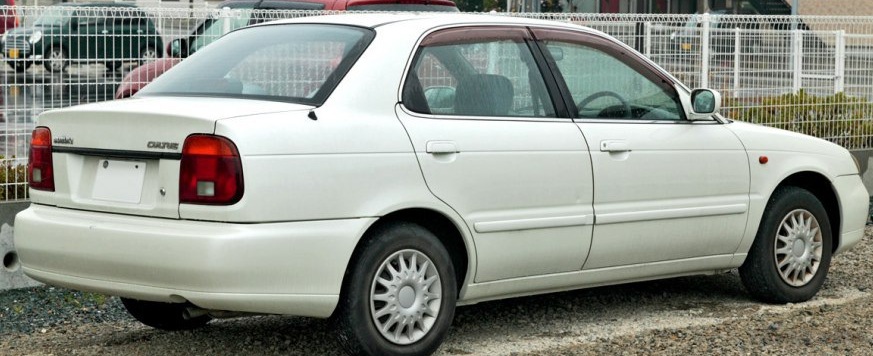
The Suzuki Cultus Cabrio, produced between 1991 and 2003, represented a unique offering in the small, affordable convertible market. This two-door, two-seater vehicle, known as the SF413 and AK35 chassis codes, was primarily aimed at buyers seeking an open-air motoring experience without the high price tag associated with more established convertible brands. The 1.3-liter engine variant, producing 68 horsepower, served as the entry point to the Cultus Cabrio range, offering a balance of fuel efficiency and accessible performance. It was built on the Suzuki Cultus platform, a subcompact car known for its reliability and practicality, and the Cabriolet version was largely aimed at the European and Japanese markets.
The 1.3L Cultus Cabrio: Entry to Open-Air Freedom
The 1.3L variant of the Cultus Cabrio occupied the base trim level within the model lineup. While Suzuki did offer other engine options in the broader Cultus range, the 1.3L engine was the sole powerplant available for the Cabriolet. This positioning made it the most affordable way to experience the joys of a convertible Suzuki. It targeted a demographic of younger drivers, couples, or individuals looking for a fun, economical, and stylish vehicle for weekend drives and leisure activities. Compared to larger or more powerful convertibles of the era, the Cultus Cabrio 1.3 prioritized affordability and simplicity over outright performance.
Powertrain & Engine Architecture
The heart of the Cultus Cabrio 1.3 is the G13BA engine, a 1.3-liter (1298 cc) inline-four cylinder gasoline engine. This engine utilizes a single-point fuel injection system, a relatively common technology for its time, which delivers fuel into the intake manifold rather than directly into the cylinders. The engine features an overhead camshaft (OHC) valvetrain with two valves per cylinder. This configuration contributed to its relatively simple design and ease of maintenance. The G13BA produces 68 horsepower at 6000 rpm and 99 Nm (73.02 lb-ft) of torque at 3500 rpm. The engine’s bore and stroke are 74mm x 75.5mm, respectively, and it operates with a compression ratio of 9.5:1. Engine oil capacity is 3.3 liters (3.49 US quarts), and the cooling system requires 4.7 liters (4.97 US quarts) of coolant.
The Cultus Cabrio 1.3 was exclusively offered with a 5-speed manual transmission. This transmission was chosen to maximize fuel efficiency and provide a more engaging driving experience, aligning with the car’s overall character. The front-wheel-drive layout further simplified the drivetrain and contributed to the vehicle’s relatively light weight.
Driving Characteristics
The driving experience in the Cultus Cabrio 1.3 is best described as light and nimble. With a kerb weight of 825 kg (1818.81 lbs), the 68 horsepower engine provides adequate, though not exhilarating, performance. Acceleration from 0 to 100 km/h (0-62 mph) takes approximately 13 seconds, and 0 to 60 mph is achieved in around 12.4 seconds. The top speed is rated at 160 km/h (99.42 mph). The 5-speed manual transmission allows drivers to keep the engine in its optimal power band, making the most of the available horsepower. While it won’t win any drag races, the Cultus Cabrio 1.3 is perfectly capable of keeping up with traffic and providing a fun driving experience on winding roads. The relatively short wheelbase of 2265 mm (89.17 in) contributes to its agile handling, but also means the ride can be somewhat firm, especially on uneven surfaces.
Equipment & Trim Levels
The Cultus Cabrio 1.3, being the base model, came with a fairly basic level of equipment. Standard features typically included cloth upholstery, a simple dashboard layout with analog gauges, and manual windows and door locks. Power steering was standard, utilizing a hydraulic system. The convertible top was manually operated, adding to the car’s simplicity and affordability. Optional extras, depending on the market, could include upgraded audio systems, alloy wheels, and different interior color schemes. The interior space is limited, as expected from a small two-seater convertible, but it is functional and reasonably comfortable for short journeys. The trunk space is also modest, offering 215 liters (7.59 cu. ft) of storage.
Chassis & Braking
The Cultus Cabrio 1.3 utilizes a front suspension system based on wishbones, providing a reasonable level of ride comfort and handling. The rear suspension employs a coil spring setup. The braking system consists of ventilated discs on the front wheels and drum brakes on the rear wheels. Anti-lock braking system (ABS) was included as a standard safety feature. The steering system is a rack and pinion type, providing precise and responsive steering feel. The vehicle is equipped with 165/65 R13 S tires mounted on 13-inch steel wheels. The front and rear track widths are 1365 mm (53.74 in) and 1340 mm (52.76 in), respectively, contributing to the car’s stable handling characteristics.
Market Reception & Comparison
The Suzuki Cultus Cabrio 1.3 was generally well-received by critics as an affordable and fun-to-drive convertible. It was praised for its fuel efficiency, with a combined fuel consumption of 5.8 l/100 km (40.6 US mpg, 48.7 UK mpg, 17.2 km/l). However, its relatively low power output and basic equipment levels were also noted. Compared to other small convertibles of the era, such as the Fiat Punto Cabriolet or the Peugeot 205 Cabriolet, the Cultus Cabrio 1.3 offered a more affordable price point, but often lacked the refinement and features of its European competitors. In terms of reliability, the Cultus Cabrio 1.3 is generally considered to be a reliable vehicle, benefiting from the robust engineering of the Suzuki Cultus platform. However, like any older vehicle, regular maintenance is essential to ensure its continued reliability.
Technical Specifications
| Brand | Suzuki |
| Model | Cultus Cabrio |
| Generation | Cultus Cabrio |
| Type (Engine) | 1.3 (SF413,AK35) (68 Hp) |
| Start of production | 1991 year |
| End of production | 2003 year |
| Powertrain Architecture | Internal Combustion engine |
| Body type | Cabriolet |
| Seats | 2 |
| Doors | 2 |
| Fuel consumption (combined) | 5.8 l/100 km (40.6 US mpg, 48.7 UK mpg, 17.2 km/l) |
| Fuel Type | Petrol (Gasoline) |
| Acceleration 0 – 100 km/h | 13 sec |
| Acceleration 0 – 62 mph | 13 sec |
| Acceleration 0 – 60 mph | 12.4 sec |
| Maximum speed | 160 km/h (99.42 mph) |
| Weight-to-power ratio | 12.1 kg/Hp |
| Weight-to-torque ratio | 8.3 kg/Nm |
| Power | 68 Hp @ 6000 rpm |
| Torque | 99 Nm @ 3500 rpm (73.02 lb.-ft. @ 3500 rpm) |
| Engine layout | Front, Transverse |
| Engine Model/Code | G13BA |
| Engine displacement | 1298 cm3 (79.21 cu. in.) |
| Number of cylinders | 4 |
| Engine configuration | Inline |
| Cylinder Bore | 74 mm (2.91 in.) |
| Piston Stroke | 75.5 mm (2.97 in.) |
| Compression ratio | 9.5:1 |
| Number of valves per cylinder | 2 |
| Fuel injection system | Single-point injection |
| Engine aspiration | Naturally aspirated engine |
| Valvetrain | OHC |
| Engine oil capacity | 3.3 l (3.49 US qt | 2.9 UK qt) |
| Coolant | 4.7 l (4.97 US qt | 4.14 UK qt) |
| Kerb Weight | 825 kg (1818.81 lbs.) |
| Max. weight | 1080 kg (2380.99 lbs.) |
| Max load | 255 kg (562.18 lbs.) |
| Trunk (boot) space – minimum | 215 l (7.59 cu. ft.) |
| Fuel tank capacity | 40 l (10.57 US gal | 8.8 UK gal) |
| Length | 3745 mm (147.44 in.) |
| Width | 1590 mm (62.6 in.) |
| Height | 1350 mm (53.15 in.) |
| Wheelbase | 2265 mm (89.17 in.) |
| Front track | 1365 mm (53.74 in.) |
| Rear (Back) track | 1340 mm (52.76 in.) |
| Minimum turning circle | 9.2 m (30.18 ft.) |
| Drivetrain Architecture | Front wheel drive |
| Number of gears and type of gearbox | 5 gears, manual transmission |
| Front suspension | Wishbone |
| Rear suspension | Coil spring |
| Front brakes | Ventilated discs |
| Rear brakes | Drum |
| Assisting systems | ABS (Anti-lock braking system) |
| Steering type | Steering rack and pinion |
| Power steering | Hydraulic Steering |
| Tires size | 165/65 R13 S |
| Wheel rims size | 13 |
Legacy
Today, the Suzuki Cultus Cabrio 1.3 is becoming increasingly sought after by enthusiasts and collectors. Its rarity, combined with its charming retro styling and affordable price point, makes it an appealing option for those looking for a unique and fun classic car. While parts availability can be a challenge, the relatively simple mechanical design of the vehicle makes it accessible for home mechanics. The G13BA engine is known for its durability, and with proper maintenance, it can provide many more years of reliable service. The Cultus Cabrio 1.3 represents a bygone era of affordable, open-air motoring, and its enduring appeal ensures its place in automotive history.