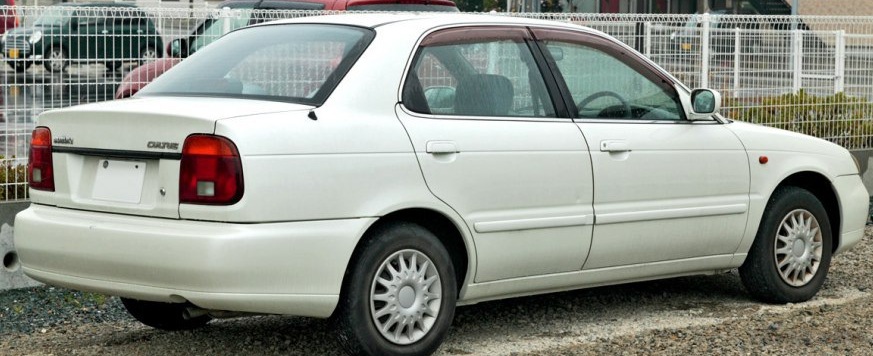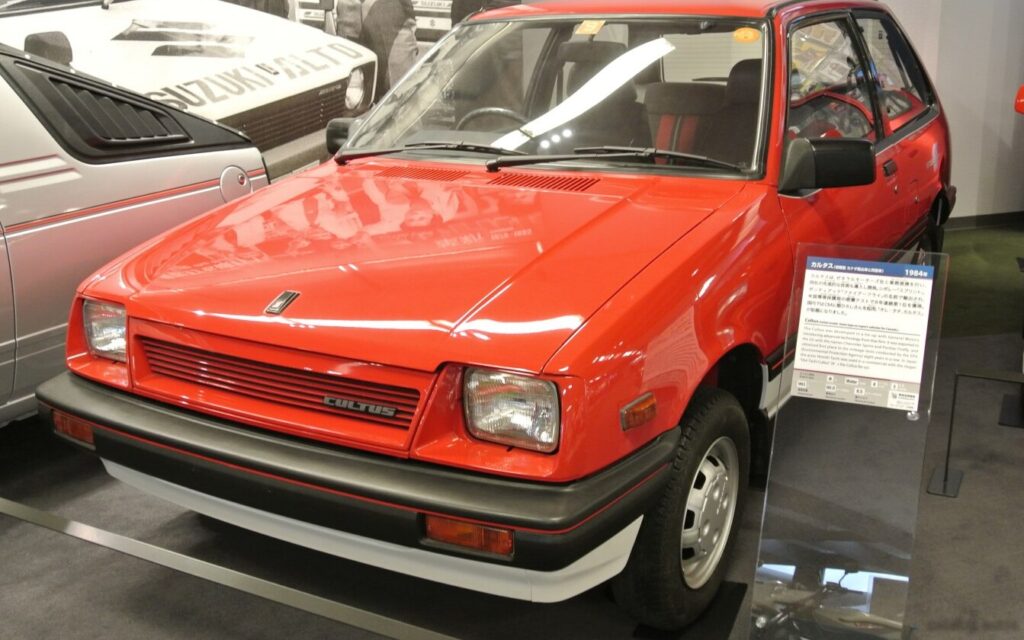
The Suzuki Cultus, known as the Suzuki Swift in many export markets, represented a significant step forward for the Japanese automaker in the subcompact hatchback segment. Introduced in 1983, the first generation (Cultus I, chassis code SA310/SA413) aimed to provide affordable and efficient transportation. The 1.0 Turbo variant, produced between 1985 and 1988, was a relatively rare and performance-oriented version of the Cultus, offering a notable power upgrade over the standard naturally aspirated engines. This model occupied a niche position within the Cultus lineup, appealing to buyers seeking a bit more excitement without sacrificing the car’s inherent practicality and fuel economy. It was primarily sold in Japan and select export markets, including Europe and Australia.
Suzuki Cultus I 1.0 Turbo: An Overview
The Cultus I 1.0 Turbo (SA310) was designed to address a growing demand for small, economical cars with a touch of sporting character. The introduction of a turbocharged engine into the Cultus range was a relatively bold move for Suzuki at the time, demonstrating a willingness to experiment with performance enhancements in their entry-level models. The SA310 chassis code specifically denotes the 3-door hatchback configuration, while the SA413 code represents the 5-door version. Both body styles were available with the 1.0 Turbo engine, though the 3-door was generally marketed as the more sporty option. The car was built on a front-wheel-drive platform, a configuration becoming increasingly common in the 1980s for its efficiency and packaging benefits.
Powertrain & Engine Architecture
The heart of the Cultus I 1.0 Turbo is the F10A engine, a 970cc inline-three cylinder gasoline engine. What sets this variant apart is the addition of a turbocharger, boosting power output to 71 horsepower. This was a substantial increase compared to the standard 1.0-liter naturally aspirated engine, which produced around 50-55 hp. The engine utilizes a single overhead camshaft (SOHC) valvetrain, operating with three valves per cylinder – two intake and one exhaust. Fuel delivery is managed by a carburetor, a common feature for vehicles of this era, though it represents a less sophisticated system than fuel injection. The turbocharger itself is a small unit, designed to provide a relatively modest boost, prioritizing drivability and fuel efficiency over outright performance. The engine code SA310 specifically refers to the engine and chassis combination. The transmission offered was a 4-speed manual, and a 3-speed automatic transmission was also available, though less common. The automatic transmission was designed for smooth operation and ease of use, prioritizing comfort over sporty performance.
Driving Characteristics
The driving experience in the Cultus I 1.0 Turbo is characterized by its surprisingly lively acceleration for a car of its size and displacement. The turbocharger provides a noticeable boost in power, particularly in the mid-range, making overtaking and merging onto highways considerably easier than with the standard engine. While not a sports car by any means, the 1.0 Turbo offers a more engaging driving experience than many of its competitors. The 4-speed manual transmission allows for precise control over the engine’s power band, while the 3-speed automatic, though less responsive, provides a comfortable and convenient driving experience. Gear ratios are relatively short, contributing to the car’s brisk acceleration. However, the turbocharger does exhibit some lag, meaning there’s a slight delay between pressing the accelerator and feeling the full boost of power. Handling is generally competent, with the front-wheel-drive layout providing predictable cornering behavior. The suspension is tuned for comfort, absorbing bumps and imperfections in the road reasonably well.
Equipment & Trim Levels
The Cultus I 1.0 Turbo was typically equipped with a relatively basic level of standard features, reflecting its position as an affordable subcompact. Standard equipment generally included cloth upholstery, a basic instrument cluster, and manual windows and door locks. Air conditioning was often an optional extra, as were features like a radio/cassette player and upgraded interior trim. The interior design is functional and straightforward, prioritizing practicality over luxury. Trim levels varied depending on the market, but generally, the 1.0 Turbo was positioned as a slightly more upscale variant than the base models. Some markets offered special editions with unique exterior colors and interior trim options. The 5-door version generally offered a slightly more refined interior and greater practicality due to its increased passenger space.
Chassis & Braking
The Cultus I 1.0 Turbo utilizes a MacPherson strut front suspension and a semi-trailing arm rear suspension. This setup provides a good balance between ride comfort and handling. The front suspension incorporates a stabilizer bar to reduce body roll during cornering. Braking duties are handled by disc brakes on the front wheels and drum brakes on the rear wheels. This configuration was common for cars in this price range during the 1980s. The braking system is adequate for normal driving conditions, but it lacks the stopping power of more modern vehicles. Steering is rack-and-pinion, providing precise and responsive steering feel. The chassis is relatively lightweight, contributing to the car’s nimble handling characteristics. The weight distribution is slightly front-biased due to the engine and drivetrain layout.
Market Reception & Comparison
The Suzuki Cultus I 1.0 Turbo received generally positive reviews from automotive critics, who praised its lively performance, fuel efficiency, and affordability. It was often compared to other subcompact hatchbacks of the era, such as the Toyota Starlet, Nissan Micra, and Honda Civic. Compared to the standard Cultus models, the 1.0 Turbo offered a significant performance advantage, making it a more appealing option for drivers who enjoyed a more engaging driving experience. However, the turbocharger did slightly compromise fuel economy compared to the naturally aspirated engines. In terms of reliability, the Cultus I 1.0 Turbo proved to be a reasonably dependable vehicle, although the turbocharger did introduce a potential point of failure. Maintenance costs were generally low, thanks to the car’s simple mechanical design. Compared to the later, more sophisticated Suzuki Swifts, the Cultus I 1.0 Turbo represents a more raw and basic driving experience.
Technical Specifications
| Engine Type | Inline-Three, Turbocharged |
| Engine Displacement | 970 cc (59.2 cu in) |
| Power Output | 71 hp (53 kW) @ 5500 rpm |
| Torque | 98 lb-ft (133 Nm) @ 3500 rpm |
| Fuel System | Carburetor |
| Valvetrain | SOHC, 3 valves per cylinder |
| Transmission | 4-speed Manual or 3-speed Automatic |
| Drivetrain | Front-Wheel Drive |
| Brakes (Front) | Disc |
| Brakes (Rear) | Drum |
| Suspension (Front) | MacPherson Strut |
| Suspension (Rear) | Semi-Trailing Arm |
| Weight | Approximately 1,600 lbs (726 kg) |
| Top Speed | Approximately 95 mph (153 km/h) |
Legacy
The Suzuki Cultus I 1.0 Turbo, while not a high-volume seller, holds a special place in the hearts of many enthusiasts. It represents a unique and relatively rare variant of a popular subcompact car. Today, well-maintained examples are becoming increasingly collectible. The F10A engine, while simple, is known for its durability and relatively easy maintenance. However, finding replacement parts for the turbocharger system can be challenging. The car’s lightweight construction and lively engine make it a fun and engaging vehicle to drive, even by modern standards. The Cultus I 1.0 Turbo paved the way for future performance-oriented Suzuki models and demonstrated the automaker’s willingness to innovate in the subcompact segment. In the used car market, prices for well-preserved examples have been steadily increasing, reflecting the car’s growing popularity among collectors and enthusiasts.