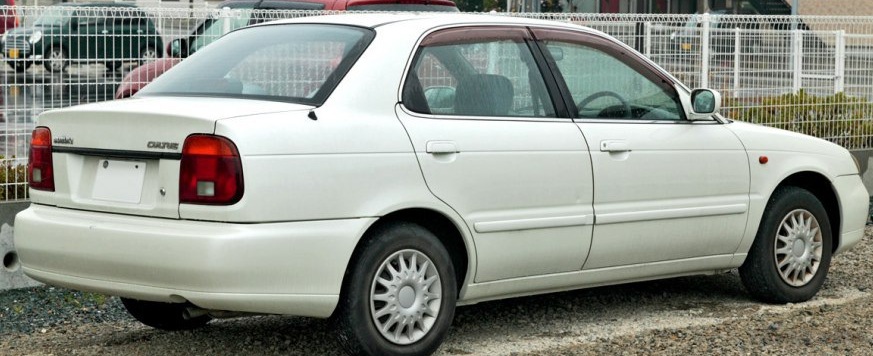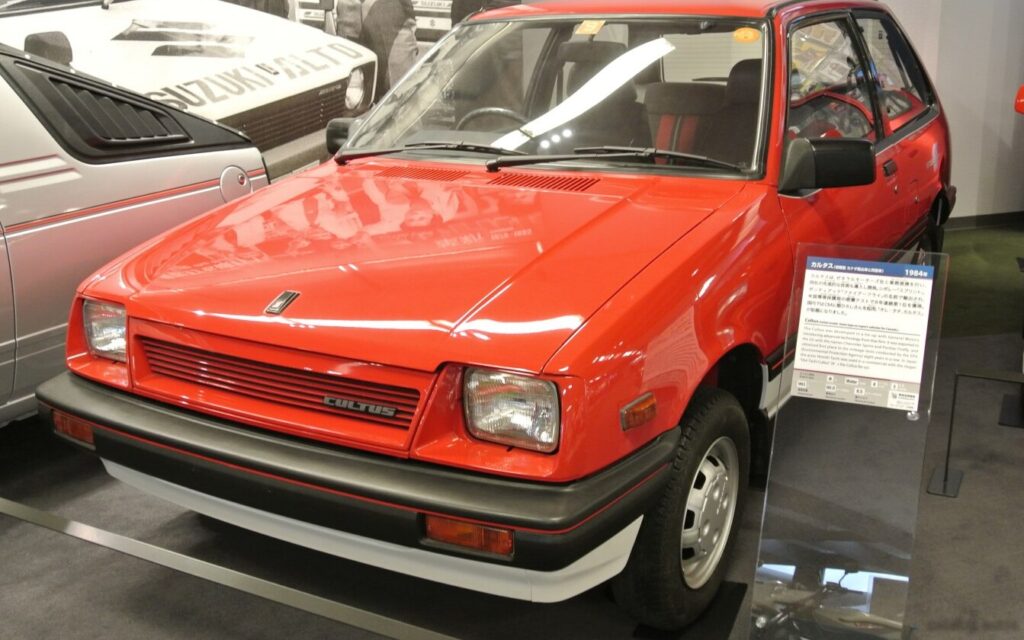
The Suzuki Cultus, known as the Suzuki Swift in many export markets, was a supermini car produced by Suzuki Motor Corporation from 1983 to 2016, spanning three generations. The first generation, known internally as the SA413/AA51 series and commonly referred to as the Cultus I, was introduced in 1983 and continued in production through 1988. This initial iteration represented Suzuki’s entry into the burgeoning front-wheel-drive supermini segment, aiming to provide affordable and efficient transportation. The 1.3-liter (SA413, AA51) variant, producing 68 horsepower, served as a core model within the Cultus I lineup, positioned as the standard engine option offering a balance between economy and usability. It was primarily targeted at first-time car buyers and those seeking a practical, no-frills city car.
Suzuki Cultus I 1.3 (SA413/AA51) Overview
The Cultus I was a significant departure for Suzuki, which had previously focused on smaller, rear-wheel-drive vehicles. The shift to a front-wheel-drive platform allowed for a more spacious interior and improved packaging. The 1.3-liter engine variant was offered in both 3-door and 5-door hatchback body styles, catering to different customer needs. The SA413 chassis code generally denotes the 3-door models, while AA51 represents the 5-door versions, though variations existed depending on the specific market. This generation Cultus was sold under various names globally, including the Suzuki Swift in Europe and Australia, and the Geo Metro in the United States.
Powertrain & Engine Architecture
The heart of the Cultus I 1.3 was the G10 engine, a 1.3-liter (1324 cc) inline-four cylinder gasoline engine. This engine featured a single overhead camshaft (SOHC) valvetrain with two valves per cylinder. The G10 engine was known for its simplicity and durability, though it wasn’t a powerhouse in terms of performance. Fuel delivery was managed by a carburetor, a common feature for vehicles of this era, rather than fuel injection. This carburetor setup contributed to the engine’s relatively low cost but also impacted its fuel efficiency and emissions compared to later, fuel-injected engines. Bore and stroke dimensions were 74mm x 77mm, resulting in a compression ratio typically around 9.0:1. The engine produced 68 horsepower (hp) at approximately 6,000 rpm and 80.8 lb-ft of torque at 3,000 rpm. The engine was mounted transversely at the front of the vehicle, driving the front wheels.
The standard transmission for the 1.3-liter Cultus I was a 5-speed manual gearbox. While an automatic transmission was offered in some markets, it was not as common as the manual, and often resulted in a noticeable performance decrease. The manual transmission was designed for smooth shifting and durability, contributing to the car’s overall reliability. The final drive ratio was typically around 4.11:1, providing a balance between acceleration and fuel economy.
Driving Characteristics
The Cultus I 1.3, equipped with the 5-speed manual transmission, offered adequate performance for urban driving. Acceleration was modest, with a 0-60 mph time estimated around 13-15 seconds. The engine felt relatively strained at higher speeds, and highway cruising required frequent downshifting. The 1.3-liter engine’s torque curve was relatively flat, providing usable power across a narrow rev range. The manual transmission allowed drivers to maximize the engine’s potential, while the automatic version significantly hampered performance. The car’s light weight (around 1,600-1,800 lbs) helped to offset the engine’s modest power output. Handling was generally considered safe and predictable, though not particularly sporty. The front-wheel-drive layout provided decent grip in most conditions.
Equipment & Trim Levels
The Cultus I 1.3 was typically offered in fairly basic trim levels, reflecting its position as an affordable entry-level car. Standard features generally included cloth upholstery, a basic instrument cluster, and manually operated windows and door locks. Air conditioning and a radio were often optional extras. Interior plastics were durable but utilitarian. The 5-door models offered greater practicality with increased rear passenger space and easier access to the rear seats. Higher trim levels, available in some markets, might have included features such as upgraded upholstery, a more comprehensive instrument panel, and a sunroof. The dashboard layout was simple and functional, prioritizing ease of use over aesthetics.
Chassis & Braking
The Cultus I utilized a MacPherson strut front suspension and a torsion beam rear suspension. This suspension setup provided a comfortable ride quality, particularly on smooth roads. The torsion beam rear suspension was a cost-effective solution that minimized complexity. Steering was rack-and-pinion, providing reasonably precise control. Braking was typically accomplished with front disc brakes and rear drum brakes. The braking system was adequate for the car’s weight and performance, but lacked the stopping power of more modern vehicles. Stabilizer bars were not standard on all models, and their presence varied depending on the trim level and market.
Market Reception & Comparison
The Suzuki Cultus I 1.3 was generally well-received by critics as a practical and affordable supermini. It was praised for its fuel efficiency, reliability, and ease of driving. However, it was also criticized for its modest performance and basic interior. Compared to its rivals, such as the Fiat Uno, Renault 5, and Nissan Micra, the Cultus I offered a competitive package, particularly in terms of reliability and value for money. The 1.3-liter engine provided a reasonable balance between economy and performance, making it a popular choice for urban commuters. The automatic transmission version, while offering convenience, was often criticized for its sluggish performance and reduced fuel economy. The Geo Metro version, sold in the United States, gained a reputation for exceptional fuel economy, becoming a popular choice during periods of high gasoline prices.
Technical Specifications
| Engine Model | G10 |
| Engine Type | Inline-4, Naturally Aspirated |
| Displacement | 1324 cc (80.8 cu in) |
| Bore x Stroke | 74 mm x 77 mm (2.91 in x 3.03 in) |
| Compression Ratio | 9.0:1 |
| Valve Configuration | SOHC, 2 valves per cylinder |
| Fuel System | Carburetor |
| Maximum Power | 68 hp @ 6,000 rpm |
| Maximum Torque | 80.8 lb-ft @ 3,000 rpm |
| Transmission | 5-speed Manual |
| Drivetrain | Front-Wheel Drive |
| Length | 3585 mm (141.14 in) |
| Width | 1530 mm (60.24 in) |
| Height | 1350 mm (53.15 in) |
| Wheelbase | 2245 mm (88.39 in) |
| Weight | 1600-1800 lbs (approx.) |
Legacy
The Suzuki Cultus I 1.3, while a relatively simple vehicle, laid the foundation for Suzuki’s success in the global supermini market. The G10 engine proved to be remarkably durable, and many examples remain on the road today. The Cultus I established Suzuki as a manufacturer of reliable and affordable cars. In the used car market, the Cultus I 1.3 is often sought after by enthusiasts and those looking for a classic, economical city car. Its simplicity makes it relatively easy to maintain and repair. While not a performance car, the Cultus I 1.3 offers a charming and practical driving experience, representing a significant milestone in Suzuki’s history.