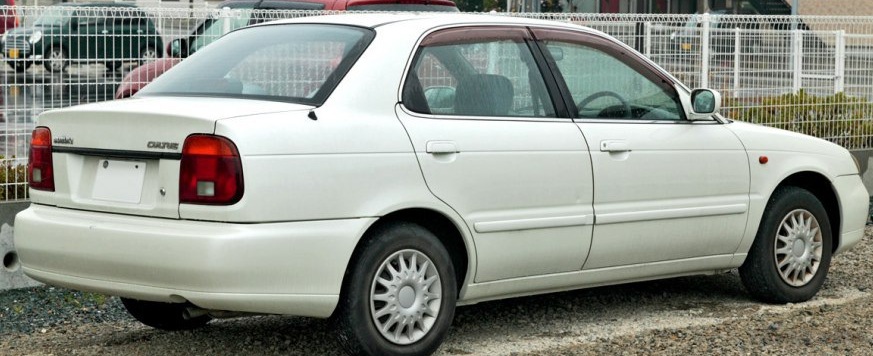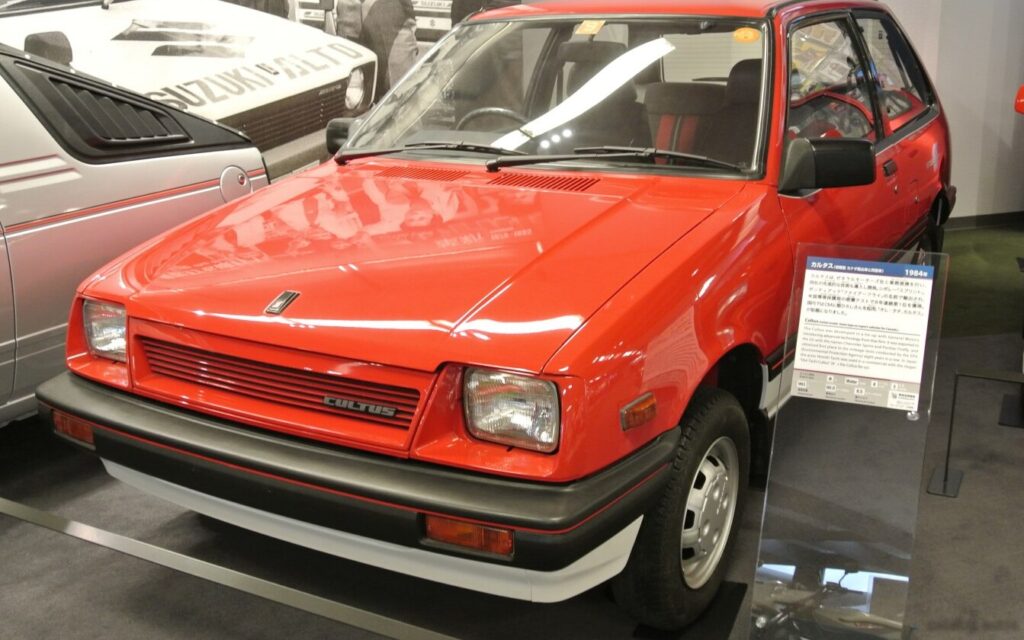
The Suzuki Cultus, known as the Suzuki Swift in many export markets, was a supermini car produced by Suzuki from 1983 to 2004. The first generation, designated the Cultus I (and internally as the SA413/AA51/53 series), was introduced in 1983 and continued in production through 1988. This generation marked Suzuki’s entry into the front-wheel-drive supermini segment, aiming to compete with established European and Japanese rivals. The 1.3-liter (73 hp) variant, detailed here, represented a core offering within the initial Cultus lineup, providing a balance of affordability and practicality for a broad customer base. It was available in both 3-door and 5-door hatchback configurations.
Suzuki Cultus I 1.3 (SA413/AA51/53) Overview
The Cultus I was a significant model for Suzuki, representing a shift towards more modern automotive engineering. It was designed to be a lightweight, fuel-efficient, and reliable vehicle, appealing to first-time car buyers and those seeking economical transportation. The 1.3-liter engine variant was positioned as the mainstream choice, offering sufficient power for everyday driving while maintaining good fuel economy. It sat below any potential performance-oriented trims (which were not initially offered) and above any potential smaller displacement base models (also not initially offered).
Powertrain & Engine Architecture
The heart of the Cultus I 1.3 was the G13 engine, a 1.3-liter (1324 cc) inline-four cylinder gasoline engine. This engine produced 73 horsepower. The engine featured a single overhead camshaft (SOHC) valvetrain with two valves per cylinder. Crucially, the G13 in this early Cultus generation utilized a carburetor for fuel delivery, rather than fuel injection. This was a cost-saving measure common for vehicles of this era. The carburetor type varied depending on the specific market, but generally consisted of a single downdraft unit. The engine’s bore and stroke measured 74 mm x 77 mm, respectively. The compression ratio was typically around 9.0:1. The engine was designed for simplicity and durability, prioritizing reliability over outright performance.
The drivetrain consisted of a front-wheel-drive layout. The 1.3-liter engine was primarily paired with a 5-speed manual transmission. While an automatic transmission was offered in some markets, it was less common and generally considered to reduce performance and increase fuel consumption. The manual transmission was a standard configuration, providing drivers with greater control and efficiency. The transmission was a conventional design, with synchromesh on all forward gears.
Driving Characteristics
The Suzuki Cultus I 1.3 offered modest but adequate performance for its intended purpose. With 73 horsepower and approximately 88 lb-ft of torque, acceleration was not brisk, but sufficient for navigating city streets and highways. The 5-speed manual transmission allowed drivers to keep the engine in its optimal power band, improving responsiveness. The carburetor, while simple, could sometimes lead to slightly sluggish throttle response compared to fuel-injected engines. The front-wheel-drive layout provided predictable handling, although the car was not particularly sporty. The relatively light weight of the Cultus (around 1,600-1,700 lbs) helped to offset the engine’s modest power output. The gear ratios were tuned for fuel efficiency, with a relatively tall final drive. Compared to later, fuel-injected Cultus models, the 1.3-liter carburetor version felt less refined and offered slightly lower fuel economy.
Equipment & Trim Levels
The Cultus I 1.3 was generally offered with a fairly basic level of equipment, reflecting its position as an affordable supermini. Standard features typically included cloth upholstery, a basic instrument cluster with speedometer, fuel gauge, and temperature gauge, and manually adjustable seats. Power steering and air conditioning were generally optional extras, depending on the market. The interior design was functional and utilitarian, prioritizing space efficiency over luxury. Trim levels were often differentiated by minor cosmetic changes, such as different wheel covers or interior fabric patterns. Some markets offered a slightly more upscale trim level with features like a radio and upgraded interior trim. The 3-door model was often marketed towards younger buyers, while the 5-door version appealed to families.
Chassis & Braking
The Cultus I featured a relatively simple chassis design. It utilized a MacPherson strut front suspension and a torsion beam rear suspension. This setup provided a comfortable ride quality, although it was not particularly sophisticated. The steering was a rack-and-pinion system, offering reasonable precision. Braking was typically accomplished with disc brakes on the front wheels and drum brakes on the rear wheels. The braking system was adequate for the car’s weight and performance, but lacked advanced features like ABS. Stabilizer bars were not standard equipment on all models, but were sometimes included as an option to reduce body roll during cornering. The suspension was tuned for comfort and ride quality, rather than sporty handling.
Market Reception & Comparison
The Suzuki Cultus I was generally well-received by critics and consumers alike. It was praised for its affordability, fuel efficiency, and reliability. However, some critics noted its relatively basic interior and modest performance. Compared to other superminis of the era, such as the Fiat Uno and the Renault 5, the Cultus offered a competitive package, particularly in terms of value for money. The carburetor-equipped 1.3-liter engine offered reasonable fuel economy, but was less efficient than later fuel-injected versions. Reliability was a strong point, with the G13 engine proving to be durable and long-lasting. The Cultus’s front-wheel-drive layout and relatively spacious interior were also appreciated by buyers.
Technical Specifications
| Engine Type | Inline-4, Gasoline |
| Engine Displacement | 1324 cc (80.8 cu in) |
| Power | 73 hp @ 6000 rpm |
| Torque | 88 lb-ft @ 3000 rpm |
| Fuel System | Carburetor |
| Valvetrain | SOHC, 2 valves/cylinder |
| Compression Ratio | 9.0:1 |
| Transmission | 5-speed Manual |
| Drivetrain | Front-Wheel Drive |
| Length | 3585 mm (141.14 in) |
| Width | 1530 mm (60.24 in) |
| Height | 1350 mm (53.15 in) |
| Wheelbase | 2245 mm (88.39 in) |
| Weight | 1600-1700 lbs (approx.) |
Legacy
The Suzuki Cultus I 1.3, while a relatively simple vehicle, laid the foundation for Suzuki’s success in the supermini segment. The G13 engine proved to be a reliable and durable powerplant, and many examples are still on the road today. The carburetor version, while less refined than later fuel-injected models, remains a popular choice among enthusiasts seeking a classic and affordable Japanese car. In the used car market, the Cultus I 1.3 is generally valued for its simplicity, reliability, and low running costs. Parts availability can be a challenge in some regions, but the engine and mechanical components are generally robust and easy to maintain. The Cultus I represents a significant milestone in Suzuki’s history, marking its entry into the competitive world of front-wheel-drive superminis.