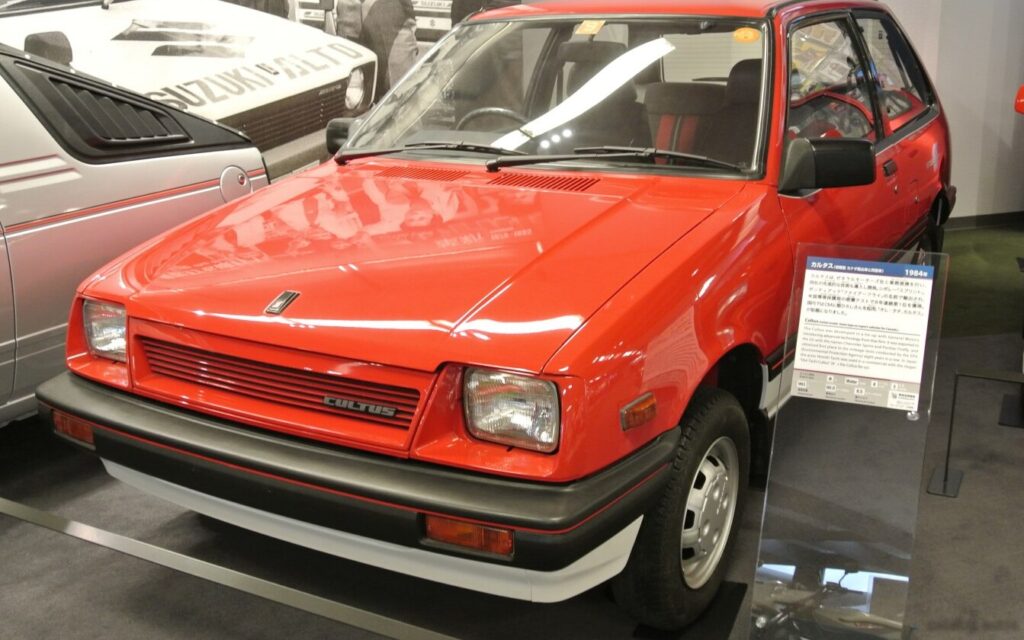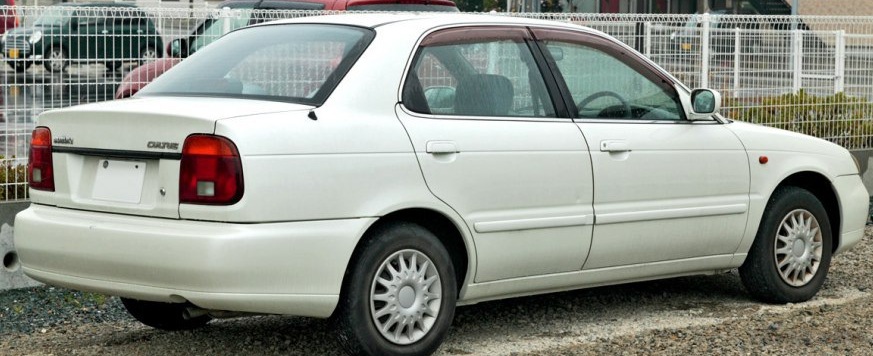
The Suzuki Cultus II, produced from 1988 to 2003, represented a significant evolution of Suzuki’s popular subcompact car. This generation, known internally as the SF413/AH35 series, was a global model sold under various names depending on the market – including the Geo Metro in the United States and Canada. The 1.3-liter (68 hp) variant, equipped with a five-speed manual transmission, served as a core offering within the Cultus II lineup, positioned as the entry-level model focused on affordability and fuel efficiency. It was designed to appeal to buyers seeking basic transportation with a reputation for reliability.
The 1.3L Cultus II: A Focus on Economy
The 1.3L Cultus II was intended to be the most accessible version of the second-generation Cultus. It occupied the lower end of the trim spectrum, offering a no-frills approach to personal transportation. While higher trims featured larger engines (typically 1.6L) and more amenities, the 1.3L model prioritized low running costs and ease of maintenance. This made it a popular choice for first-time car buyers, students, and those needing a dependable commuter vehicle. The SF413/AH35 chassis underpinned all Cultus II models, providing a consistent platform despite engine and trim variations.
Powertrain & Engine Architecture
At the heart of the 1.3L Cultus II lies the G13BA engine, a 1.3-liter (1298 cc) inline-four cylinder gasoline engine. This engine featured a single overhead camshaft (OHC) valvetrain with two valves per cylinder. The G13BA utilized a single-point fuel injection system, a relatively simple and cost-effective technology for the time. This system delivered fuel to the intake manifold, where it was mixed with air before entering the cylinders. The engine produced 68 horsepower at 6000 rpm and 73.02 lb-ft of torque at 3500 rpm. The compression ratio was set at 9.5:1. Engine oil capacity was 3.3 liters (3.49 US quarts), and the cooling system required 4.7 liters (4.97 US quarts) of coolant. The engine’s transverse front-engine layout contributed to efficient packaging within the small Cultus II chassis.
Driving Characteristics
The 1.3L Cultus II, with its modest 68 horsepower, was not designed for spirited performance. Acceleration was adequate for city driving and highway merging required planning. The five-speed manual transmission allowed drivers to keep the engine in its optimal power band, maximizing efficiency and responsiveness. The gear ratios were tuned for economy, with a relatively tall final drive. Compared to the 1.6L versions, the 1.3L felt noticeably slower, particularly when fully loaded or climbing hills. However, the lighter weight of the 1.3L model (790 kg or 1741.65 lbs) helped to mitigate some of the power deficit. The steering was light and easy, making it maneuverable in urban environments. Overall, the driving experience was characterized by practicality and ease of use rather than excitement.
Equipment & Trim Levels
The 1.3L Cultus II typically came with a fairly basic level of equipment. Standard features generally included cloth upholstery, a simple dashboard layout, and manual windows and door locks. Air conditioning was often an optional extra, as were power steering and a radio. The interior was designed for functionality and durability, with hard-wearing materials used throughout. Trim levels varied depending on the market, but the 1.3L model consistently represented the entry point. Optional extras could include upgraded audio systems, wheel covers, and color-keyed bumpers. The focus was on providing essential features at an affordable price point.
Chassis & Braking
The Cultus II utilized a front-wheel-drive layout with independent wishbone suspension at the front and a coil spring rear suspension. This setup provided a reasonable balance between ride comfort and handling. The front brakes were discs, offering better stopping power than the drum brakes found at the rear. The steering system employed a rack and pinion setup, providing precise and responsive steering. Tire size was typically 165/70 R13, mounted on 13-inch steel wheels. While not a performance-oriented chassis, the Cultus II’s suspension was well-suited to everyday driving conditions. The relatively light weight of the vehicle contributed to its nimble handling characteristics.
Market Reception & Comparison
The 1.3L Cultus II received generally positive reviews for its fuel efficiency, reliability, and affordability. Critics praised its simple design and ease of maintenance. However, its lack of power and basic interior were often noted as drawbacks. Compared to the 1.6L versions, the 1.3L offered significantly lower performance but also a lower purchase price and better fuel economy. In terms of fuel economy, the 1.3L Cultus II consistently achieved impressive figures, making it an attractive option for budget-conscious buyers. Reliability was another strong point, with the G13BA engine proving to be durable and long-lasting. Against competitors like the Toyota Corolla and Honda Civic, the Cultus II offered a more affordable alternative, albeit with fewer features and less refinement.
Technical Specifications
| Brand | Suzuki |
| Model | Cultus II |
| Type | 1.3 (SF413,AH35) (68 Hp) |
| Start of production | 1988 |
| End of production | 2003 |
| Engine Type | Internal Combustion Engine (Petrol/Gasoline) |
| Body Type | Sedan |
| Seats | 5 |
| Doors | 4 |
| Maximum Speed | 165 km/h (102.53 mph) |
| Weight-to-Power Ratio | 11.6 kg/Hp |
| Weight-to-Torque Ratio | 8 kg/Nm |
| Power | 68 Hp @ 6000 rpm |
| Torque | 99 Nm @ 3500 rpm (73.02 lb.-ft. @ 3500 rpm) |
| Engine Layout | Front, Transverse |
| Engine Model/Code | G13BA |
| Engine Displacement | 1298 cm3 (79.21 cu. in.) |
| Number of Cylinders | 4 |
| Engine Configuration | Inline |
| Cylinder Bore | 74 mm (2.91 in.) |
| Piston Stroke | 75.5 mm (2.97 in.) |
| Compression Ratio | 9.5:1 |
| Valves per Cylinder | 2 |
| Fuel Injection System | Single-point Injection |
| Engine Aspiration | Naturally Aspirated |
| Engine Oil Capacity | 3.3 l (3.49 US qt | 2.9 UK qt) |
| Coolant Capacity | 4.7 l (4.97 US qt | 4.14 UK qt) |
| Kerb Weight | 790 kg (1741.65 lbs) |
| Trunk Space (minimum) | 365 l (12.89 cu. ft.) |
| Fuel Tank Capacity | 40 l (10.57 US gal | 8.8 UK gal) |
| Length | 4075 mm (160.43 in.) |
| Width | 1600 mm (62.99 in.) |
| Height | 1380 mm (54.33 in.) |
| Wheelbase | 2365 mm (93.11 in.) |
| Front Track | 1365 mm (53.74 in.) |
| Rear Track | 1340 mm (52.76 in.) |
| Drivetrain | Front Wheel Drive |
| Gearbox | 5 gears, manual transmission |
| Front Suspension | Wishbone |
| Rear Suspension | Coil Spring |
| Front Brakes | Disc |
| Rear Brakes | Drum |
| Tire Size | 165/70 R13 |
Legacy
The 1.3L Cultus II, while not the most powerful or luxurious version of the car, established a reputation for exceptional reliability and fuel economy. The G13BA engine, in particular, proved to be a durable and long-lasting unit. Today, well-maintained examples of the 1.3L Cultus II are still found on the road, often serving as affordable and dependable transportation. In the used car market, these models are valued for their simplicity and low running costs. While parts availability may be becoming more challenging, the basic nature of the car makes it relatively easy to repair and maintain. The 1.3L Cultus II remains a testament to Suzuki’s commitment to building practical and reliable vehicles.