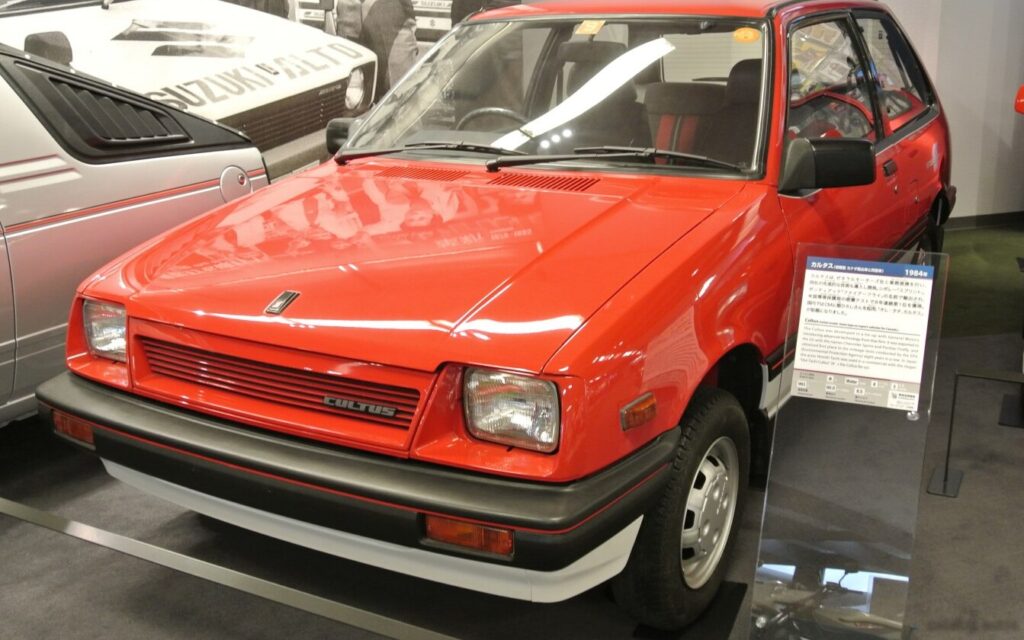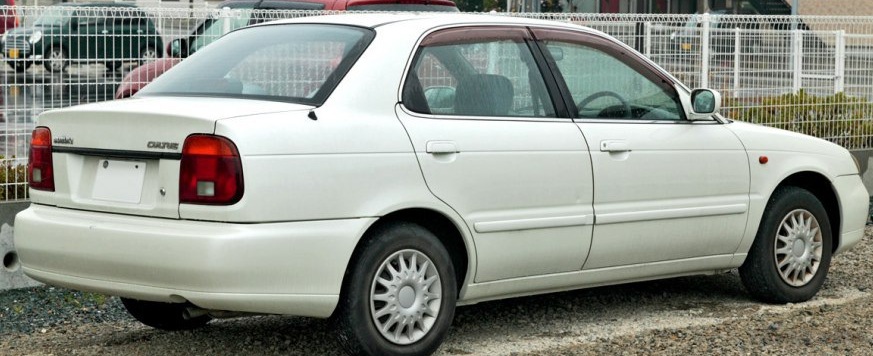
The Suzuki Cultus II 1.6 (SF416, AH14) Automatic, produced between 1988 and 1991, represented a mid-range offering within the broader Cultus II (also known as the Geo Metro in some markets) lineup. This variant, powered by the G16B engine and paired with a 3-speed automatic transmission, aimed to provide a balance of affordability, practicality, and convenience for buyers seeking a compact sedan. It occupied a position above the base 1.0 and 1.3-liter models, while remaining below the more performance-oriented (though rarely available with automatic transmissions) trims. The Cultus II itself was built on the G10/A3 platform, a subcompact car architecture shared with several other models from Suzuki and its partners.
Powertrain & Engine Architecture
The heart of the Cultus II 1.6 Automatic is the G16B engine, a 1.6-liter (1590 cc) inline-four cylinder gasoline engine. This engine produced 95 horsepower at 6000 rpm and 133 Nm (98.1 lb-ft) of torque at 3500 rpm. The G16B featured a single-point fuel injection system, a relatively common technology for the late 1980s, which provided improved fuel efficiency and reduced emissions compared to carbureted engines. The engine utilized an Overhead Camshaft (OHC) valvetrain with four valves per cylinder, contributing to its respectable power output for its displacement. Compression ratio was set at 9.5:1.
The automatic transmission paired with the G16B was a 3-speed unit. While not known for its sophistication or rapid shifting, it provided ease of use, particularly appealing to drivers in urban environments. The transmission’s gear ratios were geared towards fuel economy and smooth, comfortable cruising rather than spirited acceleration. Specific gear ratios are difficult to ascertain due to limited documentation, but the first gear was relatively tall, prioritizing smooth take-offs, while the top gear (overdrive) was designed for efficient highway driving.
Engine Code Specifics
The SF416 and AH14 designations refer to specific engine codes used by Suzuki. These codes denote variations in engine management systems and minor component differences. The SF416 was primarily used in Japanese domestic market (JDM) vehicles, while the AH14 was more common in export markets. Both codes represent essentially the same engine architecture, with differences primarily relating to emissions control equipment and calibration for local fuel quality.
Driving Characteristics
The driving experience in the Cultus II 1.6 Automatic was characterized by its smooth, predictable nature. Acceleration was adequate for everyday driving, but not particularly brisk. The 3-speed automatic transmission, while convenient, lacked the responsiveness of a manual gearbox or a more modern automatic with additional gears. The engine delivered its peak torque at 3500 rpm, meaning that most of the usable power was available in the mid-range. This made it suitable for merging onto highways and overtaking slower traffic, but required downshifting for more urgent maneuvers.
Compared to the 1.0 and 1.3-liter versions of the Cultus II, the 1.6-liter engine provided a noticeable improvement in performance, especially when fully loaded with passengers or cargo. However, it wasn’t as sporty or engaging as the manual transmission variants, which offered more direct control and quicker acceleration. The automatic transmission also slightly reduced fuel economy compared to the manual versions.
Equipment & Trim Levels
The Cultus II 1.6 Automatic typically came with a reasonable level of standard equipment for its price point. This generally included features such as cloth upholstery, a basic AM/FM radio, and manual windows and door locks. Air conditioning was often an optional extra, as were power steering and upgraded audio systems. Interior trim was generally functional and durable, prioritizing practicality over luxury. The dashboard layout was simple and straightforward, with clearly labeled controls.
Trim levels varied depending on the market. In some regions, there were distinct trim packages offering additional features like upgraded interior trim, alloy wheels, and a sunroof. However, the core features remained consistent across most variants of the 1.6 Automatic.
Chassis & Braking
The Cultus II 1.6 Automatic utilized a front-engine, front-wheel-drive layout. The front suspension consisted of a wishbone setup, providing a comfortable ride and reasonable handling. The rear suspension employed a coil spring arrangement. The car’s relatively light weight (840 kg / 1851.88 lbs) contributed to its nimble handling characteristics.
Braking was accomplished via disc brakes on the front wheels and drum brakes on the rear. While adequate for normal driving conditions, the braking system lacked the stopping power and modulation of more advanced setups. Anti-lock Braking System (ABS) was not a standard feature, though it may have been offered as an option in some markets. The steering system was a rack and pinion setup, providing precise and responsive steering feel.
Market Reception & Comparison
The Suzuki Cultus II 1.6 Automatic was generally well-received by automotive critics as a practical and affordable compact sedan. It was praised for its fuel efficiency, comfortable ride, and ease of use. However, some critics noted its lack of performance and its somewhat dated interior design. Compared to its competitors, such as the Toyota Corolla and Honda Civic, the Cultus II offered a more affordable price point, but lacked the same level of refinement and brand recognition.
In terms of fuel economy, the Cultus II 1.6 Automatic achieved approximately 7.3 l/100 km (32.2 US mpg) in urban driving, 4.8 l/100 km (49 US mpg) on the highway, and 6.1 l/100 km (38.6 US mpg) combined. These figures were competitive for the time, but have been surpassed by more modern vehicles. Reliability was generally good, with the G16B engine proving to be a durable and long-lasting unit.
Technical Specifications
| Brand | Suzuki |
| Model | Cultus |
| Generation | Cultus II |
| Type | 1.6 (SF416,AH14) (95 Hp) Automatic |
| Start of production | 1988 |
| End of production | 1991 |
| Engine Model/Code | G16B |
| Engine displacement | 1590 cm3 / 97.03 cu. in. |
| Number of cylinders | 4 |
| Power | 95 Hp @ 6000 rpm |
| Torque | 133 Nm @ 3500 rpm / 98.1 lb.-ft. @ 3500 rpm |
| Fuel Type | Petrol (Gasoline) |
| Fuel consumption (urban) | 7.3 l/100 km / 32.2 US mpg |
| Fuel consumption (extra urban) | 4.8 l/100 km / 49 US mpg |
| Fuel consumption (combined) | 6.1 l/100 km / 38.6 US mpg |
| Maximum speed | 182 km/h / 113.09 mph |
| Kerb Weight | 840 kg / 1851.88 lbs |
| Max. weight | 1290 kg / 2843.96 lbs |
| Trunk (boot) space | 363 l / 12.82 cu. ft. |
| Fuel tank capacity | 40 l / 10.57 US gal |
| Transmission | 3-speed automatic |
| Drive wheel | Front wheel drive |
| Tires size | 165/65 R14 T |
Legacy
The Suzuki Cultus II 1.6 Automatic, while not a particularly iconic or collectible vehicle, remains a reasonably common sight on the used car market. The G16B engine is known for its durability and relatively low maintenance costs. However, age-related issues such as corrosion and wear and tear on rubber components are common. Parts availability can be a challenge in some regions, but many components are still available through aftermarket suppliers. The 3-speed automatic transmission, while reliable, is prone to wear and tear with high mileage. Overall, the Cultus II 1.6 Automatic represents a solid, if unremarkable, example of a late 1980s compact sedan, offering a blend of affordability, practicality, and reasonable reliability.