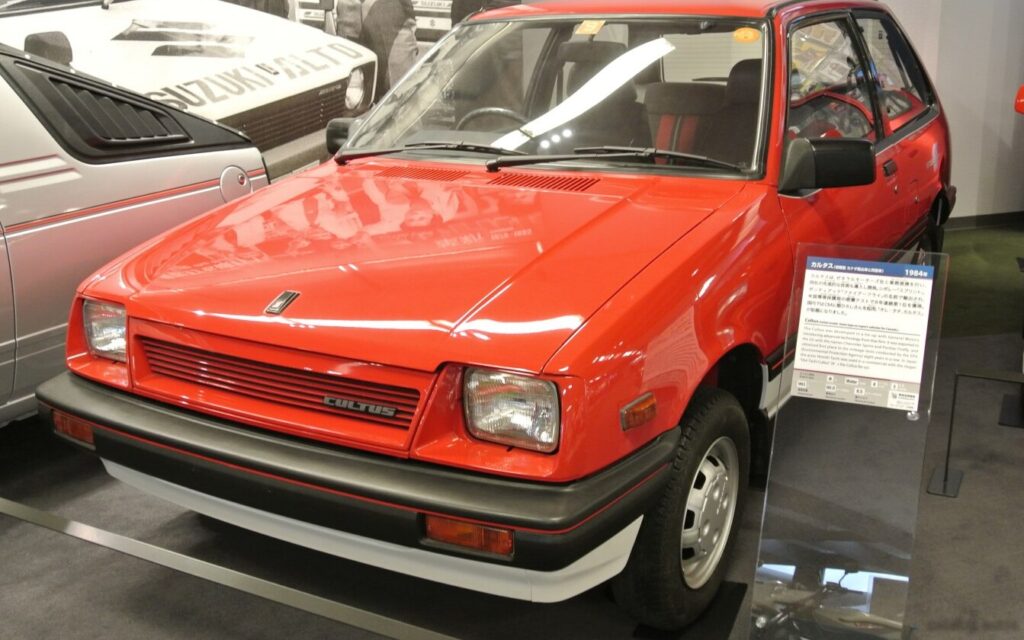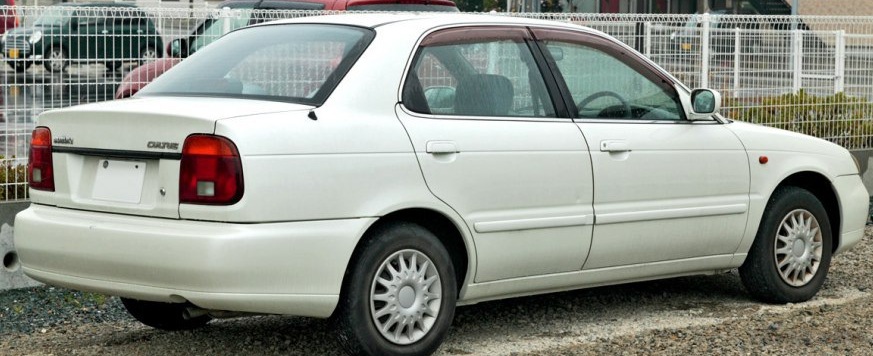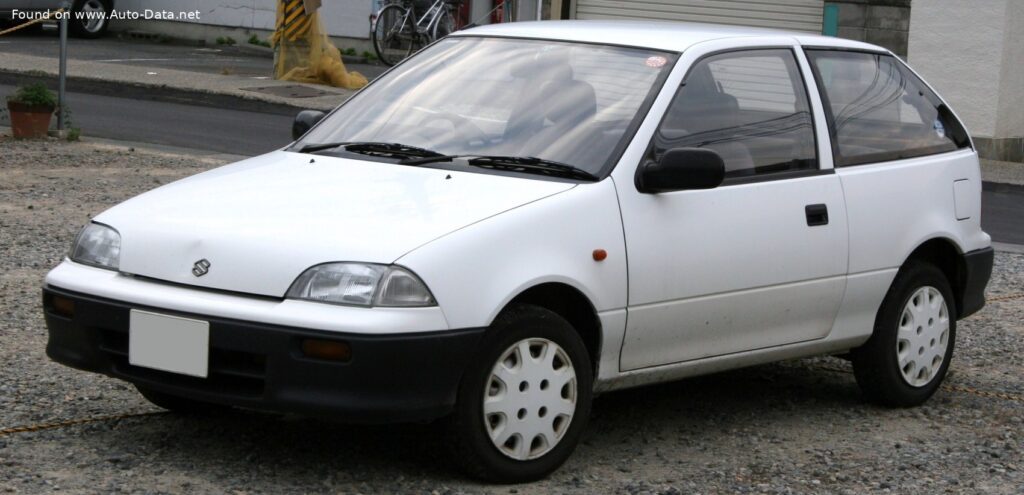
The Suzuki Cultus II, produced from 1988 to 2003, represented a significant evolution of Suzuki’s popular supermini. This generation, also known as the Cultus Crescent in some markets, was a key model for Suzuki, offering affordable and reliable transportation. Within the Cultus II range, the 1.3 i (5 dr) variant, producing 68 horsepower, occupied the entry-level position. It served as the most accessible option for buyers seeking a practical and economical hatchback, particularly in markets where smaller displacement engines were favored due to tax regulations or fuel costs. This model was built on the G10/G13 platform, a lightweight chassis designed for efficiency and maneuverability.
The 1.3 i Cultus II: Positioning and Overview
The 1.3 i 5-door hatchback was the base model of the Cultus II lineup. It was designed to appeal to first-time car buyers, city dwellers, and those prioritizing fuel efficiency over outright performance. While Suzuki offered higher-specification Cultus II models with larger engines and more features, the 1.3 i remained a popular choice due to its affordability and ease of use. It was commonly seen as a sensible and dependable vehicle, ideal for daily commuting and short trips. The 1.3 i was often compared to other superminis of the era, such as the Toyota Starlet, Nissan Micra, and Ford Fiesta, all of which offered similar levels of practicality and economy.
Powertrain & Engine Architecture
At the heart of the 1.3 i Cultus II lies the G13BA engine, a 1.3-liter (1298 cc) inline-four cylinder gasoline engine. This engine featured a single overhead camshaft (OHC) valvetrain with two valves per cylinder. The G13BA utilized a single-point fuel injection system, a common technology in the late 1980s and early 1990s, which delivered fuel to the intake manifold rather than directly into the cylinders. This system, while less efficient than later multi-point injection systems, contributed to the engine’s simplicity and reliability. The engine produced 68 horsepower at 6000 rpm and 99 Nm (73.02 lb-ft) of torque at 3500 rpm. The engine’s compression ratio was 9.5:1.
The 1.3 i Cultus II was primarily equipped with a 5-speed manual transmission. This transmission was chosen for its simplicity and contribution to fuel economy. The gear ratios were optimized for everyday driving, prioritizing acceleration in lower gears and comfortable cruising at highway speeds. The transmission was front-wheel drive, a standard configuration for vehicles in this class. The engine was transversely mounted, saving space and improving packaging within the compact engine bay.
Driving Characteristics
The 1.3 i Cultus II offered modest but adequate performance for its intended purpose. Acceleration from 0 to 100 km/h (0-62 mph) took approximately 13 seconds, and the top speed was around 165 km/h (102.53 mph). While not a particularly quick car, the 1.3 i provided sufficient power for navigating city streets and merging onto highways. The engine’s torque peak at 3500 rpm meant that it felt reasonably responsive in everyday driving situations. Compared to higher-specification Cultus II models with larger engines, the 1.3 i felt noticeably less powerful, particularly when fully loaded or climbing hills. However, the lighter weight of the 1.3 i (805 kg / 1774.72 lbs) helped to offset some of the power deficit. The 5-speed manual transmission allowed drivers to keep the engine in its optimal power band, maximizing efficiency and responsiveness.
Equipment & Trim Levels
The 1.3 i Cultus II was typically equipped with basic but functional features. Standard equipment generally included cloth upholstery, a simple dashboard layout with analog gauges, and manual windows and door locks. Power steering was often included, providing easier maneuverability, especially at low speeds. Depending on the market and optional packages, features such as a radio/cassette player, rear window wiper, and upgraded interior trim could be added. The interior was designed with practicality in mind, offering ample headroom and legroom for passengers. The rear seats could be folded down to increase cargo space, providing flexibility for carrying larger items. The trunk offered 280 liters (9.89 cu. ft.) of space with the rear seats up and 620 liters (21.9 cu. ft.) with them folded down.
Chassis & Braking
The Cultus II featured a lightweight chassis designed for agility and fuel efficiency. The front suspension utilized a wishbone configuration, providing a comfortable ride and predictable handling. The rear suspension employed a coil spring setup, offering a balance between ride comfort and stability. The 1.3 i model was equipped with disc brakes on the front wheels and drum brakes on the rear wheels. This configuration was common for vehicles in this price range during the production period. Anti-lock braking system (ABS) was not standard on the base 1.3 i model but was available as an option in some markets. The steering system was a rack and pinion type with hydraulic power assistance, providing precise steering control and reducing driver effort. The vehicle rode on 155/70 R13 tires mounted on 13-inch steel wheels.
Market Reception & Comparison
The Suzuki Cultus II 1.3 i was generally well-received by critics and consumers alike. It was praised for its affordability, reliability, and fuel efficiency. However, some reviewers noted its lack of power and basic interior appointments. Compared to other superminis of the era, the Cultus II offered a competitive package, particularly in terms of value for money. Its fuel economy was a strong point, with figures of 7.8 l/100 km (30.2 US mpg) in urban driving and 4.8 l/100 km (49 US mpg) on the highway. In terms of reliability, the Cultus II was considered to be a dependable vehicle, with relatively low maintenance costs. Compared to higher-specification Cultus II models, the 1.3 i offered a more economical option for buyers who didn’t require the extra performance or features.
Technical Specifications
| Brand | Suzuki |
| Model | Cultus |
| Generation | Cultus II Hatchback |
| Type | 1.3 i (5 dr) (68 Hp) |
| Start of production | 1988 |
| End of production | 2003 |
| Engine Displacement | 1298 cm3 (79.21 cu. in.) |
| Number of Cylinders | 4, Inline |
| Power | 68 Hp @ 6000 rpm |
| Torque | 99 Nm @ 3500 rpm (73.02 lb.-ft. @ 3500 rpm) |
| Fuel Type | Petrol (Gasoline) |
| Acceleration 0-100 km/h | 13 sec |
| Acceleration 0-60 mph | 12.4 sec |
| Maximum Speed | 165 km/h (102.53 mph) |
| Kerb Weight | 805 kg (1774.72 lbs) |
| Max. Weight | 1290 kg (2843.96 lbs) |
| Fuel Tank Capacity | 40 l (10.57 US gal | 8.8 UK gal) |
| Length | 3845 mm (151.38 in) |
| Width | 1590 mm (62.6 in) |
| Height | 1380 mm (54.33 in) |
| Wheelbase | 2365 mm (93.11 in) |
| Transmission | 5 gears, manual transmission |
Legacy
The Suzuki Cultus II 1.3 i remains a popular choice among budget-conscious buyers in the used car market. Its reputation for reliability and affordability has ensured its continued demand. While older examples may require some maintenance due to their age, the G13BA engine is known for its durability and relatively simple construction. Parts availability is generally good, and the vehicle’s straightforward design makes it relatively easy to repair. The 1.3 i Cultus II is often seen as a practical and economical option for students, commuters, and those seeking a reliable first car. Its fuel efficiency and low running costs continue to appeal to buyers looking for a sensible and dependable vehicle.