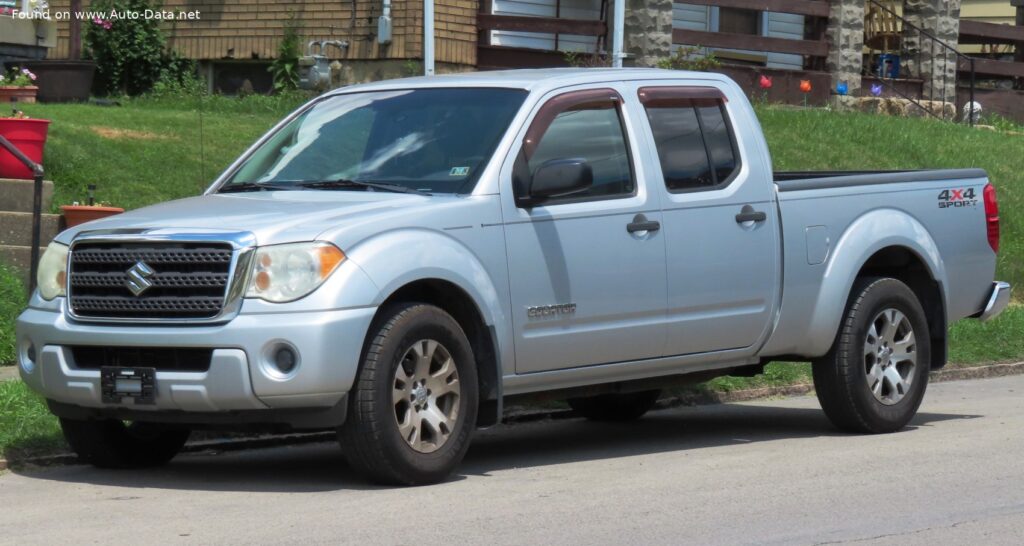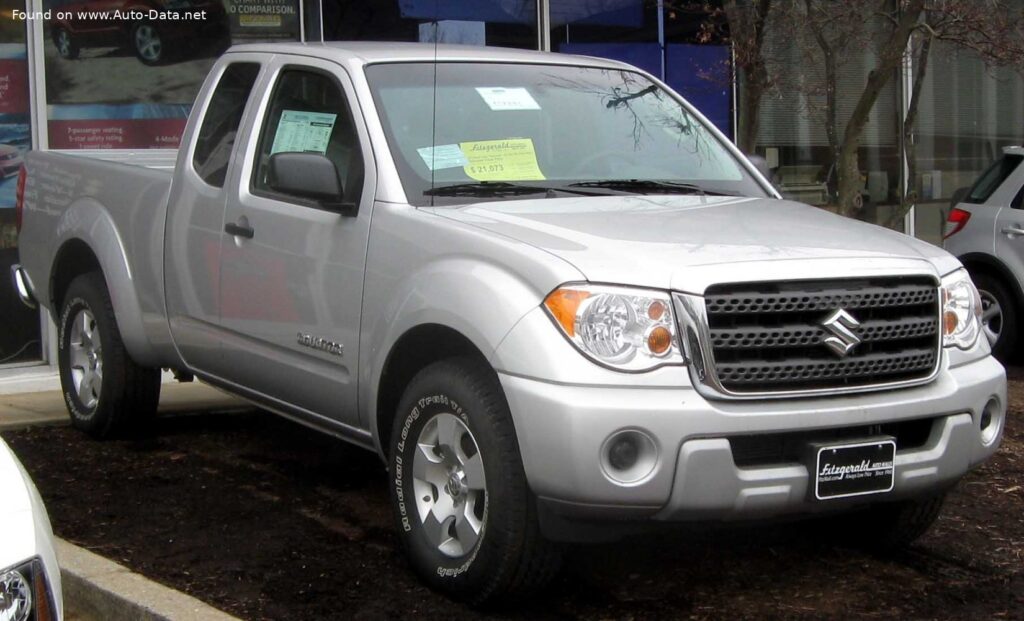
The Suzuki Equator Crew Cab Short Bed 4.0 V6 (261 hp) Automatic was a mid-size pickup truck produced by Suzuki from 2008 to 2012. It represented Suzuki’s entry into the competitive North American pickup truck market, leveraging a partnership with Nissan. The Equator was essentially a rebadged Nissan Frontier, offering a unique styling package and Suzuki’s dealer network to a new segment of buyers. This particular variant, featuring the 4.0-liter V6 engine paired with a five-speed automatic transmission, was positioned as the higher-performance option within the Equator lineup, aimed at buyers needing more capability than the base four-cylinder models.
Powertrain & Engine Architecture
The heart of the Equator Crew Cab Short Bed 4.0 V6 Automatic is Nissan’s VQ40DE 4.0-liter V6 engine. This engine is a 60-degree V-engine, naturally aspirated, and utilizes a cast iron block with aluminum cylinder heads. It produces 261 horsepower at 5600 rpm and 381 Nm (281.01 lb-ft) of torque at 4000 rpm. The engine boasts a compression ratio of 9.7:1 and features a double overhead camshaft (DOHC) valvetrain with variable valve timing (VVT) on both intake and exhaust valves. This VVT system optimizes engine performance and efficiency across a wider range of engine speeds.
Fuel delivery is handled by a multi-port fuel injection system. The engine’s oil capacity is 5.1 liters (5.39 US quarts / 4.49 UK quarts), and it requires an oil meeting specific Nissan specifications. The cooling system holds 10.2 liters (10.78 US quarts / 8.97 UK quarts) of coolant. The engine is longitudinally mounted in the chassis, driving the rear wheels.
The engine is mated to a five-speed automatic transmission. While not the most modern transmission available at the time, it provided smooth and reliable shifting for everyday driving and towing. The transmission’s gear ratios were tuned to balance acceleration and fuel economy, prioritizing usability over outright performance. Specific gear ratios were not widely publicized by Suzuki, but the transmission was designed to work in harmony with the V6’s torque curve.
Engine Specifications
Engine Code: VQ40DE
Displacement: 3954 cm3 (241.29 cu. in.)
Bore x Stroke: 95.5 mm x 92 mm (3.76 in. x 3.62 in.)
Number of Cylinders: 6
Configuration: V-engine
Valves per Cylinder: 4
Driving Characteristics
The Equator Crew Cab Short Bed 4.0 V6 Automatic offered a noticeable step up in performance compared to the base four-cylinder models. The 261 hp V6 provided ample power for daily driving, highway merging, and even moderate towing. Acceleration was brisk, though not particularly sporty, and the automatic transmission shifted smoothly, contributing to a comfortable driving experience. The weight-to-power ratio of 7.4 kg/hp (135.4 hp/tonne) indicated a reasonable level of performance for a mid-size pickup.
However, it’s important to note that the Equator wasn’t designed to compete with high-performance trucks. The five-speed automatic, while reliable, lacked the efficiency and responsiveness of newer transmissions with more gears. Fuel economy was also a drawback, with EPA estimates of 15.7 l/100 km (15 US mpg / 18 UK mpg) in urban driving and 11.8 l/100 km (19.9 US mpg / 23.9 UK mpg) in extra-urban driving. Compared to the four-cylinder Equator, the V6 offered significantly more power but at the cost of increased fuel consumption.
Equipment & Trim Levels
The Equator Crew Cab Short Bed 4.0 V6 Automatic was typically offered in a single, well-equipped trim level. Standard features included air conditioning, power windows and locks, a CD player with auxiliary input, and a basic cloth interior. The Crew Cab configuration provided seating for five passengers and offered a more spacious rear seat compared to the extended cab models. The short bed offered a reasonable amount of cargo space, measuring 767 liters (27.09 cu. ft.).
Optional extras were relatively limited, often consisting of items like a towing package, upgraded audio system, and alloy wheels. The interior was functional and durable, prioritizing practicality over luxury. The dashboard layout was straightforward and easy to use, with clearly labeled controls.
Chassis & Braking
The Equator’s chassis was based on the Nissan Frontier, featuring a body-on-frame construction. The front suspension utilized an independent coil spring setup with a transverse stabilizer bar, while the rear suspension employed a rigid axle with leaf springs. This suspension configuration provided a comfortable ride quality for everyday driving, while also offering sufficient load-carrying capacity. The curb weight of the Equator Crew Cab Short Bed 4.0 V6 Automatic was 1927 kg (4248.31 lbs), with a maximum payload capacity of 667 kg (1470.48 lbs).
Braking duties were handled by ventilated discs on all four wheels, assisted by an Anti-lock Braking System (ABS). The steering system was a rack and pinion setup with hydraulic power steering, providing responsive and precise steering feel. The Equator rode on 265/65 R17 tires mounted on 17-inch wheels.
Market Reception & Comparison
The Suzuki Equator received mixed reviews from automotive critics. While praised for its capable V6 engine and comfortable ride, it was often criticized for its dated interior, lackluster fuel economy, and limited brand recognition in the pickup truck segment. Compared to its rivals, such as the Toyota Tacoma and Ford Ranger, the Equator offered a more affordable price point but lacked the refinement and reputation of those established players.
The V6 engine provided a significant advantage over the base four-cylinder Equator, offering more power and torque for towing and hauling. However, the fuel economy difference was substantial, making the four-cylinder a more attractive option for buyers prioritizing fuel efficiency. The automatic transmission, while reliable, was not as sophisticated as some of the transmissions offered by competitors.
Technical Specifications
| Body Type | Pick-up |
| Engine Type | 4.0 V6 (Gasoline) |
| Engine Displacement | 3954 cm3 (241.29 cu. in.) |
| Power | 261 Hp @ 5600 rpm |
| Torque | 381 Nm @ 4000 rpm (281.01 lb.-ft. @ 4000 rpm) |
| Transmission | 5-speed Automatic |
| Drive Type | Rear Wheel Drive |
| Curb Weight | 1927 kg (4248.31 lbs.) |
| Max Weight | 2594 kg (5718.79 lbs.) |
| Fuel Tank Capacity | 80 l (21.13 US gal / 17.6 UK gal) |
| Length | 5248 mm (206.61 in.) |
| Width | 1849 mm (72.8 in.) |
| Height | 1781 mm (70.12 in.) |
| Wheelbase | 3198 mm (125.91 in.) |
Legacy
The Suzuki Equator was discontinued after a relatively short production run. While it didn’t achieve significant sales success, it provided Suzuki with a foothold in the North American pickup truck market. Today, used Equators are relatively affordable and can be a good value for buyers seeking a capable and reliable pickup truck. The VQ40DE engine is known for its durability and longevity, and with proper maintenance, it can provide many years of service. However, potential buyers should be aware of the truck’s relatively poor fuel economy and dated interior. Parts availability may also be a concern, as Suzuki has since withdrawn from the US automotive market. Overall, the Equator Crew Cab Short Bed 4.0 V6 Automatic remains a viable option for those seeking a budget-friendly pickup truck with a proven powertrain.