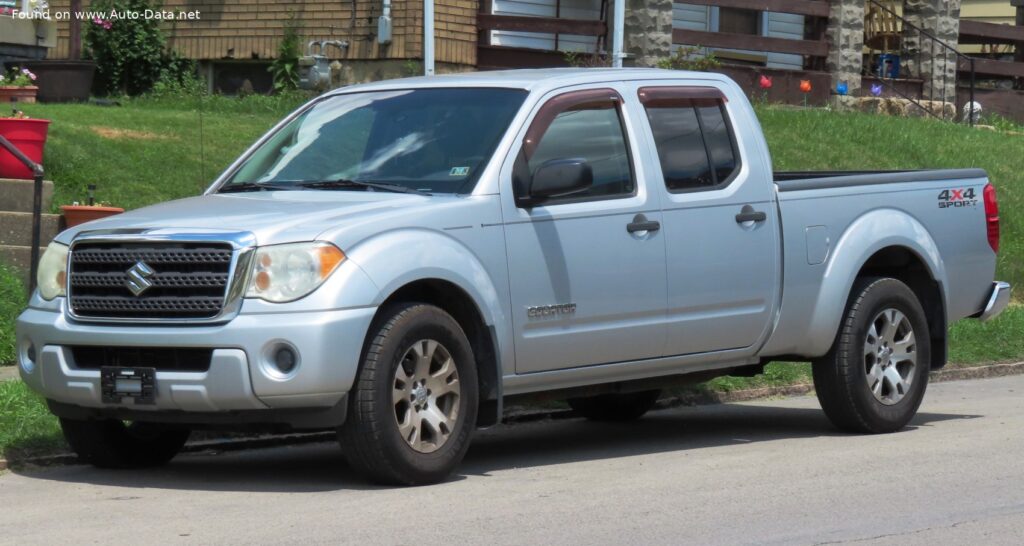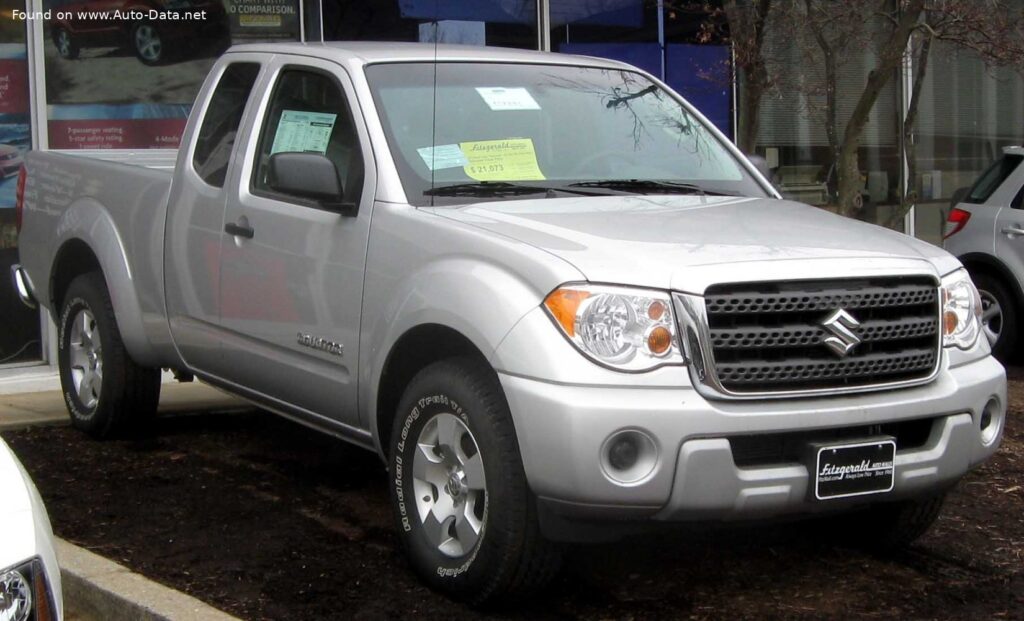
The Suzuki Equator Extended Cab 2.5 (152 hp) Automatic, produced between 2008 and 2012, was a mid-size pickup truck offered by Suzuki in the North American market. It represented Suzuki’s attempt to gain a foothold in the competitive pickup truck segment, leveraging a partnership with Nissan. The Equator was based on the Nissan Frontier, offering a similar platform but with Suzuki branding and unique styling elements. The 2.5-liter engine paired with an automatic transmission represented a core trim level, positioned as a balance between affordability and capability within the Equator lineup. It served as a step up from potential base models (if offered) and sat below any potential higher-output engine options.
Suzuki Equator 2.5L Automatic: Powertrain & Engine Architecture
The heart of the Equator Extended Cab 2.5 Automatic is the QR25DE 2.5-liter inline-four cylinder gasoline engine. This engine was sourced directly from Nissan and is also found in various Nissan vehicles of the same era, including the Frontier and Altima. The QR25DE is a naturally aspirated engine, meaning it does not utilize a turbocharger or supercharger to force air into the cylinders. It features multi-port fuel injection, delivering fuel directly into the intake ports just before the intake valves. This system, while not as advanced as direct injection, proved reliable and relatively efficient for its time.
The engine utilizes a double overhead camshaft (DOHC) valvetrain with variable valve timing (VVT) on the intake camshaft. This VVT system adjusts the timing of the intake valves based on engine speed and load, optimizing performance and fuel efficiency. The engine’s bore measures 89 mm (3.5 inches) and the piston stroke is 100 mm (3.94 inches), resulting in a displacement of 2488 cm³ (151.83 cubic inches). The engine produces 152 horsepower at 5200 rpm and 232 Nm (171.11 lb-ft) of torque at 4400 rpm.
The Equator 2.5 Automatic was equipped with a 5-speed automatic transmission. This transmission was also sourced from Nissan and was designed to provide smooth and reliable shifting. The gear ratios were tuned to balance acceleration and fuel economy, prioritizing usability for everyday driving and light-duty hauling. While not offering the sporty responsiveness of a manual transmission, the automatic provided convenience and ease of use for a wider range of drivers.
Engine Specifications
Engine Oil Capacity: 4.6 liters (4.86 US qt | 4.05 UK qt)
Coolant Capacity: 9.4 liters (9.93 US qt | 8.27 UK qt)
Driving Characteristics
The driving experience in the Suzuki Equator 2.5 Automatic is best described as competent and practical. The 152 horsepower engine provides adequate power for everyday driving and light hauling tasks. Acceleration is not particularly brisk, but sufficient for merging onto highways and maintaining cruising speeds. The automatic transmission shifts smoothly, although it can sometimes feel hesitant when downshifting for passing maneuvers. The weight-to-power ratio of 11.3 kg/Hp translates to a noticeable lack of outright performance, especially when compared to more powerful pickup trucks.
The rear-wheel-drive configuration provides a traditional pickup truck feel, with a focus on durability and simplicity. The suspension is tuned for comfort, absorbing bumps and irregularities in the road reasonably well. However, the leaf spring rear suspension can feel somewhat stiff when the truck is unloaded. The steering is hydraulic, providing a decent level of feedback, but it lacks the precision of more modern steering systems. Overall, the Equator 2.5 Automatic is a comfortable and easy-to-drive pickup truck, well-suited for everyday use and light-duty work.
Equipment & Trim Levels
The Equator Extended Cab 2.5 Automatic typically came standard with features such as air conditioning, power windows and locks, and an AM/FM stereo with a CD player. The “Extended Cab” configuration added a small rear seat, increasing passenger capacity to four. Interior upholstery was typically cloth, with a durable and practical design. The dashboard layout was functional and straightforward, with easy-to-read gauges and controls.
Optional extras available for the Equator 2.5 Automatic included alloy wheels, a premium sound system, and a towing package. The towing package added a trailer hitch and upgraded cooling system, increasing the truck’s towing capacity. Some models also offered features such as cruise control and a sunroof. The specific trim levels and available options varied depending on the year and region.
Chassis & Braking
The Suzuki Equator Extended Cab 2.5 Automatic utilized a body-on-frame construction, providing a robust and durable chassis. The front suspension consisted of an independent coil spring setup with a transverse stabilizer bar, offering a comfortable ride and good handling. The rear suspension employed a rigid axle with leaf springs, providing a stable platform for hauling and towing.
Braking duties were handled by ventilated discs on all four wheels, providing adequate stopping power. The Equator was equipped with an Anti-lock Braking System (ABS) as standard, enhancing safety and control during emergency braking situations. The steering system was a rack and pinion setup with hydraulic power assist, offering a reasonable level of steering feel and responsiveness. The Equator rode on 265/70 R16 tires mounted on 16-inch wheels.
Market Reception & Comparison
The Suzuki Equator received mixed reviews from automotive critics. While praised for its affordability and practicality, it was often criticized for its lack of refinement and its relatively weak engine compared to some of its competitors. The 2.5-liter engine, while reliable, was considered underpowered by some reviewers, particularly when compared to the V6 engines offered in competing trucks like the Toyota Tacoma and Ford Ranger. Fuel economy was average for its class, with EPA estimates of 13.8 l/100 km (17 US mpg) in the city and 10.7 l/100 km (22 US mpg) on the highway.
Compared to other trims in the Equator lineup (if any were offered), the 2.5-liter automatic version represented the entry-level option, prioritizing affordability and fuel efficiency over outright performance. It appealed to buyers who needed a capable pickup truck for everyday use and light-duty tasks, but didn’t require the extra power of a larger engine. Reliability was generally considered good, thanks to the proven Nissan powertrain components.
Technical Specifications
| Body Type | Pick-up |
| Doors | 4 |
| Seats | 4 |
| Engine Type | Petrol (Gasoline) |
| Engine Displacement | 2488 cm³ (151.83 cu. in.) |
| Number of Cylinders | 4, Inline |
| Power | 152 Hp @ 5200 rpm |
| Torque | 232 Nm @ 4400 rpm (171.11 lb.-ft. @ 4400 rpm) |
| Fuel Consumption (Urban) | 13.8 l/100 km (17 US mpg) |
| Fuel Consumption (Extra Urban) | 10.7 l/100 km (22 US mpg) |
| Transmission | 5 gears, automatic transmission |
| Drive Wheels | Rear wheel drive |
| Kerb Weight | 1724 kg (3800.77 lbs.) |
| Max. Weight | 2125 kg (4684.82 lbs.) |
| Max Load | 401 kg (884.05 lbs.) |
| Fuel Tank Capacity | 80 l (21.13 US gal | 17.6 UK gal) |
| Length | 5248 mm (206.61 in.) |
| Width | 1849 mm (72.8 in.) |
| Height | 1745 mm (68.7 in.) |
| Wheelbase | 3198 mm (125.91 in.) |
Legacy
The Suzuki Equator, while a relatively short-lived model, has established a modest following among pickup truck enthusiasts. The QR25DE engine is known for its reliability and durability, and the 5-speed automatic transmission has also proven to be dependable. In the used car market, the Equator 2.5 Automatic is often available at affordable prices, making it an attractive option for buyers seeking a budget-friendly pickup truck. However, potential buyers should be aware of the truck’s limited power and its relatively basic features. Overall, the Equator 2.5 Automatic remains a viable option for those seeking a simple, reliable, and affordable pickup truck for everyday use.