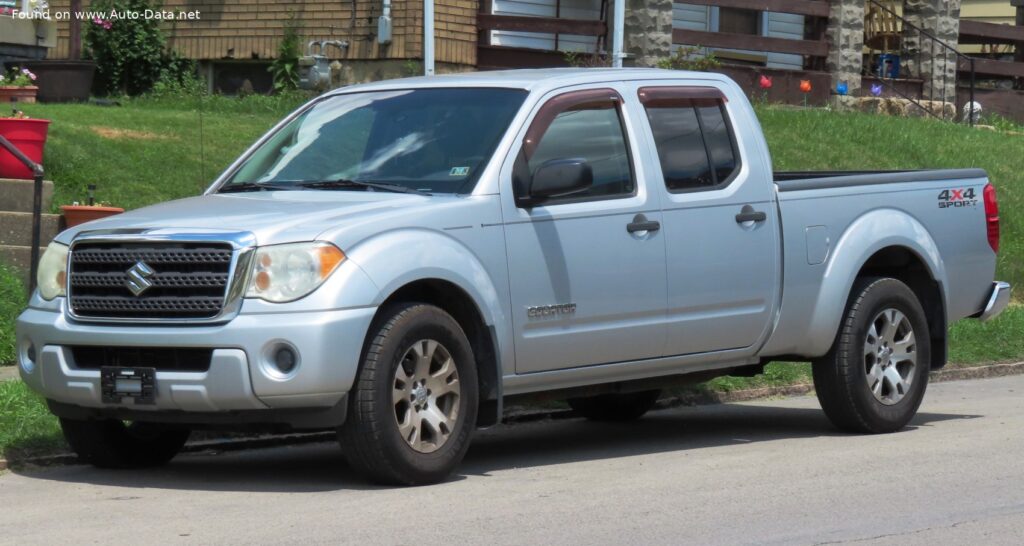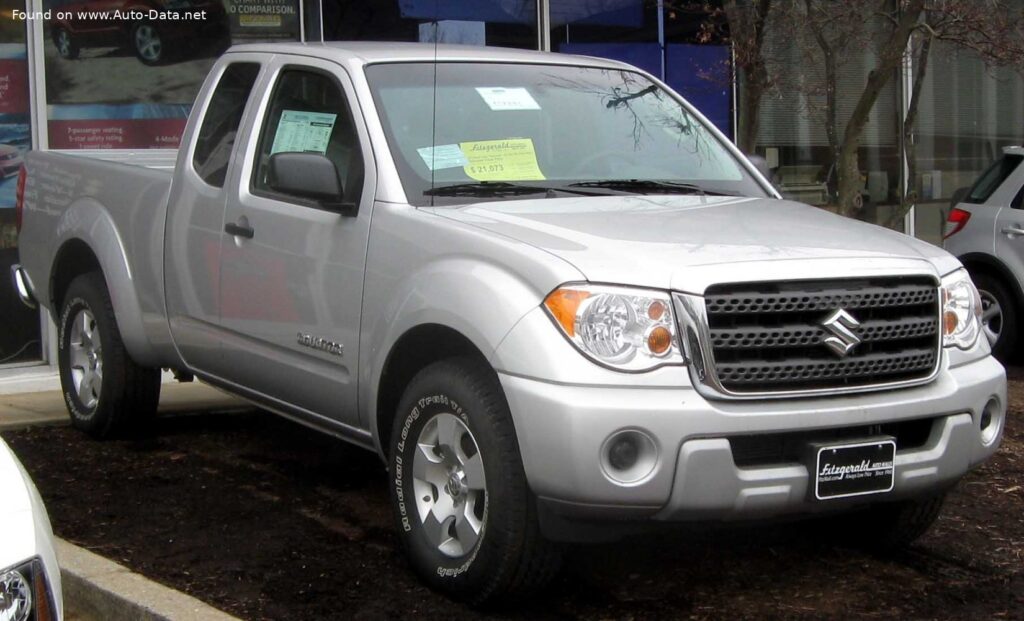
The Suzuki Equator Extended Cab 4.0 V6 4×4 Automatic was a mid-size pickup truck produced by Suzuki from 2008 to 2012. It represented Suzuki’s entry into the competitive North American pickup truck market, leveraging a partnership with Nissan. The Equator was essentially a rebadged Nissan Frontier, offering a blend of Japanese reliability and American truck capability. The Extended Cab configuration, paired with the 4.0-liter V6 engine and automatic transmission, positioned the Equator as a versatile option for both work and recreational use, appealing to buyers needing more passenger space than a standard cab but not requiring the full size of a crew cab.
Suzuki Equator Extended Cab: Overview and Positioning
The Suzuki Equator was introduced as a response to the growing demand for compact and mid-size pickup trucks in the United States. Suzuki aimed to capitalize on its reputation for building reliable and affordable vehicles. The Extended Cab model offered a compromise between the single-cab work truck and the larger crew-cab family hauler. It featured rear-hinged rear doors and a small rear seating area, suitable for occasional passengers. The 4.0-liter V6 engine and automatic transmission combination was a mid-range offering within the Equator lineup, slotting above the base 2.5-liter four-cylinder engine but below any potential future performance-oriented trims that never materialized. This configuration was designed to provide a balance of power, fuel economy, and ease of use for a broad range of customers.
Powertrain & Engine Architecture
The heart of the Equator Extended Cab 4.0 V6 4×4 Automatic is Nissan’s VQ40DE 4.0-liter V6 engine. This engine is a 60-degree V-engine with an aluminum alloy block and cylinder heads. It produces 261 horsepower at 5600 rpm and 381 Nm (281.01 lb-ft) of torque at 4000 rpm. The engine utilizes a multi-port fuel injection system and a double overhead camshaft (DOHC) valvetrain with variable valve timing (VVT) to optimize performance and efficiency. The VQ40DE is known for its smooth operation and relatively robust design.
The engine is mated to a 5-speed automatic transmission. This transmission is electronically controlled and designed to provide smooth and responsive shifting. The automatic transmission was chosen to appeal to a wider audience, offering convenience and ease of use, particularly for drivers who preferred not to operate a manual transmission. The transmission features standard overdrive and tow/haul modes to enhance performance when towing or carrying heavy loads. The drivetrain is a part-time four-wheel-drive system, allowing the driver to switch between two-wheel drive (2WD) and four-wheel drive (4WD) modes as needed. The 4WD system utilizes an electronically controlled clutch to engage the front wheels when traction is lost.
Driving Characteristics
The Equator Extended Cab 4.0 V6 4×4 Automatic delivers adequate performance for everyday driving and light to moderate towing. The 261 horsepower and 281 lb-ft of torque provide sufficient power for merging onto highways and climbing hills, even when carrying a load. However, it’s not a particularly sporty truck; acceleration is respectable but not exhilarating. The 5-speed automatic transmission generally shifts smoothly, but can sometimes feel hesitant during quick acceleration. Compared to the base 2.5-liter four-cylinder engine, the V6 offers a significant improvement in power and responsiveness. The automatic transmission, while convenient, doesn’t offer the same level of control as a manual transmission. The 4WD system provides enhanced traction in slippery conditions, making the Equator capable of handling moderate off-road terrain. The ride quality is typical for a body-on-frame pickup truck – firm but generally comfortable.
Equipment & Trim Levels
The Equator Extended Cab 4.0 V6 4×4 Automatic typically came standard with features such as air conditioning, power windows and locks, a CD player with auxiliary input, and a basic instrument cluster. Safety features included anti-lock brakes (ABS) and front airbags. The interior upholstery was typically cloth, with a relatively simple and functional design. Optional extras included a premium audio system, alloy wheels, a sunroof, and a navigation system. The Extended Cab configuration added rear seats, although they were relatively small and best suited for children or short trips. The dashboard layout was similar to that of the Nissan Frontier, with easy-to-read gauges and logically placed controls.
Chassis & Braking
The Suzuki Equator utilized a traditional body-on-frame construction, providing a robust and durable platform. The front suspension consisted of independent coil springs with a transverse stabilizer bar, while the rear suspension featured a rigid axle with leaf springs. This suspension setup was designed to provide a balance of ride comfort and load-carrying capacity. The braking system consisted of ventilated discs on all four wheels, providing adequate stopping power. The ABS system helped to prevent wheel lockup during hard braking, enhancing stability and control. The steering system was a hydraulic rack-and-pinion setup, offering responsive and precise steering feel. The Equator rode on 17-inch wheels with 265/65 R17 tires, providing a good balance of on-road and off-road performance.
Market Reception & Comparison
The Suzuki Equator received mixed reviews from automotive critics. While the V6 engine was generally praised for its power and smoothness, some reviewers criticized the truck’s interior quality and overall refinement compared to competitors like the Toyota Tacoma and Ford Ranger. Fuel economy was also a concern, with the Equator achieving approximately 15-16 mpg in the city and 19-20 mpg on the highway. Compared to the base 2.5-liter four-cylinder Equator, the V6 offered a significant improvement in performance, but at the cost of fuel economy. The Equator’s reliability was generally considered to be good, benefiting from Nissan’s engineering and manufacturing expertise. However, Suzuki’s limited dealer network and relatively low brand recognition hindered its sales success.
Technical Specifications
| Engine Model/Code | VQ40DE |
| Engine Displacement | 3954 cm3 (241.29 cu. in.) |
| Number of Cylinders | 6 |
| Engine Configuration | V-engine |
| Cylinder Bore | 95.5 mm (3.76 in.) |
| Piston Stroke | 92 mm (3.62 in.) |
| Compression Ratio | 9.7:1 |
| Power | 261 Hp @ 5600 rpm |
| Torque | 381 Nm @ 4000 rpm (281.01 lb.-ft. @ 4000 rpm) |
| Fuel Type | Petrol (Gasoline) |
| Fuel Injection System | Multi-port manifold injection |
| Valvetrain | DOHC, VVT |
| Transmission | 5-speed automatic |
| Drivetrain | All wheel drive (4×4) |
| Kerb Weight | 1948 kg (4294.6 lbs.) |
| Max. Weight | 2580 kg (5687.93 lbs.) |
| Fuel Tank Capacity | 80 l (21.13 US gal | 17.6 UK gal) |
| Length | 5248 mm (206.61 in.) |
| Width | 1849 mm (72.8 in.) |
| Height | 1770 mm (69.69 in.) |
Legacy
The Suzuki Equator, while a relatively short-lived model, offered a compelling alternative in the mid-size pickup truck segment. The V6 engine and automatic transmission combination proved to be a reliable and capable powertrain. Today, used Equators are relatively affordable and can be a good value for buyers seeking a practical and durable truck. The VQ40DE engine is known for its longevity, and with proper maintenance, it can provide many years of reliable service. However, potential buyers should be aware of the limited availability of Suzuki parts and service, as the brand has since withdrawn from the US market. Despite its limited production run, the Equator remains a testament to Suzuki’s engineering capabilities and its attempt to establish a foothold in the competitive North American truck market.