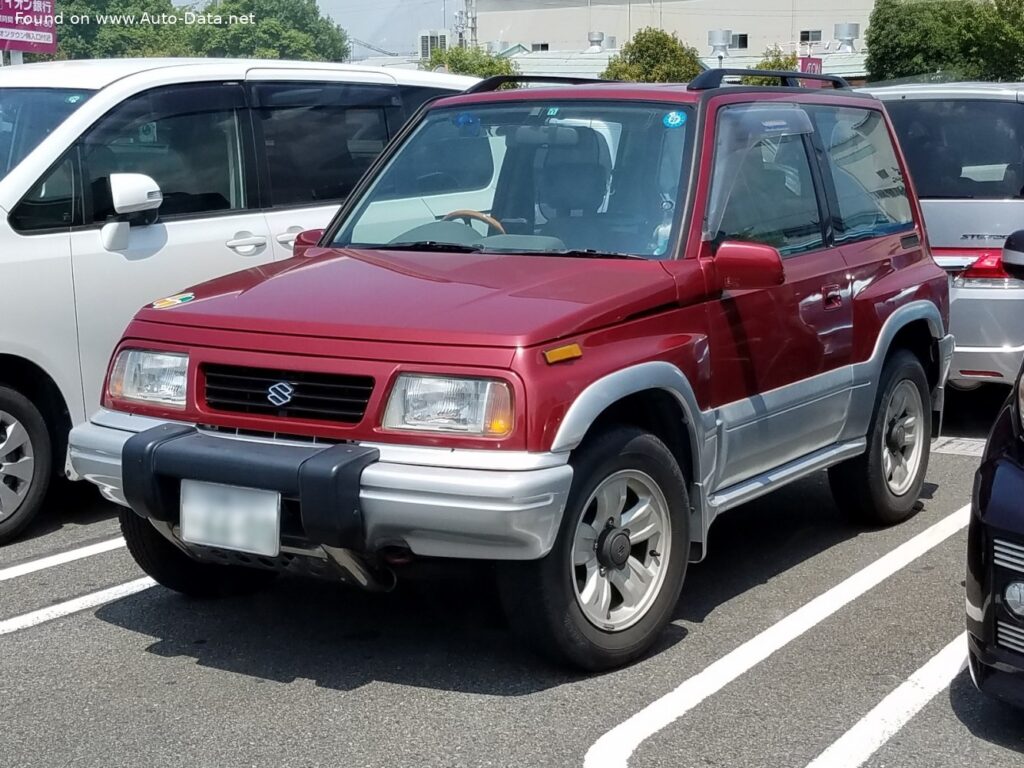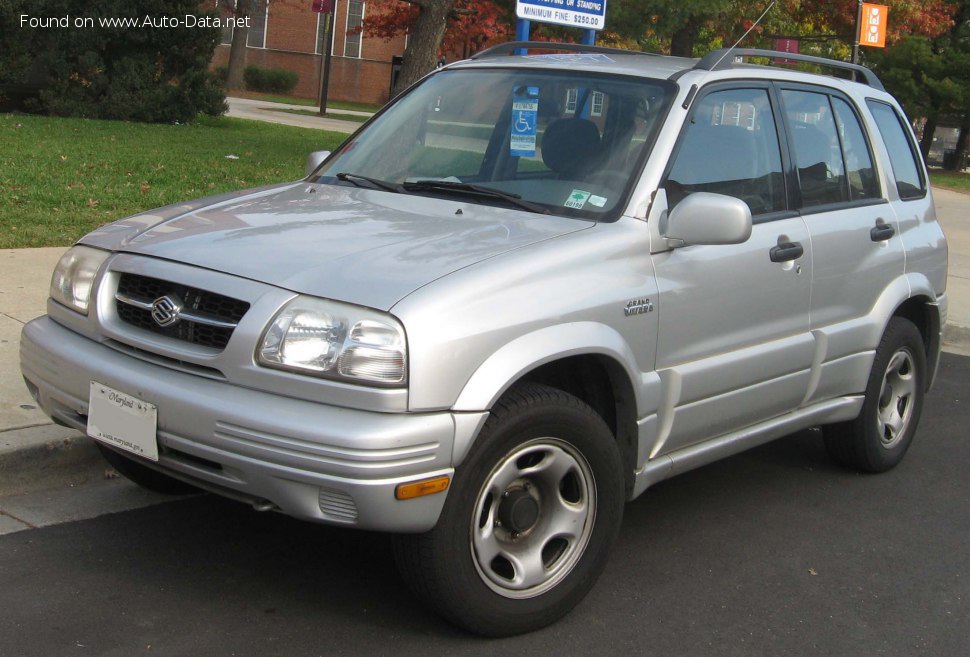
The Suzuki Escudo II 1.6i (107 hp) was a compact sport utility vehicle (SUV) produced between 1998 and 2000. It represented an entry-level offering within the broader Escudo II range, which spanned from 1997 to 2000. This variant, powered by the G16A engine and typically paired with either a 5-speed manual or a 4-speed automatic transmission, aimed to provide affordable and practical transportation within the growing SUV market. The Escudo II, known as the Vitara in some markets, was built on Suzuki’s robust ladder-frame chassis, offering a blend of off-road capability and on-road comfort. The 1.6i model was positioned as the most economical option, appealing to buyers prioritizing fuel efficiency and lower purchase price over outright performance.
Suzuki Escudo II 1.6i: Overview and Positioning
The Escudo II, internally designated as the TA01 series, was a significant update to the original Escudo. The 1.6i variant occupied the base trim level, serving as the gateway to the Escudo II lineup. Above it sat models equipped with the 1.8-liter engine, and in some markets, a 2.0-liter V6 was also available. The 1.6i was targeted towards buyers who needed the utility of an SUV – increased ground clearance, available four-wheel drive – but didn’t require the power or features of the more expensive trims. It was a popular choice for families and individuals seeking a versatile vehicle for everyday use and occasional off-road excursions.
Powertrain & Engine Architecture
The heart of the Escudo II 1.6i is the G16A engine, a 1.6-liter (1590 cc) inline-four cylinder gasoline engine. This engine utilizes a naturally aspirated configuration and a multi-port fuel injection system. The G16A is known for its relative simplicity and durability, though it isn’t a particularly high-performance unit. The engine’s bore measures 75mm, and its stroke is 90mm, resulting in a compression ratio of 9.5:1. The valvetrain employs a single overhead camshaft (OHC) design, operating four valves per cylinder. This configuration contributes to reasonable power output and fuel efficiency for its time.
The automatic transmission offered with the 1.6i was a four-speed unit. While not as sophisticated as modern automatic transmissions, it provided convenient operation for urban driving and highway cruising. The transmission’s gear ratios were optimized for fuel economy and smooth acceleration, rather than outright performance. The automatic transmission was a popular choice for buyers prioritizing ease of use over driver engagement.
Driving Characteristics
The Escudo II 1.6i, particularly when equipped with the automatic transmission, offered a comfortable but unhurried driving experience. With 107 horsepower at 6000 rpm and 144 Nm (106.21 lb-ft) of torque at 4500 rpm, acceleration was adequate for everyday driving, but passing maneuvers required planning. Compared to the 1.8-liter models, the 1.6i felt noticeably slower, especially when fully loaded or climbing hills. The automatic transmission’s shift points were programmed for fuel efficiency, which sometimes resulted in the engine feeling strained during acceleration. However, the engine proved to be relatively smooth and refined for its class.
The Escudo II’s four-wheel-drive system, when equipped, enhanced its capabilities in slippery conditions and on unpaved roads. The system typically offered selectable 2H (two-wheel drive), 4H (four-wheel drive high range), and 4L (four-wheel drive low range) modes, providing versatility for various terrains. The 1.6i’s lighter weight compared to the larger-engined models contributed to slightly better fuel economy and improved handling on paved roads.
Equipment & Trim Levels
The Escudo II 1.6i typically came standard with features such as power steering, air conditioning, and a basic audio system. Interior upholstery was usually cloth, and the dashboard featured a functional but relatively simple design. Depending on the market and optional packages, features like power windows, power door locks, and alloy wheels could be added. The base trim level prioritized practicality and affordability, so luxury features were generally limited. Safety equipment included seatbelts for all occupants, but airbags were not standard on all models.
Optional extras often included a sunroof, upgraded audio systems, and a rear cargo cover. Some models also offered a limited-slip differential for improved off-road traction. The availability of these options varied depending on the region and the specific year of production.
Chassis & Braking
The Escudo II utilized a traditional body-on-frame construction, providing a robust and durable platform. The suspension consisted of coil springs and shock absorbers, with an independent front suspension and a rigid axle rear suspension. The rear axle configuration varied depending on the model and market; some versions featured drum brakes, while others were equipped with disc brakes. The 1.6i models generally had smaller diameter wheels and tires compared to the higher-spec trims.
The braking system typically consisted of ventilated disc brakes on the front wheels and either disc or drum brakes on the rear wheels. The braking performance was adequate for the vehicle’s weight and power, but it wasn’t particularly sporty. A stabilizer bar was fitted to the front suspension to reduce body roll during cornering.
Market Reception & Comparison
The Suzuki Escudo II 1.6i was generally well-received as an affordable and practical SUV. Critics praised its rugged construction, available four-wheel drive, and reasonable fuel economy. However, the 1.6-liter engine was often criticized for being underpowered, especially when compared to the larger-engined models. Compared to competitors like the Honda CR-V and Toyota RAV4, the Escudo II offered a more traditional off-road focused approach, while the Honda and Toyota leaned more towards on-road comfort and refinement.
In terms of reliability, the G16A engine proved to be relatively dependable, although regular maintenance was essential. The automatic transmission, while generally reliable, could be prone to wear and tear if not properly serviced. Fuel economy was a strong point for the 1.6i, typically achieving around 25-30 mpg in mixed driving conditions.
Technical Specifications
| Engine Type | Inline-4, Gasoline |
| Engine Displacement | 1590 cc (97.03 cu in) |
| Engine Code | G16A |
| Power Output | 107 hp @ 6000 rpm |
| Torque Output | 144 Nm (106.21 lb-ft) @ 4500 rpm |
| Compression Ratio | 9.5:1 |
| Fuel Injection | Multi-port |
| Valvetrain | OHC, 4 valves per cylinder |
| Transmission | 4-speed Automatic (available with 5-speed Manual) |
| Drivetrain | Rear-wheel drive or Four-wheel drive (selectable) |
| Curb Weight | Approximately 1,300 – 1,400 kg (2,866 – 3,086 lbs) |
| Fuel Capacity | 55 liters (14.5 US gallons) |
| Length | 4,000 mm (157.5 in) |
| Width | 1,695 mm (66.7 in) |
| Height | 1,725 mm (67.9 in) |
Legacy
The Suzuki Escudo II 1.6i remains a relatively affordable and accessible SUV in the used car market. The G16A engine is known for its durability, and parts availability is generally good. However, potential buyers should be aware of the engine’s limited power output and the potential for wear and tear on the automatic transmission. The Escudo II’s body-on-frame construction provides a robust and durable platform, but it can also contribute to a less refined ride compared to more modern unibody SUVs. Despite its age, the Escudo II 1.6i continues to appeal to buyers seeking a practical and capable SUV for everyday use and occasional off-road adventures.
The Escudo II, and the 1.6i variant specifically, represents a transitional period in SUV design, bridging the gap between traditional, rugged off-roaders and the more car-like crossovers that would dominate the market in later years. Its simplicity, durability, and affordability have ensured its continued presence on roads around the world.