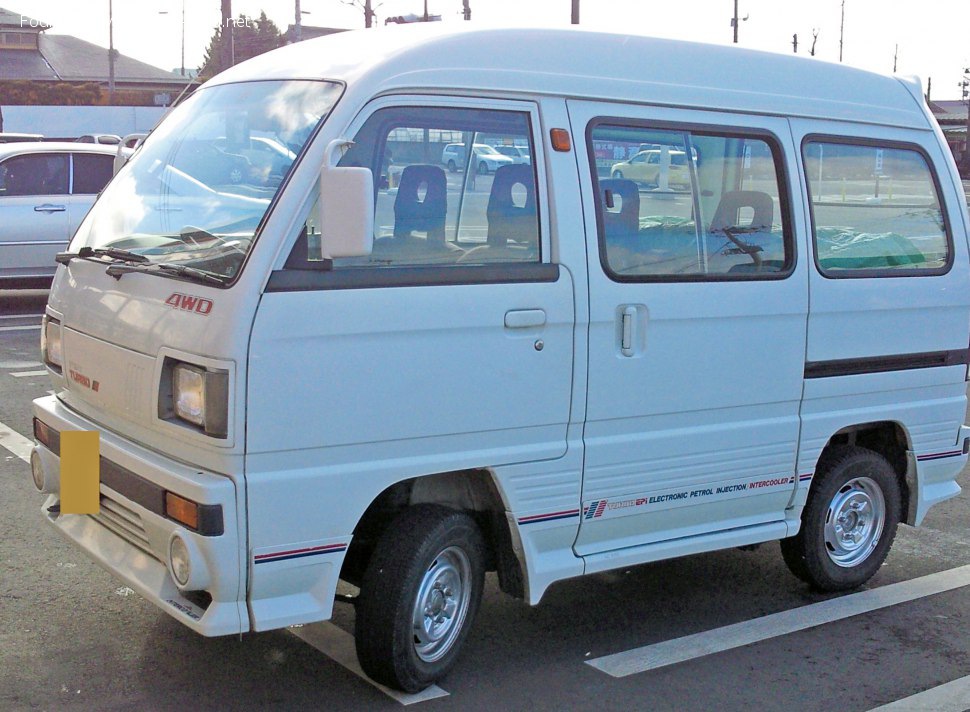
The Suzuki Every 1.3 i 16V, producing 86 horsepower, was a key variant of the first-generation Suzuki Every, manufactured between 1985 and 1989. This model occupied a significant position within the Every lineup as a practical and affordable people-carrier, aimed at families and commercial users needing a versatile, compact minivan. The first-generation Every (designated as the PA series) was a departure for Suzuki, moving away from kei car offerings to a more conventionally sized, yet still compact, minivan designed to maximize interior space and utility. This 1.3L engine and 4-speed automatic transmission combination represented a balance between affordability and convenience, making it a popular choice in the Japanese domestic market.
The 1.3 i 16V Powertrain & Engine Architecture
The heart of the Suzuki Every 1.3 i 16V is the G13B inline-four cylinder engine. This 1299cc (79.27 cubic inches) engine utilizes a naturally aspirated configuration and a multi-port fuel injection system. The “16V” designation indicates the engine features four valves per cylinder, contributing to improved breathing and power output compared to earlier two-valve designs. The engine’s bore measures 74mm (2.91 inches) and the stroke is 75.5mm (2.97 inches), resulting in a compression ratio of 9.5:1. The overhead camshaft (OHC) valvetrain design simplifies the engine’s head, reducing weight and complexity.
The G13B engine produces 86 hp at 6000 rpm and 115 Nm (84.82 lb-ft) of torque at 3000 rpm. This power is delivered to the rear wheels via a four-speed automatic transmission. This transmission was chosen for its ease of use, particularly in urban environments, and to broaden the appeal of the Every to drivers not comfortable with a manual gearbox. The automatic transmission’s gear ratios were tuned for practicality and fuel efficiency rather than outright performance. The engine requires 3.5 liters (3.7 US quarts or 3.08 UK quarts) of engine oil, and the manufacturer’s specified oil type is crucial for maintaining engine longevity.
Transmission Details
The four-speed automatic transmission used in the Every 1.3 i 16V is a conventional hydraulic automatic. While not known for its cutting-edge technology, it provided smooth and reliable operation for its time. The gear ratios were optimized for everyday driving, prioritizing acceleration from a standstill and maintaining reasonable cruising speeds. The transmission lacks modern features like overdrive or selectable driving modes.
Driving Characteristics
The Suzuki Every 1.3 i 16V with the automatic transmission offers a comfortable, if not particularly sporty, driving experience. Acceleration is adequate for typical urban and suburban driving, but the 86 hp engine and four-speed automatic transmission are not geared towards rapid acceleration or high-speed cruising. The automatic transmission contributes to a relaxed driving style, eliminating the need for constant gear changes. Compared to the manual transmission versions of the Every 1.3, the automatic sacrifices some responsiveness and fuel economy. The rear-wheel drive layout provides a stable feel, but it also means that the Every is not suited for challenging off-road conditions. The power delivery is relatively linear, with the engine providing usable torque throughout the rev range. However, the engine can feel strained when fully loaded with passengers and cargo, especially on inclines.
Equipment & Trim Levels
The Suzuki Every 1.3 i 16V was generally offered with a relatively basic level of equipment, reflecting its positioning as an affordable family vehicle. Standard features typically included cloth upholstery, a simple dashboard layout with basic instrumentation, and manually operated windows and door locks. Air conditioning was often an optional extra, as were features like a radio/cassette player. The interior was designed for practicality and durability, with hard-wearing materials used throughout. The seven-seat configuration was a key selling point, providing ample space for families. Trim levels were often limited, with most variations focusing on the inclusion of optional extras rather than significant changes to the core features. The focus was on providing a functional and reliable vehicle at a competitive price point.
Chassis & Braking
The Suzuki Every 1.3 i 16V utilizes a body-on-frame construction, which contributes to its durability and load-carrying capacity. The front suspension consists of coil springs, while the rear also employs coil springs. This suspension setup provides a comfortable ride, but it is not particularly sophisticated. The front brakes are disc brakes, offering better stopping power than the drum brakes used on the rear wheels. The inclusion of an Anti-lock Braking System (ABS) was relatively uncommon in this era, and it was likely offered as an optional extra on higher trim levels. The steering system is a rack and pinion setup with hydraulic power steering, providing relatively light and precise steering feel. The vehicle rides on 165/65 R14 tires mounted on 14-inch steel wheels.
Market Reception & Comparison
The Suzuki Every 1.3 i 16V was well-received in the Japanese market as a practical and affordable minivan. Critics praised its spacious interior, fuel efficiency, and ease of use. However, some reviewers noted its lack of performance and relatively basic equipment levels. Compared to other trims in the Every lineup, the 1.3L automatic version offered a balance between affordability and convenience. It was less expensive than the higher-powered variants, but it also provided the convenience of an automatic transmission. Fuel economy was a strong point, with the 1.3L engine achieving approximately 6.41 l/100 km (36.7 US mpg or 44.1 UK mpg) in urban driving conditions. Reliability was generally good, although regular maintenance was essential to ensure long-term durability.
Technical Specifications
| Engine Type | Inline-4, Naturally Aspirated |
| Engine Displacement | 1299 cc (79.27 cu in) |
| Bore x Stroke | 74 mm x 75.5 mm (2.91 in x 2.97 in) |
| Compression Ratio | 9.5:1 |
| Valve Configuration | 16V (4 valves/cylinder) |
| Fuel Injection | Multi-port Fuel Injection |
| Maximum Power | 86 hp @ 6000 rpm |
| Maximum Torque | 115 Nm (84.82 lb-ft) @ 3000 rpm |
| Transmission | 4-speed Automatic |
| Drivetrain | Rear-Wheel Drive |
| Kerb Weight | 1040 kg (2292.81 lbs) |
| Fuel Tank Capacity | 40 liters (10.57 US gal, 8.8 UK gal) |
| Dimensions (L x W x H) | 3710 mm x 1505 mm x 1915 mm (146.06 in x 59.25 in x 75.39 in) |
| Wheelbase | 2350 mm (92.52 in) |
| Tire Size | 165/65 R14 |
Legacy
The Suzuki Every 1.3 i 16V, while now a classic vehicle, remains relatively common on the used car market in Japan. The G13B engine is known for its durability and relatively simple maintenance requirements. However, age-related issues such as corrosion and wear and tear on rubber components are common. The automatic transmission, while reliable, may require servicing or rebuilding after many years of use. Overall, the 1.3L automatic variant of the Every remains a viable option for those seeking an affordable and practical people-carrier, particularly for those who prioritize ease of use and low running costs. Its simple design and readily available parts contribute to its continued appeal in the used car market.