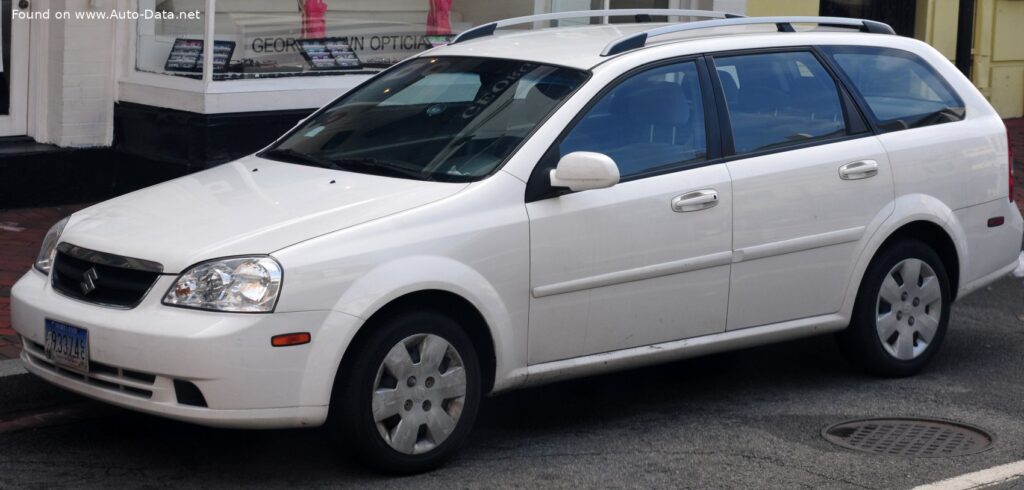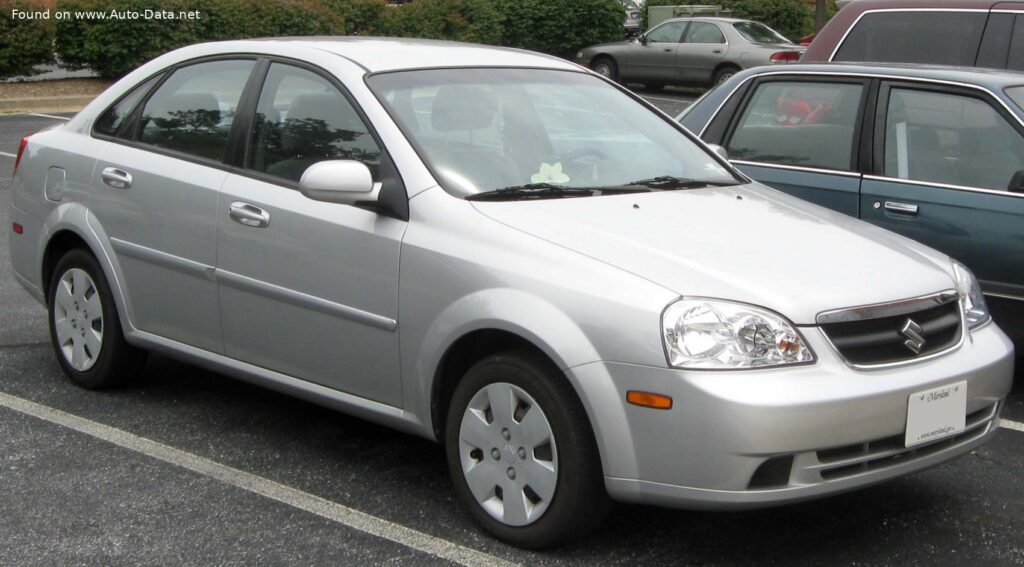
The Suzuki Forenza 2.0, produced between 2003 and 2006, was a compact sedan offered by Suzuki as an entry-level option in several markets, primarily targeting buyers seeking affordable transportation. It represented Suzuki’s attempt to establish a stronger foothold in the North American sedan segment. The Forenza was based on the General Motors Delta platform, shared with models like the Chevrolet Nubira and the Pontiac G5, reflecting a strategic partnership between the two automakers. The 2.0-liter, 120 horsepower variant occupied a middle ground in the Forenza lineup, offering a step up in performance from the base 1.8-liter engine while remaining more accessible than potential future, higher-performance trims that never materialized.
Suzuki Forenza 2.0: Powertrain & Engine Architecture
The heart of the Forenza 2.0 was the J20A inline-four cylinder engine. This 1998cc (2.0L) naturally aspirated engine produced 120 horsepower at 5600 rpm and 130 lb-ft of torque at 3800 rpm. The J20A utilized a cast iron block with an aluminum cylinder head, a common configuration for engines of this era aiming for a balance of durability and weight reduction. Fuel delivery was managed by a multi-point fuel injection system, providing adequate, though not exceptional, fuel atomization. The engine featured a single overhead camshaft (SOHC) design with two valves per cylinder. This valvetrain configuration prioritized simplicity and cost-effectiveness over high-revving performance. The engine was paired exclusively with a five-speed manual transmission during its production run. There was no automatic transmission option available for the 2.0L engine.
Engine Code & Specifics
The J20A engine code is crucial for identifying parts and service information. While generally reliable, the J20A was known to exhibit occasional issues with the crankshaft position sensor and the evaporative emissions control system. Regular maintenance, including oil changes and spark plug replacements, was essential for maintaining optimal performance and longevity. The engine’s design, while not particularly innovative, was robust and relatively easy to service, contributing to its appeal in the used car market.
Driving Characteristics
The Suzuki Forenza 2.0, with its 120 hp and five-speed manual transmission, offered adequate performance for everyday driving. Acceleration was not brisk, with 0-60 mph times estimated around 9-10 seconds. However, the engine provided sufficient power for merging onto highways and maintaining cruising speeds. The five-speed manual transmission allowed drivers to keep the engine in its optimal power band, improving responsiveness. The gear ratios were fairly conventional, prioritizing fuel economy and smooth operation over sporty performance. Compared to the base 1.8L Forenza, the 2.0L offered a noticeable improvement in acceleration and overall drivability, particularly when fully loaded with passengers or cargo. The handling was unremarkable, typical of a budget-oriented compact sedan. The suspension was tuned for comfort rather than sporty handling, resulting in a relatively soft ride.
Equipment & Trim Levels
The Forenza 2.0 was offered in a relatively limited number of trim levels, typically a base model and a slightly more equipped variant. Standard features generally included air conditioning, power steering, a basic audio system, and cloth upholstery. The more equipped trim level often added features such as power windows and locks, keyless entry, and an upgraded audio system. Interior materials were generally of acceptable quality for the price point, but lacked the refinement of more expensive competitors. Optional extras were limited, typically consisting of alloy wheels and a sunroof. The dashboard layout was functional but somewhat dated, even for the early 2000s. Safety features were also basic, with dual front airbags and ABS being the most prominent inclusions.
Chassis & Braking
The Forenza 2.0 utilized a MacPherson strut front suspension and a multi-link rear suspension. This suspension setup provided a reasonable balance of ride comfort and handling. The front brakes were ventilated discs, while the rear brakes were drum brakes. This configuration was common for vehicles in this price range during the early 2000s. ABS (Anti-lock Braking System) was standard, enhancing braking performance and stability, particularly on slippery surfaces. The steering was hydraulic power steering, providing light and easy steering effort. Tire size was typically 195/55 R15, mounted on 15-inch steel or alloy wheels.
Market Reception & Comparison
The Suzuki Forenza 2.0 received mixed reviews from automotive critics. It was generally praised for its affordability and fuel economy, but criticized for its unremarkable performance, bland styling, and basic interior. Compared to competitors like the Honda Civic, Toyota Corolla, and Mazda3, the Forenza lacked the refinement and driving dynamics of these established players. However, it offered a lower price point, making it an attractive option for budget-conscious buyers. Fuel economy was rated at approximately 26 mpg city and 31 mpg highway, which was competitive for its class. Reliability was generally considered average, with some reports of minor mechanical issues. The 2.0L engine was generally considered more reliable than the base 1.8L engine.
Technical Specifications
| Body Type | Sedan, 4 Doors, 5 Seats |
| Engine Type | Inline-4, Naturally Aspirated |
| Engine Displacement | 1998 cc (2.0 L) |
| Horsepower | 120 hp @ 5600 rpm |
| Torque | 130 lb-ft @ 3800 rpm |
| Fuel Type | Gasoline |
| Transmission | 5-Speed Manual |
| Drivetrain | Front Wheel Drive |
| Curb Weight | 2755.78 lbs (1250 kg) |
| Gross Weight | 3736.84 lbs (1695 kg) |
| Fuel Tank Capacity | 14.53 US gal (55 L) |
| Trunk Space (Minimum) | 14.3 cu. ft (405 L) |
| Trunk Space (Maximum) | 16.03 cu. ft (454 L) |
| Length | 177.17 in (4500 mm) |
| Width | 67.91 in (1725 mm) |
| Height | 56.89 in (1445 mm) |
| Wheelbase | 102.36 in (2600 mm) |
| Front Brakes | Disc |
| Rear Brakes | Drum |
Legacy
The Suzuki Forenza 2.0, while not a resounding success, remains a relatively affordable and accessible option in the used car market. The J20A engine, when properly maintained, has proven to be reasonably durable. However, potential buyers should be aware of the potential for issues with the crankshaft position sensor and the evaporative emissions control system. The lack of an automatic transmission option may limit its appeal to some buyers. Overall, the Forenza 2.0 represents a budget-friendly compact sedan that offers basic transportation at a low cost. Its association with General Motors technology provides some level of parts availability and familiarity for mechanics. While it doesn’t offer the refinement or performance of its more established competitors, it remains a viable option for those seeking an inexpensive and reliable vehicle.