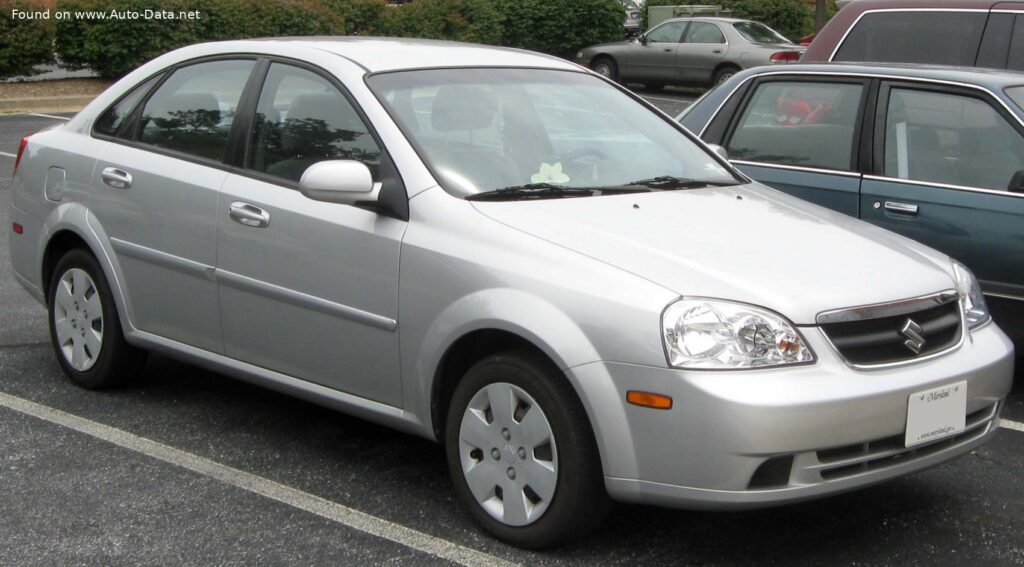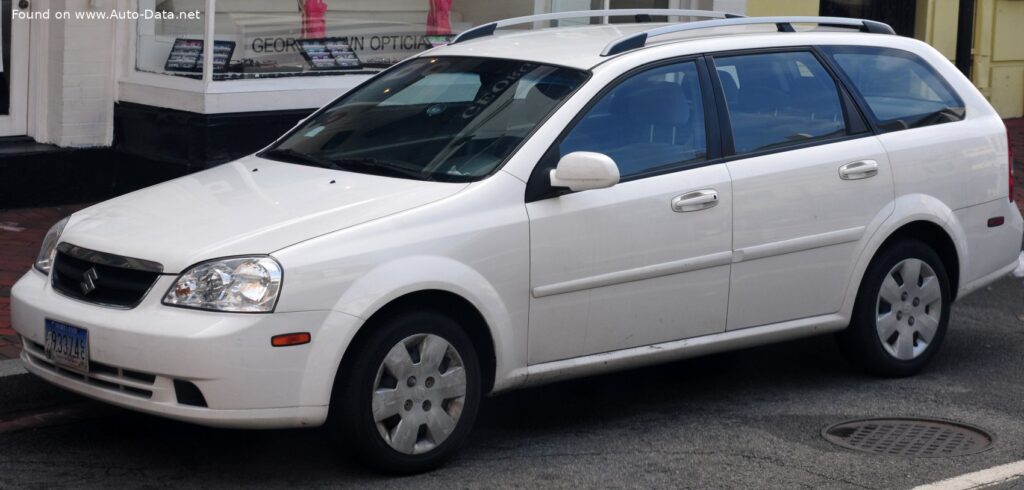
The Suzuki Forenza Wagon 2.0, produced between 2006 and 2008, represented a relatively late addition to the Forenza line, offering a station wagon (estate) body style alongside the existing sedan. This variant aimed to provide a more practical and family-oriented option within the compact car segment. The Forenza itself was a rebadged version of the Daewoo Nubira, a result of Suzuki’s acquisition of Daewoo Motors in 2002. The Wagon, specifically the 2.0-liter 127 horsepower version, occupied a mid-range position in the Forenza lineup, offering a step up in performance from the base 1.8-liter engine while remaining more affordable than potential future, higher-specification trims that never materialized. It was primarily targeted towards buyers seeking an economical and spacious vehicle for daily commuting and family duties.
Suzuki Forenza Wagon 2.0: Powertrain & Engine Architecture
The heart of the Forenza Wagon 2.0 was the J20A inline-four cylinder gasoline engine. This 1998cc (2.0L) engine was a naturally aspirated powerplant, meaning it did not utilize forced induction like a turbocharger or supercharger. It produced 127 horsepower at 5800 rpm and 122 lb-ft of torque at 3600 rpm. The engine featured a single overhead camshaft (SOHC) valvetrain with two valves per cylinder. Fuel delivery was managed by a multi-point fuel injection system, a common setup for engines of this era. The J20A engine was known for its relatively simple design, contributing to its generally acceptable reliability.
The 2.0-liter engine was paired exclusively with a 5-speed manual transmission in the Forenza Wagon. An automatic transmission was not offered with this engine configuration. The transmission was a standard front-wheel-drive setup, directing all power to the front wheels. The gear ratios were tuned for a balance between fuel efficiency and everyday drivability, rather than outright performance. First gear was relatively short for quick acceleration from a standstill, while fifth gear was geared for comfortable highway cruising. The clutch engagement was generally smooth, though not particularly sporty.
Engine Specifications
The J20A engine utilized a cast iron block and an aluminum cylinder head. This combination provided a good balance of durability and weight. The engine also featured a timing belt, which required periodic replacement as part of scheduled maintenance. The engine oil capacity was 4.0 liters (4.23 US quarts or 3.52 UK quarts), and the recommended oil specification varied depending on the climate and driving conditions. The cooling system held 7.4 liters (7.82 US quarts or 6.51 UK quarts) of coolant.
Driving Characteristics
The driving experience in the Forenza Wagon 2.0 was characterized by adequate, but not exhilarating, performance. The 127 horsepower engine provided sufficient power for typical daily driving scenarios, such as commuting and running errands. Acceleration from 0 to 60 mph was estimated to be around 9-10 seconds, which was competitive with other compact wagons of the time. However, it was noticeably slower than more powerful alternatives. The 5-speed manual transmission allowed drivers to maintain control over the engine’s powerband, and downshifting was often necessary for overtaking maneuvers or climbing hills.
The suspension was tuned for comfort rather than sporty handling. The ride quality was generally smooth, absorbing bumps and imperfections in the road reasonably well. However, the Forenza Wagon 2.0 did exhibit some body roll in corners. Steering feel was light and lacked precision, making it less engaging to drive than some of its rivals. Overall, the driving experience was geared towards practicality and ease of use, rather than driving excitement.
Equipment & Trim Levels
The Forenza Wagon 2.0 was offered with a relatively basic level of standard equipment. Standard features typically included air conditioning, power windows and locks, and an AM/FM radio with a CD player. The interior upholstery was typically cloth, and the dashboard was constructed from durable plastic materials. Safety features included dual front airbags and ABS (Anti-lock Braking System).
Optional extras were limited, but could include features such as alloy wheels, a sunroof, and an upgraded audio system. The trim levels were not extensively differentiated, with most variations stemming from the addition of optional packages. The interior design was functional but lacked the refinement of some competitors. The rear seats offered ample headroom and legroom, making the Wagon a comfortable option for passengers.
Chassis & Braking
The Forenza Wagon 2.0 utilized a front-wheel-drive chassis with an independent MacPherson strut suspension in the front and a multi-link suspension in the rear. This suspension setup provided a reasonable balance of ride comfort and handling. The front brakes were ventilated discs, while the rear brakes were solid discs. The braking system was assisted by ABS, which helped to prevent wheel lockup during hard braking. The power steering was hydraulic, providing a light and easy steering feel. The chassis was relatively lightweight, contributing to the vehicle’s fuel efficiency.
Stabilizer bars were included both front and rear, helping to reduce body roll during cornering. The tire size was typically 195/60R15, providing adequate grip in most driving conditions. The overall chassis design was conservative, prioritizing practicality and affordability over sporty handling.
Market Reception & Comparison
The Suzuki Forenza Wagon 2.0 received mixed reviews from automotive critics. It was generally praised for its spacious interior, practical wagon body style, and affordable price. However, it was criticized for its lackluster performance, unrefined interior, and bland styling. Compared to other compact wagons of the time, such as the Toyota Corolla Wagon or the Honda Civic Wagon, the Forenza Wagon 2.0 offered less refinement and performance. However, it was often more affordable than its competitors.
Fuel economy was a strong point for the Forenza Wagon 2.0, with EPA estimates of around 24 mpg city and 32 mpg highway. Reliability was generally considered to be average, with some reports of minor mechanical issues. The 2.0-liter engine was generally more reliable than the base 1.8-liter engine. Overall, the Forenza Wagon 2.0 was a practical and economical choice for buyers seeking a spacious and affordable wagon, but it lacked the refinement and performance of some of its rivals.
Technical Specifications
| Body Type | Station Wagon (Estate) |
| Engine Type | Inline-4 Cylinder, Naturally Aspirated |
| Engine Displacement | 1998cc (2.0L) |
| Horsepower | 127 hp @ 5800 rpm |
| Torque | 122 lb-ft @ 3600 rpm |
| Transmission | 5-Speed Manual |
| Drivetrain | Front-Wheel Drive |
| Front Brakes | Ventilated Discs |
| Rear Brakes | Solid Discs |
| ABS | Standard |
| Fuel Economy (EPA est.) | 24 mpg City / 32 mpg Highway |
| Engine Oil Capacity | 4.0 liters (4.23 US qt / 3.52 UK qt) |
| Coolant Capacity | 7.4 liters (7.82 US qt / 6.51 UK qt) |
Legacy
The Suzuki Forenza Wagon 2.0, while not a particularly memorable vehicle, occupies a niche in the history of compact wagons. Its relatively simple design and generally acceptable reliability have made it a reasonably affordable option in the used car market. However, parts availability can be a challenge, as Suzuki withdrew from the US market in 2012. The J20A engine, while not known for its exceptional performance, has proven to be reasonably durable with proper maintenance. Today, the Forenza Wagon 2.0 is often sought after by budget-conscious buyers looking for a practical and spacious vehicle for basic transportation. Its lack of advanced features and relatively low resale value make it an attractive option for those who prioritize affordability over prestige.
The Forenza Wagon, and the Forenza line as a whole, represents a transitional period for Suzuki in the US market. It was an attempt to establish a foothold in the competitive compact car segment, but ultimately failed to gain significant market share. Despite its shortcomings, the Forenza Wagon 2.0 remains a testament to Suzuki’s commitment to providing affordable and practical transportation options.