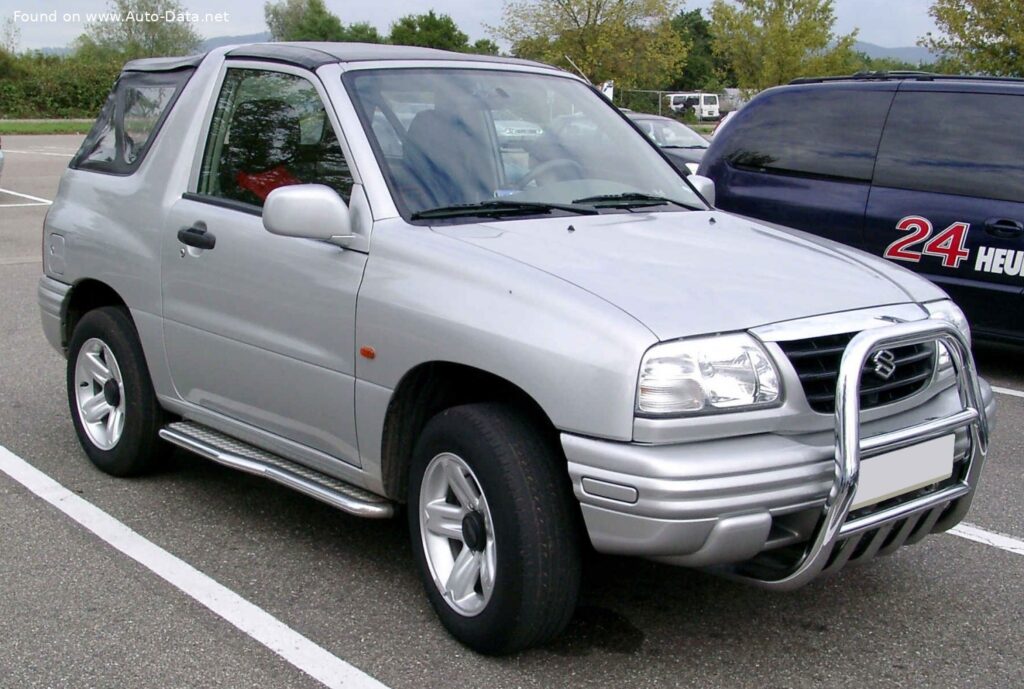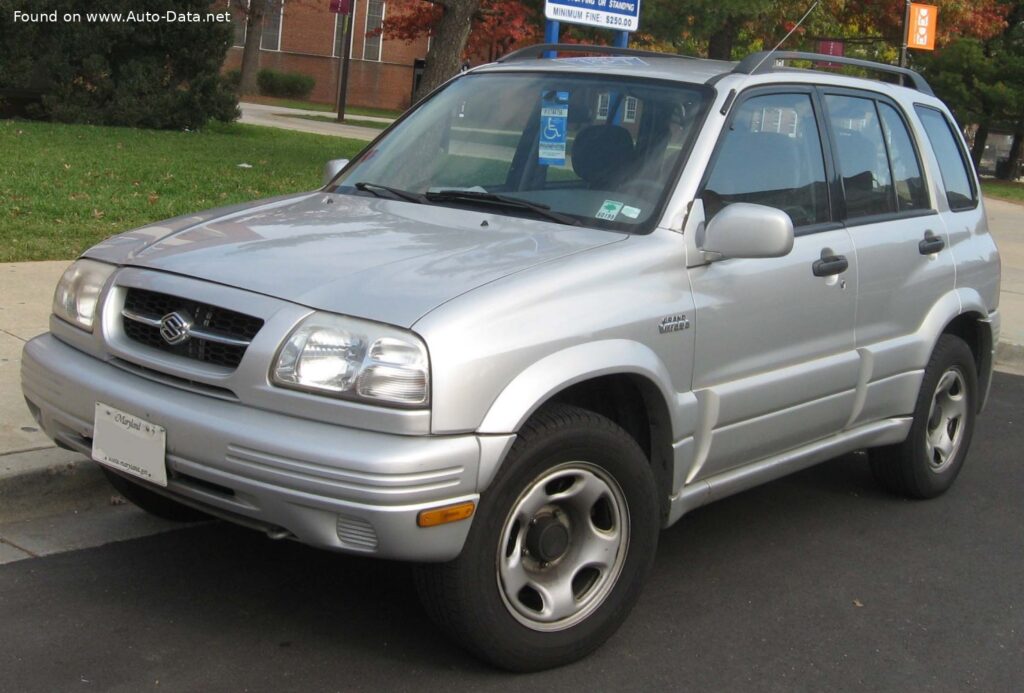
The Suzuki Grand Vitara (FT, GT) 1.6 i 16V 3-door, produced between 1997 and 2005, represented an entry point into the second generation of Suzuki’s popular compact SUV. This variant, powered by the G16B engine and equipped with a 5-speed manual transmission, was positioned as a more affordable and accessible option within the Grand Vitara lineup, appealing to buyers prioritizing practicality and off-road capability over outright performance. It served as a counterpoint to the more powerful and often more expensive 2.0L and 2.5L engine options available during the same period. The FT/GT series marked a significant shift for the Grand Vitara, moving to a fully independent suspension and offering a more refined driving experience compared to its predecessor.
Powertrain & Engine Architecture
The heart of the Grand Vitara 1.6 i 16V is the G16B inline-four cylinder engine. This 1.6-liter (1590 cm3 or 97.03 cu. in.) engine utilizes a naturally aspirated configuration and a multi-port fuel injection system. The engine produces 107 horsepower (Hp) at 6000 rpm and 144 Nm (106.21 lb.-ft.) of torque at 4500 rpm. The engine features an overhead camshaft (OHC) valvetrain with four valves per cylinder, contributing to its relatively efficient operation. The compression ratio is set at 9.5:1. The G16B engine is known for its durability and relative simplicity, making it a reasonably reliable powerplant.
The 5-speed manual transmission paired with the G16B was a standard offering. While not known for particularly sporty ratios, the gearbox was robust and well-suited to the engine’s power characteristics. The transmission’s gear ratios were geared towards providing adequate acceleration and maintaining reasonable fuel economy. The Grand Vitara 1.6 i 16V featured a full-time four-wheel drive system, enhancing its off-road capabilities and providing improved traction in various conditions.
Engine Specifications
The G16B engine’s longitudinal engine layout contributed to the vehicle’s balanced handling characteristics. Engine oil capacity is 4.2 liters (4.44 US qt | 3.7 UK qt), and the recommended oil specification should be consulted in the vehicle’s owner’s manual. The cooling system requires 5.3 liters (5.6 US qt | 4.66 UK qt) of coolant.
Driving Characteristics
The 1.6L engine in the 3-door Grand Vitara delivered adequate, but not exhilarating, performance. Acceleration was modest, with a 0-60 mph time estimated to be around 12-14 seconds. The vehicle’s weight of 1200 kg (2645.55 lbs) contributed to this. The engine felt most comfortable in the mid-range, providing sufficient power for everyday driving and moderate highway cruising. Compared to the 2.0L and 2.5L variants, the 1.6L model felt noticeably less powerful, particularly when fully loaded or tackling steep inclines. However, the lower weight of the 1.6L model partially offset the power deficit, making it feel more nimble in certain situations. The manual transmission allowed for greater driver control and engagement compared to the optional automatic transmission available on other Grand Vitara trims.
The full-time four-wheel drive system provided excellent traction on loose surfaces, making the Grand Vitara 1.6 i 16V a capable off-road vehicle for its class. The suspension, while not overly sophisticated, offered a comfortable ride on paved roads and absorbed bumps reasonably well.
Equipment & Trim Levels
The Grand Vitara 1.6 i 16V 3-door typically came with a relatively basic level of standard equipment, reflecting its position as the entry-level model. Standard features generally included power steering, air conditioning (often optional), and a basic audio system. Interior upholstery was typically cloth, and the dashboard featured a functional, if somewhat utilitarian, design.
Optional extras included features such as alloy wheels, upgraded audio systems, power windows, and central locking. The 3-door configuration meant rear seat access was less convenient than in the 5-door model, and rear passenger space was somewhat limited. The focus was on providing a practical and affordable SUV, rather than a luxurious one.
Chassis & Braking
The Grand Vitara 1.6 i 16V utilized a spring strut front suspension and a coil spring rear suspension. This setup provided a good balance between ride comfort and handling. The front brakes were ventilated discs, offering good stopping power, while the rear brakes were drums. The braking system was assisted by ABS (Anti-lock braking system), enhancing safety and control during emergency braking situations. The steering system was a rack and pinion type with hydraulic power assistance, providing precise and responsive steering feel. Tire size was typically 215/65 R16, mounted on 17-inch wheel rims.
Market Reception & Comparison
The Suzuki Grand Vitara 1.6 i 16V 3-door received generally positive reviews for its affordability, off-road capability, and practicality. Critics noted that the 1.6L engine was somewhat underpowered, particularly when compared to the larger engine options. However, they also acknowledged that the 1.6L model offered a good value proposition for buyers who didn’t require maximum performance. Fuel economy was a strong point, with combined fuel consumption figures around 12 l/100 km urban, 7 l/100 km extra urban (19.6 US mpg / 23.5 UK mpg and 33.6 US mpg / 40.4 UK mpg respectively).
Compared to competitors such as the Honda CR-V and Toyota RAV4, the Grand Vitara 1.6 i 16V offered a more rugged and off-road-focused experience. The 1.6L engine generally provided comparable fuel economy to similar-sized engines in competing vehicles, but its performance was often lower. Reliability was generally considered good, with the G16B engine proving to be a durable and long-lasting powerplant.
Technical Specifications
| Brand | Suzuki |
| Model | Grand Vitara |
| Generation | Grand Vitara (FT,GT) |
| Type (Engine) | 1.6 i 16V (3 dr) (107 Hp) |
| Start of production | 1997 year |
| End of production | 2005 year |
| Powertrain Architecture | Internal Combustion engine |
| Body type | SUV |
| Seats | 4 |
| Doors | 3 |
| Fuel consumption (urban) | 12 l/100 km (19.6 US mpg) |
| Fuel consumption (extra urban) | 7 l/100 km (33.6 US mpg) |
| Fuel Type | Petrol (Gasoline) |
| Maximum speed | 150 km/h (93.21 mph) |
| Weight-to-power ratio | 11.2 kg/Hp |
| Power | 107 Hp @ 6000 rpm |
| Torque | 144 Nm @ 4500 rpm (106.21 lb.-ft. @ 4500 rpm) |
| Engine layout | Front, Longitudinal |
| Engine Model/Code | G16B |
| Engine displacement | 1590 cm3 (97.03 cu. in.) |
| Number of cylinders | 4 |
| Cylinder Bore | 75 mm (2.95 in.) |
| Piston Stroke | 90 mm (3.54 in.) |
| Compression ratio | 9.5:1 |
| Engine oil capacity | 4.2 l (4.44 US qt | 3.7 UK qt) |
| Coolant | 5.3 l (5.6 US qt | 4.66 UK qt) |
| Kerb Weight | 1200 kg (2645.55 lbs.) |
| Trunk (boot) space – minimum | 210 l (7.42 cu. ft.) |
| Trunk (boot) space – maximum | 828 l (29.24 cu. ft.) |
| Fuel tank capacity | 56 l (14.79 US gal | 12.32 UK gal) |
| Length | 3810 mm (150 in.) |
| Width | 1700 mm (66.93 in.) |
| Height | 1690 mm (66.54 in.) |
| Wheelbase | 2200 mm (86.61 in.) |
| Drive wheel | All wheel drive (4×4) |
| Number of gears and type of gearbox | 5 gears, manual transmission |
| Front brakes | Ventilated discs |
| Rear brakes | Drum |
| Tires size | 215/65 R16 |
Legacy
The Suzuki Grand Vitara 1.6 i 16V 3-door, while not the most powerful or luxurious variant, remains a popular choice in the used car market due to its affordability, reliability, and off-road capability. The G16B engine is known for its longevity, and with proper maintenance, can provide many years of reliable service. Parts availability is generally good, and the vehicle’s relatively simple mechanical design makes it relatively easy to repair. Today, these Grand Vitara models are often sought after by enthusiasts looking for a capable and affordable off-road vehicle or a practical daily driver. The 3-door configuration, while less common than the 5-door, adds a certain charm and uniqueness to the vehicle.