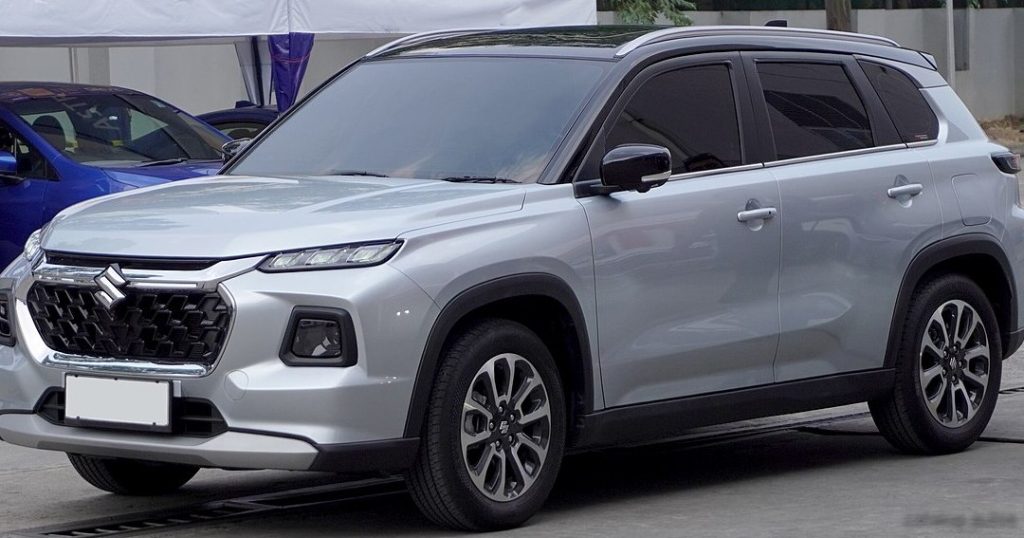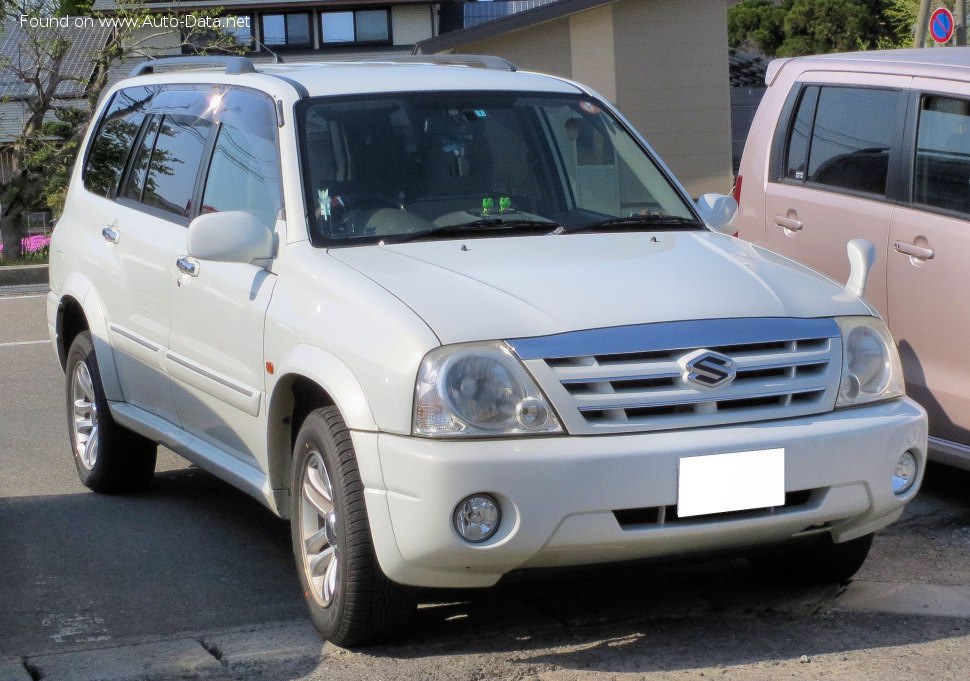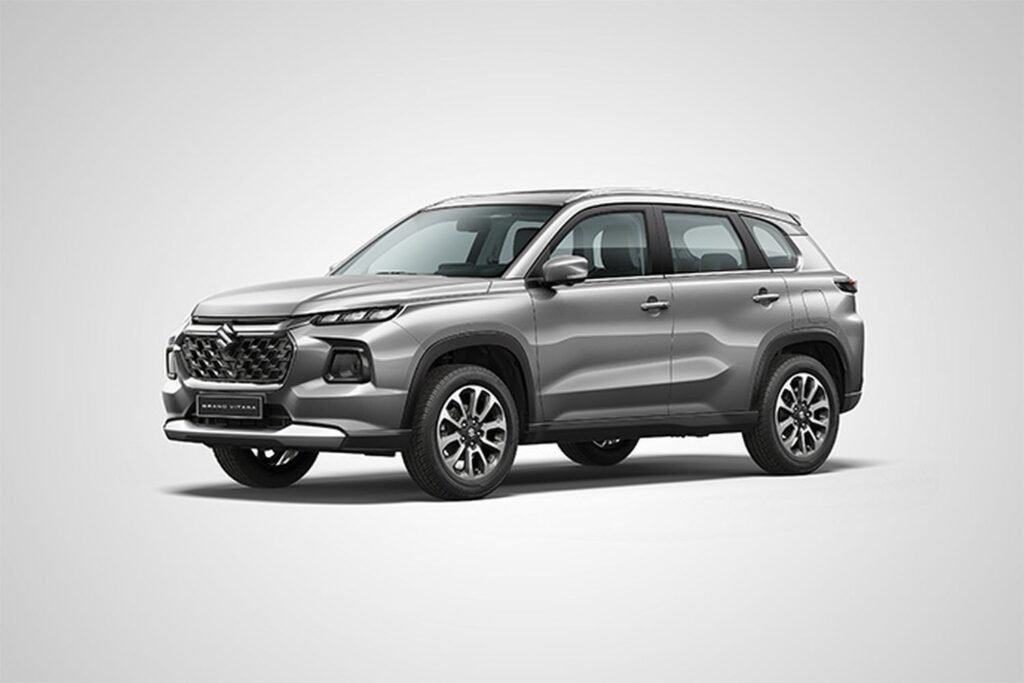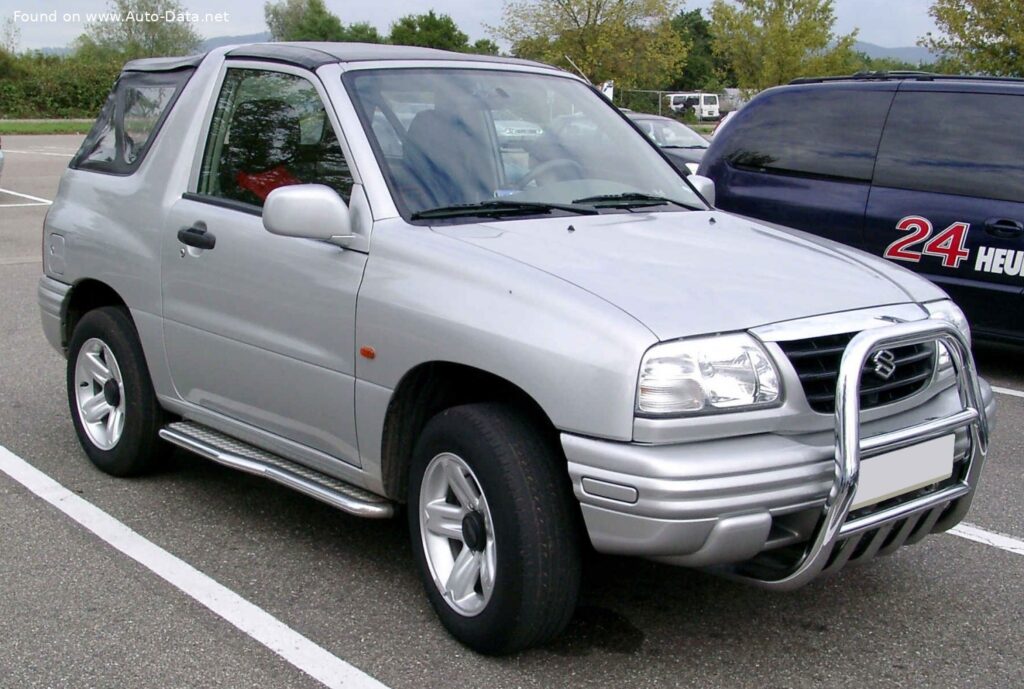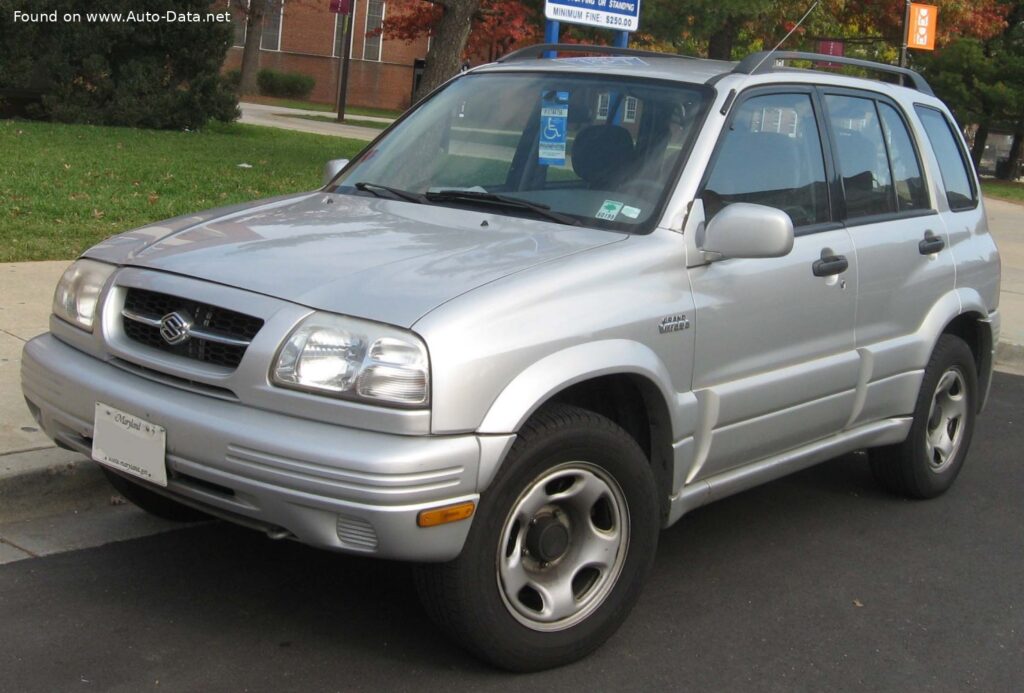
The Suzuki Grand Vitara (FT,GT) 1.6 i 16V (3 dr) (94 Hp) represents a significant chapter in the evolution of compact SUVs, particularly for the global market. Produced from 1999 to 2005, this generation of the Grand Vitara built upon Suzuki’s storied heritage in creating capable and reliable four-wheel-drive vehicles. This specific variant, with its three-door configuration and efficient 1.6-liter engine, was a popular choice in markets outside of North America, resonating with consumers seeking a versatile vehicle for both urban navigation and light off-road adventures. While larger, five-door siblings with more potent engines were more common in the United States, this particular model exemplified Suzuki’s commitment to offering a range of options tailored to diverse international needs.
The Suzuki Grand Vitara (FT,GT) 1.6 i 16V: A Compact SUV Legend
The Grand Vitara (FT,GT) generation marked a pivotal shift for Suzuki, moving beyond the utilitarian simplicity of earlier models like the Sidekick and Vitara (Escudo in Japan) to offer a more sophisticated package. The 1.6 i 16V (3 dr) (94 Hp) variant, with its emphasis on efficiency and compact dimensions, was particularly well-suited for European and Asian markets where fuel economy and nimble handling were paramount. This model continued Suzuki’s tradition of offering robust, go-anywhere vehicles, but with an added layer of comfort and modern features that appealed to a broader audience. Positioned as an entry-level offering within the Grand Vitara range, it provided a more affordable pathway to Suzuki’s 4×4 capability compared to the 2.0L and 2.5L engine options.
Powertrain & Engine Architecture
At the heart of the Suzuki Grand Vitara (FT,GT) 1.6 i 16V (3 dr) (94 Hp) was the G16B engine, a naturally aspirated 1.6-liter (1590 cm³ or 97.03 cu. in.) inline-four gasoline unit. This engine was a proven workhorse for Suzuki, known for its reliability and straightforward design. The G16B is a cast iron block engine with an aluminum cylinder head, a common configuration for Suzuki engines of this era. Equipped with a multi-point fuel injection system and 16 valves (four per cylinder), it produced a respectable 94 horsepower (hp) at 5200 rpm and 138 Nm (approximately 101.78 lb-ft) of torque, peaking at 4000 rpm. The engine utilized a single overhead camshaft (SOHC) valvetrain, contributing to its simplicity and ease of maintenance.
Power was delivered to all four wheels via a durable 5-speed manual transmission. While an automatic transmission was available in some markets, the manual was the more common pairing for this engine, particularly in Europe and Asia. The all-wheel-drive (4×4) system, a hallmark of Suzuki SUVs, employed a transfer case allowing the driver to switch between 2-wheel drive (2H), 4-wheel drive high range (4H), and 4-wheel drive low range (4L). This provided confidence on unpaved roads and in adverse weather conditions. The transfer case was typically operated via a lever located near the gear shifter.
Driving Characteristics
The 1.6L engine and manual transmission combination in the Grand Vitara (FT,GT) offered a driving experience focused on efficiency and practicality rather than outright performance. Acceleration from 0 to 60 mph took approximately 12.5 seconds, and the top speed was around 93.21 mph (150 km/h). Compared to the higher-output 2.0L and 2.5L versions of the Grand Vitara, the 1.6L felt noticeably less powerful, especially when fully loaded or tackling steep inclines. However, the engine’s torque delivery was adequate for everyday driving, and the manual transmission allowed drivers to maintain control and optimize fuel economy.
The gear ratios were tuned for a balance between acceleration and fuel efficiency. First gear was relatively short, providing good off-the-line acceleration, while fifth gear was geared for comfortable highway cruising. The 4×4 system, when engaged, added weight and slightly increased steering effort, but provided significantly improved traction on loose surfaces. The three-door configuration contributed to a more nimble and responsive feel compared to the five-door models, making it easier to maneuver in tight spaces.
Equipment & Trim Levels
The Grand Vitara (FT,GT) 1.6 i 16V (3 dr) (94 Hp) was typically offered with a relatively basic level of standard equipment, reflecting its position as an entry-level model. Standard features generally included power steering, central locking, electric windows, and an AM/FM radio. Interior upholstery was typically cloth, and the dashboard featured a functional, if somewhat spartan, design. Air conditioning was often an optional extra, as were features like alloy wheels and a CD player.
Trim levels varied depending on the market. In some regions, a single trim level was offered, while others had a choice of two or three. Higher trim levels might include features like upgraded interior trim, a sunroof, and improved audio systems. The three-door configuration generally limited rear passenger space compared to the five-door models, but the folding rear seats provided a degree of versatility for cargo hauling.
Chassis & Braking
The Grand Vitara (FT,GT) retained a robust body-on-frame chassis, a defining characteristic that differentiated it from many emerging unibody crossovers of the era. This construction provided superior durability and rigidity, essential for off-road driving and towing capabilities. The suspension setup featured spring struts at the front and coil springs with a solid axle at the rear, a configuration that balanced on-road comfort with off-road articulation. The rear solid axle contributed to the vehicle’s off-road prowess, allowing for greater wheel travel and improved traction on uneven terrain.
Braking duties were handled by ventilated discs at the front and drum brakes at the rear. While the front discs provided good stopping power, the rear drums were less effective, particularly under heavy braking. An Anti-lock Braking System (ABS) was often available as an option, enhancing safety by preventing wheel lockup during emergency stops. Hydraulic power steering, utilizing a rack and pinion system, ensured effortless steering in various conditions.
Market Reception & Comparison
The Suzuki Grand Vitara (FT,GT) 1.6 i 16V (3 dr) (94 Hp) was generally well-received in markets where fuel economy and affordability were key considerations. Critics praised its robust construction, capable 4×4 system, and surprisingly comfortable ride. However, the engine’s modest power output was often cited as a drawback, particularly when compared to larger-engined rivals. Fuel economy was a strong point, with the 1.6L model achieving around 23.3 US mpg in urban driving and 32.7 US mpg on the highway.
Compared to the 2.0L and 2.5L Grand Vitara variants, the 1.6L offered a more affordable entry point into the model range. However, it lacked the performance and refinement of its larger-engined siblings. The 1.6L was often compared to other compact SUVs like the Honda CR-V and Toyota RAV4, but the Grand Vitara’s body-on-frame construction and more rugged character set it apart from these more car-like crossovers.
Technical Specifications
| General Information | |
| Brand | Suzuki |
| Model | Grand Vitara |
| Generation | Grand Vitara (FT,GT) |
| Type (Engine) | 1.6 i 16V (3 dr) (94 Hp) |
| Start of Production | 1999 year |
| End of Production | 2005 year |
| Powertrain Architecture | Internal Combustion Engine |
| Body Type | SUV |
| Seats | 4 |
| Doors | 3 |
| Performance Specifications | |
| Fuel Consumption (Urban) | 10.1 l/100 km (23.3 US mpg) |
| Fuel Consumption (Extra Urban) | 7.2 l/100 km (32.7 US mpg) |
| Fuel Type | Petrol (Gasoline) |
| Acceleration 0 – 60 mph | 12.5 sec |
| Maximum Speed | 93.21 mph (150 km/h) |
| Weight-to-Power Ratio | 13.1 kg/Hp |
| Weight-to-Torque Ratio | 8.9 kg/Nm |
| Engine Specifications | |
| Power | 94 Hp @ 5200 rpm |
| Power per Liter | 59.1 Hp/l |
| Torque | 138 Nm (101.78 lb.-ft.) @ 4000 rpm |
| Engine Layout | Front, Longitudinal |
| Engine Model/Code | G16B |
| Engine Displacement | 1590 cm³ (97.03 cu. in.) |
| Number of Cylinders | 4 |
| Engine Configuration | Inline |
| Cylinder Bore | 75 mm (2.95 in.) |
| Piston Stroke | 90 mm (3.54 in.) |
| Compression Ratio | 9.5:1 |
| Number of Valves per Cylinder | 4 |
| Fuel Injection System | Multi-port manifold injection |
| Engine Aspiration | Naturally aspirated engine |
| Engine Oil Capacity | 4.2 l (4.44 US qt) |
| Coolant Capacity | 5.3 l (5.6 US qt) |
| Space, Volume, and Weights | |
| Kerb Weight | 1235 kg (2722.71 lbs) |
| Max. Weight | 1750 kg (3858.09 lbs) |
| Max Load | 515 kg (1135.38 lbs) |
| Trunk (Boot) Space – Minimum | 210 l (7.42 cu. ft.) |
| Trunk (Boot) Space – Maximum | 828 l (29.24 cu. ft.) |
| Fuel Tank Capacity | 56 l (14.79 US gal) |
| Dimensions | |
| Length | 3865 mm (152.17 in.) |
| Width | 1695 mm (66.73 in.) |
| Height | 1685 mm (66.34 in.) |
| Wheelbase | 2200 mm (86.61 in.) |
| Front Track | 1460 mm (57.48 in.) |
| Rear (Back) Track | 1460 mm (57.48 in.) |
| Minimum Turning Circle | 9.4 m (30.84 ft.) |
| Drivetrain, Brakes, and Suspension Specifications | |
| Drive Wheel | All-wheel drive (4×4) |
| Number of Gears and Type of Gearbox | 5 gears, manual transmission |
| Front Suspension | Spring Strut |
| Rear Suspension | Coil spring |
Legacy
The Suzuki Grand Vitara (FT,GT) 1.6 i 16V (3 dr) (94 Hp) powertrain, while not known for blistering performance, proved to be remarkably reliable. The G16B engine is generally considered a durable unit, capable of high mileage with proper maintenance. Today, these vehicles are increasingly sought after by enthusiasts and collectors, particularly those looking for a simple, affordable, and capable 4×4. Parts availability remains relatively good, and the straightforward mechanical design makes them relatively easy to maintain and repair. While rust can be an issue on older examples, well-maintained Grand Vitaras from this era continue to provide years of reliable service, cementing their place as a beloved and enduring compact SUV.