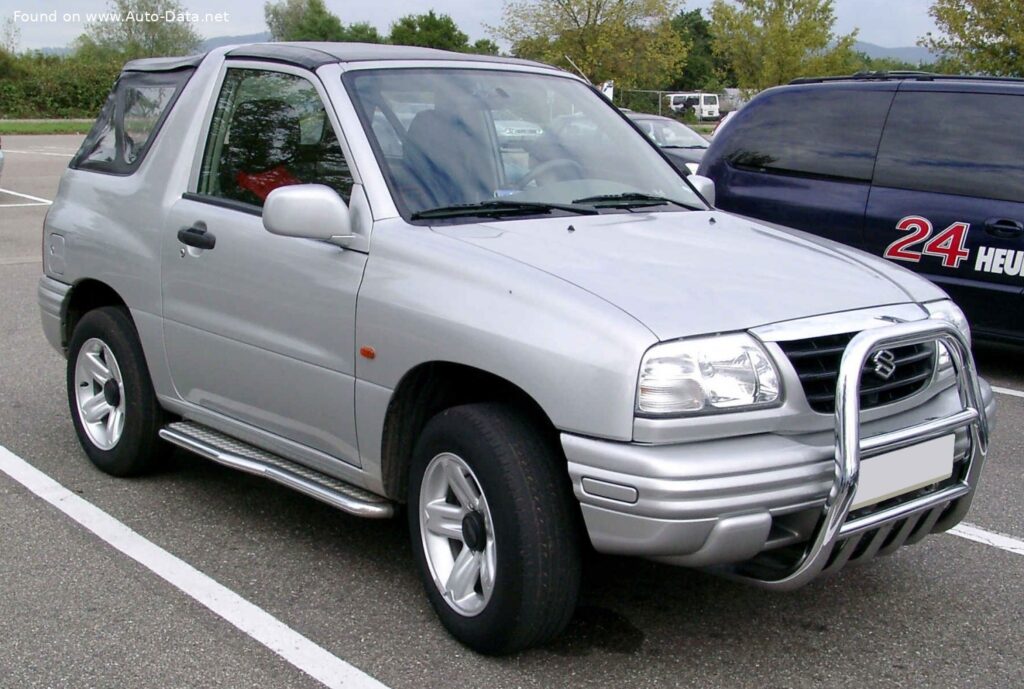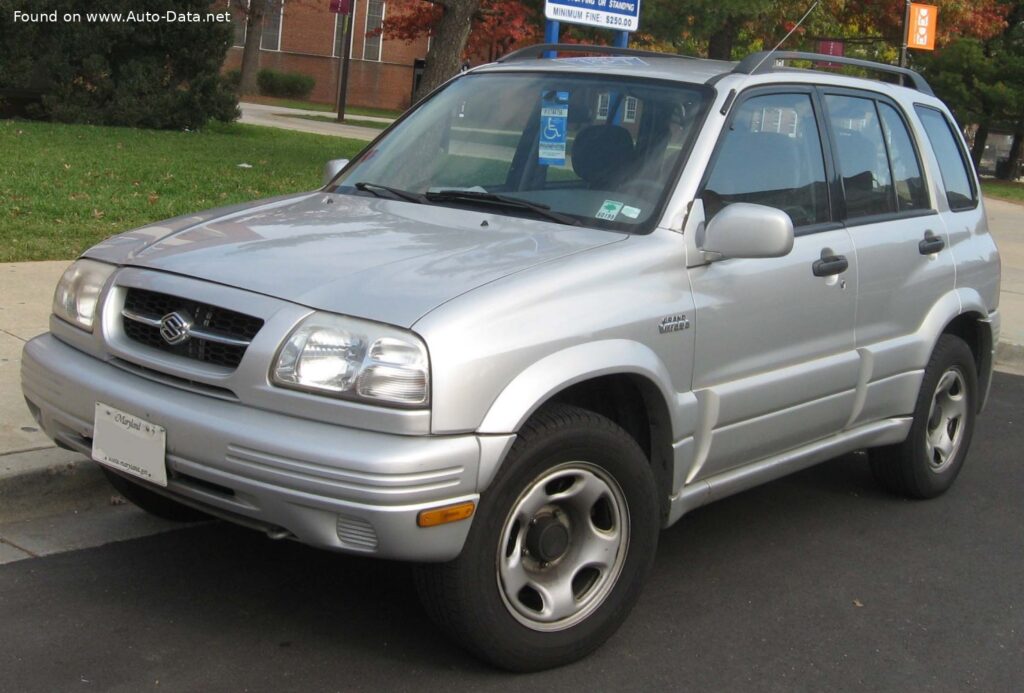
The Suzuki Grand Vitara (FT,GT) represents a significant chapter in the evolution of the compact SUV segment, particularly for Suzuki, a brand long synonymous with rugged, capable off-road vehicles. Introduced in 1999 as the second generation of Suzuki’s popular Vitara line, the FT/GT series aimed to bridge the gap between traditional body-on-frame utility vehicles and the burgeoning market for more refined, car-like SUVs. This particular iteration, the 2.0 i 16V with 128 horsepower, offered a compelling blend of compact dimensions, genuine off-road capability, and everyday usability. Produced from 1999 to 2005, this generation of the Grand Vitara solidified Suzuki’s reputation for building durable and versatile vehicles, appealing to a global audience that sought adventure without sacrificing practicality. The Grand Vitara FT/GT was built on the 1HX0/A3 platform, sharing components with other Suzuki models of the era.
Powertrain & Engine Architecture
At the heart of the 1999-2005 Suzuki Grand Vitara (FT,GT) 2.0 i 16V model was the robust J20A engine, a 2.0-liter (1998 cm3 or 121.93 cu. in.) inline-four cylinder unit. This naturally aspirated gasoline engine was designed for durability and a balanced performance profile, characteristic of Suzuki’s approach to its utility vehicles. Employing a multi-port fuel injection system and a 16-valve cylinder head (four valves per cylinder), the engine produced a respectable 128 horsepower at 6000 rpm. This power output, combined with a power-per-liter ratio of 64.1 Hp/l, was competitive for its class during its production run.
Crucially for an SUV, the engine delivered 174 Newton-meters (128.34 lb.-ft.) of torque at a relatively low 2900 rpm. This early torque peak was instrumental in providing the Grand Vitara with strong pulling power from low engine speeds, a vital attribute for both off-road maneuvers and confident acceleration in urban traffic. The engine’s front, longitudinal layout contributed to a balanced weight distribution and facilitated the integration of a capable four-wheel-drive system, which was often a key selling point for the Grand Vitara.
The J20A engine utilized a timing belt, requiring periodic replacement as part of scheduled maintenance. The fuel injection system was a conventional multi-point system, offering reliable operation and relatively straightforward servicing. The engine’s design, including an 84 mm (3.31 in.) bore and a 90 mm (3.54 in.) piston stroke, along with a 9.3:1 compression ratio, underscored its focus on reliable, everyday performance rather than high-revving sports car dynamics.
The 2.0 i 16V Grand Vitara was typically paired with a four-speed automatic transmission. This transmission, while not the most modern by today’s standards, was known for its durability and smooth operation. Gear ratios were optimized for a balance of fuel efficiency and off-road capability, with a relatively low first gear for climbing obstacles and a higher final drive ratio for highway cruising. Manual transmission options were also available, offering a more engaging driving experience and slightly improved fuel economy.
Driving Characteristics
The 2.0L 16V automatic Grand Vitara offered a comfortable and predictable driving experience. Acceleration was adequate for everyday driving, but not particularly brisk. The four-speed automatic transmission, while reliable, lacked the responsiveness of more modern transmissions with additional gears. The 0-60 mph time was estimated to be around 11-12 seconds. Compared to the manual transmission version, the automatic offered smoother shifts but at the expense of some performance and fuel economy. Compared to higher-output versions of the Grand Vitara, such as those equipped with the 2.5L V6 engine, the 2.0L automatic felt noticeably less powerful, particularly when fully loaded or tackling steep inclines.
The automatic transmission’s gear ratios were geared towards usability rather than outright speed. First gear provided ample torque for off-road situations, while higher gears allowed for comfortable highway cruising. However, the lack of overdrive could result in higher engine speeds and increased fuel consumption at sustained highway speeds. The suspension, tuned for a balance of on-road comfort and off-road capability, provided a reasonably smooth ride, although it could feel somewhat bouncy on rough surfaces.
Equipment & Trim Levels
The 2.0 i 16V Grand Vitara typically served as a mid-range trim level within the broader Grand Vitara lineup. Standard equipment generally included air conditioning, power windows, power door locks, and an AM/FM radio. Higher trim levels added features such as alloy wheels, a sunroof, upgraded audio systems, and leather upholstery. The three-door configuration often meant a slightly more spartan interior compared to the five-door models.
Interior upholstery was typically cloth, with durable and stain-resistant materials chosen to withstand the rigors of outdoor use. The dashboard layout was functional and straightforward, with easy-to-read gauges and logically placed controls. Optional extras included a CD player, cruise control, and a rear cargo cover. The three-door model’s rear seats were typically less spacious and comfortable than those found in the five-door version.
Chassis & Braking
The Suzuki Grand Vitara (FT,GT) utilized a traditional body-on-frame construction, providing a robust and durable platform for off-road driving. The suspension consisted of coil springs and shock absorbers, with independent front suspension and a solid rear axle. This setup offered a good balance of on-road comfort and off-road articulation. The front suspension featured stabilizer bars to reduce body roll during cornering.
Braking systems varied depending on the market and trim level. Many models were equipped with front disc brakes and rear drum brakes. Higher trim levels often featured disc brakes on all four wheels. Anti-lock Braking System (ABS) was a standard feature on many models, enhancing braking performance and stability, particularly on slippery surfaces. The braking system was generally considered adequate for the vehicle’s weight and performance, but lacked the stopping power of more modern braking systems.
Market Reception & Comparison
Critics generally praised the Suzuki Grand Vitara (FT,GT) for its ruggedness, off-road capability, and value for money. However, some reviewers noted that the interior was somewhat basic and that the engine lacked the refinement of some of its competitors. Fuel economy was considered reasonable for a compact SUV with four-wheel-drive capabilities, but not class-leading. Reliability was generally rated as good, with the J20A engine proving to be a durable and dependable unit.
Compared to other trims in the Grand Vitara lineup, the 2.0 i 16V automatic offered a good balance of performance and affordability. The V6 engine provided more power, but at a higher price point. The manual transmission version offered slightly better fuel economy and a more engaging driving experience, but was less convenient for some drivers. Compared to competitors like the Honda CR-V and Toyota RAV4, the Grand Vitara offered more genuine off-road capability, but lacked the refinement and fuel efficiency of those models.
Technical Specifications
| Category | Specification |
| Brand | Suzuki |
| Model | Grand Vitara |
| Generation | Grand Vitara (FT,GT) |
| Type (Engine) | 2.0 i 16V (3 dr) (128 Hp) |
| Start of Production | 1999 year |
| End of Production | 2005 year |
| Powertrain Architecture | Internal Combustion engine |
| Body type | SUV |
| Seats | 4 |
| Doors | 3 |
| Fuel consumption (economy) – urban | 13.5 l/100 km (17.4 US mpg) |
| Fuel consumption (economy) – extra urban | 8.3 l/100 km (28.3 US mpg) |
| Fuel consumption (economy) – combined | 10.2 l/100 km (23.1 US mpg) |
| Fuel Type | Petrol (Gasoline) |
| Emission standard | Euro 3 |
| Power | 128 Hp @ 6000 rpm |
| Power per liter | 64.1 Hp/l |
| Torque | 174 Nm @ 2900 rpm (128.34 lb.-ft. @ 2900 rpm) |
| Engine layout | Front, Longitudinal |
| Engine Model/Code | J20A |
| Engine displacement | 1998 cm3 (121.93 cu. in.) |
| Number of cylinders | 4 |
| Engine configuration | Inline |
| Cylinder Bore | 84 mm (3.31 in.) |
| Piston Stroke | 90 mm (3.54 in.) |
| Compression ratio | 9.3:1 |
| Number of valves per cylinder | 4 |
| Fuel injection system | Multi-port manifold injection |
| Engine aspiration | Naturally aspirated engine |
| Engine oil capacity | 5.2 l (5.49 US qt) |
| Coolant | 6.5 l (6.87 US qt) |
| Assisting systems | ABS (Anti-lock braking system) |
Legacy
The Suzuki Grand Vitara (FT,GT) 2.0 i 16V powertrain has proven to be relatively reliable over the long term. The J20A engine is known for its durability, and the four-speed automatic transmission, while not particularly sophisticated, is also generally dependable. Common issues include oil leaks and timing belt failure, but these are typically addressed with routine maintenance. Today, these models are often found in the used car market at affordable prices, making them attractive options for budget-conscious buyers seeking a capable and reliable SUV.
The Grand Vitara (FT,GT) remains a popular choice among off-road enthusiasts and those who appreciate its rugged character. Its simple design and readily available parts make it relatively easy to maintain and repair. While it may not offer the same level of refinement or fuel efficiency as more modern SUVs, its enduring appeal lies in its combination of practicality, durability, and genuine off-road capability. The 2.0L automatic version, while not the most powerful, provides a comfortable and dependable driving experience for everyday use and light off-road adventures.