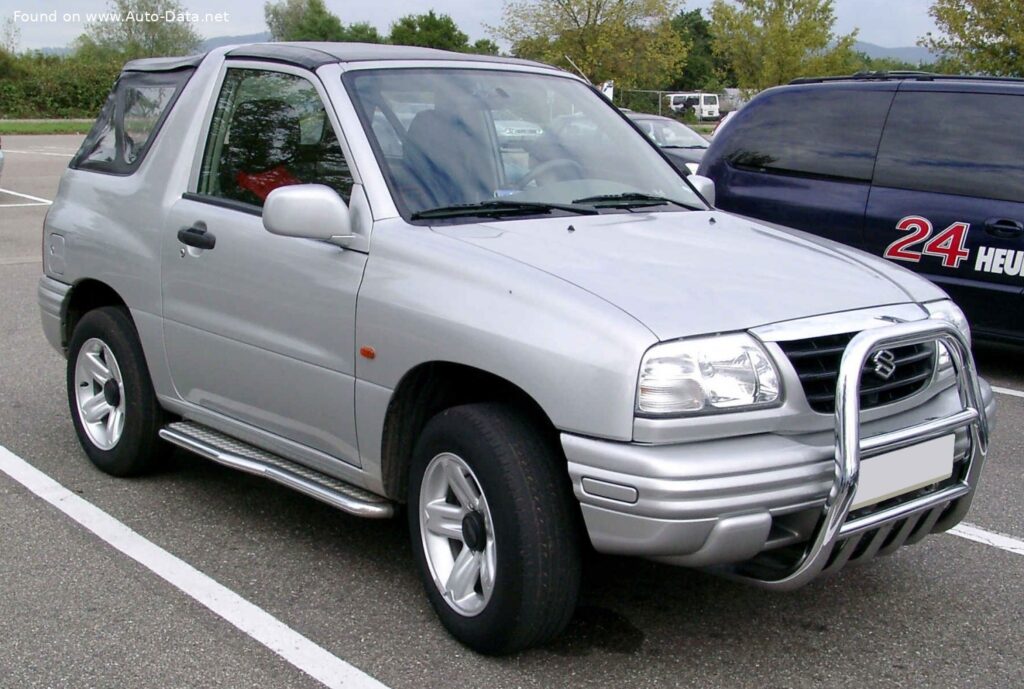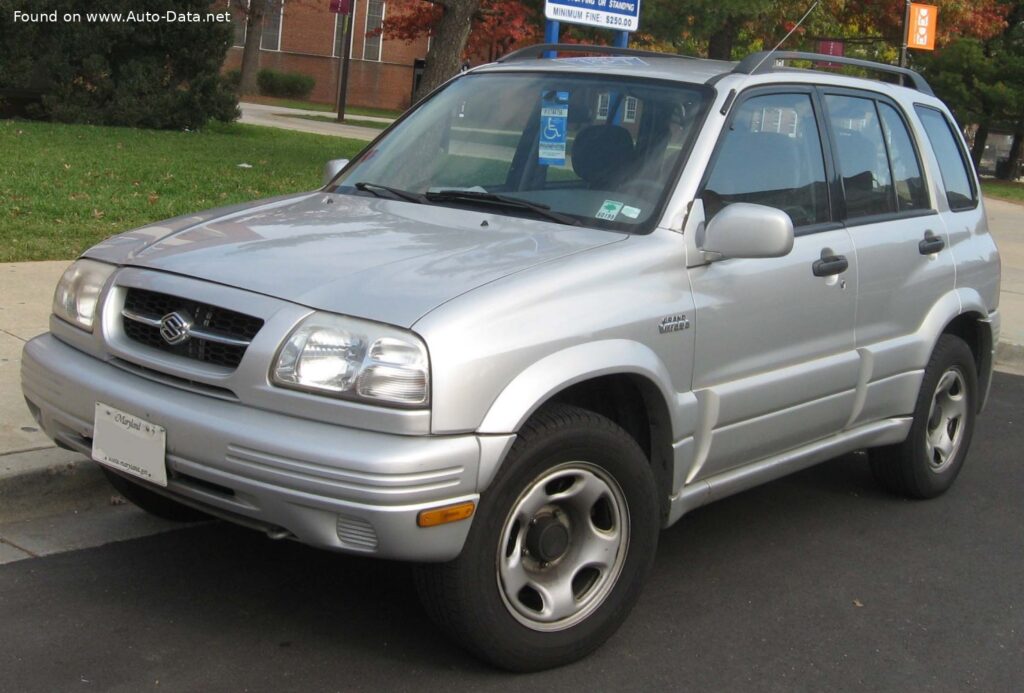
The Suzuki Grand Vitara (FT,GT), produced from 1999 to 2005, represents a significant evolution in the compact sport utility vehicle (SUV) segment. This generation of the Grand Vitara solidified Suzuki’s reputation for building durable, capable, and practical 4×4 vehicles. Positioned globally as a versatile offering, it bridged the gap between smaller, car-based crossovers and more traditional, rugged off-roaders. In the United States, it was known simply as the Grand Vitara, inheriting the legacy of its Vitara and Sidekick predecessors, offering consumers a compelling blend of everyday usability and genuine adventurous spirit. This particular variant, the 2.0 i 16V (5 dr) with 128 horsepower, exemplifies the model’s core strengths, providing a balanced package for a wide array of drivers seeking reliability and utility. It occupied a mid-range position in the lineup, offering a step up in power and features from the base models while remaining more affordable than the higher-specification trims.
Powertrain & Engine Architecture
At the heart of the Suzuki Grand Vitara (FT,GT) 2.0 i 16V (5 dr) lies the J20A engine. This 2.0-liter (1998 cm3 or 121.93 cubic inches) inline-four cylinder gasoline engine was a testament to Suzuki’s engineering philosophy: robust, reliable, and efficient for its intended purpose. Featuring a 16-valve (4 valves per cylinder) configuration and a dual overhead camshaft (DOHC) design, the J20A produced 128 horsepower at 6000 rpm. This power output, combined with 128.34 lb.-ft. (174 Nm) of torque arriving at 2900 rpm, provided the Grand Vitara with ample grunt for both urban commuting and light off-road excursions.
The engine’s front, longitudinal layout was typical for a vehicle with four-wheel drive intentions, allowing for a more robust drivetrain architecture. Its naturally aspirated nature meant predictable power delivery without the complexities of forced induction, contributing to its reputation for long-term durability. The multi-port fuel injection system ensured precise fuel delivery, optimizing combustion for a balance of power and fuel economy. With a compression ratio of 9.3:1, the J20A was designed to run reliably on widely available gasoline grades. The power per liter, at 64.1 Hp/l, was competitive for an SUV engine of its era. The J20A engine was often paired with a four-speed automatic transmission, a common choice for drivers prioritizing ease of use over ultimate performance. This transmission was known for its durability, though it lacked the sophistication of more modern automatic gearboxes. It featured standard torque converter lock-up for improved fuel efficiency at highway speeds.
Driving Characteristics
The 2.0L 128 hp / Automatic setup in the Grand Vitara delivered a driving experience that prioritized usability and dependability over outright speed. Acceleration was adequate for everyday driving, but not particularly brisk. The four-speed automatic transmission, while reliable, had relatively wide gear ratios, which meant the engine often operated at higher RPMs during acceleration and highway cruising. This could result in a noticeable drone, especially when compared to manual transmission versions or the more powerful engines available in other Grand Vitara trims. Compared to the manual transmission, the automatic version offered less driver engagement and slightly reduced fuel economy. Against the higher-output engines, such as those found in some export markets, the 2.0L automatic felt noticeably less powerful, particularly when fully loaded or tackling steep inclines. However, the automatic transmission made the Grand Vitara more accessible to a wider range of drivers, particularly those unfamiliar or uncomfortable with manual gearboxes.
Equipment & Trim Levels
The 2.0 i 16V (5 dr) Grand Vitara typically came with a reasonable level of standard equipment. Air conditioning was almost universally included, along with power windows and power steering. The interior upholstery was generally cloth, with a durable and practical design. The dashboard layout was functional and straightforward, prioritizing ease of use over aesthetic flair. Optional extras varied depending on the market, but commonly included an upgraded audio system, alloy wheels, a sunroof, and side airbags. Some trims also offered features like cruise control and a rear cargo cover. The Grand Vitara’s interior space was competitive for its class, offering comfortable seating for five adults, although rear legroom could be limited for taller passengers. The 5-door configuration was a key selling point, providing easy access to the rear seats and a versatile cargo area.
Chassis & Braking
The Suzuki Grand Vitara (FT,GT) utilized a traditional body-on-frame construction, which contributed to its ruggedness and off-road capability. The suspension consisted of coil springs and shock absorbers all around, providing a comfortable ride on paved roads while still offering sufficient articulation for off-road use. Front suspension was typically independent, while the rear suspension varied depending on the specific model and market. Many versions featured a solid rear axle, which further enhanced off-road performance. Braking systems varied, with some models equipped with front disc brakes and rear drum brakes, while others featured disc brakes all around. Anti-lock braking systems (ABS) were often available as an option, or standard on higher trim levels, improving stopping performance and stability. Stabilizer bars were typically fitted to the front suspension to reduce body roll during cornering.
Market Reception & Comparison
Critics generally viewed the 2.0L automatic Grand Vitara as a competent and reliable SUV, offering a good balance of value and capability. It was praised for its rugged construction, comfortable ride, and user-friendly features. However, some reviewers noted that the engine felt underpowered, particularly when compared to competitors with larger displacement engines. Fuel economy was considered average for its class. Compared to the manual transmission versions, the automatic suffered a slight penalty in both fuel economy and performance. Against rivals like the Toyota RAV4 and Honda CR-V, the Grand Vitara offered a more traditional SUV experience with greater off-road capability, but lacked the refined driving dynamics of its competitors. The Nissan X-Trail and Subaru Forester offered similar levels of practicality and capability, but the Grand Vitara often came at a more competitive price point. Reliability was generally considered to be excellent, with the J20A engine proving to be a durable and long-lasting powerplant.
Technical Specifications
| Brand | Suzuki |
| Model | Grand Vitara |
| Generation | Grand Vitara (FT,GT) |
| Type (Engine) | 2.0 i 16V (5 dr) (128 Hp) |
| Start of Production | 1999 year |
| End of Production | 2005 year |
| Powertrain Architecture | Internal Combustion engine |
| Body type | SUV |
| Seats | 5 |
| Doors | 5 |
| Fuel Type | Petrol (Gasoline) |
| Power | 128 Hp @ 6000 rpm. |
| Power per liter | 64.1 Hp/l |
| Torque | 174 Nm @ 2900 rpm. (128.34 lb.-ft. @ 2900 rpm.) |
| Engine layout | Front, Longitudinal |
| Engine Model/Code | J20A |
| Engine displacement | 1998 cm3 (2.0 l / 121.93 cu. in.) |
| Number of cylinders | 4 |
| Engine configuration | Inline |
| Cylinder Bore | 84 mm (3.31 in.) |
| Piston Stroke | 90 mm (3.54 in.) |
| Compression ratio | 9.3:1 |
| Number of valves per cylinder | 4 |
| Fuel injection system | Multi-port manifold injection |
| Engine aspiration | Naturally aspirated engine |
| Engine oil capacity | 5.2 l (5.49 US qt | 4.58 UK qt) |
| Engine oil specification | Manufacturer’s specific recommendation |
| Coolant capacity | 6.5 l (6.87 US qt | 5.72 UK qt) |
Legacy
The Suzuki Grand Vitara (FT,GT) 2.0 i 16V (5 dr) has proven to be a remarkably durable vehicle. The J20A engine, when properly maintained, is known for its longevity and reliability. The four-speed automatic transmission, while not the most advanced, is also generally considered to be robust. In the used car market today, these Grand Vitaras are often sought after by buyers looking for an affordable and dependable SUV. They are particularly popular among those who need a vehicle capable of handling rough terrain or inclement weather. While parts availability may be becoming more challenging as the vehicle ages, the simplicity of the J20A engine and the Grand Vitara’s overall mechanical design make it relatively easy to repair and maintain. The Grand Vitara’s enduring appeal is a testament to Suzuki’s commitment to building practical, reliable, and capable vehicles that stand the test of time.