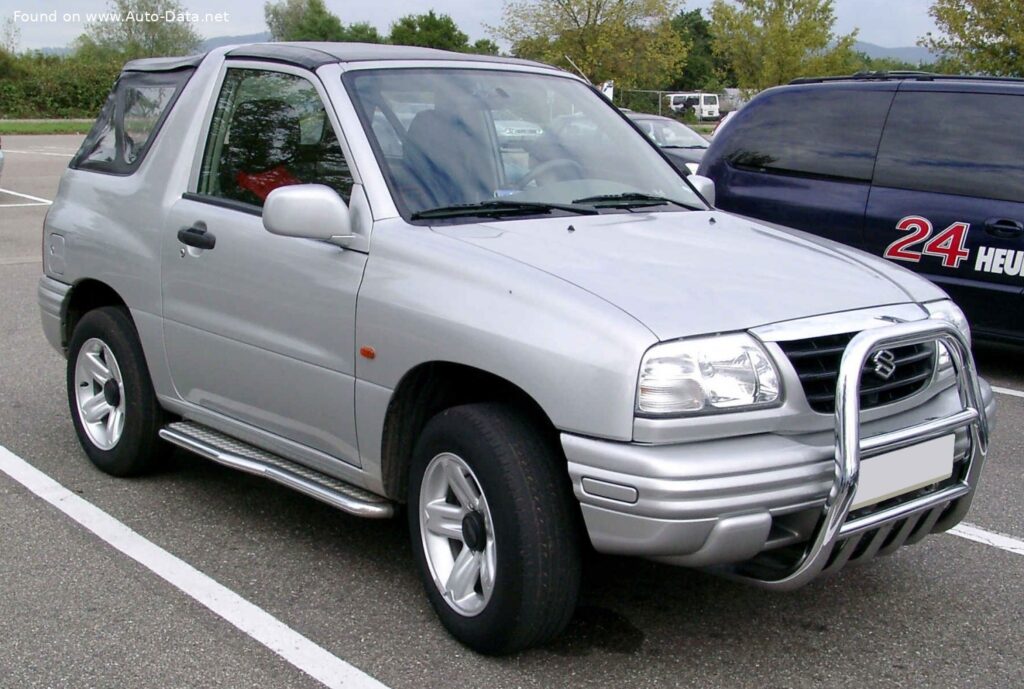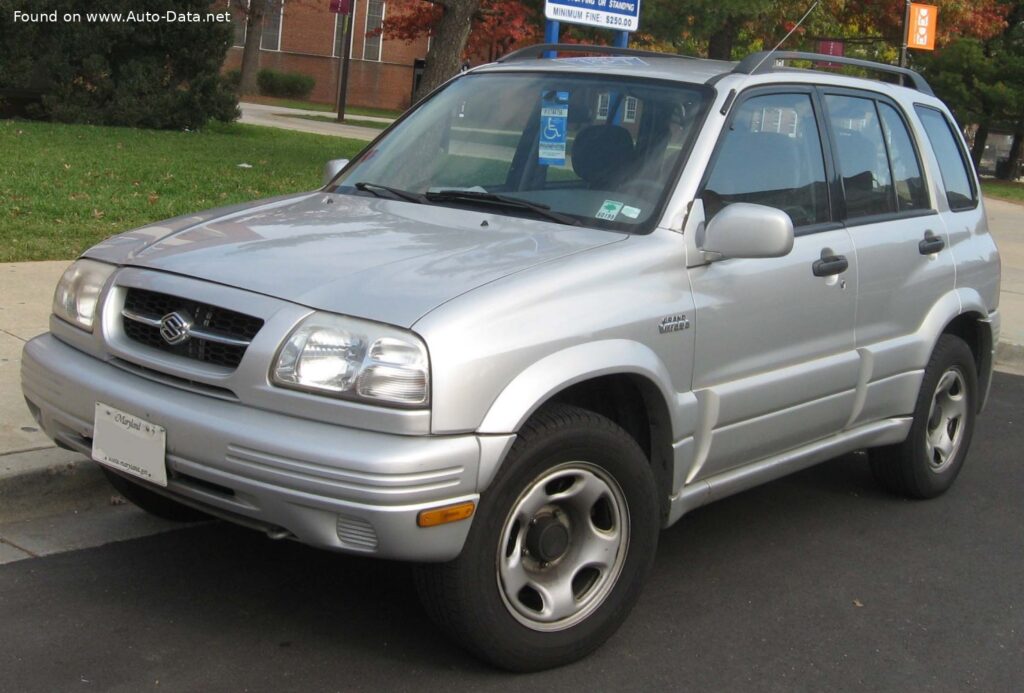
The Suzuki Grand Vitara (FT,GT) represents a significant chapter in Suzuki’s automotive history, particularly within the rapidly expanding compact SUV segment of the late 1990s and early 2000s. Produced from 1997 through 2005, this generation built upon the foundation laid by the earlier Vitara and Sidekick models, offering a more refined, spacious, and powerful vehicle aimed at a broader audience. The Grand Vitara (FT,GT) was designed to be versatile, capable of handling daily commutes and weekend off-road adventures. In the North American market, simply known as the Grand Vitara, it competed with a growing number of car-based crossovers, but distinguished itself through its traditional body-on-frame construction, providing superior durability and off-road performance compared to many unibody rivals. The 2.0 i 16V (5 dr) (140 Hp) variant occupied a crucial mid-range position in the lineup, offering a balance of affordability, practicality, and capability.
The 2.0 i 16V (140 Hp) Grand Vitara: A Mid-Range Offering
The 2.0-liter, 140 horsepower Grand Vitara (FT,GT) was positioned as a sweet spot within the model range. Below it sat the base models with smaller engines and fewer features, geared towards budget-conscious buyers. Above it were the more powerful V6 variants, aimed at customers prioritizing performance and willing to pay a premium. The 2.0 i 16V, with its five-door configuration, struck a balance appealing to families and individuals seeking a versatile vehicle without the added cost of the V6. It offered a compelling combination of adequate power for everyday driving, reasonable fuel economy, and the spaciousness needed for passengers and cargo. This trim level was particularly popular with those who wanted a capable SUV but didn’t necessarily require the ultimate in off-road prowess or acceleration.
Powertrain & Engine Architecture
The heart of the Suzuki Grand Vitara (FT,GT) 2.0 i 16V (5 dr) (140 Hp) is the J20A engine. This 2.0-liter (1995 cc) inline four-cylinder engine was engineered for reliability and efficient power delivery. It features a Double Overhead Camshaft (DOHC) valvetrain with four valves per cylinder – a total of 16 valves. This configuration optimizes airflow into and out of the combustion chambers, enhancing both performance and fuel economy compared to older two-valve designs. The J20A produces 140 horsepower at 6500 rpm and 186 Nm (137.19 lb-ft) of torque at 4000 rpm. The engine’s front, longitudinal layout is typical for a body-on-frame vehicle, facilitating the integration of a robust four-wheel-drive system.
Fuel delivery is managed by a multi-port fuel injection system, a reliable and precise method for ensuring efficient combustion and meeting emissions standards. The compression ratio is 9.7:1, allowing the engine to operate effectively on regular unleaded gasoline. The J20A is paired with a four-speed automatic transmission. This transmission, while not the most modern by today’s standards, was known for its durability and smooth operation. Gear ratios were optimized for a balance of acceleration and fuel efficiency, with a focus on providing adequate torque for off-road situations. The automatic transmission contributed to the Grand Vitara’s ease of use, making it accessible to a wider range of drivers.
Driving Characteristics
The 2.0-liter, 140 hp engine and four-speed automatic transmission combination in the Grand Vitara (FT,GT) delivered a driving experience that prioritized practicality and usability over outright performance. Acceleration was adequate for most driving situations, but it wasn’t particularly brisk. Compared to the V6 models, the 2.0-liter engine felt noticeably less powerful, especially when fully loaded or climbing steep hills. However, the torque delivery at lower and mid-range engine speeds was sufficient for everyday driving and light off-road work. The automatic transmission shifted smoothly, but lacked the responsiveness of a manual gearbox. The gear ratios were spaced to provide a balance between fuel economy and acceleration, with the lower gears offering sufficient torque for off-road maneuvering. Compared to manual transmission versions, the automatic offered greater convenience, but at the expense of some driver engagement and fuel efficiency.
Equipment & Trim Levels
The 2.0 i 16V (5 dr) (140 Hp) Grand Vitara typically came standard with features considered essential for the time. These included air conditioning, power windows, power door locks, and an AM/FM stereo with a CD player. Interior upholstery was typically cloth, with a durable and practical design. Higher trim levels offered upgrades such as alloy wheels, a sunroof, and upgraded audio systems. Optional extras included leather upholstery, a rear cargo cover, and a tow package. The dashboard layout was functional and straightforward, with easy-to-read gauges and logically placed controls. Safety features included dual front airbags, and some trims offered anti-lock brakes (ABS) as an option.
Chassis & Braking
The Grand Vitara (FT,GT) utilized a traditional body-on-frame chassis, providing a robust and durable foundation. The suspension consisted of coil springs and shock absorbers, with independent front suspension and a solid rear axle. This setup provided a comfortable ride on paved roads while maintaining good off-road capability. The rear brakes were typically drum brakes, while the front brakes were disc brakes. This configuration was common for vehicles in this weight class during the late 1990s and early 2000s. Stabilizer bars were included on both the front and rear axles to reduce body roll during cornering. The steering was a recirculating ball system, providing a direct and responsive feel.
Market Reception & Comparison
Critics generally praised the Suzuki Grand Vitara (FT,GT) for its ruggedness, off-road capability, and value for money. The 2.0-liter engine was considered adequate for most drivers, but some reviewers noted that it could feel underpowered when fully loaded or tackling steep inclines. Fuel economy was generally considered to be reasonable for a compact SUV. Compared to its unibody crossover rivals, such as the Honda CR-V and Toyota RAV4, the Grand Vitara offered superior off-road performance but a less refined on-road ride. Compared to the V6-powered Grand Vitara models, the 2.0-liter version was more affordable and fuel-efficient, but lacked the same level of performance. Reliability was generally considered to be good, with the J20A engine proving to be a durable and long-lasting powerplant.
Technical Specifications
| Category | Specification |
| Brand | Suzuki |
| Model | Grand Vitara |
| Generation | Grand Vitara (FT,GT) |
| Engine Type | 2.0 i 16V (5 dr) (140 Hp) |
| Start of Production | 1997 |
| End of Production | 2005 |
| Powertrain Architecture | Internal Combustion Engine |
| Body type | SUV |
| Seats | 5 |
| Doors | 5 |
| Fuel Type | Petrol (Gasoline) |
| Engine Layout | Front, Longitudinal |
| Engine Model/Code | J20A |
| Engine Displacement | 1995 cm3 (121.74 cu. in.) |
| Number of Cylinders | 4 |
| Engine Configuration | Inline |
| Cylinder Bore | 84 mm (3.31 in.) |
| Piston Stroke | 90 mm (3.54 in.) |
| Compression Ratio | 9.7:1 |
| Number of Valves per Cylinder | 4 |
| Fuel Injection System | Multi-port manifold injection |
| Engine Aspiration | Naturally aspirated engine |
| Valvetrain | DOHC |
| Power | 140 Hp @ 6500 rpm |
| Power per Liter | 70.2 Hp/l |
| Torque | 186 Nm (137.19 lb.-ft.) @ 4000 rpm |
| Engine Oil Capacity | 5.2 l (5.49 US qt) |
| Coolant Capacity | 6.5 l (6.87 US qt) |
Legacy
The Suzuki Grand Vitara (FT,GT) 2.0 i 16V (5 dr) (140 Hp) has proven to be a relatively reliable vehicle in the long term. The J20A engine is known for its durability, and with proper maintenance, can last for many years. The automatic transmission, while not the most sophisticated, is also generally considered to be robust. Today, these Grand Vitaras can be found on the used car market at affordable prices. They are often sought after by those looking for a capable and affordable SUV with genuine off-road potential. While they may require some maintenance due to their age, the Grand Vitara’s simple design and readily available parts make it a relatively easy vehicle to maintain. Its enduring appeal lies in its blend of practicality, capability, and affordability, making it a popular choice for enthusiasts and budget-conscious buyers alike.