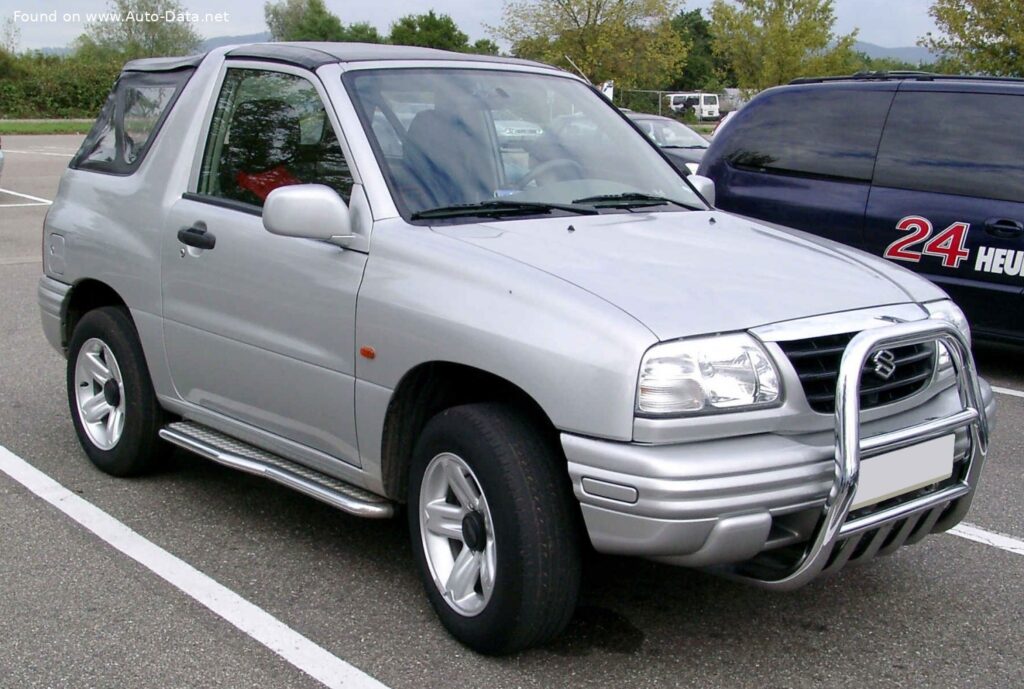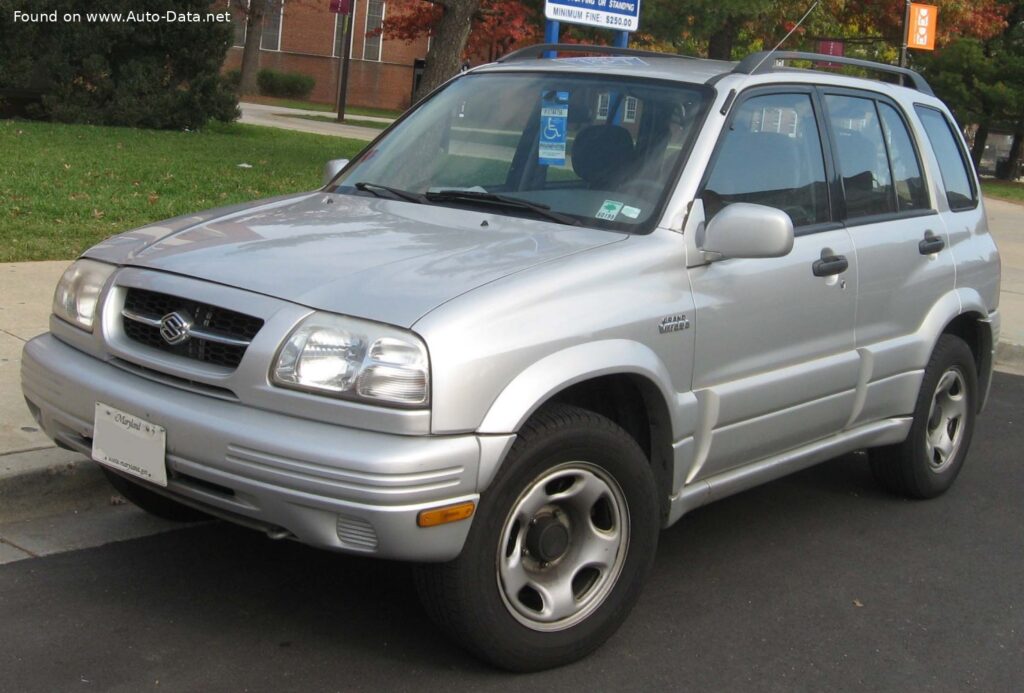
The Suzuki Grand Vitara (FT,GT) 2.5 i V6 (144 Hp) variant represents a pivotal model in Suzuki’s history as a global automaker known for its small, capable 4×4 vehicles. Launched in 1999 as the successor to the popular Vitara/Sidekick, the first-generation Grand Vitara, identified by its FT and GT chassis codes, aimed to combine the maneuverability and efficiency of a compact SUV with the genuine off-road prowess traditionally associated with larger, more rugged utility vehicles. This particular V6-powered model, produced from 1999 to 2005, offered a compelling blend of power, refinement, and Suzuki’s renowned four-wheel-drive capability, positioning it as a versatile option in an increasingly competitive segment. It catered to drivers seeking a daily commuter that could also confidently tackle challenging terrains, embodying Suzuki’s “Way of Life!” philosophy. This trim level sat in the mid-range of the Grand Vitara lineup, offering a step up in performance and refinement compared to the base four-cylinder models, but remaining more accessible than potential future luxury trims.
Powertrain & Engine Architecture
Under the hood, the Suzuki Grand Vitara (FT,GT) 2.5 i V6 variant was equipped with a sophisticated H25A engine, a naturally aspirated 2.5-liter (2495 cm3) V6 powerplant. This engine was a significant step up from the four-cylinder options typically found in compact SUVs of the era, providing a more refined driving experience and enhanced performance. With a power output of 144 horsepower delivered at 6200 rpm and a healthy 153.41 lb-ft of torque peaking at 3500 rpm, the Grand Vitara offered respectable acceleration for its class. It could sprint from 0 to 60 mph in approximately 10.4 seconds, with a top speed of 96.31 mph, making it perfectly adequate for highway cruising and merging.
The engine’s configuration as a front, longitudinal V-engine with a Double Overhead Camshaft (DOHC) valvetrain and four valves per cylinder (24 total) contributed to its smooth operation and efficient power delivery. Fuel was supplied via a multi-port manifold injection system, ensuring precise fuel metering. Power was channeled through a robust 5-speed automatic transmission to an all-wheel-drive (4×4) system, which was a hallmark of Suzuki’s off-road heritage. The automatic transmission, while providing convenience, was a key differentiator from the available 5-speed manual, targeting a broader audience prioritizing ease of use over outright driver engagement. Unlike many emerging “soft-roaders” of the time, the Grand Vitara typically featured a traditional part-time 4×4 system with a low-range transfer case, offering genuine off-road capability that distinguished it from its peers.
The H25A engine, while generally reliable, is known for potential issues with timing belt maintenance. The timing belt requires replacement at specified intervals (typically around 60,000 – 90,000 miles) to prevent catastrophic engine damage. The automatic transmission, while durable, benefits from regular fluid changes to maintain optimal performance and longevity.
Driving Characteristics
The 2.5L V6 with the 5-speed automatic transmission in the Grand Vitara offered a noticeably smoother and more relaxed driving experience compared to the four-cylinder models. While not a performance-oriented vehicle, the V6 provided sufficient power for everyday driving and highway passing maneuvers. The automatic transmission featured relatively conservative gear ratios, prioritizing fuel efficiency and smooth shifts over aggressive acceleration. First gear was geared for initial acceleration and low-speed off-road crawling, while higher gears were optimized for highway cruising. Compared to the manual transmission version, the automatic sacrificed some responsiveness and direct control, but gained in convenience, particularly in urban environments.
The Grand Vitara’s body-on-frame construction contributed to a more truck-like ride quality, which could feel firmer than the more car-like ride of unibody competitors. However, this also translated to greater durability and off-road capability. The 4×4 system, with its low-range transfer case, allowed the Grand Vitara to confidently tackle challenging terrain, including steep inclines, rocky trails, and snow-covered roads. The automatic transmission didn’t hinder off-road performance significantly, but required careful throttle control to avoid excessive wheelspin.
Equipment & Trim Levels
The 2.5 i V6 automatic variant of the Grand Vitara typically came standard with features such as air conditioning, power windows and locks, a basic audio system, and alloy wheels. Interior upholstery was generally cloth, with options for upgraded materials available. The dashboard configuration was straightforward and functional, with clearly labeled controls. Optional extras included a sunroof, upgraded audio systems with CD players, and leather upholstery. The specific trim level (often denoted by package names) determined the inclusion of these optional features. The V6 automatic trim generally represented a step up in standard equipment compared to the base four-cylinder models, offering a more comfortable and refined interior.
Chassis & Braking
The Grand Vitara (FT,GT) utilized a body-on-frame construction, providing a robust and durable chassis. Suspension components included a Spring Strut setup at the front and a Coil Spring arrangement at the rear, providing a balance between on-road comfort and off-road articulation. Braking duties were handled by ventilated discs at the front and solid discs at the rear, augmented by an Anti-lock Braking System (ABS) for enhanced safety and control during emergency stops. The hydraulic rack and pinion steering system offered direct feedback and ease of maneuverability. The V6 models often received slightly upgraded suspension components compared to the four-cylinder versions to handle the increased weight and power. Stabilizer bars were present at both the front and rear, contributing to reduced body roll during cornering.
Market Reception & Comparison
Critics generally viewed the Suzuki Grand Vitara (FT,GT) 2.5 i V6 Automatic as a capable and versatile SUV, particularly praising its off-road prowess and robust construction. It was often lauded as a more authentic SUV experience compared to the growing number of car-based crossovers. Fuel economy was considered reasonable for a V6-powered vehicle with 4×4 capability, averaging around 19.4 US mpg in urban conditions and 30.2 US mpg on the highway. Reliability was generally good, although the timing belt maintenance requirement was a noted concern. Compared to the four-cylinder Grand Vitara models, the V6 offered significantly improved performance and refinement, but at a higher price point. Compared to competitors like the Toyota RAV4 and Honda CR-V, the Grand Vitara offered superior off-road capability but lacked the same level of refinement and fuel efficiency.
Technical Specifications
| Category | Specification |
| General Information | |
| Brand | Suzuki |
| Model | Grand Vitara |
| Generation | Grand Vitara (FT,GT) |
| Engine Type | 2.5 i V6 (144 Hp) |
| Production Start | 1999 |
| Production End | 2005 |
| Powertrain Architecture | Internal Combustion Engine |
| Body Type | SUV |
| Seats | 5 |
| Doors | 5 |
| Performance Specifications | |
| Fuel Consumption (Urban) | 12.1 l/100 km (19.4 US mpg) |
| Fuel Consumption (Extra Urban) | 7.8 l/100 km (30.2 US mpg) |
| Fuel Type | Petrol (Gasoline) |
| Acceleration 0-60 mph | 10.4 sec |
| Maximum Speed | 155 km/h (96.31 mph) |
| Weight-to-Power Ratio | 9.8 kg/Hp (102.5 Hp/tonne) |
| Weight-to-Torque Ratio | 6.8 kg/Nm (148 Nm/tonne) |
| Engine Specifications | |
| Power | 144 Hp @ 6200 rpm |
| Torque | 208 Nm (153.41 lb.-ft.) @ 3500 rpm |
| Engine Layout | Front, Longitudinal |
| Engine Model/Code | H25A |
| Engine Displacement | 2495 cm3 (2.5 Liters / 152.25 cu. in.) |
| Number of Cylinders | 6 |
| Engine Configuration | V-engine |
| Cylinder Bore | 84 mm (3.31 in.) |
| Piston Stroke | 75 mm (2.95 in.) |
| Compression Ratio | 9.5:1 |
| Valves per Cylinder | 4 |
| Fuel Injection System | Multi-port manifold injection |
| Engine Aspiration | Naturally aspirated engine |
| Valvetrain | DOHC |
| Engine Oil Capacity | 5.5 l (5.81 US qt) |
| Coolant Capacity | 8 l (8.45 US qt) |
| Dimensions, Volume, and Weights | |
| Kerb Weight | 1405 kg (3097.49 lbs.) |
| Maximum Weight | 1950 kg (4299.01 lbs.) |
| Maximum Load | 545 kg (1201.52 lbs.) |
| Trunk Space (Minimum) | 258 l (9.11 cu. ft.) |
| Trunk Space (Maximum) | 1080 l (38.14 cu. ft.) |
| Fuel Tank Capacity | 66 l (17.44 US gal) |
| Length | 4195 mm (165.16 in.) |
| Width | 1780 mm (70.08 in.) |
| Height | 1685 mm (66.34 in.) |
| Wheelbase | 2480 mm (97.64 in.) |
| Front Track | 1500 mm (59.06 in.) |
| Rear Track | 1500 mm (59.06 in.) |
| Minimum Turning Circle | 9.4 m (30.84 ft.) |
| Drivetrain, Brakes, and Suspension | |
| Drive Wheel | All-wheel drive (4×4) |
| Gearbox Type | 5 gears, Automatic Transmission |
| Front Suspension | Spring Strut |
| Rear Suspension | Coil Spring |
| Front Brakes | Ventilated discs |
| Rear Brakes | Disc |
| Assisting Systems | ABS (Anti-lock braking system) |
| Steering Type | Steering rack and pinion |
| Power Steering | Hydraulic Steering |
| Tires Size | 215/65 R16 |
| Wheel Rims Size | 16 inches |
Legacy
The Suzuki Grand Vitara (FT,GT) 2.5 i V6 Automatic holds a respectable position in the used car market today, particularly among enthusiasts seeking a capable and affordable off-road vehicle. The H25A V6 engine, while requiring diligent maintenance (especially timing belt replacement), is generally considered durable. The automatic transmission, if properly maintained with regular fluid changes, can provide years of reliable service. However, potential buyers should be aware of potential corrosion issues, particularly in areas with harsh winters. The Grand Vitara’s body-on-frame construction and robust 4×4 system continue to appeal to those who value off-road capability and durability. It remains a viable option for those seeking a practical and versatile SUV that can handle both daily commutes and weekend adventures, offering a unique blend of ruggedness and refinement that sets it apart from many of its more modern crossover competitors.