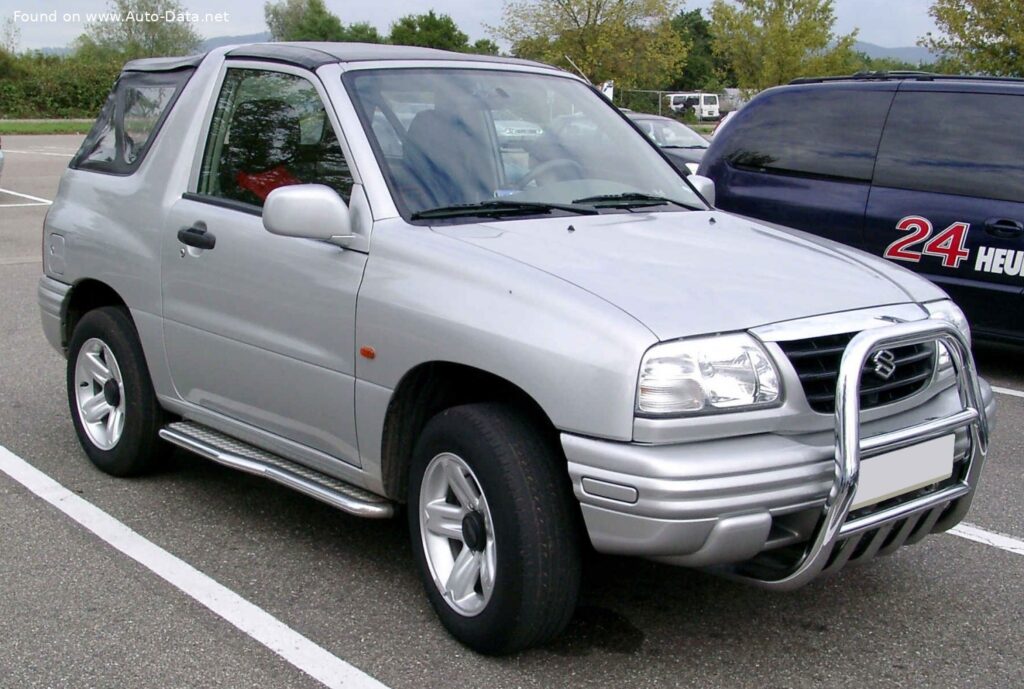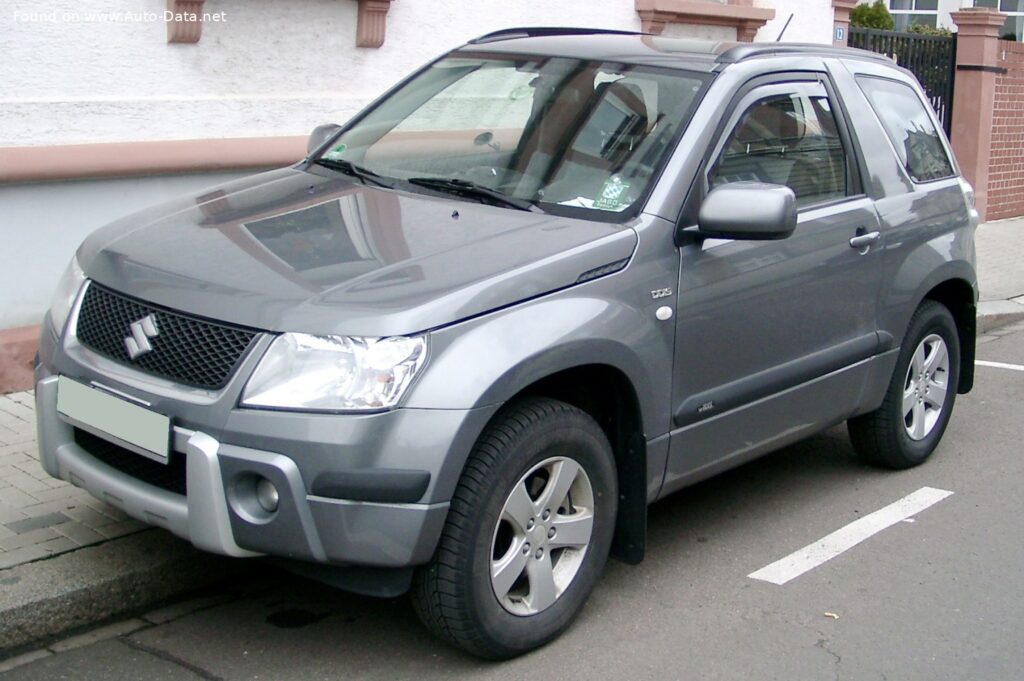
The Suzuki Grand Vitara II 3 Door 1.6 i 16V (107 Hp), produced between 2005 and 2008, represented a significant evolution for Suzuki’s popular compact SUV line. While the Grand Vitara nameplate was familiar to consumers, this specific 3-door, 1.6-liter variant was primarily targeted at European, Asian, and other international markets where fuel efficiency, compact dimensions, and genuine off-road capability in a smaller package were highly valued. It carved out a niche as a rugged, yet practical, five-seater SUV, offering a blend of urban maneuverability and surprising capability away from paved roads, embodying Suzuki’s long-standing heritage in robust four-wheel-drive vehicles.
Grand Vitara II 3-Door: Positioning and Overview
The second-generation Grand Vitara moved away from the traditional body-on-frame construction of its predecessors, adopting a unique integrated ladder frame within a unibody structure. This engineering choice aimed to combine the rigidity and off-road prowess of a traditional SUV with the improved on-road comfort and handling characteristic of modern crossovers. The 3-door variant, in particular, emphasized sportiness and agility, catering to buyers seeking a more compact and nimble vehicle without sacrificing the utility and adventurous spirit inherent in the Grand Vitara name. This trim level occupied the entry-level position within the Grand Vitara II range, offering a more affordable and fuel-efficient option compared to the larger-engined, five-door models.
Powertrain & Engine Architecture
Under the hood of the Suzuki Grand Vitara II 3 Door 1.6 i 16V (107 Hp) lay Suzuki’s M16A engine, a 1.6-liter (1586 cm3 or 96.78 cu. in.) naturally aspirated inline-four gasoline unit. This powerplant featured a Double Overhead Camshaft (DOHC) valvetrain with 16 valves, ensuring efficient air intake and exhaust. Fuel delivery was managed by a multi-port manifold injection system, a reliable and well-proven technology for the era. With a compression ratio of 10.5:1, the engine was designed for a balance of power output and fuel efficiency using standard petrol (gasoline).
The M16A engine generated a respectable 107 horsepower at 5600 rpm, which for a compact SUV of its size and intended markets, provided adequate thrust. Torque output stood at 106.95 lb.-ft. (145 Nm) available at 4000 rpm, delivering sufficient pulling power for both on-road driving and light off-road excursions. Power was channeled through a 5-speed manual transmission, offering drivers direct control over the vehicle’s dynamics and contributing to the overall engagement. While an automatic transmission was available in some markets with the M16A engine, this article specifically focuses on the manual transmission variant.
Driving Characteristics
The driving experience of the 1.6-liter 3-door Grand Vitara was characterized by its willingness to rev and its relatively light weight. Acceleration from 0 to 60 mph took approximately 12.7 seconds, and 0 to 100 km/h in 13.4 seconds. While not particularly quick, the engine provided sufficient power for everyday driving and highway cruising. The 5-speed manual transmission allowed drivers to keep the engine in its optimal power band, maximizing performance. Compared to the larger-engined versions (typically 2.0L or 2.4L), the 1.6L felt less strained during acceleration and offered a more economical driving experience. The gear ratios were tuned for a balance of fuel efficiency and usability, with a relatively tall fifth gear for relaxed highway cruising.
The 3-door configuration contributed to a more agile and responsive feel compared to the five-door model. The shorter wheelbase and lighter weight made it easier to maneuver in tight spaces and more enjoyable on winding roads. The all-wheel-drive system provided enhanced traction in slippery conditions, making it a capable vehicle for inclement weather and light off-road adventures.
Equipment & Trim Levels
The Grand Vitara II 3 Door 1.6 i 16V typically came equipped with a standard level of features focused on practicality and functionality. Standard equipment generally included air conditioning, power steering, central locking, electric windows, and an AM/FM radio with CD player. Safety features included an Anti-lock Braking System (ABS) and driver and passenger airbags. Interior upholstery was typically cloth, with a durable and hard-wearing finish.
Optional extras varied depending on the market, but commonly included alloy wheels, a sunroof, upgraded audio systems, and metallic paint finishes. Higher trim levels, if available, might have added features such as leather upholstery, automatic climate control, and a more comprehensive audio system. The overall interior design was functional and straightforward, prioritizing usability over luxury.
Chassis & Braking
The chassis of the Grand Vitara II 3 Door featured a robust suspension system designed to handle both on-road and off-road conditions. The front suspension utilized a MacPherson strut setup, while the rear suspension employed coil springs. This configuration provided a comfortable ride on paved surfaces while maintaining sufficient wheel travel for off-road excursions. The braking system comprised ventilated discs at the front for effective stopping power, complemented by drum brakes at the rear. The steering was managed by a responsive rack and pinion system. The vehicle rode on 225/65 R17 tires, mounted on 17-inch wheel rims, providing a good balance of grip and ride comfort.
The integrated ladder frame construction contributed to the vehicle’s rigidity and durability, enhancing its ability to withstand the stresses of off-road driving. Stabilizer bars were fitted to both the front and rear axles to reduce body roll during cornering.
Market Reception & Comparison
Critics generally viewed the 1.6-liter Grand Vitara II 3 Door as a competent and practical compact SUV, particularly for its price point. It was praised for its fuel efficiency, robust construction, and genuine off-road capability. However, some reviewers noted that the engine lacked outright power, especially when fully loaded or tackling steep inclines. Compared to the larger-engined versions, the 1.6L offered a more economical driving experience but at the expense of performance.
Fuel economy was a strong suit for this variant, with a combined rating of 27 US mpg (8.7 l/100 km). Reliability was generally good, with the M16A engine proving to be a durable and long-lasting unit. Compared to competitors like the Toyota RAV4 and Land Rover Freelander, the Grand Vitara offered a more traditional SUV feel and a more capable four-wheel-drive system, although it lacked the brand prestige of some of its rivals.
Technical Specifications
| Category | Specification |
| Brand | Suzuki |
| Model | Grand Vitara |
| Generation | Grand Vitara II 3 Door |
| Type (Engine) | 1.6 i 16V (107 Hp) |
| Production Start | 2005 year |
| Production End | 2008 year |
| Powertrain Architecture | Internal Combustion engine |
| Body type | SUV |
| Seats | 5 |
| Doors | 3 |
| Fuel consumption (urban) | 10.6 l/100 km |
| Fuel consumption (extra urban) | 7.6 l/100 km |
| Fuel consumption (combined) | 8.7 l/100 km |
| Fuel Type | Petrol (Gasoline) |
| Acceleration 0-60 mph | 12.7 sec |
| Acceleration 0-100 km/h | 13.4 sec |
| Maximum speed | 160 km/h (99.42 mph) |
| Weight-to-power ratio | 13.5 kg/Hp |
| Weight-to-torque ratio | 10 kg/Nm |
| Power | 107 Hp @ 5600 rpm |
| Torque | 145 Nm @ 4000 rpm (106.95 lb.-ft. @ 4000 rpm) |
| Engine layout | Front, Transverse |
| Engine Model/Code | M16A |
| Engine displacement | 1586 cm3 (96.78 cu. in.) |
| Number of cylinders | 4 |
| Engine configuration | Inline |
| Cylinder Bore | 78 mm (3.07 in.) |
| Piston Stroke | 83 mm (3.27 in.) |
| Compression ratio | 10.5:1 |
| Number of valves per cylinder | 4 |
| Fuel injection system | Multi-port manifold injection |
| Engine aspiration | Naturally aspirated engine |
| Valvetrain | DOHC |
| Kerb Weight | 1445 kg (3185.68 lbs.) |
| Max. weight | 1800 kg (3968.32 lbs.) |
| Trunk (boot) space – minimum | 398 l (14.06 cu. ft.) |
| Trunk (boot) space – maximum | 758 l (26.77 cu. ft.) |
| Fuel tank capacity | 55 l (14.53 US gal) |
| Length | 4005 mm (157.68 in.) |
| Width | 1810 mm (71.26 in.) |
| Height | 1695 mm (66.73 in.) |
| Wheelbase | 2440 mm (96.06 in.) |
Legacy
The Suzuki Grand Vitara II 3 Door 1.6 i 16V (107 Hp) has proven to be a reliable and durable vehicle in the used car market. The M16A engine is known for its longevity, and the robust construction of the chassis contributes to its overall durability. While not as sought after as the larger-engined versions, the 1.6L variant remains a popular choice for buyers seeking an affordable and practical compact SUV. Its fuel efficiency and relatively low maintenance costs make it an attractive option for those on a budget. The Grand Vitara II, as a whole, cemented Suzuki’s reputation for building capable and reliable off-road vehicles, and the 3-door 1.6L variant represents a unique and appealing niche within that legacy.