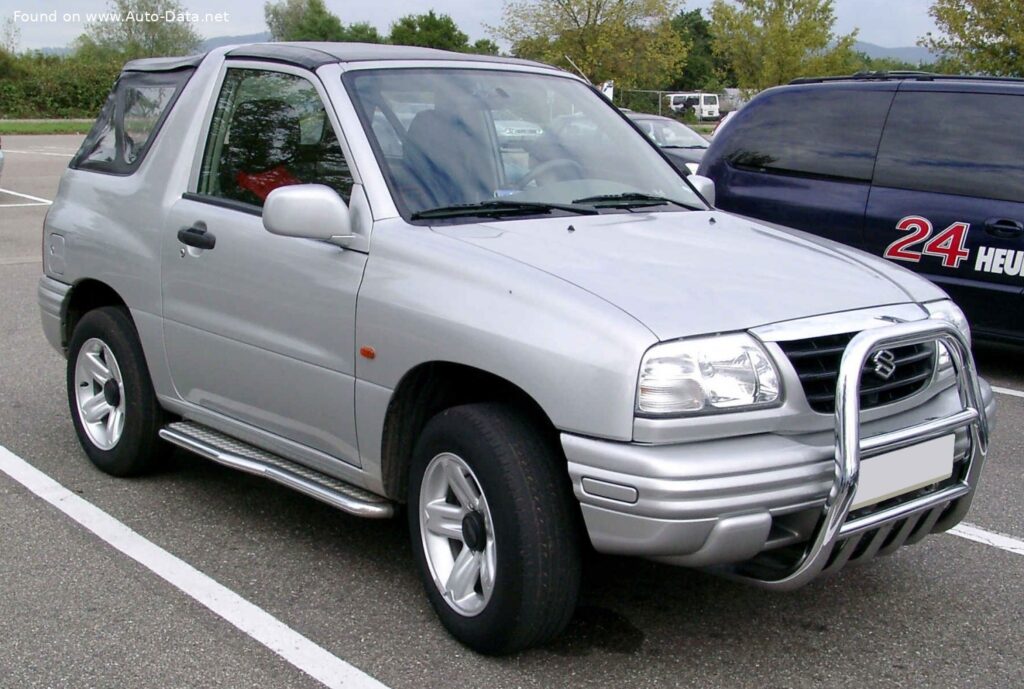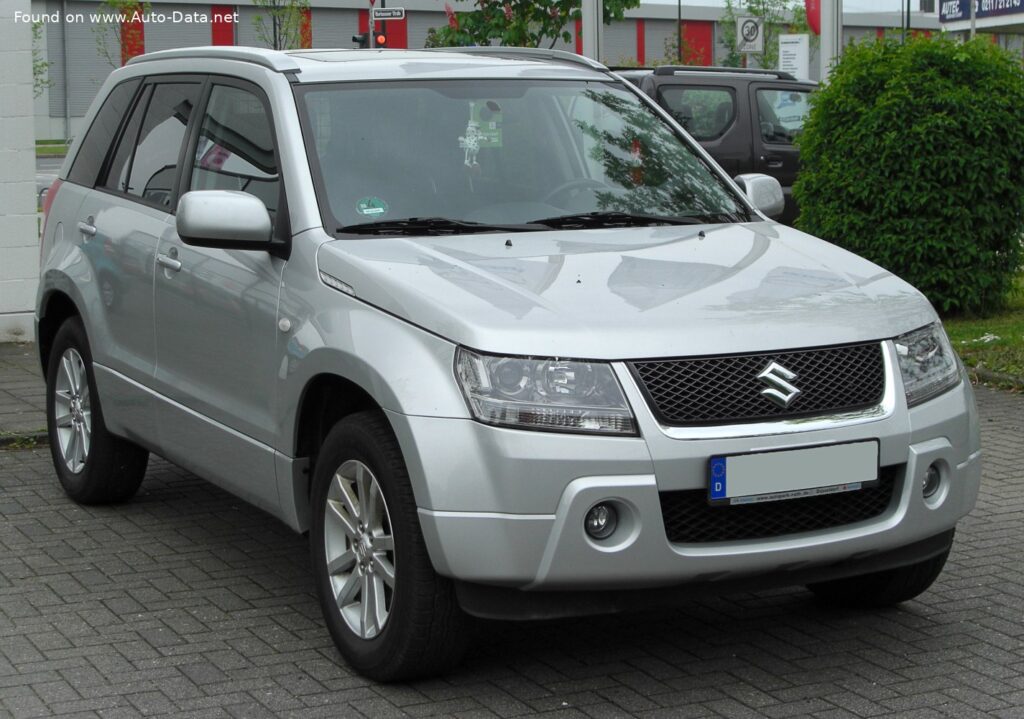
The Suzuki Grand Vitara II 5 Door 2.4 VVT (163 Hp) represents a significant iteration in Suzuki’s long-standing commitment to producing capable and reliable sport utility vehicles. Introduced in 2005, this second-generation Grand Vitara, specifically the five-door variant equipped with the 2.4-liter Variable Valve Timing (VVT) engine, was manufactured until 2008. It carved out a distinct niche in the compact SUV segment, particularly in markets outside the United States where Suzuki maintained a strong presence, by offering a blend of robust off-road capability with improved on-road manners and comfort. Unlike many contemporary “soft-roaders” that prioritized car-like handling and efficiency, the Grand Vitara II retained a more traditional SUV architecture, including a permanent all-wheel-drive system and, in some configurations, a low-range transfer case, appealing to consumers seeking genuine utility and adventure.
This particular model, with its 163 horsepower 2.4-liter engine, aimed to provide a more spirited performance compared to its smaller displacement siblings, without sacrificing Suzuki’s renowned reliability and practicality. It was designed to cater to a global audience, finding popularity in Europe, Asia, Australia, and parts of North America (though engine offerings could vary by region), as a versatile family vehicle equally at home navigating urban environments or tackling unpaved trails.
Powertrain and Engine Architecture
At the heart of the Suzuki Grand Vitara II 5 Door 2.4 VVT (163 Hp) lies the J24B engine, a 2.4-liter (2393 cm³ or 146.03 cubic inches) inline-four cylinder unit. This naturally aspirated engine features a Double Overhead Camshaft (DOHC) valvetrain with 16 valves (four per cylinder), incorporating Suzuki’s Variable Valve Timing (VVT) technology. VVT optimizes valve lift and duration, contributing to improved fuel efficiency at lower RPMs and enhanced power delivery higher in the rev range. Fuel is delivered via a multi-port manifold injection system, ensuring precise fuel metering for efficient combustion.
The engine produces a respectable 163 horsepower at 6000 rpm, which, when combined with 165.95 lb-ft of torque peaking at 3800 rpm, provides ample motivation for daily driving and light off-road excursions. The power-to-weight ratio stands at 112.8 horsepower per tonne (or 8.9 kg/Hp), indicating a responsive feel for its class. The J24B engine is known for its relative simplicity and durability, making it a relatively easy engine to maintain compared to more complex, technologically advanced engines of the era. It shares some architectural similarities with engines used in other Suzuki and General Motors vehicles due to collaborative engineering efforts.
The 2.4L engine was typically paired with either a 5-speed manual transmission or a 4-speed automatic transmission. The automatic transmission, while providing convenience, was sometimes criticized for its relatively conservative gear ratios and tendency to hunt for gears in certain driving conditions. The manual transmission offered a more direct driving experience and slightly improved fuel economy. The powertrain architecture featured a front, longitudinally mounted engine driving an all-wheel-drive (4×4) system. This setup, often incorporating a center differential lock and a low-range transfer case in some markets, provided superior traction and capability compared to many front-wheel-drive-based crossovers. Fuel economy figures for the 2.4 VVT manual include an urban rating of 20.6 US mpg, an extra urban rating of 30.9 US mpg, and a combined rating of 26.1 US mpg, which were considered reasonable for a vehicle of its size and drivetrain complexity during its production run. The 17.44 US gallon fuel tank offered a decent cruising range.
Driving Characteristics
The Grand Vitara II 5 Door 2.4 VVT (163 Hp) offered a driving experience that leaned towards practicality and capability rather than outright performance. The 163 hp engine provided adequate acceleration for everyday driving, but it wasn’t particularly quick. Acceleration from 0 to 60 mph was computed at 11.1 seconds, and the maximum speed was 114.95 mph. Compared to the smaller 1.6L engine options available in some markets, the 2.4L offered a noticeable improvement in responsiveness, especially when fully loaded or tackling inclines. However, it didn’t match the performance of the larger displacement engines found in some competing SUVs.
The automatic transmission, while convenient, had relatively wide gear ratios. This meant that the engine often operated at higher RPMs during acceleration, potentially impacting fuel economy. The manual transmission, on the other hand, allowed for more precise control over engine speed and offered a more engaging driving experience. The permanent all-wheel-drive system provided excellent traction on a variety of surfaces, making the Grand Vitara II a capable off-road vehicle. The available low-range transfer case further enhanced its off-road prowess, allowing it to navigate challenging terrain with confidence.
Equipment & Trim Levels
The Suzuki Grand Vitara II 5 Door 2.4 VVT (163 Hp) was typically offered in a range of trim levels, varying by market. Standard equipment generally included air conditioning, power windows and locks, a basic audio system, and ABS brakes. Higher trim levels added features such as alloy wheels, a sunroof, upgraded audio systems, and leather upholstery. The interior materials were generally durable and practical, rather than luxurious. The five-door configuration provided ample space for passengers and cargo, making it a versatile family vehicle.
Optional extras often included a navigation system, rear parking sensors, and a tow hitch. The availability of these options varied depending on the region and the specific trim level. The Grand Vitara II was positioned as a mid-range SUV, offering a good balance of features, capability, and affordability. It aimed to appeal to buyers who wanted a practical and reliable vehicle that could handle both daily commutes and weekend adventures.
Chassis & Braking
The chassis of the Grand Vitara II represented a shift towards a more integrated design, though it retained elements of Suzuki’s traditional SUV expertise. It featured an independent suspension setup, with spring struts at the front and coil springs at the rear, contributing to improved ride comfort and handling dynamics on paved roads. This design helped to mitigate the often harsher ride associated with more utilitarian off-road vehicles, making it more palatable for everyday use. Steering was managed by a rack and pinion system, offering predictable and direct feedback.
The braking system consisted of ventilated discs at the front and solid discs at the rear, providing confident stopping power. ABS was standard equipment, enhancing safety by preventing wheel lock-up during hard braking. The curb weight of 3185.68 lbs. (1445 kg) and a maximum permissible weight of 3968.32 lbs. (1800 kg) underscored its robust construction. The suspension tuning was generally geared towards providing a comfortable ride on paved roads, while still maintaining adequate off-road capability. Stabilizer bars were included to reduce body roll during cornering.
Market Reception & Comparison
The Suzuki Grand Vitara II 5 Door 2.4 VVT (163 Hp) received generally positive reviews from automotive critics. It was praised for its robust build quality, capable all-wheel-drive system, and comfortable ride. However, some critics noted that the automatic transmission could be hesitant at times, and the interior design was somewhat dated compared to some competitors. Fuel economy was considered reasonable for a vehicle of its size and drivetrain complexity.
Compared to other trims in the Grand Vitara II lineup, the 2.4L VVT model offered a noticeable performance advantage over the smaller displacement engines. It was a good choice for buyers who wanted a more spirited driving experience without sacrificing fuel efficiency or reliability. Compared to competitors such as the Honda CR-V and Toyota RAV4, the Grand Vitara II offered a more rugged and capable off-road experience, but it lacked some of the refinement and fuel efficiency of those vehicles.
Technical Specifications
| Category | Specification |
| General Information | |
| Brand | Suzuki |
| Model | Grand Vitara |
| Generation | Grand Vitara II 5 Door |
| Type (Engine) | 2.4 VVT (163 Hp) |
| Start of Production | 2005 year |
| End of Production | 2008 year |
| Powertrain Architecture | Internal Combustion engine |
| Body type | SUV |
| Seats | 5 |
| Doors | 5 |
| Performance Specs | |
| Fuel consumption (economy) – urban | 11.4 l/100 km |
| Fuel consumption (economy) – extra urban | 7.6 l/100 km |
| Fuel consumption (economy) – combined | 9 l/100 km |
| Fuel Type | Petrol (Gasoline) |
| Acceleration 0 – 60 mph | 11.1 sec |
| Maximum speed | 185 km/h |
| Weight-to-power ratio | 8.9 kg/Hp |
| Weight-to-torque ratio | 6.4 kg/Nm |
| Engine Specs | |
| Power | 163 Hp @ 6000 rpm |
| Power per liter | 68.1 Hp/l |
| Torque | 225 Nm @ 3800 rpm |
| Engine layout | Front, Longitudinal |
| Engine Model/Code | J24B |
| Engine displacement | 2393 cm³ |
| Engine displacement (US) | 2.4 l (146.03 cu. in.) |
| Number of cylinders | 4 |
| Engine configuration | Inline |
| Cylinder Bore | 92 mm |
| Piston Stroke | 90 mm |
| Compression ratio | 9.5:1 |
| Number of valves per cylinder | 4 |
| Fuel injection system | Multi-port manifold injection |
Legacy
The Suzuki Grand Vitara II 5 Door 2.4 VVT (163 Hp) has proven to be a relatively reliable vehicle over the long term. The J24B engine is known for its durability, and the overall build quality of the Grand Vitara II is generally good. However, like any vehicle, it is susceptible to age-related issues such as corrosion and wear and tear on suspension components. On the used car market, these Grand Vitaras are often sought after by buyers looking for a capable and affordable SUV. They are particularly popular among those who need a vehicle that can handle off-road conditions or tow a small trailer. While not as common as some of its competitors, the Grand Vitara II remains a respected and capable SUV, offering a unique blend of practicality, reliability, and off-road capability.