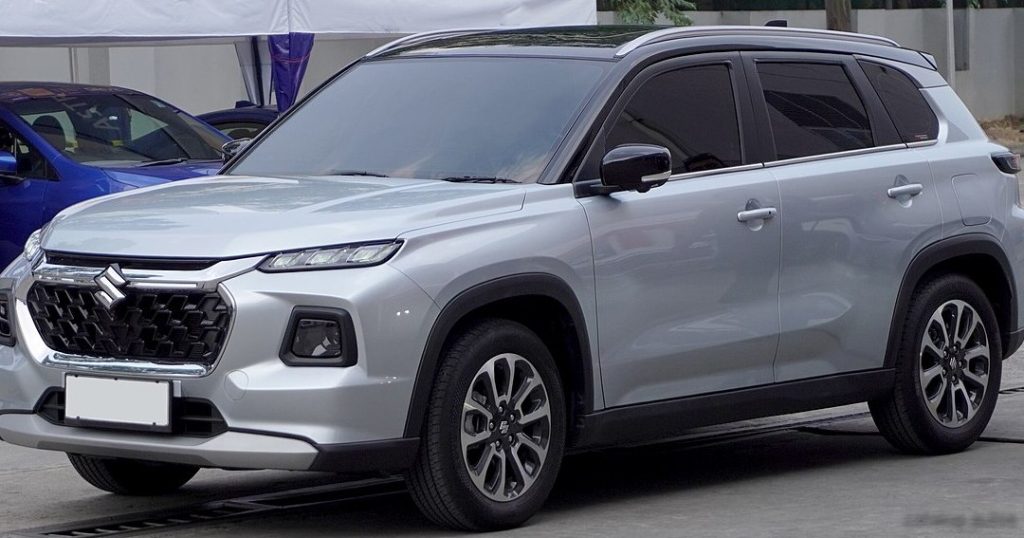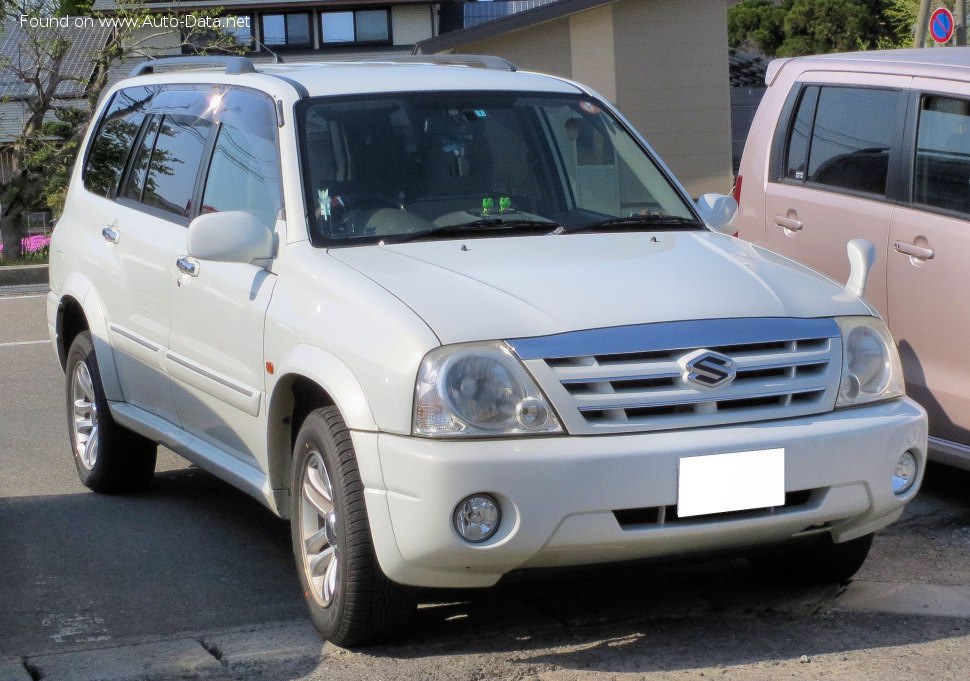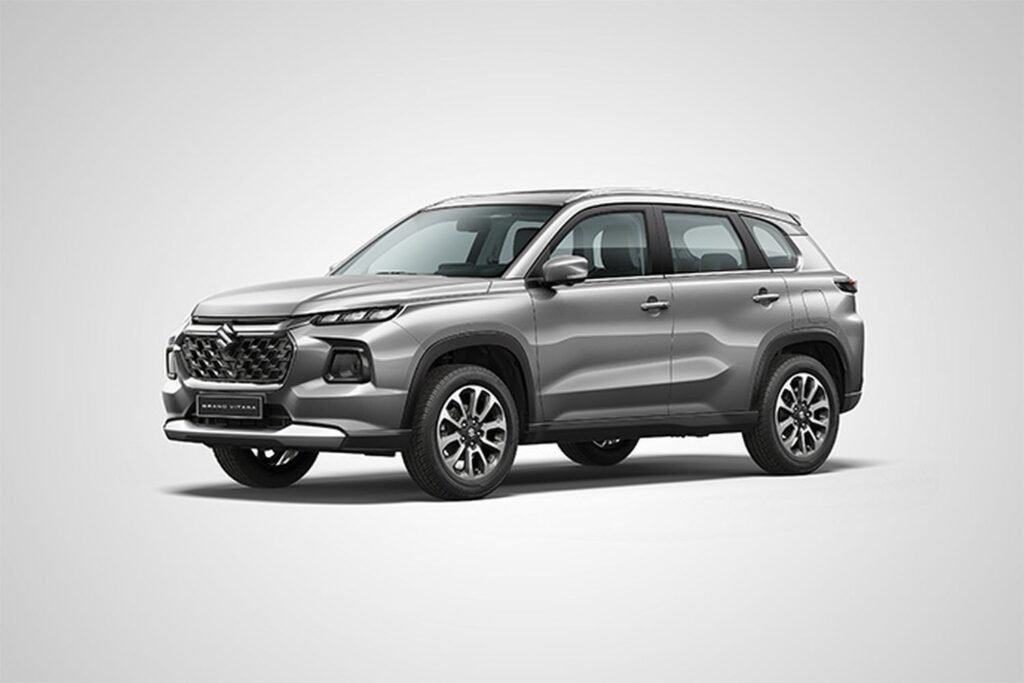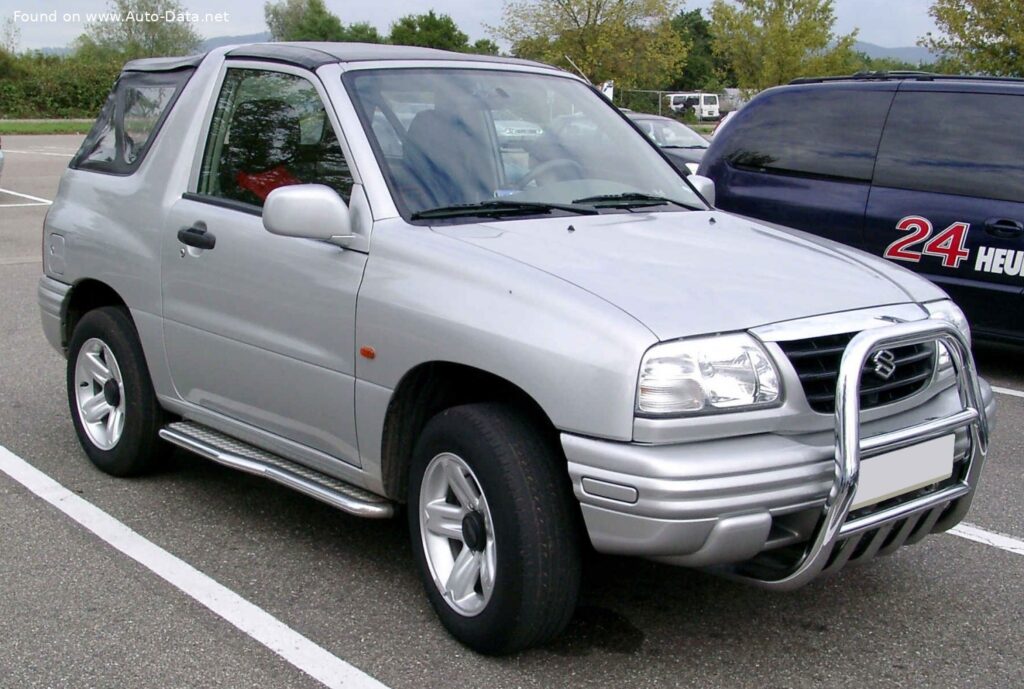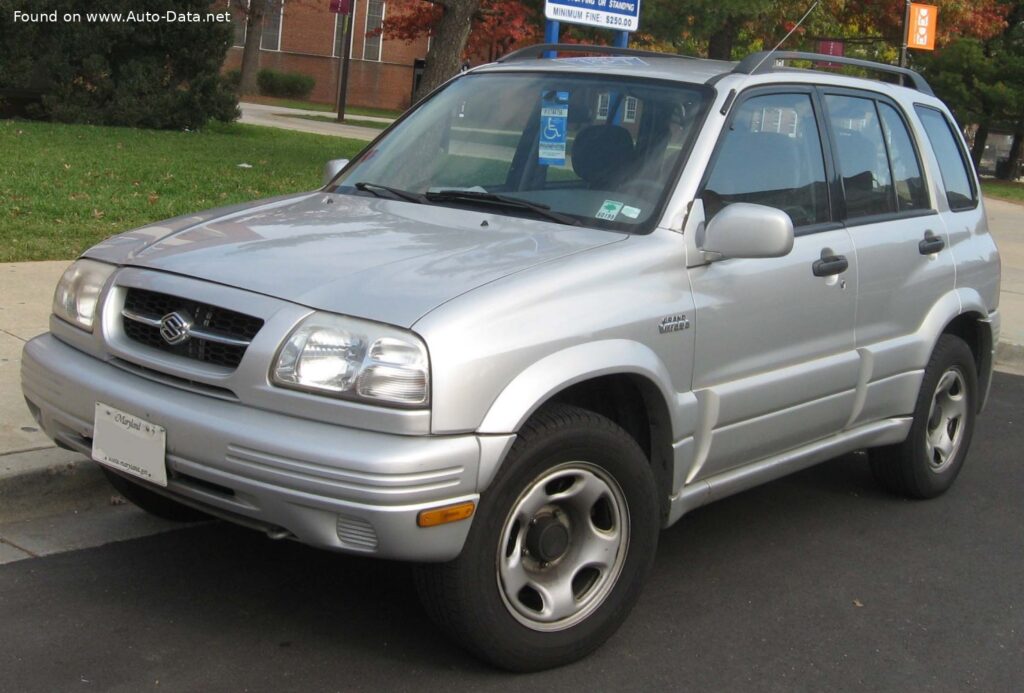
The Suzuki Grand Vitara II (facelift 2008) 3 Door 1.9 DDiS (129 Hp) AWD represents a significant iteration of Suzuki’s long-standing commitment to producing capable and compact sport utility vehicles. Launched in September 2008 as a refreshed version of the second-generation Grand Vitara, this model was designed primarily for European and Asian markets, where its combination of compact dimensions, robust four-wheel-drive system, and efficient diesel powertrain made it a compelling option for both urban driving and light off-road excursions. Unlike its larger, often gasoline-powered siblings sold in the North American market, this 3-door diesel variant offered a more focused proposition, catering to consumers seeking fuel economy and maneuverability without sacrificing genuine all-terrain capability. Production of this specific configuration continued until May 2010, cementing its place as a practical and versatile choice in its segment.
The Grand Vitara lineage has always been synonymous with rugged reliability and value, a tradition the second generation, and particularly this facelifted 3-door model, proudly upheld. Positioned in the compact SUV segment, it faced a diverse array of competitors, but its unique blend of a body-on-frame chassis (integrated into a monocoque structure for improved rigidity and ride comfort), permanent all-wheel drive, and a torquey diesel engine set it apart. This article will delve into the technical specifications, design philosophies, and market impact of the Suzuki Grand Vitara II (facelift 2008) 3 Door 1.9 DDiS (129 Hp) AWD, providing a comprehensive overview for automotive enthusiasts and experts alike.
Powertrain & Engine Architecture
At the heart of the Suzuki Grand Vitara II (facelift 2008) 3 Door 1.9 DDiS (129 Hp) AWD lies a potent 1.9-liter (1870 cm³, 114.11 cu. in.) F9Q inline-four diesel engine. This powerplant, known for its robust construction and widespread use in various European vehicles, was specifically tuned by Suzuki to deliver a balance of power and efficiency suitable for the Grand Vitara’s applications. It generates a respectable 129 horsepower at 3750 rpm, providing ample thrust for daily driving. More significantly for an SUV of its type, the engine produces a substantial 221.27 lb.-ft. (300 Nm) of torque, available at a low 2000 rpm. This strong low-end torque is crucial for off-road capability, allowing the vehicle to tackle challenging terrains and pull heavy loads with confidence.
The F9Q engine utilizes a Diesel Commonrail fuel injection system, ensuring precise fuel delivery for optimal combustion and efficiency. Coupled with a turbocharger and intercooler, it provides brisk acceleration and responsiveness across the rev range. The engine features a single overhead camshaft (SOHC) valvetrain with two valves per cylinder. This configuration, while simpler than dual overhead camshaft (DOHC) designs, contributes to the engine’s durability and ease of maintenance. The engine block is constructed from cast iron, further enhancing its robustness. The 5-speed manual transmission paired with this engine was a standard unit sourced from various suppliers, known for its durability and relatively simple design. It features synchromesh on all forward gears, ensuring smooth and precise shifting. The transmission’s gear ratios are optimized for both on-road cruising and off-road crawling, providing a balance between fuel efficiency and low-speed torque multiplication.
Driving Characteristics
The 1.9 DDiS engine, coupled with the 5-speed manual transmission, delivers a driving experience focused on practicality and efficiency rather than outright performance. Acceleration from 0 to 60 mph takes approximately 12.2 seconds, and the top speed is around 105.63 mph. Compared to the larger gasoline engines offered in other Grand Vitara variants, this 1.9L diesel provides significantly more low-end torque, making it more capable in off-road situations and when towing. However, it lacks the higher-revving power of the gasoline engines. The gear ratios in the 5-speed manual transmission are relatively long, prioritizing fuel economy at highway speeds. This can result in the need to downshift more frequently when accelerating or climbing hills. The permanent all-wheel-drive system provides excellent traction on various surfaces, enhancing stability and control. The steering is relatively light and precise, making it easy to maneuver in urban environments. Overall, the driving experience is characterized by its relaxed and composed nature, making it a comfortable and capable vehicle for everyday use and occasional off-road adventures.
Equipment & Trim Levels
The Grand Vitara II (facelift 2008) 3 Door 1.9 DDiS (129 Hp) AWD was typically equipped with a practical and functional interior. Standard features included air conditioning, power windows, central locking, and an audio system with CD player. The interior upholstery was typically cloth, with durable and easy-to-clean materials. The dashboard layout was straightforward and user-friendly, with logically placed controls. Optional extras included alloy wheels, a sunroof, and upgraded audio systems. Safety features were also a priority, with standard equipment including an Anti-lock Braking System (ABS) and front airbags. Depending on the specific market, additional safety features such as side airbags and Electronic Stability Program (ESP) may have been available as options. The 3-door configuration meant that rear seat access was somewhat limited, but the rear seats were still reasonably comfortable for passengers on shorter journeys. The rear seats also folded down to increase cargo space, providing added versatility.
Chassis & Braking
The Suzuki Grand Vitara II utilized a unique integrated ladder frame construction, combining the rigidity of a traditional body-on-frame SUV with the refined ride quality of a unibody design. This hybrid architecture provided exceptional torsional stiffness, crucial for both on-road handling and off-road durability. The suspension system consisted of independent MacPherson struts at the front and an independent multi-link suspension at the rear. This setup provided a comfortable ride and good handling characteristics. Ground clearance was a generous 8.07 inches (205 mm), allowing the vehicle to navigate uneven terrain with ease. The braking system featured ventilated disc brakes on all four wheels, providing strong and consistent stopping power. The ABS system helped to prevent wheel lockup during hard braking, enhancing safety and control. The steering system was a rack and pinion type with electric power steering, offering light and precise control.
Market Reception & Comparison
Critics generally viewed the 1.8L Automatic Grand Vitara as a practical and capable SUV, particularly for those seeking fuel efficiency and all-terrain capability. The diesel engine was praised for its torque and fuel economy, while the all-wheel-drive system was lauded for its effectiveness in various driving conditions. However, some critics noted that the engine lacked the refinement and power of some of its competitors. Compared to the gasoline-powered Grand Vitara variants, the 1.9 DDiS model offered significantly better fuel economy but slightly less overall performance. It also tended to be more expensive to maintain due to the complexity of the diesel engine and its associated components. In terms of reliability, the Grand Vitara II generally enjoyed a good reputation, but some owners reported issues with the diesel particulate filter (DPF) and the fuel injection system. Overall, the 1.9 DDiS model represented a compelling option for those seeking a versatile and fuel-efficient SUV with genuine off-road capability.
Technical Specifications
| Category | Specification |
| Brand | Suzuki |
| Model | Grand Vitara |
| Generation | Grand Vitara II (facelift 2008) 3 Door |
| Type (Engine) | 1.9 DDiS (129 Hp) AWD |
| Production Start | September, 2008 |
| Production End | May, 2010 |
| Powertrain Architecture | Internal Combustion Engine |
| Body Type | SUV |
| Seats | 4 |
| Doors | 3 |
| Fuel Consumption (Urban NEDC) | 8.3 l/100 km (28.3 US mpg) |
| Fuel Consumption (Extra Urban NEDC) | 6.2 l/100 km (37.9 US mpg) |
| Fuel Consumption (Combined NEDC) | 7.0 l/100 km (33.6 US mpg) |
| CO2 Emissions (NEDC) | 183 g/km |
| Fuel Type | Diesel |
| Acceleration 0 – 60 mph | 12.2 sec |
| Maximum Speed | 105.63 mph (170 km/h) |
| Emission Standard | Euro 4 |
| Weight-to-power ratio | 11.8 kg/Hp (84.5 Hp/tonne) |
| Power | 129 Hp @ 3750 rpm |
| Power per liter | 69 Hp/l |
| Torque | 221.27 lb.-ft. (300 Nm) @ 2000 rpm |
| Engine Layout | Front, Longitudinal |
| Engine Model/Code | F9Q |
| Engine Displacement | 1.9 liters (1870 cm³, 114.11 cu. in.) |
| Number of Cylinders | 4 |
| Engine Configuration | Inline |
| Cylinder Bore | 3.15 in. (80 mm) |
| Piston Stroke | 3.66 in. (93 mm) |
| Compression Ratio | 17:1 |
| Valves per Cylinder | 2 |
| Fuel Injection System | Diesel Commonrail |
| Engine Aspiration | Turbocharger, Intercooler |
| Engine Oil Capacity | 5.1 liters (5.39 US qt) |
| Engine Systems | Particulate filter |
| Kerb Weight | 3366.46 – 3545.03 lbs. (1527-1608 kg) |
| Max. Weight | 4276.97 lbs. (1940 kg) |
| Max Load | 731.93 – 910.51 lbs. (332-413 kg) |
| Trunk (Boot) Space – Minimum | 18.22 cu. ft. (516 l) |
| Trunk (Boot) Space – Maximum | 34.04 cu. ft. (964 l) |
| Fuel Tank Capacity | 14.53 US gal (55 l) |
| Permitted Trailer Load with Brakes (12%) | 3527.4 lbs. (1600 kg) |
| Permitted Trailer Load without Brakes | 1212.54 lbs. (550 kg) |
| Permitted Towbar Download | 187.39 lbs. (85 kg) |
| Length | 163.39 in. (4150 mm) |
| Width | 73.62 in. (1870 mm) |
| Height | 66.73 in. (1695 mm) |
| Wheelbase | 96.06 in. (2440 mm) |
| Front Track | 60.63 in. (1540 mm) |
| Rear Track | 61.81 in. (1570 mm) |
| Ride Height (Ground Clearance) | 8.07 in. (205 mm) |
| Minimum Turning Circle | 33.46 ft. (10.2 m) |
| Drivetrain Architecture | Permanent All-Wheel Drive (4×4) |
| Drive Wheel | All-Wheel Drive (4×4) |
| Number of Gears | 5 |
| Gearbox Type | Manual Transmission |
| Front Suspension | Independent type McPherson |
| Rear Suspension | Independent multi-link suspension |
| Front Brakes | Ventilated discs |
| Rear Brakes | Ventilated discs |
| Assisting Systems | ABS (Anti-lock braking system) |
| Steering Type | Steering rack and pinion |
| Power Steering | Electric Steering |
| Tires Size | 215/70 R16 99H; 225/70 R16 102S; 225/70 R16 101H |
| Wheel Rims Size | 6.5J x 16 |
Legacy
The Suzuki Grand Vitara II (facelift 2008) 3 Door 1.9 DDiS (129 Hp) AWD carved out a distinct niche in its primary European and Asian markets. Its legacy is rooted in Suzuki’s long-standing reputation for building durable, capable, and surprisingly affordable 4×4 vehicles, a tradition that began with iconic models like the Samurai and the original Vitara/Sidekick. The second-generation Grand Vitara, and particularly this 3-door diesel variant, continued this heritage by offering a more refined and comfortable package without compromising its off-road prowess.
In Europe, where diesel engines and compact SUVs were highly valued, the 1.9 DDiS model found a receptive audience. It competed against a diverse range of vehicles, from more road-biased compact SUVs like the first-generation Nissan Qashqai and certain variants of the Honda CR-V, to more off-road-focused contenders such as the Land Rover Freelander (particularly its smaller diesel engines) and even the Toyota RAV4 3-door models from earlier generations. What set the Grand Vitara apart was its unique blend of a genuine low-range capable (though this specific 1.9 DDiS variant had permanent AWD, not always low-range in all markets, but the chassis was capable) all-wheel-drive system, robust construction, and relatively compact dimensions, making it adept at navigating both congested city streets and challenging rural paths.
Its market impact stemmed from its versatility. For many, it served as a practical family vehicle, offering decent fuel economy and a commanding driving position. For others, its sturdy build, ample ground clearance, and permanent AWD made it an ideal companion for outdoor activities, light towing (up to 3527.4 lbs. with brakes), and navigating snowy or unpaved roads. The 3-door configuration, while limiting rear passenger access, appealed to those who valued its sportier aesthetic and slightly shorter wheelbase for increased maneuverability. Today, well-maintained examples of the Grand Vitara II 1.9 DDiS are sought after by enthusiasts and those looking for a reliable and capable used SUV. The F9Q diesel engine, while requiring regular maintenance, is known for its longevity. Potential buyers should be aware of the potential for DPF issues and ensure that the vehicle has been properly serviced throughout its life. Overall, the Grand Vitara II 1.9 DDiS remains a testament to Suzuki’s engineering philosophy: building capable, reliable, and value-oriented vehicles that empower drivers to explore beyond the pavement. Its robust construction and dependable powertrain ensure that many examples continue to serve their owners faithfully, underscoring its enduring legacy as a true workhorse in the compact SUV segment.