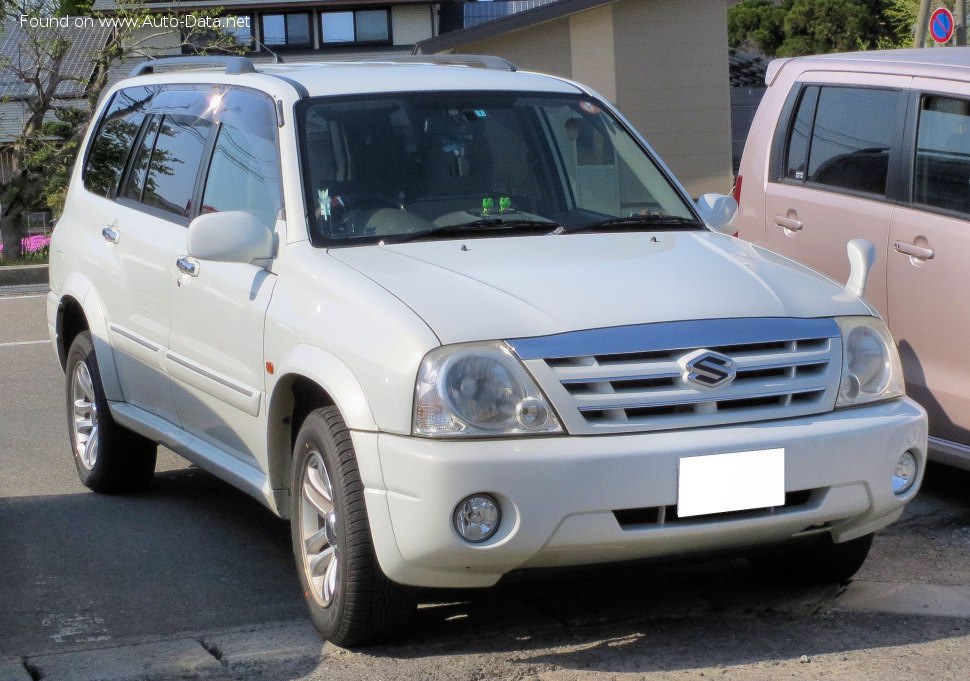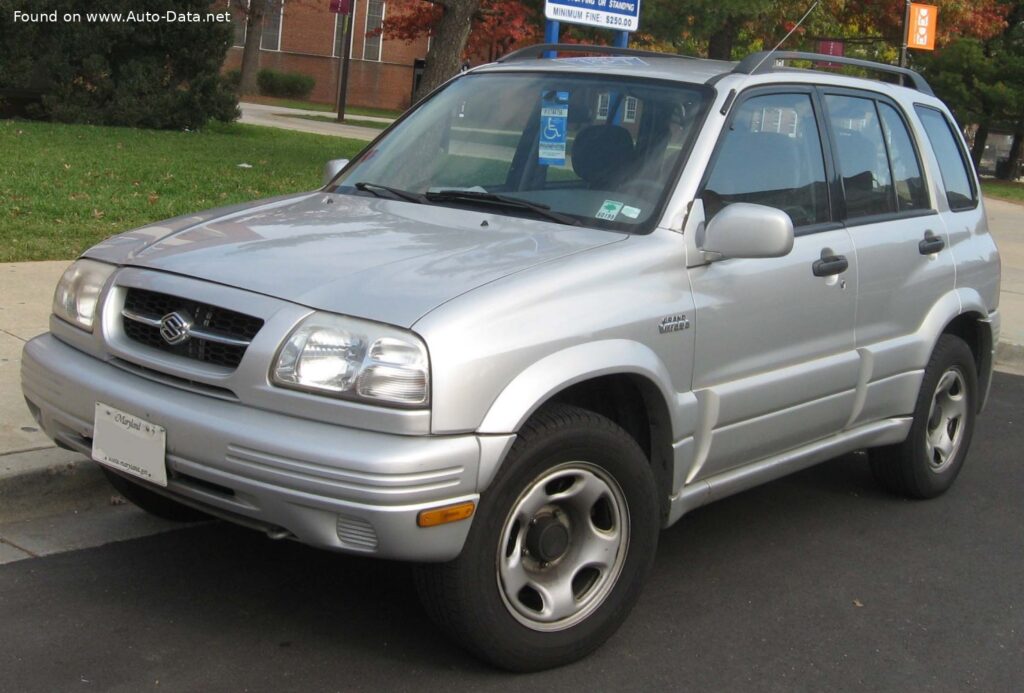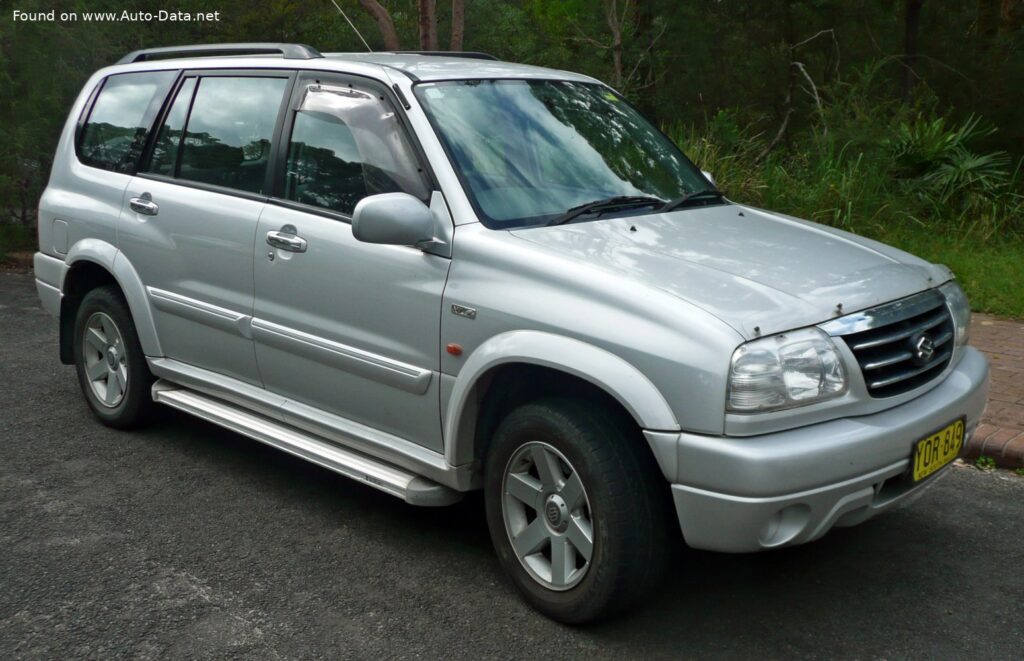
The Suzuki Grand Vitara XL-7 (HT) represents a significant evolution in Suzuki’s popular compact SUV lineup, offering an extended wheelbase and enhanced versatility. Introduced for the 1998 model year and continuing production until 2005, this specific variant, powered by a 2.7-liter V6 engine and equipped with an automatic transmission, aimed to bridge the gap between smaller, car-based SUVs and larger, more traditional truck-based utility vehicles. In the North American market, where it was known simply as the Suzuki XL-7, it provided a compelling option for consumers seeking more space and power than the standard Grand Vitara, without the bulk or fuel consumption of full-size SUVs. The Suzuki Grand Vitara XL-7 (HT) carved out a niche for itself, emphasizing a blend of on-road comfort and Suzuki’s renowned off-road capability, making it a distinctive player in the burgeoning SUV segment of its era.
Engine & Performance of the Suzuki Grand Vitara XL-7 (HT)
Under the hood of the Suzuki Grand Vitara XL-7 (HT) lies a robust and reliable 2.7-liter (2736 cm3 or 166.96 cu. in.) naturally aspirated V6 engine, designated as the H27A. This powerplant was a key differentiator for the XL-7, providing a substantial upgrade in power and torque compared to the four-cylinder engines found in many of its segment rivals. The V6 engine, featuring a DOHC (Double Overhead Camshaft) valvetrain with four valves per cylinder, was engineered for smooth operation and respectable performance. It delivered a healthy 173 horsepower at 6000 rpm, which was competitive for its time and segment, allowing the XL-7 to handle highway cruising and light towing with relative ease.
Torque output stood at 231 Nm (170.38 lb.-ft.) at a relatively low 3300 rpm. This ample torque at lower engine speeds contributed to the vehicle’s responsive acceleration and capability to navigate varied terrain, even with its rear-wheel-drive architecture. Paired with a 4-speed automatic transmission, the powertrain focused on providing a user-friendly and comfortable driving experience. The automatic gearbox, while not as sophisticated as modern multi-speed units, was well-matched to the engine’s power band, ensuring smooth shifts and predictable performance.
In terms of acceleration, the Suzuki Grand Vitara XL-7 (HT) could sprint from 0 to 60 mph in approximately 10 seconds (0-100 km/h in 10.5 seconds), with a maximum speed of 108.74 mph (175 km/h). These figures positioned it as a capable, rather than overtly sporty, performer, aligning with its role as a practical family SUV. Fuel efficiency, a growing concern even in the early 2000s, was rated at a combined 19.6 US mpg (12 l/100 km), with urban consumption at 15.1 US mpg (15.6 l/100 km) and extra-urban at 23.8 US mpg (9.9 l/100 km). While not class-leading, these figures were acceptable for a V6-powered SUV of its size and weight (kerb weight of 3703.77 lbs or 1680 kg). The 17.44 US gallon (66 liter) fuel tank provided a decent cruising range.
Design and Features
The Suzuki Grand Vitara XL-7 (HT) was designed as a five-door SUV, characterized by its longer wheelbase compared to the standard Grand Vitara. This extended platform contributed to a more spacious interior. While the “XL-7” designation often implied a seven-seat configuration in some markets, the specific variant detailed here is noted as a 5-seater in its technical specifications, offering generous passenger room and cargo capacity. Its exterior styling was rugged yet refined, featuring a robust stance typical of SUVs from the late 1990s and early 2000s.
Dimensionally, the XL-7 measured 185.04 inches (4700 mm) in length, 70.08 inches (1780 mm) in width, and 68.5 inches (1740 mm) in height, with a substantial wheelbase of 110.24 inches (2800 mm). These dimensions provided a stable ride and significant interior volume. The cargo area was particularly versatile, offering a minimum of 6.6 cu. ft. (187 liters) with the rear seats in place, which could expand to an impressive 72.92 cu. ft. (2065 liters) with the rear seats folded, making it highly practical for hauling gear, groceries, or luggage.
The vehicle’s chassis featured a traditional body-on-frame construction, enhancing its durability and off-road potential, even in its rear-wheel-drive configuration. The suspension system comprised a wishbone setup at the front and coil springs at the rear, designed to balance on-road comfort with the ability to absorb bumps on less-than-perfect roads. Braking was handled by ventilated discs at the front and drum brakes at the rear, augmented by an Anti-lock Braking System (ABS) for improved safety during emergency stops. Steering was a hydraulic rack and pinion system, providing direct feedback and ease of maneuverability, complemented by power steering as standard. The XL-7 rode on 235/60 R16 H tires, offering a good balance of grip and ride comfort.
Technical Specifications: Suzuki Grand Vitara XL-7 (HT) 2.7 i V6 (173 Hp) Automatic
| Category | Specification |
| General Information | |
| Brand | Suzuki |
| Model | Grand Vitara |
| Generation | Grand Vitara XL-7 (HT) |
| Type (Engine) | 2.7 i V6 (173 Hp) Automatic |
| Start of Production | 1998 year |
| End of Production | 2005 year |
| Powertrain Architecture | Internal Combustion engine |
| Body type | SUV |
| Seats | 5 |
| Doors | 5 |
| Performance Specs | |
| Fuel consumption (economy) – urban | 15.6 l/100 km (15.1 US mpg) |
| Fuel consumption (economy) – extra urban | 9.9 l/100 km (23.8 US mpg) |
| Fuel consumption (economy) – combined | 12 l/100 km (19.6 US mpg) |
| Fuel Type | Petrol (Gasoline) |
| Acceleration 0 – 60 mph | 10 sec |
| Maximum speed | 175 km/h (108.74 mph) |
| Weight-to-power ratio | 9.7 kg/Hp (103 Hp/tonne) |
| Weight-to-torque ratio | 7.3 kg/Nm (137.5 Nm/tonne) |
| Engine Specs | |
| Power | 173 Hp @ 6000 rpm |
| Power per liter | 63.2 Hp/l |
| Torque | 231 Nm @ 3300 rpm (170.38 lb.-ft. @ 3300 rpm) |
| Engine layout | Front, Longitudinal |
| Engine Model/Code | H27A |
| Engine displacement | 2736 cm3 (166.96 cu. in.) |
| Number of cylinders | 6 |
| Engine configuration | V-engine |
| Cylinder Bore | 88 mm (3.46 in.) |
| Piston Stroke | 75 mm (2.95 in.) |
| Compression ratio | 9.5:1 |
| Number of valves per cylinder | 4 |
| Fuel injection system | Multi-port manifold injection |
| Engine aspiration | Naturally aspirated engine |
| Valvetrain | DOHC |
| Engine oil capacity | 5.5 l (5.81 US qt) |
| Coolant | 8 l (8.45 US qt) |
| Space, Volume and Weights | |
| Kerb Weight | 1680 kg (3703.77 lbs) |
| Max. weight | 2260 kg (4982.45 lbs) |
| Max load | 580 kg (1278.68 lbs) |
| Trunk (boot) space – minimum | 187 l (6.6 cu. ft.) |
| Trunk (boot) space – maximum | 2065 l (72.92 cu. ft.) |
| Fuel tank capacity | 66 l (17.44 US gal) |
| Dimensions | |
| Length | 4700 mm (185.04 in.) |
| Width | 1780 mm (70.08 in.) |
| Height | 1740 mm (68.5 in.) |
| Wheelbase | 2800 mm (110.24 in.) |
| Front track | 1500 mm (59.06 in.) |
| Rear (Back) track | 1500 mm (59.06 in.) |
| Drivetrain, Brakes and Suspension Specs | |
| Drivetrain Architecture | The Internal combustion engine (ICE) drives the rear wheels of the vehicle. |
| Drive wheel | Rear wheel drive |
| Number of gears and type of gearbox | 4 gears, automatic transmission |
| Front suspension | Wishbone |
| Rear suspension | Coil spring |
| Front brakes | Ventilated discs |
| Rear brakes | Drum |
| Assisting systems | ABS (Anti-lock braking system) |
| Steering type | Steering rack and pinion |
| Power steering | Hydraulic Steering |
| Tires size | 235/60 R16 H |
Legacy and Market Impact
The Suzuki Grand Vitara XL-7 (HT) occupied a unique position in the highly competitive SUV market of the late 1990s and early 2000s. It was larger and more powerful than many of the emerging car-based compact SUVs like the Honda CR-V and Toyota RAV4, yet more agile and fuel-efficient than larger, traditional body-on-frame SUVs from domestic manufacturers. Its extended wheelbase and the availability of a potent V6 engine allowed it to appeal to a demographic seeking a versatile family vehicle that could also handle light-duty off-road excursions, a hallmark of Suzuki’s SUV heritage.
In the North American market, the XL-7 faced competition from a diverse array of vehicles, including the Ford Escape, Hyundai Santa Fe, and even some smaller offerings from Jeep. However, the XL-7 differentiated itself with a reputation for robust build quality, reliability, and a more rugged demeanor than some of its car-like rivals. Its body-on-frame construction and available four-wheel-drive (though this specific variant is rear-wheel-drive) contributed to a perception of durability and capability that resonated with consumers who valued practicality and a sense of adventure.
The XL-7’s legacy is rooted in its ability to offer a compelling value proposition. It provided V6 power and substantial interior space at a price point that often undercut larger, similarly equipped SUVs. This made it an attractive option for families and individuals who needed the utility of an SUV but were conscious of budget and running costs. While it may not have achieved the same sales volume as some of its mainstream competitors, the Suzuki Grand Vitara XL-7 (HT) played a crucial role in expanding Suzuki’s presence in the global SUV market, reinforcing the brand’s image for producing capable, dependable, and often understated utility vehicles. Its production run from 1998 to 2005 solidified its place as a dependable and practical choice for those seeking a mid-sized SUV with a blend of comfort and traditional SUV robustness.