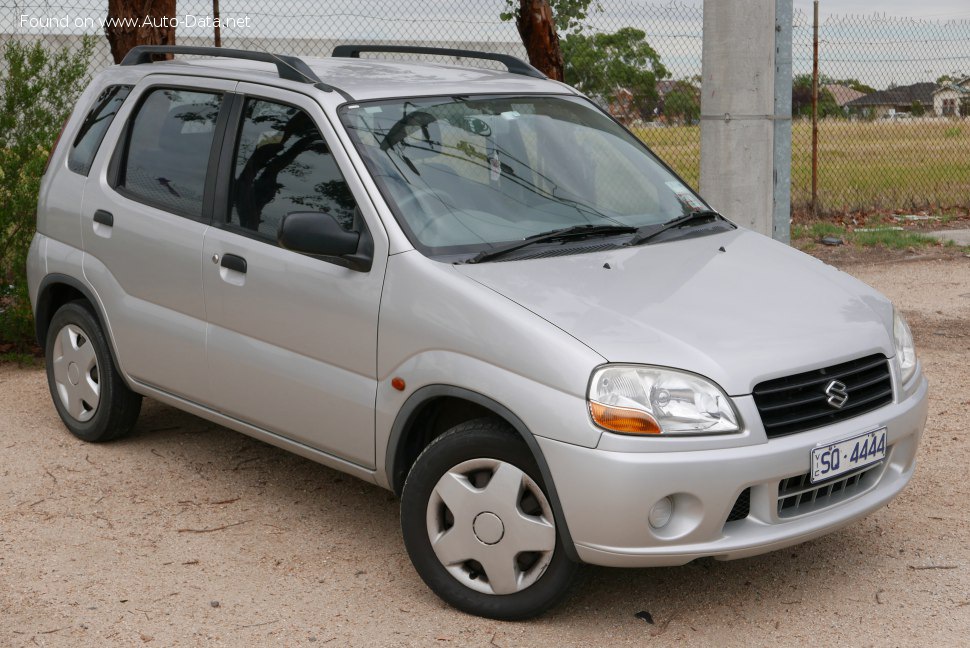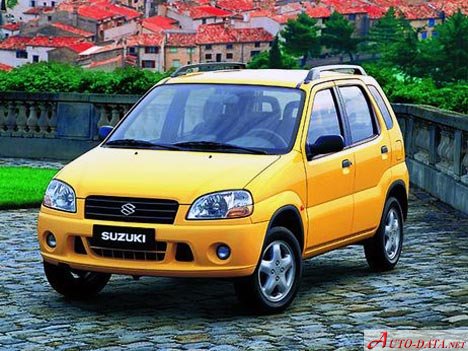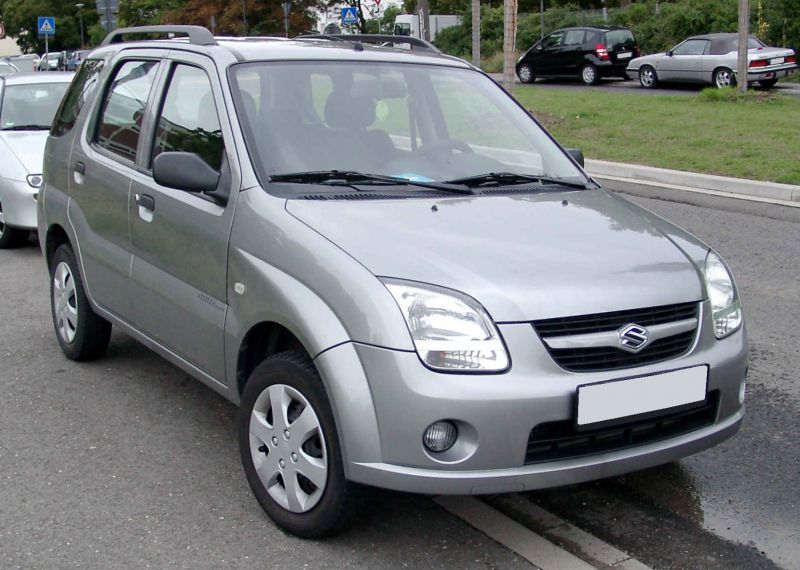
The Suzuki Ignis I MH represents the first generation of Suzuki’s subcompact car, a versatile and practical offering that carved out a niche in the global automotive market, particularly in Europe, Asia, and Australia. Produced from 2003 to 2008, this iteration of the Ignis was known for its compact dimensions, fuel efficiency, and a surprisingly spacious interior, making it a popular choice for urban dwellers and those seeking an affordable, reliable vehicle. While not primarily marketed in the United States in this specific guise, its underlying platform and ethos were indicative of Suzuki’s global strategy for small, robust vehicles. This particular variant, the 1.5 i 16V with 99 horsepower and an automatic transmission, highlighted the model’s blend of modest performance and user-friendly operation.
Suzuki Ignis I MH: A Global Compact Hatchback
The Ignis I MH (MH stands for “Multi Hatch”) was designed to appeal to a broad demographic seeking an economical and practical vehicle. It occupied the B-segment in the European market, competing with other supermini hatchbacks. Its success stemmed from a combination of affordability, reliability, and a surprisingly spacious interior for its size. The vehicle’s design also anticipated the growing popularity of small crossovers, offering a slightly elevated ride height and a more robust appearance than traditional city cars.
Engine & Performance
At the heart of the Suzuki Ignis I MH 1.5 i 16V Automatic lies a 1.5-liter (1490 cm3 or 90.93 cubic inches) M15A inline four-cylinder engine. This naturally aspirated powerplant utilizes a Double Overhead Camshaft (DOHC) valvetrain with 16 valves – four per cylinder – to optimize airflow and enhance both efficiency and power delivery. A compression ratio of 9.5:1, coupled with a multi-port fuel injection system, contributes to smooth operation and respectable fuel economy for its era.
The M15A engine produces a peak power output of 99 horsepower at 5900 revolutions per minute (rpm) and a maximum torque of 133 Newton-meters (equivalent to 98.1 lb.-ft.) at 4100 rpm. Power is transferred to the front wheels via a conventional 4-speed automatic transmission, prioritizing ease of driving over sporty performance. Despite its modest power figures, the Ignis’s relatively lightweight construction results in a power-to-weight ratio of 103.1 Hp per tonne (or 9.7 kg/Hp).
Performance figures include a 0 to 60 miles per hour acceleration time of approximately 10.5 seconds (0 to 100 km/h in 11 seconds) and a top speed of 102.53 mph (165 km/h). These figures position the Ignis as a suitable performer for urban driving and highway cruising, rather than a vehicle focused on outright speed. Fuel economy was a key strength, with urban consumption rated at 9.8 liters per 100 kilometers (approximately 24 US mpg) and extra-urban consumption at an impressive 5.8 liters per 100 kilometers (40.6 US mpg). The 41-liter (10.83 US gallons) fuel tank provides a reasonable driving range.
Design & Features
The Suzuki Ignis I MH featured a distinctive design for its segment, blending hatchback practicality with a slightly taller, more upright stance. This elevated body provided increased ground clearance and a higher seating position, improving visibility and ease of access – features particularly valued by drivers in congested urban environments. Its compact dimensions – a length of 148.43 inches (3770 mm), a width of 63.19 inches (1605 mm), and a height of 61.61 inches (1565 mm) – ensured exceptional maneuverability and ease of parking.
The Ignis I MH was offered exclusively as a 5-door hatchback, providing convenient access for five occupants. The interior design prioritized utility and space efficiency. The rear seats could be folded down, expanding the trunk (boot) space from a minimum of 8.33 cubic feet (236 liters) to a generous maximum of 35.39 cubic feet (1002 liters), offering considerable cargo flexibility. This made the Ignis a surprisingly versatile vehicle for shopping trips or weekend getaways, despite its small footprint.
Standard features for the era included essential safety equipment such as an Anti-lock Braking System (ABS), a significant advancement for compact cars at the time. The vehicle utilized disc brakes on the front wheels and drum brakes on the rear, a common and cost-effective configuration. The steering system was a responsive rack-and-pinion type, contributing to the car’s agile handling. Suspension was provided by spring struts on both the front and rear axles, delivering a comfortable and stable ride. The car rode on 165/70 R14 tires, offering a balance of comfort and grip appropriate for its intended use.
Technical Specifications
| Category | Specification |
| General Information | |
| Brand | Suzuki |
| Model | Ignis |
| Generation | Ignis I MH |
| Type (Engine) | 1.5 i 16V (99 Hp) Automatic |
| Production Start | 2003 |
| Production End | 2008 |
| Powertrain Architecture | Internal Combustion engine |
| Body type | Hatchback |
| Seats | 5 |
| Doors | 5 |
| Performance Specifications | |
| Fuel Consumption (Urban) | 9.8 l/100 km (24 US mpg) |
| Fuel Consumption (Extra Urban) | 5.8 l/100 km (40.6 US mpg) |
| Fuel Type | Petrol (Gasoline) |
| Acceleration 0-60 mph | 10.5 sec |
| Acceleration 0-100 km/h | 11 sec |
| Maximum Speed | 165 km/h (102.53 mph) |
| Weight-to-Power Ratio | 9.7 kg/Hp (103.1 Hp/tonne) |
| Weight-to-Torque Ratio | 7.2 kg/Nm (138.5 Nm/tonne) |
| Engine Specifications | |
| Power | 99 Hp @ 5900 rpm |
| Torque | 133 Nm (98.1 lb.-ft.) @ 4100 rpm |
| Engine Layout | Front, Transverse |
| Engine Model/Code | M15A |
| Engine Displacement | 1490 cm3 (1.5 liters / 90.93 cu. in.) |
| Number of Cylinders | 4 |
| Engine Configuration | Inline |
| Cylinder Bore | 78 mm (3.07 in.) |
| Piston Stroke | 78 mm (3.07 in.) |
| Compression Ratio | 9.5:1 |
| Valves per Cylinder | 4 |
| Fuel Injection System | Multi-port manifold injection |
| Engine Aspiration | Naturally aspirated engine |
| Valvetrain | DOHC |
| Engine Oil Capacity | 4.1 liters (4.33 US qt) |
| Coolant Capacity | 5.4 liters (5.71 US qt) |
| Dimensions, Volume, and Weights | |
| Kerb Weight | 960 kg (2116.44 lbs.) |
| Max. Weight (GVWR) | 1470 kg (3240.8 lbs.) |
| Max Load | 510 kg (1124.36 lbs.) |
| Trunk (Boot) Space – Minimum | 236 liters (8.33 cu. ft.) |
| Trunk (Boot) Space – Maximum | 1002 liters (35.39 cu. ft.) |
| Fuel Tank Capacity | 41 liters (10.83 US gal) |
| Length | 3770 mm (148.43 in.) |
| Width | 1605 mm (63.19 in.) |
| Height | 1565 mm (61.61 in.) |
| Wheelbase | 2360 mm (92.91 in.) |
| Front Track | 1420 mm (55.91 in.) |
| Rear Track | 1419 mm (55.87 in.) |
| Drivetrain, Brakes, and Suspension | |
| Drivetrain Architecture | Front wheel drive; Internal Combustion engine drives the front wheels. |
| Drive Wheel | Front wheel drive |
| Gearbox Type | 4 gears, automatic transmission |
| Front Suspension | Spring Strut |
| Rear Suspension | Spring Strut |
| Front Brakes | Disc |
| Rear Brakes | Drum |
| Assisting Systems | ABS (Anti-lock braking system) |
| Steering Type | Steering rack and pinion |
| Tires Size | 165/70 R14 |
The Suzuki Ignis I MH, particularly the 1.5 i 16V Automatic variant, played a significant role in Suzuki’s global strategy for compact cars. In its primary markets of Europe and Asia, it was lauded for its reputation for reliability, affordability, and practical utility. Suzuki, a brand with a strong heritage in small cars and SUVs, leveraged its expertise to create a vehicle that was both economical to run and surprisingly robust for its size.
In the competitive subcompact segment, the Ignis faced rivals such as the Fiat Panda, Toyota Yaris, Honda Jazz (known as the Fit in some markets), and other B-segment hatchbacks. Its slightly elevated stance and available all-wheel-drive options (though not in this specific FWD automatic variant) gave it a unique appeal, bridging the gap between traditional hatchbacks and the emerging mini-SUV or crossover category. This design foresight allowed it to attract buyers looking for something a bit more versatile than a standard city car, without the bulk or expense of a full-fledged SUV.
The Ignis I MH’s historical significance lies in its embodiment of Suzuki’s core values: building small, efficient, and durable vehicles. It contributed to the brand’s image as a producer of dependable “world cars” that could adapt to diverse market needs. While the first-generation Ignis eventually ceased production in 2008, the nameplate was later revived, demonstrating the lasting impact and brand equity of the original model. Its legacy is one of a pragmatic and unfussy vehicle that delivered exactly what it promised: reliable, economical transportation with a touch of go-anywhere attitude for the urban landscape and beyond.