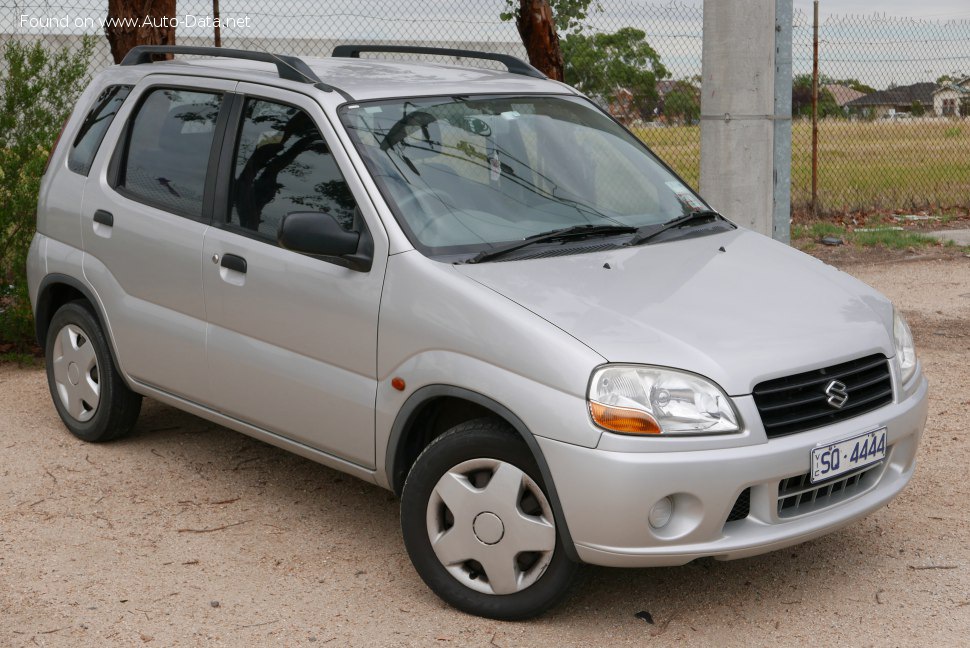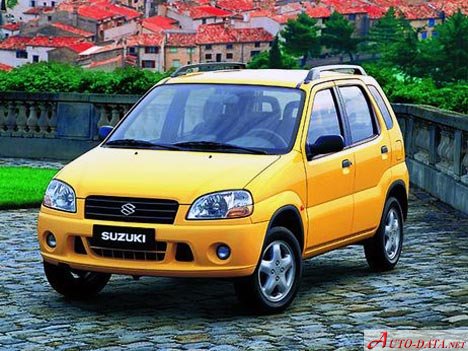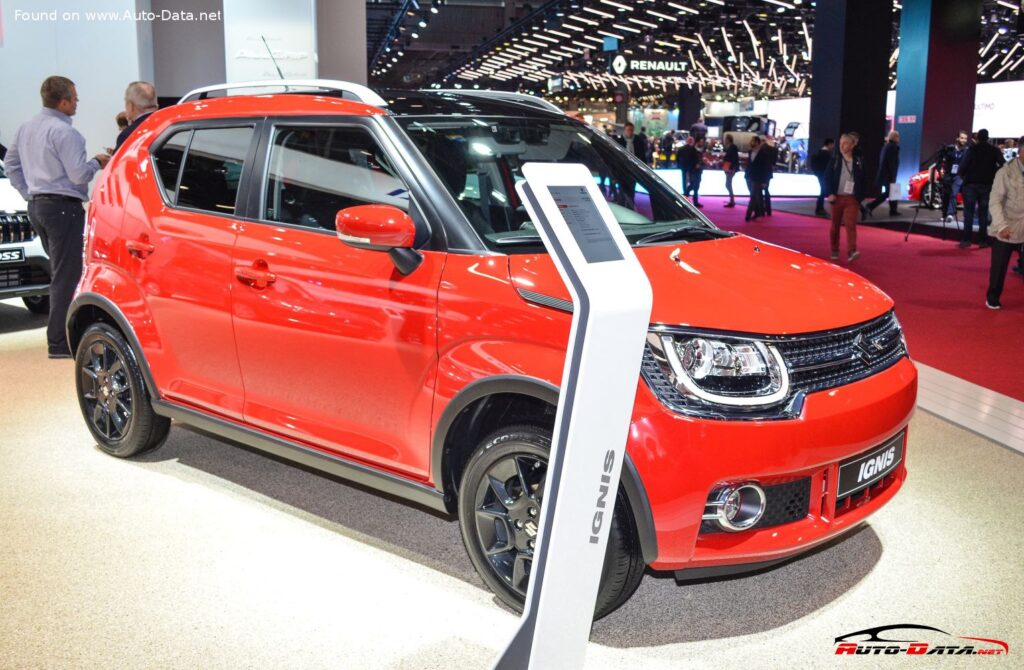
The Suzuki Ignis II 1.2 DualJet (90 Hp) AGS 5 Seat, produced from 2016 to December 2019, represents the second generation of Suzuki’s distinctive compact crossover. While not a mainstream offering in the North American market, the Ignis carved out a significant niche in Europe, Asia, and other global markets as a versatile and economical “micro-SUV.” This generation revived the Ignis nameplate, which had previously been used for a subcompact car, transforming it into a quirky, retro-futuristic urban utility vehicle designed to blend city maneuverability with a rugged, SUV-inspired aesthetic. Its compact dimensions, elevated seating position, and efficient powertrain made it an attractive option for consumers seeking a practical and stylish vehicle capable of navigating congested urban environments and light rural roads with ease.
Positioned in the burgeoning segment of small crossovers, the Ignis II offered a compelling package for buyers prioritizing fuel efficiency, a compact footprint, and a distinctive design. Its five-door, five-seat configuration provided surprising interior space for its size, further enhancing its appeal as a daily driver or a small family car in its primary markets. The 1.2 DualJet engine, paired with an Auto Gear Shift (AGS) transmission, underscored Suzuki’s commitment to delivering reliable, low-cost motoring solutions.
Engine & Performance of the Suzuki Ignis II
At the heart of the Suzuki Ignis II 1.2 DualJet (90 Hp) AGS 5 Seat lies a naturally aspirated 1.2-liter (1242 cm3 or 75.79 cu. in.) K12C inline-four cylinder engine. This powerplant, featuring a multi-port fuel injection system and four valves per cylinder, is a testament to Suzuki’s expertise in developing highly efficient small engines. It produces a respectable 90 horsepower at 6000 rpm, translating to a power-per-liter output of 72.5 Hp/l, which is commendable for a non-turbocharged engine of this displacement. Torque output stands at 120 Nm (88.51 lb.-ft.) at 4400 rpm, providing adequate thrust for city driving and highway cruising.
The engine’s design, with a compression ratio of 12.5:1, emphasizes fuel efficiency and clean emissions, meeting the stringent Euro 6 emission standard. It is positioned front and transverse, driving the front wheels, a common and efficient layout for compact vehicles. The K12C engine is known for its smooth operation and reliability, requiring an engine oil capacity of 3.3 liters (3.49 US quarts) and a coolant capacity of 4.2 liters (4.44 US quarts).
Power is transmitted through a 5-speed Auto Gear Shift (AGS) automatic transmission. This system, an automated manual transmission, offers the convenience of an automatic with the mechanical efficiency of a manual gearbox, contributing to the Ignis’s impressive fuel economy figures. The vehicle boasts a combined fuel consumption of 4.6 liters per 100 kilometers, which translates to an excellent 51.1 US miles per gallon. Urban driving yields 5.5 l/100 km (42.8 US mpg), while extra-urban consumption drops to 4.1 l/100 km (57.4 US mpg). With CO2 emissions of just 104 g/km, the Ignis II was an environmentally conscious choice in its segment.
Performance-wise, the Ignis II 1.2 DualJet AGS accelerates from 0 to 60 mph in approximately 11.6 seconds, and from 0 to 100 km/h in 12.2 seconds. Its top speed is rated at 170 km/h (105.63 mph). Given its light curb weight, ranging from 830 to 865 kg (1829.84 to 1907 lbs.), the vehicle achieves a favorable weight-to-power ratio of 9.2 kg/Hp (108.4 Hp/tonne), allowing for nimble handling and responsive acceleration in urban settings.
Design & Features: The Distinctive Suzuki Ignis II
The Suzuki Ignis II is characterized by its unique and polarizing design, a clear departure from conventional subcompacts or small SUVs. It adopted a distinct “micro-SUV” body type, featuring a robust, upright stance, prominent wheel arches, and short overhangs, giving it a playful yet rugged appearance. Measuring 3700 mm (145.67 inches) in length, 1660-1690 mm (65.35 to 66.54 inches) in width, and 1595 mm (62.8 inches) in height, the Ignis is remarkably compact, making it incredibly agile in tight city streets. The wheelbase of 2435 mm (95.87 inches) further contributes to its maneuverability, evidenced by a minimum turning circle of just 9.4 meters (30.84 feet).
Despite its small exterior, the Ignis II offers a surprisingly spacious interior for five occupants, thanks to clever packaging. The trunk space is practical, with a minimum capacity of 267 liters (9.43 cu. ft.) that expands to a generous 1097 liters (38.74 cu. ft.) with the rear seats folded, providing ample versatility for cargo. The elevated ride height of 180 mm (7.09 inches) not only contributes to its SUV-like appearance but also offers improved visibility and the capability to handle minor off-road excursions or rough terrain, further supported by approach, departure, and ramp-over angles of 20°, 38.8°, and 18° respectively.
The Ignis II features a robust chassis with an independent McPherson strut front suspension and a semi-independent, coil spring rear suspension, tuned for a comfortable yet controlled ride. Braking is handled by ventilated discs at the front and drum brakes at the rear, supplemented by an Anti-lock Braking System (ABS) for enhanced safety. The electric power steering system, with a rack and pinion setup, ensures light and precise steering, crucial for urban driving. The Ignis II came with tire sizes of either 175/65 R15 or 175/60 R16, mounted on 15 or 16-inch wheel rims, respectively. With a fuel tank capacity of 32 liters (8.45 US gallons), the Ignis offered a decent cruising range given its high fuel efficiency.
Technical Specifications
| General Information | |
|---|---|
| Brand | Suzuki |
| Model | Ignis |
| Generation | Ignis II |
| Type (Engine) | 1.2 DualJet (90 Hp) AGS 5 Seat |
| Production Start | 2016 |
| Production End | December, 2019 |
| Powertrain Architecture | Internal Combustion engine |
| Body type | SUV, 5 Doors |
| Seats | 5 |
| Performance Specifications | |
| Fuel Consumption (Urban) | 5.5 l/100 km (42.8 US mpg) |
| Fuel Consumption (Extra Urban) | 4.1 l/100 km (57.4 US mpg) |
| Fuel Consumption (Combined) | 4.6 l/100 km (51.1 US mpg) |
| CO2 Emissions | 104 g/km |
| Fuel Type | Petrol (Gasoline) |
| Acceleration 0-60 mph | 11.6 sec |
| Acceleration 0-100 km/h | 12.2 sec |
| Maximum Speed | 170 km/h (105.63 mph) |
| Emission Standard | Euro 6 |
| Weight-to-Power Ratio | 9.2 kg/Hp (108.4 Hp/tonne) |
| Weight-to-Torque Ratio | 6.9 kg/Nm (144.6 Nm/tonne) |
| Engine Specifications | |
| Power | 90 Hp @ 6000 rpm |
| Power per liter | 72.5 Hp/l |
| Torque | 120 Nm (88.51 lb.-ft.) @ 4400 rpm |
| Engine Layout | Front, Transverse |
| Engine Model/Code | K12C |
| Engine Displacement | 1242 cm3 (75.79 cu. in.) |
| Number of Cylinders | 4 |
| Engine Configuration | Inline |
| Cylinder Bore | 73 mm (2.87 in.) |
| Piston Stroke | 74.2 mm (2.92 in.) |
| Compression Ratio | 12.5:1 |
| Number of Valves per Cylinder | 4 |
| Fuel Injection System | Multi-port manifold injection |
| Engine Aspiration | Naturally aspirated engine |