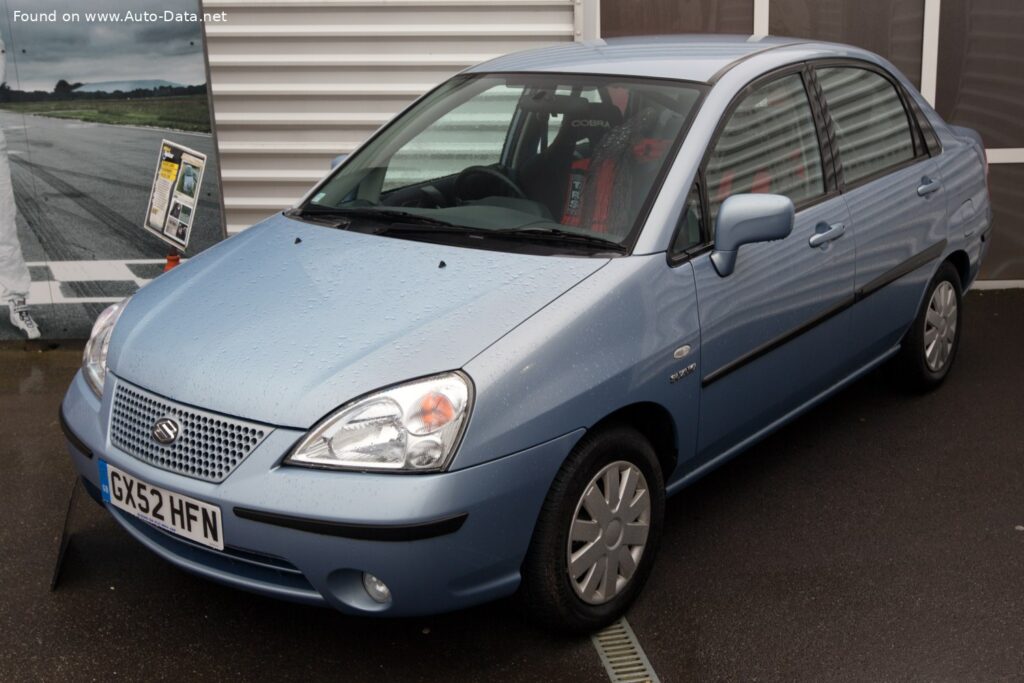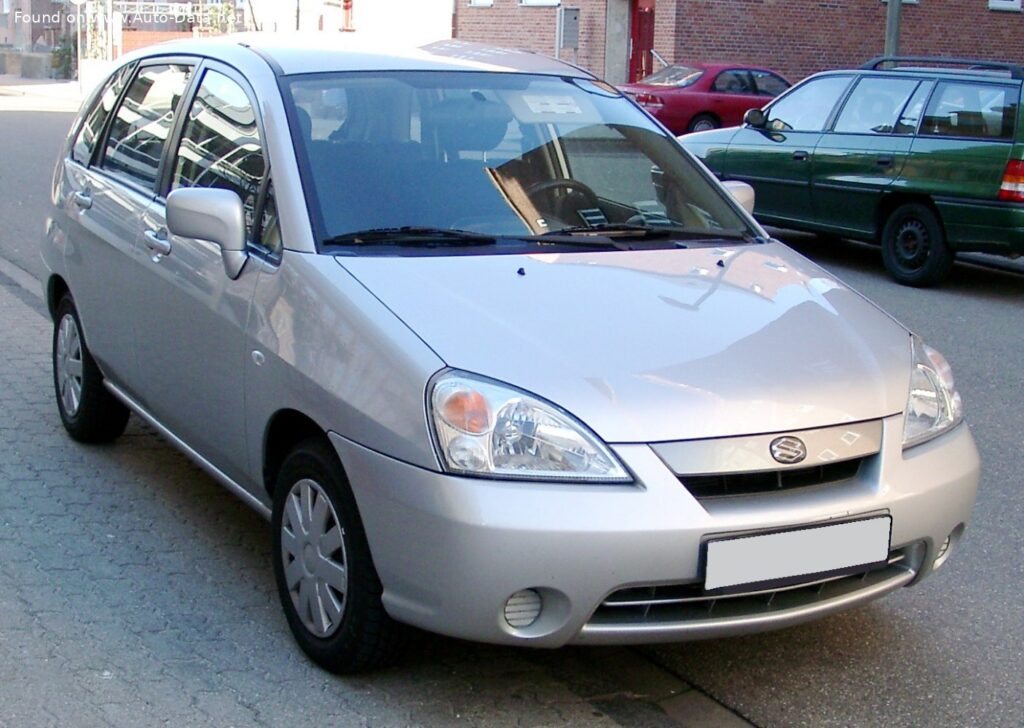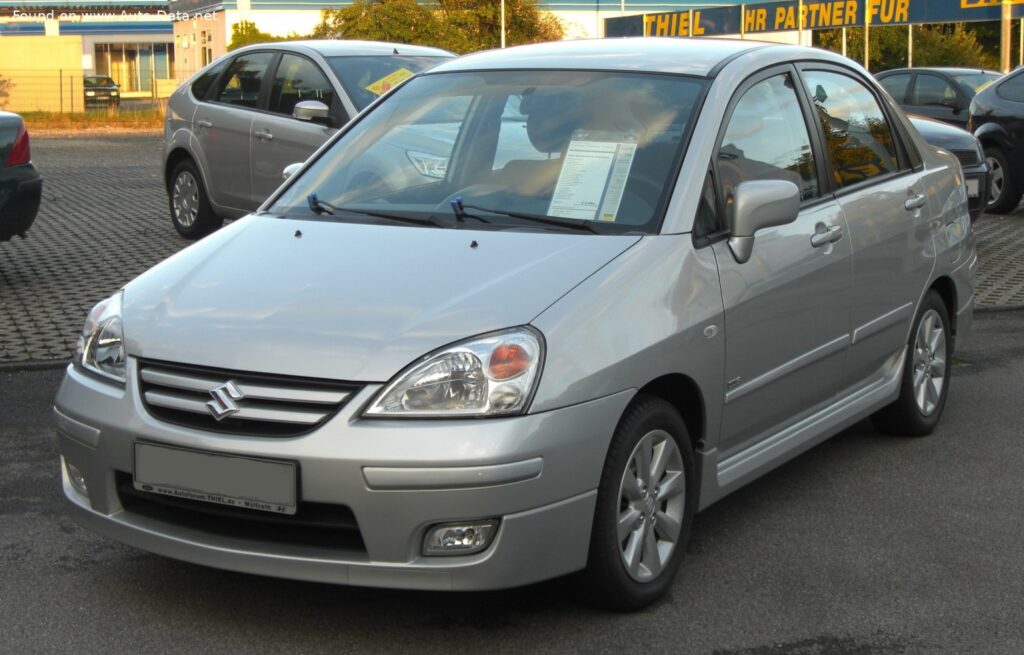
The Suzuki Liana Sedan I (facelift 2004) 1.6i (107 Hp) 4WD Automatic represented Suzuki’s attempt to gain a stronger foothold in the global compact car segment. Initially launched in 2001, the Liana aimed to provide a practical, versatile, and economical transportation solution. This particular variant, a four-door sedan produced from 2004 to 2007, was primarily marketed in Europe, Asia, and Australia, where its compact size, robust engineering, and optional all-wheel-drive system were well-received. While not a major player in the North American market, the Liana established itself as a value-oriented and dependable vehicle, embodying Suzuki’s reputation for building durable and efficient small cars. The 2004 facelift brought subtle styling and feature enhancements, maintaining its relevance in a competitive automotive landscape.
Engine & Performance of the Suzuki Liana Sedan I (facelift 2004)
The Suzuki Liana Sedan I (facelift 2004) 1.6i (107 Hp) 4WD Automatic is powered by Suzuki’s M16A engine. This is a 1.6-liter (1586 cm3 or 96.78 cu. in.) inline four-cylinder, naturally aspirated powerplant engineered for a balance of efficiency and usable power. The engine features a Double Overhead Camshaft (DOHC) valvetrain with four valves per cylinder, optimizing breathing and combustion. A multi-port fuel injection system ensures precise fuel metering and efficient combustion throughout the engine’s operating range.
The M16A engine produces 107 horsepower (Hp) at 5500 revolutions per minute (rpm), providing sufficient power for the compact sedan. Torque output is 144 Newton-meters (Nm), equivalent to 106.21 lb.-ft., peaking at 4000 rpm. This torque curve provides good responsiveness in city driving and adequate power for highway cruising, even with a full passenger load. The engine’s 9.7:1 compression ratio is compatible with regular gasoline fuel, contributing to its economical operation. With a power-to-liter ratio of 67.5 Hp/l, the M16A demonstrates Suzuki’s ability to maximize efficiency in its compact engine designs.
Power is delivered through a conventional 4-speed automatic transmission, chosen for its smooth shifting and ease of use, particularly in urban environments. A key feature of this Liana variant is its All-Wheel Drive (4WD) system, enhancing traction and stability in adverse weather conditions or on unpaved surfaces – a significant advantage in many of its target markets. Despite the added weight of the 4WD system, the Liana maintains a kerb weight of 2711.69 lbs (1230 kg), resulting in a weight-to-power ratio of 11.5 kg/Hp, or approximately 87 Hp per tonne.
Performance figures reflect the Liana’s practical nature. It achieves a maximum speed of 102.53 mph (165 km/h), sufficient for typical driving scenarios. Fuel economy, while not class-leading by modern standards, was competitive for its time, considering the automatic transmission and 4WD system. Combined fuel consumption is rated at 28.7 US mpg (8.2 l/100 km), with urban consumption at 22.8 US mpg (10.3 l/100 km) and extra-urban at 33.6 US mpg (7 l/100 km). The vehicle also meets the Euro 4 emission standard, demonstrating compliance with environmental regulations.
Design & Features: Practicality and Refinement
The Suzuki Liana Sedan I (facelift 2004) features a design philosophy centered on practicality, spaciousness, and understated aesthetics. As a four-door sedan, it offers a traditional body style favored by families for its dedicated trunk space and conventional proportions. The 2004 facelift included minor exterior revisions, such as updated grille designs, headlamp treatments, and potentially refreshed wheel options, to maintain a contemporary appearance.
The Liana sedan is compact yet intelligently packaged, measuring 171.26 inches (4350 mm) in length, 66.54 inches (1690 mm) in width, and 57.24 inches (1454 mm) in height. The 97.64-inch (2480 mm) wheelbase contributes to a stable ride and surprising interior volume for its class. These dimensions make the Liana maneuverable in urban settings while providing adequate space for five occupants.
The cabin accommodates five passengers, making it a viable family vehicle. While specific interior features beyond seating capacity are not detailed, a car of this era and segment would typically include air conditioning, power windows, and a basic audio system. The emphasis was on durability and ease of use rather than luxury.
In terms of safety, the 2004 Liana was equipped with an Anti-lock Braking System (ABS), preventing wheel lock-up during hard braking and maintaining steering control. The combination of a robust body structure, the available 4WD system for enhanced traction, and ABS underscored Suzuki’s commitment to occupant safety. The design, while not flashy, was honest and functional, reflecting the car’s role as a dependable everyday vehicle.
Technical Specifications
| Category | Specification |
| General Information | |
| Brand | Suzuki |
| Model | Liana |
| Generation | Liana Sedan I (facelift 2004) |
| Type (Engine) | 1.6i (107 Hp) 4WD Automatic |
| Start of Production | 2004 |
| End of Production | 2007 |
| Powertrain Architecture | Internal Combustion engine |
| Body type | Sedan |
| Seats | 5 |
| Doors | 4 |
| Performance Specs | |
| Fuel consumption (economy) – urban | 10.3 l/100 km (22.8 US mpg) |
| Fuel consumption (economy) – extra urban | 7 l/100 km (33.6 US mpg) |
| Fuel consumption (economy) – combined | 8.2 l/100 km (28.7 US mpg) |
| Fuel Type | Petrol (Gasoline) |
| Maximum speed | 165 km/h (102.53 mph) |
| Emission standard | Euro 4 |
| Weight-to-power ratio | 11.5 kg/Hp (87 Hp/tonne) |
| Weight-to-torque ratio | 8.5 kg/Nm (117.1 Nm/tonne) |
| Engine Specs | |
| Power | 107 Hp @ 5500 rpm |
| Power per liter | 67.5 Hp/l |
| Torque | 144 Nm @ 4000 rpm (106.21 lb.-ft. @ 4000 rpm) |
| Engine layout | Front, Transverse |
| Engine Model/Code | M16A |
| Engine displacement | 1586 cm3 (96.78 cu. in.) |
| Number of cylinders | 4 |
| Engine configuration | Inline |
| Cylinder Bore | 78 mm (3.07 in.) |
| Piston Stroke | 83 mm (3.27 in.) |
| Compression ratio | 9.7:1 |
| Number of valves per cylinder | 4 |
| Fuel injection system | Multi-port manifold injection |
| Engine aspiration | Naturally aspirated engine |
| Valvetrain | DOHC |
| Engine oil capacity | 4.1 l (4.33 US qt) |
| Coolant | 6.9 l (7.29 US qt) |
| Space, Volume and Weights | |
| Kerb Weight | 1230 kg (2711.69 lbs) |
| Dimensions | |
| Length | 4350 mm (171.26 in.) |
| Width | 1690 mm (66.54 in.) |
| Height | 1454 mm (57.24 in.) |
| Wheelbase | 2480 mm (97.64 in.) |
| Drivetrain, Brakes and Suspension Specs | |
| Drive wheel | All wheel drive (4×4) |
| Number of gears and type of gearbox | 4 gears, automatic transmission |
| Assisting systems | ABS (Anti-lock braking system) |
Legacy and Market Impact of the Suzuki Liana
The Suzuki Liana, particularly the sedan variant, played a significant, though often understated, role in Suzuki’s global strategy from 2001 to 2007, with the facelifted model extending its reach from 2004. While it didn’t achieve the sales figures of its more established rivals, the Liana earned a reputation as a dependable, no-frills, and value-for-money option. Its primary markets – Europe, Asia, and Australia – appreciated its practical design, robust mechanics, and competitive pricing.
In these regions, the Liana competed with models like the Toyota Corolla, Honda Civic, Hyundai Elantra, and offerings from Ford and Opel (Vauxhall). The Liana distinguished itself, especially in the 1.6i 4WD Automatic configuration, with its combination of a compact sedan body, an efficient gasoline engine, and all-wheel drive – a package uncommon in its price range. This appealed to buyers in areas with challenging weather or unpaved roads, offering enhanced traction without the bulk or fuel consumption of a larger SUV.
The Liana’s legacy is defined by its reliability and low running costs, traits synonymous with the Suzuki brand. Owners often praised its straightforward engineering, resulting in fewer mechanical issues and easier maintenance. While not celebrated for its driving dynamics or luxury, the Liana consistently delivered on its promise of practical, efficient, and durable transportation.
The Liana also gained recognition through its role as the “reasonably priced car” on the British motoring show, Top Gear. Although the hatchback version was featured, this exposure boosted the nameplate’s recognition worldwide, showcasing its robustness and straightforward nature. This association, while not directly impacting sedan sales, cemented the Liana’s image as an honest, unpretentious vehicle.
Ultimately, the Suzuki Liana Sedan I (facelift 2004) represented Suzuki’s commitment to offering a broad range of vehicles, leveraging its expertise in small, efficient engines and dependable drivetrain technologies. It served as a practical choice for budget-conscious buyers seeking a reliable family car with added all-weather capability. Its impact may not have been revolutionary, but its consistent performance and value ensured its place as a respected player in the international compact car market.