
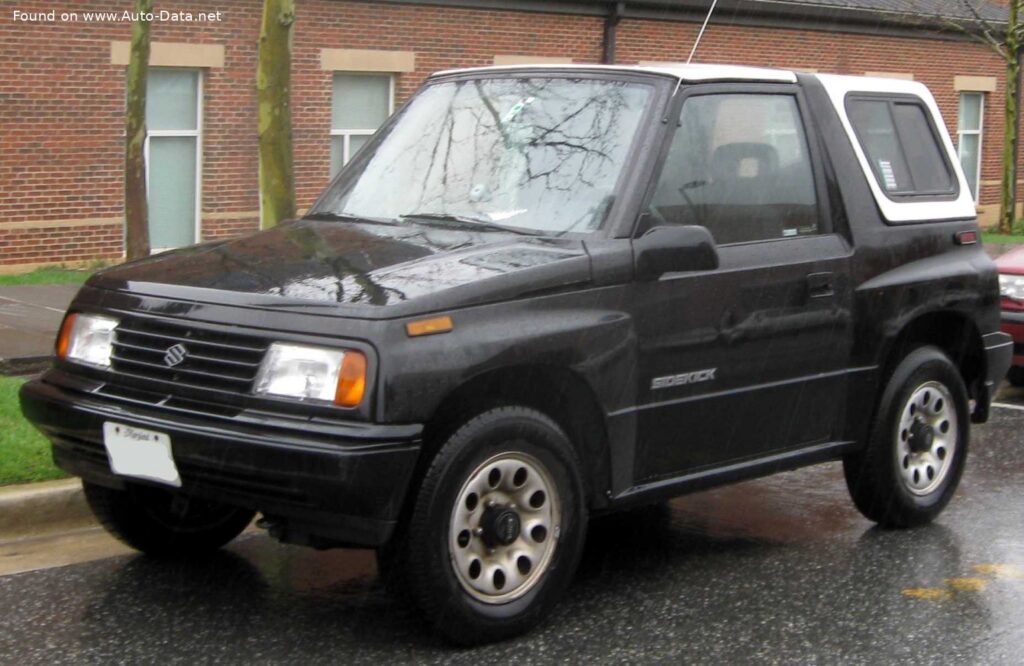
The Suzuki Sidekick, known as the Suzuki Escudo in Japan and other markets, was a subcompact SUV produced by Suzuki from 1989 to 1998. The second generation, launched in 1997 and running through 1998 in the US market, represented a significant refinement of the original, offering increased size, improved safety features, and a more powerful engine option. While relatively short-lived in its final form for North America, the 1997-1998 Sidekick 2.0, with its 130 horsepower engine, remains a notable example of early, affordable SUV design, particularly for its off-road capability in a small package. It competed with vehicles like the Honda CR-V and Toyota RAV4, though it generally positioned itself as a more rugged, utilitarian option.
Suzuki Sidekick 2.0: A Detailed Overview
The Sidekick’s history is intertwined with the development of the compact SUV segment. Originally conceived as a joint venture with General Motors (who marketed rebadged versions as the Geo Tracker and Chevrolet Tracker), the Sidekick aimed to provide a capable and fuel-efficient four-wheel-drive vehicle for a growing market. The 1997-1998 model year saw the introduction of the 2.0-liter engine as the primary powerplant for the US market, replacing the smaller 1.6-liter option. This engine upgrade provided a noticeable boost in performance, making the Sidekick more competitive and appealing to buyers seeking a more robust driving experience. The Sidekick was discontinued in the US after 1998, but production continued for other markets under different names for several more years.
Engine & Performance
The heart of the 1997-1998 Suzuki Sidekick 2.0 is the J420 2.0-liter naturally aspirated four-cylinder engine. This engine produces 130 horsepower, a substantial increase over the earlier 1.6-liter versions. While not a powerhouse by modern standards, the 2.0-liter engine provided adequate power for both on-road driving and moderate off-road excursions. The engine is paired with either a five-speed manual transmission or a four-speed automatic transmission. The Sidekick’s relatively light weight contributes to its respectable performance, allowing for reasonably quick acceleration and a comfortable cruising speed.
The Sidekick’s defining characteristic is its four-wheel-drive system. It utilizes a part-time four-wheel-drive system with selectable 2H (two-wheel drive high range), 4H (four-wheel drive high range), and 4L (four-wheel drive low range) settings. This allows drivers to adapt to various terrain conditions, from paved roads to challenging off-road trails. The low range gearing provides increased torque for navigating steep inclines and obstacles. The suspension, consisting of coil springs and a MacPherson strut front suspension and a multi-link rear suspension, is tuned for a balance of ride comfort and off-road capability. While not luxurious, the ride is generally considered acceptable for a vehicle of its type and era. Fuel economy is rated at approximately 20 mpg city and 24 mpg highway, figures that were competitive for SUVs of the time.
Design & Features
The 1997-1998 Suzuki Sidekick features a traditional SUV body style, characterized by a boxy shape and a relatively high ground clearance. The design prioritizes functionality and practicality over aesthetics. The Sidekick is available in both a two-door and a four-door configuration, with the four-door model offering increased passenger space and convenience. The interior is simple and utilitarian, with durable materials and a focus on ease of use.
Standard features typically included air conditioning, a basic audio system, and cloth upholstery. Optional features, depending on trim level, could include power windows and locks, and a sunroof. Safety features for the 1997-1998 Sidekick were relatively basic by today’s standards, but included front disc brakes and rear drum brakes, and a driver-side airbag. The Sidekick’s compact size and maneuverability make it easy to park and navigate in urban environments. The rear seats can be folded down to create additional cargo space, enhancing the vehicle’s versatility. The Sidekick’s robust construction and four-wheel-drive system make it a capable off-road vehicle, suitable for light to moderate trail use. Its relatively simple mechanical design also contributes to its reliability and ease of maintenance.
Technical Specifications
| Brand | Suzuki |
| Model | Sidekick |
| Generation | Sidekick |
| Type (Engine) | 2.0 (130 Hp) |
| Start of production | 1997 |
| End of production | 1998 |
| Powertrain Architecture | Internal Combustion engine |
| Body type | SUV |
| Fuel Type | Petrol (Gasoline) |
| Power | 130 Hp |
| Engine Model/Code | J420 |
| Engine aspiration | Naturally aspirated engine |
| Engine oil capacity | 4.2 l |
| Engine oil capacity (US qt) | 4.44 US qt |
| Engine oil capacity (UK qt) | 3.7 UK qt |
The Suzuki Sidekick 2.0, despite its relatively short production run in the US, left a lasting impression on the subcompact SUV market. It offered a compelling combination of affordability, fuel efficiency, and off-road capability, appealing to buyers who sought a versatile and practical vehicle. While it has been superseded by more modern and sophisticated SUVs, the Sidekick remains a popular choice among enthusiasts and collectors, appreciated for its simplicity, reliability, and rugged charm. Its legacy continues in the evolution of the compact SUV segment, demonstrating the enduring appeal of a small, capable, and affordable four-wheel-drive vehicle.
