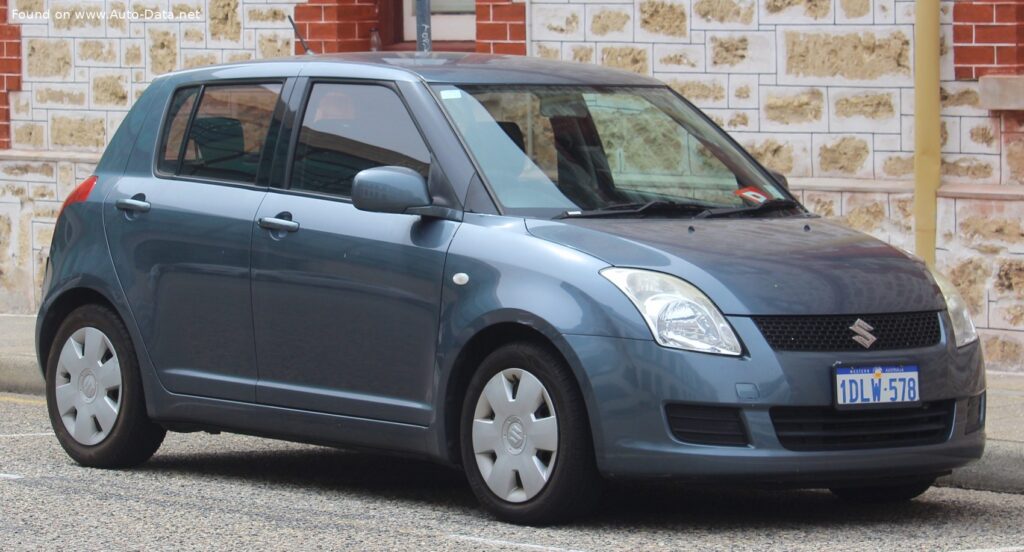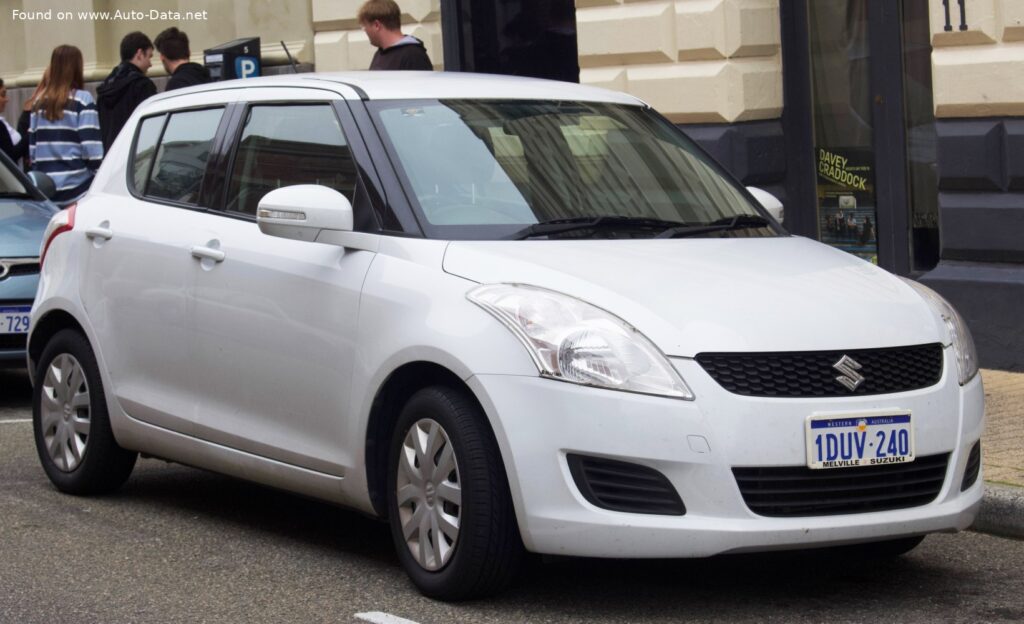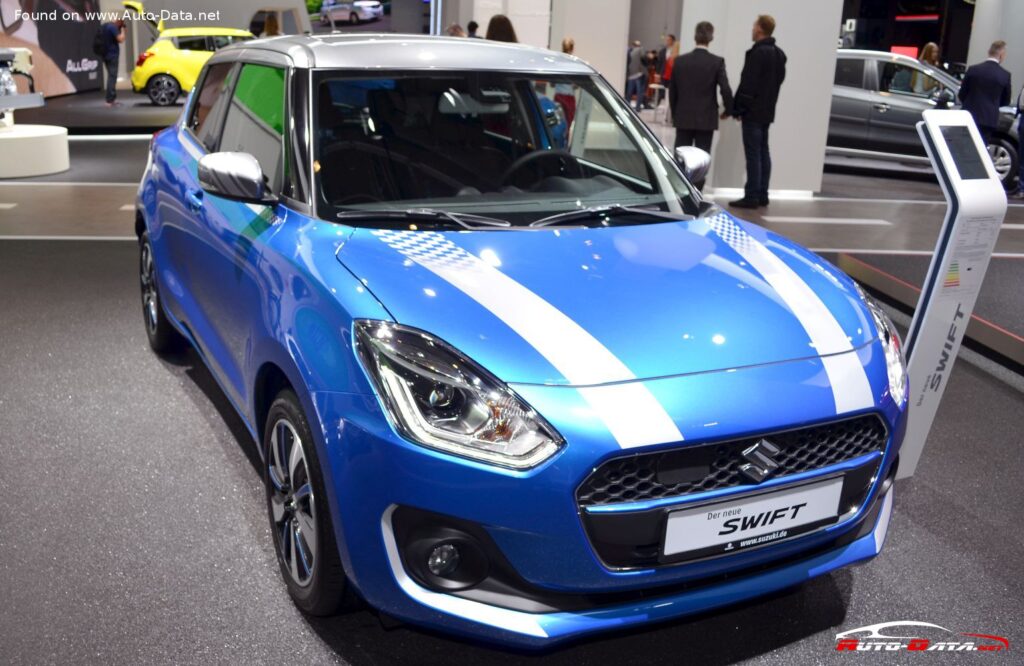
The Suzuki Swift VI 1.0 Boosterjet, produced from 2017 to 2020, represents the sixth generation of Suzuki’s popular supermini. While not officially sold in the United States, the Swift has been a mainstay in European, Asian, and other international markets for decades, known for its affordability, fuel efficiency, and nimble handling. This generation marked a significant step forward in terms of technology and refinement, offering a compelling package in the competitive small car segment. The 1.0 Boosterjet variant, powered by a turbocharged three-cylinder engine, was a key offering, balancing performance with excellent economy.
Suzuki Swift VI 1.0 Boosterjet: An Overview
The Swift VI aimed to appeal to a broader audience than its predecessors, with a more sophisticated design and improved interior quality. It competed with vehicles like the Volkswagen Polo, Ford Fiesta, and Renault Clio in Europe, offering a distinctive blend of practicality and driving enjoyment. The 1.0 Boosterjet engine was introduced as a replacement for older, naturally aspirated engines, providing a noticeable boost in power and torque while maintaining competitive fuel consumption figures. The Swift VI’s success in its target markets solidified Suzuki’s reputation as a manufacturer of reliable and value-oriented vehicles.
Engine & Performance
The heart of the Swift VI 1.0 Boosterjet is the K10C 998cc inline-three cylinder engine. This engine utilizes direct fuel injection and a turbocharger with an intercooler to produce 111 horsepower at 5500 rpm and 170 Nm (125.39 lb.-ft.) of torque between 2000 and 3500 rpm. This configuration delivers a surprisingly punchy performance for a vehicle of its size and weight. The engine’s power-to-weight ratio of 7.8 kg/Hp and torque-to-weight ratio of 5.1 kg/Nm contribute to its responsive feel. Acceleration from 0 to 100 km/h (0-62 mph) takes 10.6 seconds, while 0-60 mph is achieved in a calculated 10.1 seconds. The car boasts a maximum speed of 195 km/h (121.17 mph). The engine’s compact size and lightweight construction contribute to the Swift’s overall agility. The K10C engine is known for its relatively smooth operation despite its three-cylinder configuration, and its turbocharging provides a broad torque curve for everyday drivability.
Design & Features
The Swift VI adopted a more modern and dynamic design language compared to previous generations. Its hatchback body style offers a practical and versatile layout, with seating for five passengers and a usable cargo area. The exterior features a distinctive front grille, swept-back headlights, and a sporty rear spoiler. Inside, the Swift VI offers a well-appointed cabin with a focus on functionality and ergonomics. Standard features typically included air conditioning, power windows, central locking, and a basic audio system. Higher trim levels offered features such as alloy wheels, a touchscreen infotainment system, and advanced safety technologies. The trunk space ranges from a minimum of 265 liters (9.36 cu. ft.) with the rear seats up to a maximum of 947 liters (33.44 cu. ft.) with the rear seats folded down. Safety features, crucial in this generation, included ABS (Anti-lock Braking System) and adherence to Euro 6 emission standards, reflecting a commitment to both passenger protection and environmental responsibility.
Technical Specifications
| Brand | Suzuki |
| Model | Swift |
| Generation | Swift VI |
| Type (Engine) | 1.0 BOOSTERJET (111 Hp) |
| Start of production | 2017 |
| End of production | 2020 |
| Powertrain Architecture | Internal Combustion engine |
| Body type | Hatchback |
| Seats | 5 |
| Doors | 5 |
| Fuel consumption (urban) | 5.7 l/100 km (41.3 US mpg, 49.6 UK mpg, 17.5 km/l) |
| Fuel consumption (extra urban) | 4 l/100 km (58.8 US mpg, 70.6 UK mpg, 25 km/l) |
| Fuel consumption (combined) | 4.6 l/100 km (51.1 US mpg, 61.4 UK mpg, 21.7 km/l) |
| CO2 emissions | 104 g/km |
| Fuel Type | Petrol (Gasoline) |
| Acceleration 0 – 100 km/h | 10.6 sec |
| Acceleration 0 – 62 mph | 10.6 sec |
| Acceleration 0 – 60 mph | 10.1 sec |
| Maximum speed | 195 km/h (121.17 mph) |
| Emission standard | Euro 6 |
| Weight-to-power ratio | 7.8 kg/Hp |
| Weight-to-torque ratio | 5.1 kg/Nm |
| Power | 111 Hp @ 5500 rpm |
| Torque | 170 Nm @ 2000-3500 rpm (125.39 lb.-ft. @ 2000-3500 rpm) |
| Engine layout | Front, Transverse |
| Engine Model/Code | K10C |
| Engine displacement | 998 cm3 (60.9 cu. in.) |
| Number of cylinders | 3 |
| Engine configuration | Inline |
| Cylinder Bore | 73 mm (2.87 in.) |
| Piston Stroke | 79.5 mm (3.13 in.) |
| Compression ratio | 10:1 |
| Number of valves per cylinder | 4 |
| Fuel injection system | Direct injection |
| Engine aspiration | Turbocharger, Intercooler |
| Valvetrain | DOHC-VVT |
| Engine oil capacity | 2.9 l (3.06 US qt | 2.55 UK qt) |
| Coolant | 4.5 l (4.76 US qt | 3.96 UK qt) |
| Kerb Weight | 865 kg (1907 lbs.) |
| Max. weight | 1380 kg (3042.38 lbs.) |
| Max load | 515 kg (1135.38 lbs.) |
| Trunk (boot) space – minimum | 265 l (9.36 cu. ft.) |
| Trunk (boot) space – maximum | 947 l (33.44 cu. ft.) |
| Fuel tank capacity | 37 l (9.77 US gal | 8.14 UK gal) |
| Max. roof load | 50 kg (110.23 lbs.) |
| Permitted trailer load with brakes (12%) | 1000 kg (2204.62 lbs.) |
| Permitted trailer load without brakes | 400 kg (881.85 lbs.) |
| Permitted towbar download | 60 kg (132.28 lbs.) |
| Length | 3840 mm (151.18 in.) |
| Width | 1735 mm (68.31 in.) |
| Height | 1480 mm (58.27 in.) |
| Wheelbase | 2450 mm (96.46 in.) |
| Front track | 1520 mm (59.84 in.) |
| Rear (Back) track | 1520 mm (59.84 in.) |
| Ride height (ground clearance) | 115 mm (4.53 in.) |
| Minimum turning circle (turning diameter) | 9.6 m (31.5 ft.) |
| Drivetrain Architecture | Front wheel drive |
| Number of gears and type of gearbox | 5 gears, manual transmission |
| Front suspension | Independent type McPherson |
| Rear suspension | independent torsion suspension |
| Front brakes | Ventilated discs |
| Rear brakes | Drum |
| Tires size | 185/55 R16 |
| Wheel rims size | 6J x 16 |
The Suzuki Swift VI 1.0 Boosterjet offered a compelling combination of efficiency, performance, and practicality, making it a popular choice in its segment. While not available in the US market, it represents a significant evolution in Suzuki’s small car offerings and showcases the company’s commitment to innovative engine technology.