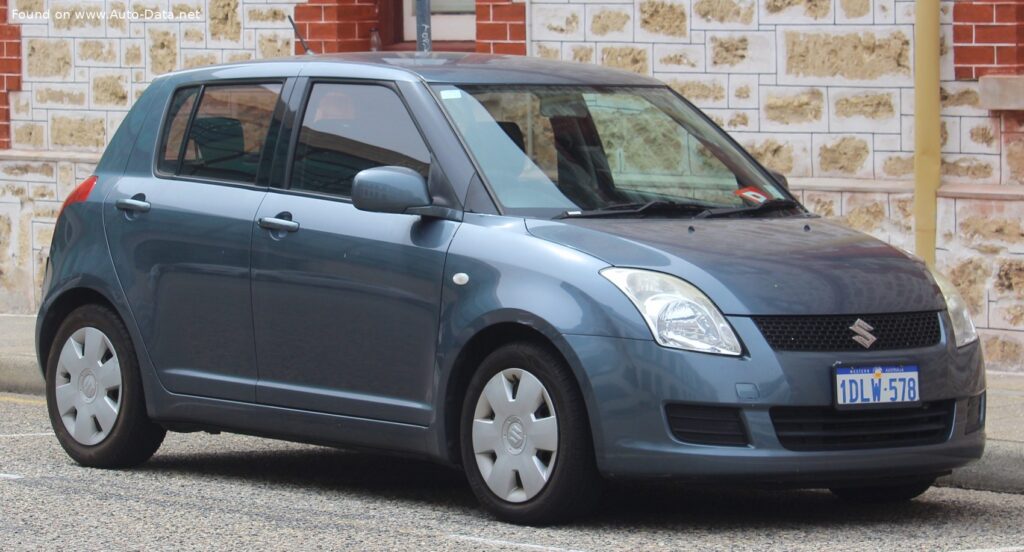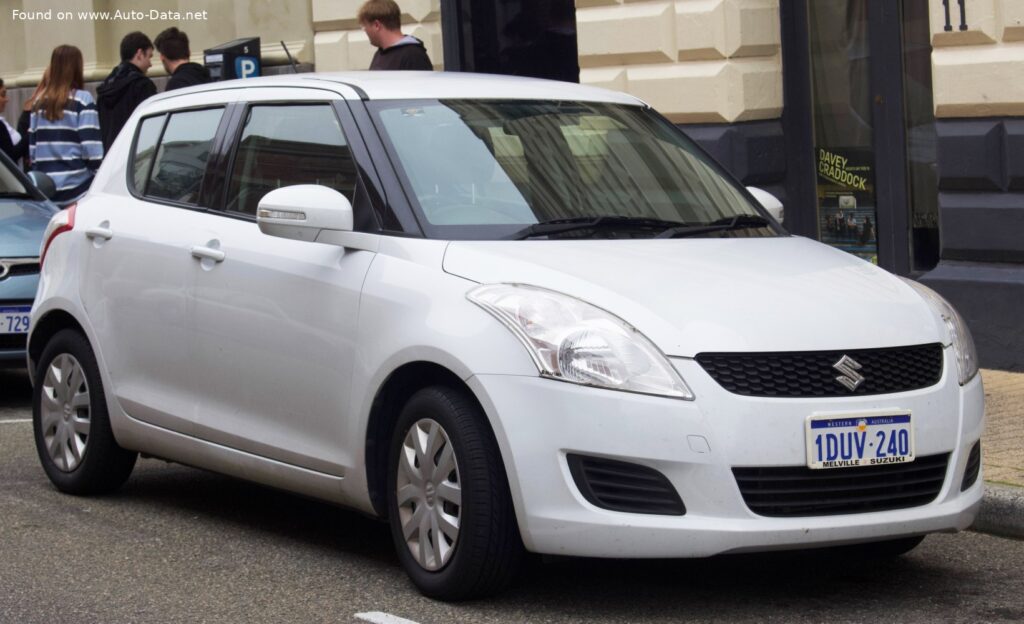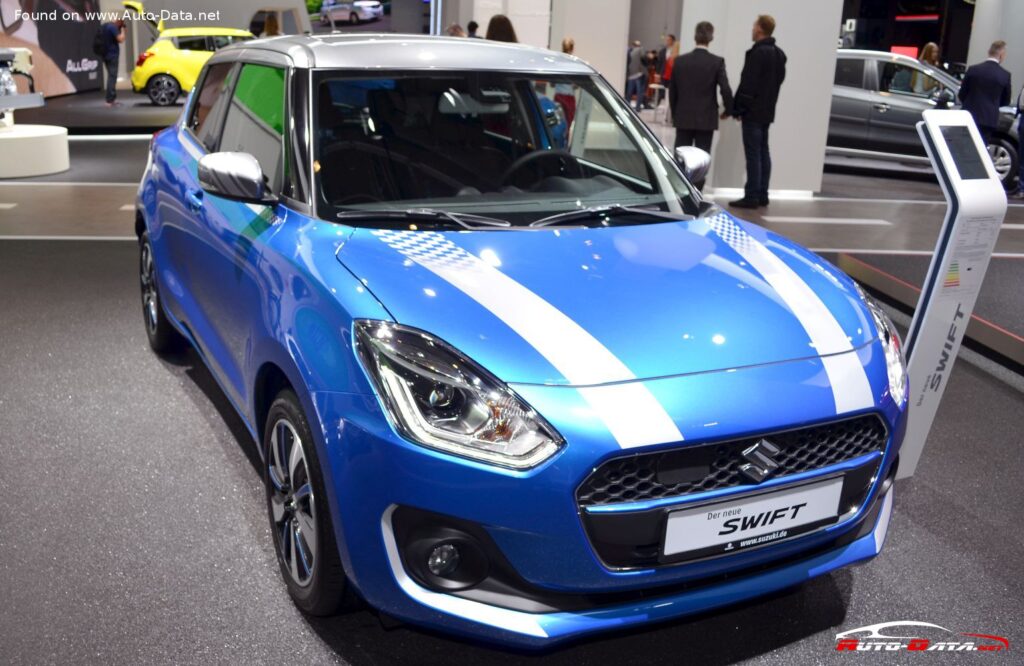
The Suzuki Swift VI 1.0 Boosterjet (111 Hp) SHVC is a subcompact hatchback produced by Suzuki from 2017 to 2020. Representing the sixth generation of the long-running Swift model, this iteration focused on fuel efficiency and modern technology while maintaining the Swift’s reputation for nimble handling. While not officially sold in the United States, the Swift is a popular vehicle in Europe, Asia, and other global markets, competing with models like the Toyota Yaris, Volkswagen Polo, and Hyundai i20. The “SHVC” designation stands for Smart Hybrid Vehicle by Suzuki, indicating a mild hybrid system designed to enhance fuel economy.
Suzuki Swift VI 1.0 Boosterjet: An Overview
The Swift VI marked a significant evolution for the model, incorporating a new platform and a range of updated engines. The 1.0 Boosterjet variant, equipped with a turbocharged three-cylinder engine, was a key offering, balancing performance with impressive fuel efficiency. This generation of Swift aimed to appeal to buyers seeking a practical, economical, and stylish city car. The Boosterjet engine was particularly notable for its responsiveness and relatively low emissions, aligning with increasingly stringent European emission standards.
Engine & Performance
The heart of the Swift VI 1.0 Boosterjet is the K10C 998 cc turbocharged inline-three cylinder engine. This engine produces 111 horsepower at 5500 rpm and 170 Nm (125.39 lb.-ft.) of torque between 2000 and 3500 rpm. The direct injection system and turbocharger contribute to its responsive nature, providing ample power for everyday driving. The engine’s power-to-weight ratio is 7.9 kg/Hp, and the torque-to-weight ratio is 5.1 kg/Nm, contributing to a lively driving experience. The SHVC mild hybrid system assists the engine, utilizing an integrated starter generator (ISG) to provide a small boost during acceleration and enable start-stop functionality. This system helps to reduce fuel consumption and emissions. Performance figures include a 0-100 km/h (0-62 mph) acceleration time of 10.6 seconds and a top speed of 195 km/h (121.17 mph). A 0-60 mph time is calculated at 10.1 seconds. The engine is transversely mounted at the front of the vehicle and is paired with a 5-speed manual transmission, driving the front wheels.
Design & Features
The Swift VI adopted a more modern and dynamic design language compared to its predecessors. The hatchback body style offers a practical and versatile layout, with seating for five passengers and a usable cargo area. The exterior features a distinctive front grille, swept-back headlights, and a sporty rear spoiler. Inside, the cabin is well-appointed for its class, with a focus on functionality and user-friendliness. Standard features typically included air conditioning, power windows, central locking, and a basic audio system. Higher trim levels offered additional features such as a touchscreen infotainment system, navigation, and advanced safety technologies. Safety features included ABS (Anti-lock Braking System) and multiple airbags. The Swift VI’s compact dimensions make it easy to maneuver in urban environments, while its relatively lightweight construction contributes to its agility. Trunk space ranges from a minimum of 265 liters (9.36 cu. ft.) to a maximum of 947 liters (33.44 cu. ft.) with the rear seats folded down.
Technical Specifications
| Brand | Suzuki |
| Model | Swift |
| Generation | Swift VI |
| Type (Engine) | 1.0 BOOSTERJET (111 Hp) SHVC |
| Start of production | 2017 |
| End of production | 2020 |
| Powertrain Architecture | Internal Combustion engine |
| Body type | Hatchback |
| Seats | 5 |
| Doors | 5 |
| Fuel consumption (urban) | 4.8 l/100 km (49 US mpg, 58.9 UK mpg, 20.8 km/l) |
| Fuel consumption (extra urban) | 4 l/100 km (58.8 US mpg, 70.6 UK mpg, 25 km/l) |
| Fuel consumption (combined) | 4.3 l/100 km (54.7 US mpg, 65.7 UK mpg, 23.3 km/l) |
| CO2 emissions | 97 g/km |
| Fuel Type | Petrol (Gasoline) |
| Acceleration 0 – 100 km/h | 10.6 sec |
| Acceleration 0 – 62 mph | 10.6 sec |
| Acceleration 0 – 60 mph | 10.1 sec |
| Maximum speed | 195 km/h (121.17 mph) |
| Emission standard | Euro 6 |
| Weight-to-power ratio | 7.9 kg/Hp |
| Weight-to-torque ratio | 5.1 kg/Nm |
| Power | 111 Hp @ 5500 rpm |
| Torque | 170 Nm @ 2000-3500 rpm (125.39 lb.-ft. @ 2000-3500 rpm) |
| Engine layout | Front, Transverse |
| Engine Model/Code | K10C |
| Engine displacement | 998 cm3 (60.9 cu. in.) |
| Number of cylinders | 3 |
| Engine configuration | Inline |
| Cylinder Bore | 73 mm (2.87 in.) |
| Piston Stroke | 79.5 mm (3.13 in.) |
| Compression ratio | 10:1 |
| Number of valves per cylinder | 4 |
| Fuel injection system | Direct injection |
| Engine aspiration | Turbocharger, Intercooler |
| Valvetrain | DOHC-VVT |
| Engine oil capacity | 2.9 l (3.06 US qt | 2.55 UK qt) |
| Coolant | 4.7 l (4.97 US qt | 4.14 UK qt) |
| Kerb Weight | 875 kg (1929.04 lbs.) |
| Max. weight | 1380 kg (3042.38 lbs.) |
| Max load | 505 kg (1113.33 lbs.) |
| Trunk (boot) space – minimum | 265 l (9.36 cu. ft.) |
| Trunk (boot) space – maximum | 947 l (33.44 cu. ft.) |
| Fuel tank capacity | 37 l (9.77 US gal | 8.14 UK gal) |
| Max. roof load | 50 kg (110.23 lbs.) |
| Permitted trailer load with brakes (12%) | 1000 kg (2204.62 lbs.) |
| Permitted trailer load without brakes | 400 kg (881.85 lbs.) |
| Permitted towbar download | 60 kg (132.28 lbs.) |
| Length | 3840 mm (151.18 in.) |
| Width | 1735 mm (68.31 in.) |
| Height | 1480 mm (58.27 in.) |
| Wheelbase | 2450 mm (96.46 in.) |
| Front track | 1520 mm (59.84 in.) |
| Rear (Back) track | 1525 mm (60.04 in.) |
| Ride height (ground clearance) | 115 mm (4.53 in.) |
| Minimum turning circle (turning diameter) | 9.6 m (31.5 ft.) |
| Drivetrain Architecture | Front wheel drive |
| Number of gears and type of gearbox | 5 gears, manual transmission |
| Front suspension | Independent type McPherson |
| Rear suspension | independent torsion suspension |
| Front brakes | Ventilated discs |
| Rear brakes | Disc |
| Assisting systems | ABS (Anti-lock braking system) |
| Steering type | Steering rack and pinion |
| Tires size | 185/55 R16 |
| Wheel rims size | 6J x 16 |