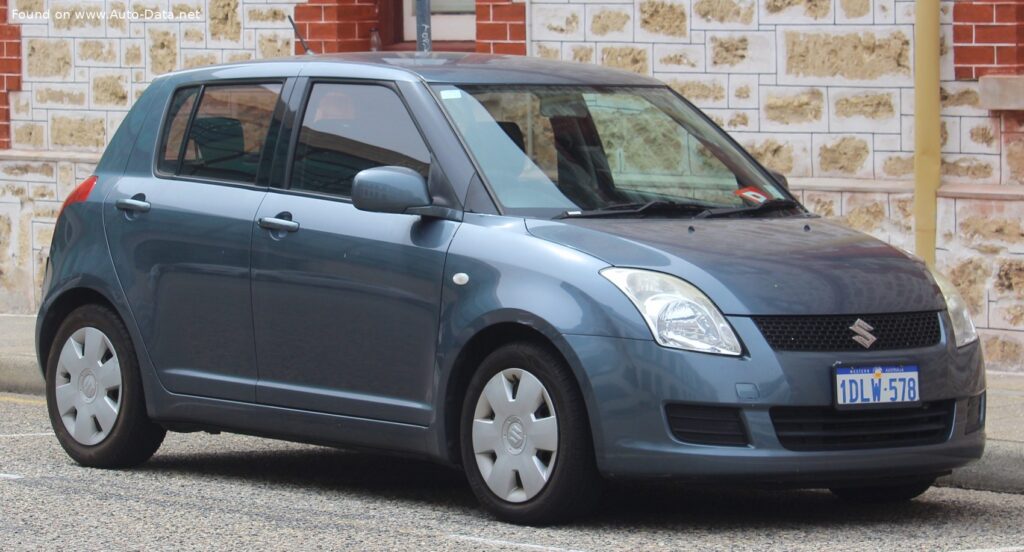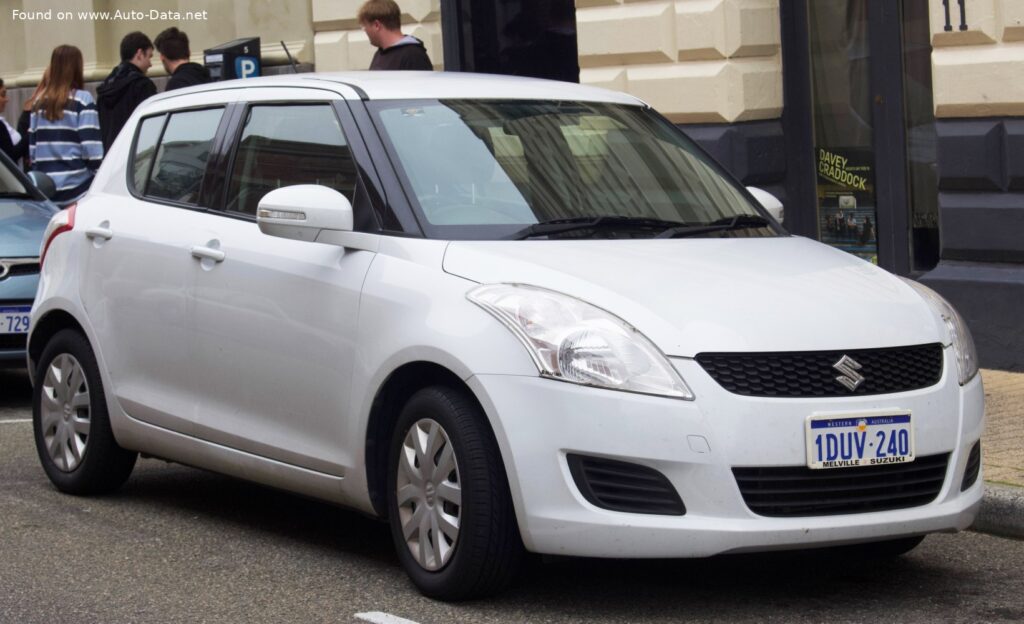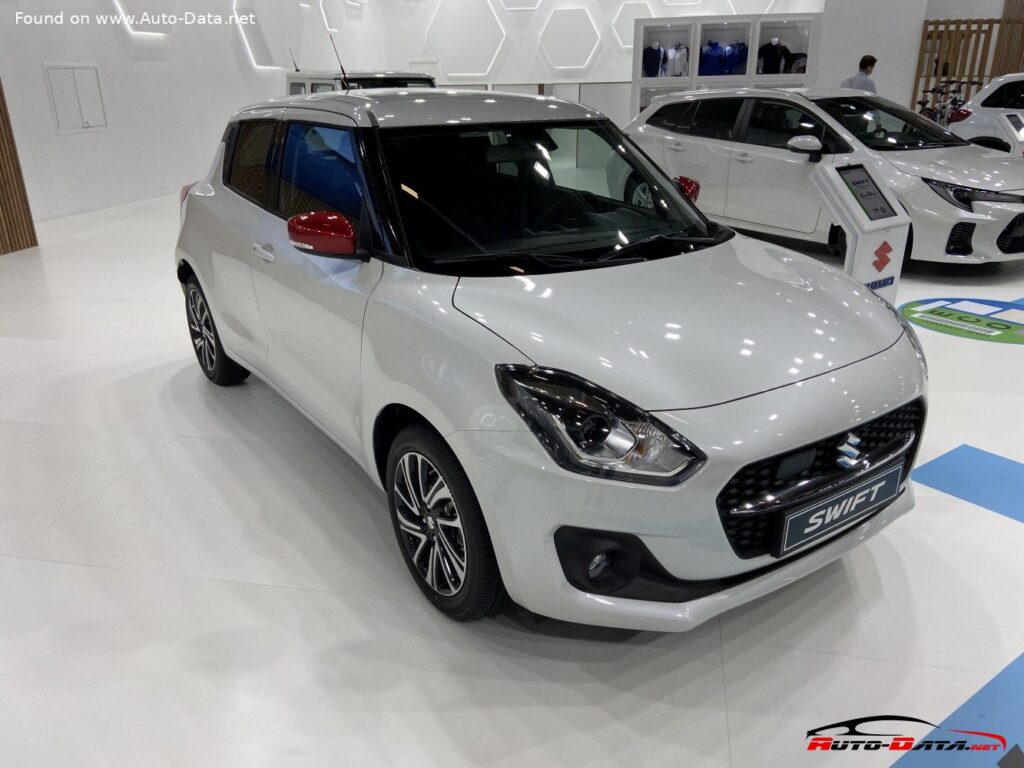
The Suzuki Swift VI (facelift 2020) 1.2 DUALJET+SHVS (83 Hp) CVT represents a significant update to the popular subcompact hatchback, primarily aimed at the European and Asian markets. While not officially sold in the United States, the Swift has a long history as an affordable, fuel-efficient, and surprisingly engaging city car. This iteration, produced from July 2020 to December 2023, incorporates mild hybrid technology to further enhance its efficiency and reduce emissions, aligning with increasingly stringent environmental regulations. The Swift consistently occupies a competitive position within the B-segment, rivaling vehicles like the Toyota Yaris, Volkswagen Polo, and Hyundai i20.
Suzuki Swift VI (facelift 2020): An Overview
The Swift VI, introduced in 2017, received a substantial facelift in 2020, bringing with it revised styling, updated safety features, and the introduction of the DUALJET+SHVS mild hybrid powertrain. The “SHVS” designation stands for Smart Hybrid Vehicle System, a key component of Suzuki’s strategy to improve fuel economy across its range. This model is a five-door hatchback designed to maximize interior space within a compact footprint, catering to urban drivers and small families. The facelifted version features a more prominent front grille, redesigned headlights, and updated interior trim, enhancing its overall appeal.
Engine & Performance
The heart of the 2020 Suzuki Swift 1.2 DUALJET+SHVS is a 1.2-liter inline-four cylinder gasoline engine, designated K12D. This engine produces 83 horsepower at 6000 rpm and 107 Nm (78.92 lb.-ft.) of torque at 2800 rpm. The DUALJET direct injection system improves combustion efficiency, while the SHVS mild hybrid system adds a 48V integrated starter generator (ISG). This ISG assists the engine during acceleration, provides regenerative braking to recapture energy, and enables an engine start-stop system for reduced idling emissions. The powertrain is coupled with a continuously variable transmission (CVT), prioritizing smooth operation and fuel efficiency over outright performance. Acceleration from 0 to 100 km/h (0-62 mph) takes 12.2 seconds, with a top speed of 175 km/h (108.74 mph). The engine’s power-to-weight ratio is 11.1 kg/Hp, and the torque-to-weight ratio is 8.6 kg/Nm.
Design & Features
The Suzuki Swift VI (facelift 2020) maintains the hatchback body style, offering five seats and five doors. Its design emphasizes a sporty and youthful aesthetic. The exterior features a distinctive front grille, projector headlights, and alloy wheel options ranging from 15 to 16 inches. Inside, the cabin is designed for practicality and functionality. The interior offers a reasonable amount of space for passengers and cargo, with a trunk volume ranging from 265 liters (9.36 cu. ft.) with the rear seats up to 947 liters (33.44 cu. ft.) with them folded down. Standard features typically include air conditioning, power windows, a touchscreen infotainment system, and basic safety equipment. The facelifted model saw improvements in safety technology, including enhanced driver assistance systems like lane departure warning and autonomous emergency braking, depending on the trim level. The kerb weight ranges from 925 to 946 kg (2039.28 – 2085.57 lbs.), contributing to its relatively nimble handling.
Technical Specifications
| Brand | Suzuki |
| Model | Swift |
| Generation | Swift VI (facelift 2020) |
| Type (Engine) | 1.2 DUALJET+SHVS (83 Hp) CVT |
| Start of production | July, 2020 |
| End of production | December, 2023 |
| Powertrain Architecture | MHEV (Mild Hybrid Electric Vehicle) |
| Body type | Hatchback |
| Seats | 5 |
| Doors | 5 |
| Fuel consumption at Low speed (WLTP) | 6.2 l/100 km (37.9 US mpg) |
| Fuel consumption at Medium speed (WLTP) | 4.8 l/100 km (49 US mpg) |
| Fuel consumption at high speed (WLTP) | 4.6 l/100 km (51.1 US mpg) |
| Fuel consumption at very high speed (WLTP) | 6.1 l/100 km (38.6 US mpg) |
| Combined fuel consumption (WLTP) | 5.4 l/100 km (43.6 US mpg) |
| CO2 emissions (WLTP) | 121 g/km |
| CO2 emissions (NEDC) | 94 g/km |
| Fuel Type | Petrol (Gasoline) |
| Acceleration 0 – 100 km/h | 12.2 sec |
| Acceleration 0 – 62 mph | 12.2 sec |
| Acceleration 0 – 60 mph | 11.6 sec |
| Maximum speed | 175 km/h (108.74 mph) |
| Emission standard | Euro 6 |
| Weight-to-power ratio | 11.1 kg/Hp |
| Weight-to-torque ratio | 8.6 kg/Nm |
| Power | 83 Hp @ 6000 rpm |
| Torque | 107 Nm @ 2800 rpm (78.92 lb.-ft. @ 2800 rpm) |
| Engine layout | Front, Transverse |
| Engine Model/Code | K12D |
| Engine displacement | 1197 cm3 (73.05 cu. in.) |
| Number of cylinders | 4 |
| Engine configuration | Inline |
| Cylinder Bore | 73 mm (2.87 in.) |
| Piston Stroke | 71.5 mm (2.81 in.) |
| Compression ratio | 13:1 |
| Number of valves per cylinder | 4 |
| Fuel injection system | Multi-port manifold injection |
| Engine oil capacity | 3.3 l (3.49 US qt | 2.9 UK qt) |
| Coolant | 4.7 l (4.97 US qt | 4.14 UK qt) |
| Kerb Weight | 925-946 kg (2039.28 – 2085.57 lbs.) |
| Max. weight | 1375 kg (3031.36 lbs.) |
| Max load | 429-450 kg (945.78 – 992.08 lbs.) |
| Trunk (boot) space – minimum | 265 l (9.36 cu. ft.) |
| Trunk (boot) space – maximum | 947 l (33.44 cu. ft.) |
| Fuel tank capacity | 37 l (9.77 US gal | 8.14 UK gal) |
| Permitted trailer load with brakes (12%) | 1000 kg (2204.62 lbs.) |
| Permitted trailer load without brakes | 400 kg (881.85 lbs.) |
| Length | 3845 mm (151.38 in.) |
| Width | 1735 mm (68.31 in.) |
| Height | 1495 mm (58.86 in.) |
| Wheelbase | 2450 mm (96.46 in.) |
| Front track | 1520-1530 mm (59.84 – 60.24 in.) |
| Rear (Back) track | 1520-1530 mm (59.84 – 60.24 in.) |
| Ride height (ground clearance) | 120 mm (4.72 in.) |
| Minimum turning circle (turning diameter) | 9.6 m (31.5 ft.) |
| Drive wheel | Front wheel drive |
| Number of gears and type of gearbox | automatic transmission CVT |
The Suzuki Swift VI (facelift 2020) 1.2 DUALJET+SHVS (83 Hp) CVT remains a compelling option in the subcompact segment, particularly for buyers prioritizing fuel efficiency, affordability, and a nimble driving experience. Its mild hybrid technology and updated features contribute to its appeal in a market increasingly focused on sustainability and practicality.