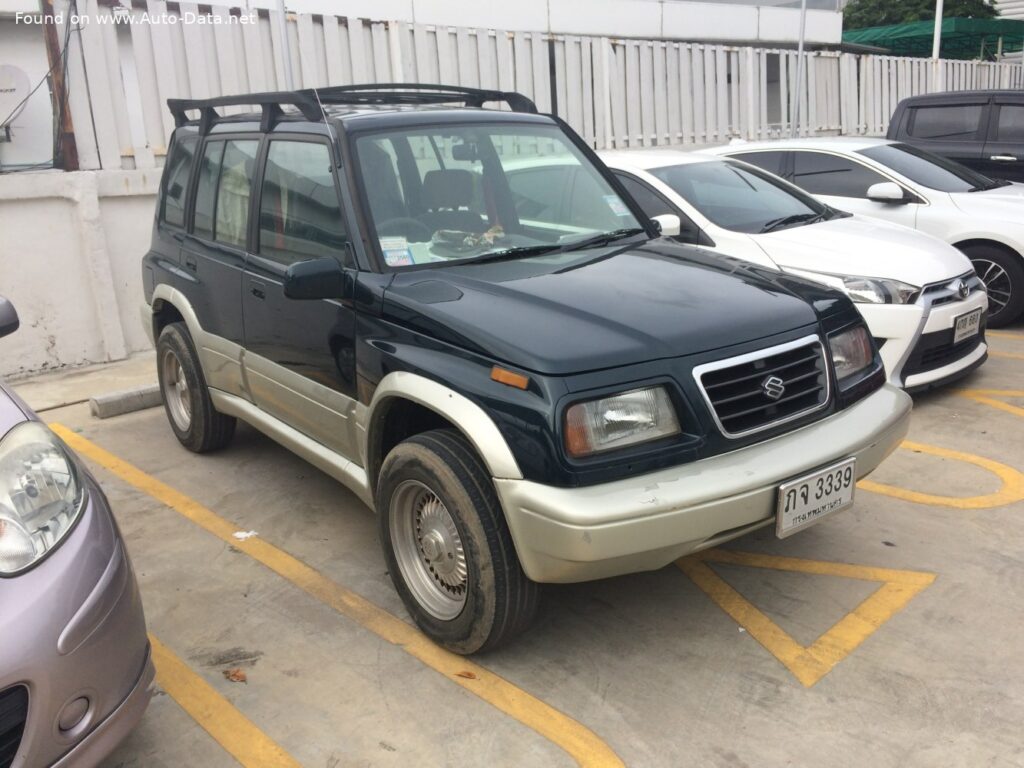
The Suzuki Vitara (ET, TA) 2.0 i 16V (3 dr), produced between 1996 and 1997, represents a refinement of Suzuki’s popular compact SUV. This generation, falling within the broader Vitara lineage, was primarily aimed at the European market, offering a blend of affordability, practicality, and off-road capability. While not officially sold in the United States during these specific years, the Vitara – known as the Sidekick in the US during earlier iterations – established Suzuki as a player in the growing SUV segment. The ET and TA designations refer to chassis variations within this generation, denoting slight differences in equipment and market focus. This particular 2.0-liter, 16-valve version aimed to provide a more spirited driving experience compared to lower-powered variants.
Suzuki Vitara (ET, TA): A Detailed Overview
The Vitara ET/TA series built upon the success of its predecessors, offering a more modern and refined package. It catered to buyers seeking a versatile vehicle suitable for both urban commuting and light off-road adventures. The 3-door configuration prioritized a more compact footprint and sporty aesthetic, appealing to individuals and smaller families. While the US market had moved towards larger SUVs by the mid-1990s, the Vitara remained a popular choice in Europe due to its manageable size, fuel efficiency (relative to larger competitors), and robust build quality. The 2.0 i 16V model, with its increased horsepower, was positioned as a more desirable option for drivers who valued performance.
Engine & Performance
The heart of the Suzuki Vitara (ET, TA) 2.0 i 16V is the J20A engine, a 1.995-liter (121.74 cubic inches) inline-four cylinder gasoline engine. This naturally aspirated powerplant produces 132 horsepower at 6,100 rpm and 166 Nm (122.44 lb.-ft.) of torque at 3,000 rpm. The engine features a multi-port fuel injection system and a compression ratio of 9.7:1. The 16-valve cylinder head contributes to improved breathing and higher engine speeds, resulting in a noticeable performance increase over earlier Vitara models with smaller or less sophisticated engines. The engine’s longitudinal front-engine layout, coupled with a robust drivetrain, allows for effective power delivery. While not a high-performance machine, the 2.0-liter engine provides adequate power for everyday driving and moderate off-road conditions. Fuel consumption is rated at 9.8 liters per 100 kilometers (24 US mpg, 28.8 UK mpg, 10.2 km/l), which was competitive for an SUV of its class during the mid-1990s. The engine requires 4.2 liters (4.44 US quarts or 3.7 UK quarts) of engine oil, and the specific oil specification should be consulted in the vehicle’s owner’s manual.
Design & Features
The Suzuki Vitara (ET, TA) 2.0 i 16V is a classic example of a late 1990s compact SUV. Its 3-door body style offers a relatively short wheelbase and overall length, enhancing maneuverability. The design is functional and utilitarian, prioritizing practicality over extravagant styling. The vehicle features a high ride height, contributing to its off-road capability and providing a commanding driving position. Standard safety features for the era included an Anti-lock Braking System (ABS), which was becoming increasingly common on new vehicles. Hydraulic power steering assists with low-speed maneuvering. The interior is typically spartan but durable, with a focus on providing a comfortable and functional space for passengers and cargo. The 3-door configuration limits rear passenger space compared to 5-door models, but it does offer a more compact and agile vehicle. The Vitara’s body-on-frame construction, a hallmark of many early SUVs, contributes to its robustness and off-road prowess. The design reflects the growing demand for SUVs that could handle both on-road and off-road duties, appealing to a broad range of buyers.
Technical Specifications
| Brand | Suzuki |
| Model | Vitara |
| Generation | Vitara (ET, TA) |
| Type (Engine) | 2.0 i 16V (3 dr) (132 Hp) |
| Start of production | 1996 |
| End of production | 1997 |
| Powertrain Architecture | Internal Combustion engine |
| Body type | SUV |
| Doors | 3 |
| Fuel consumption (combined) | 9.8 l/100 km |
| Fuel consumption (US mpg) | 24 US mpg |
| Fuel consumption (UK mpg) | 28.8 UK mpg |
| Fuel consumption (km/l) | 10.2 km/l |
| Fuel Type | Petrol (Gasoline) |
| Power | 132 Hp @ 6100 rpm |
| Power per litre | 66.2 Hp/l |
| Torque | 166 Nm @ 3000 rpm |
| Torque (lb.-ft.) | 122.44 lb.-ft. @ 3000 rpm |
| Engine layout | Front, Longitudinal |
| Engine Model/Code | J20A |
| Engine displacement | 1995 cm3 |
| Engine displacement (cu. in.) | 121.74 cu. in. |
| Number of cylinders | 4 |
| Engine configuration | Inline |
| Cylinder Bore | 84 mm |
| Cylinder Bore (in.) | 3.31 in. |
| Piston Stroke | 90 mm |
| Piston Stroke (in.) | 3.54 in. |
| Compression ratio | 9.7:1 |
| Number of valves per cylinder | 4 |
| Fuel injection system | Multi-port manifold injection |
| Engine aspiration | Naturally aspirated engine |
| Engine oil capacity | 4.2 l |
| Engine oil capacity (US qt) | 4.44 US qt |
| Engine oil capacity (UK qt) | 3.7 UK qt |
| Front brakes | Disc |
| Rear brakes | Disc |
| Assisting systems | ABS (Anti-lock braking system) |
| Power steering | Hydraulic Steering |
The Suzuki Vitara (ET, TA) 2.0 i 16V, while a relatively short-lived model, represents a significant step in Suzuki’s SUV development. It offered a compelling combination of practicality, affordability, and performance, making it a popular choice in European markets. Its robust construction and capable drivetrain ensured its longevity and appeal to drivers seeking a versatile vehicle for both on-road and off-road adventures.