
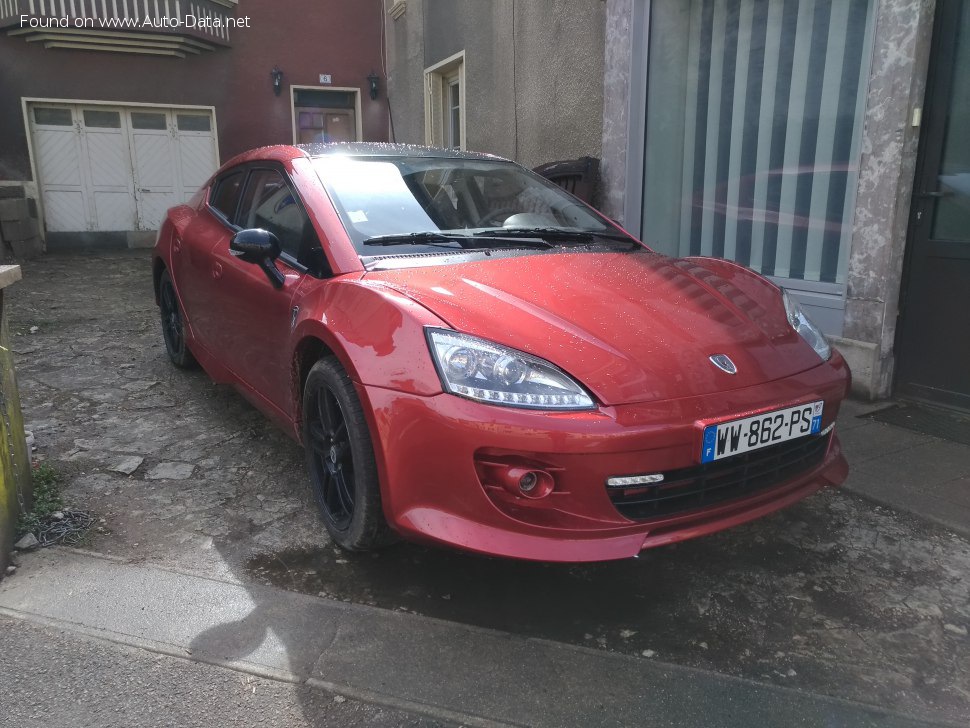
The TagAz Aquila 1.6 (107 Hp) represents a unique, albeit short-lived, chapter in the history of the Russian automotive industry. Produced by the Taganrog Automobile Plant (TagAZ) from 2013 to 2014, the Aquila was an ambitious attempt to introduce an affordable, domestically manufactured sports sedan to the Russian market. Its design, characterized by a distinctive, somewhat aggressive aesthetic, aimed to capture the attention of younger buyers seeking a vehicle that stood apart from more conventional offerings. Marketed as a “coupe-sedan” due to its sleek profile and four doors, the Aquila was positioned as an entry-level performance-oriented vehicle, offering a blend of European styling cues with a price point more accessible to the local consumer base. Its brief production run makes it a notable, if niche, piece of modern automotive history, particularly in understanding the aspirations and challenges of emerging auto manufacturers.
The TagAz Aquila: An Overview of Russian Automotive Ambition
The TagAz Aquila, bearing the internal combustion engine designation 1.6 (107 Hp), emerged during a period when the Russian automotive market was experiencing significant growth and diversification. Unlike many domestic offerings that focused primarily on utilitarian or budget-conscious designs, the Aquila sought to inject a sense of style and dynamism. Its generation, simply referred to as “Aquila,” denotes a singular vision for this model, conceived and brought to market with a distinct identity. The vehicle’s architecture, centered around an internal combustion engine, reflected conventional automotive engineering practices for its time, providing a straightforward and robust foundation. As a sedan with four doors and seating for five, it aimed to balance its sporty appearance with practical considerations for daily use. While its production window was narrow, spanning only 2013 to 2014, the Aquila remains a testament to TagAZ’s attempt to carve out a unique segment within its home market, offering a visually striking option that challenged preconceived notions of Russian automotive design.
In a global context, the TagAz Aquila was largely confined to its domestic market and neighboring regions, not seeing official distribution in major Western markets like the United States. Therefore, its role was primarily to serve a specific demographic within Russia, where its unique styling could be a significant selling point. The vehicle’s existence highlights the varying automotive preferences and market dynamics across different continents. For American enthusiasts, the Aquila represents an intriguing example of automotive development from a less common source, showcasing how different regions approach vehicle design and market positioning. Its focus on distinctive aesthetics at an accessible price point offers a contrast to the more standardized offerings often found in mature markets, underscoring the innovative spirit that can emerge from diverse automotive landscapes.
Powertrain and Performance of the TagAz Aquila 1.6 (107 Hp)
At the heart of the TagAz Aquila 1.6 (107 Hp) lies a 1.6-liter (1584 cm³ or 96.66 cu. in.) naturally aspirated inline four-cylinder engine, identified by the model code 4G18. This powertrain was designed to offer a balance of accessible power and efficiency, catering to the everyday driving needs of its target audience. The engine delivers a respectable 107 horsepower at 6000 rpm, translating to a power-per-liter output of 67.6 Hp/l. This figure, while not segment-leading, was competitive for an affordable sedan in its market. Torque production stands at 138 Nm (101.78 lb.-ft.) available at a relatively low 3000 rpm, which suggests a focus on usable mid-range pull, beneficial for city driving and highway cruising without constant downshifting.
The power is routed to the front wheels via a five-speed manual transmission, a common and cost-effective choice for vehicles in this segment, offering direct driver engagement. This front-wheel-drive architecture is a practical and efficient layout, providing predictable handling characteristics and optimizing interior space. The Aquila operates on gasoline, utilizing a multi-port manifold injection system for fuel delivery, a proven technology that balances performance with fuel economy. With a top speed of 180 km/h (approximately 111.85 mph), the Aquila was capable of reasonable highway performance. The vehicle’s weight-to-power ratio of 13.2 kg/Hp (75.9 Hp/tonne) and a weight-to-torque ratio of 10.2 kg/Nm (97.9 Nm/tonne) indicate a moderate performance profile, consistent with its positioning as an affordable, stylish sedan rather than an outright performance machine. The engine oil capacity is 3.3 liters (3.49 US quarts), an average volume for a four-cylinder engine of this displacement.
The engineering choices for the Aquila’s powertrain reflect a strategy of utilizing reliable and widely understood technologies to keep manufacturing costs in check while still delivering a compelling driving experience. The naturally aspirated design, while perhaps lacking the immediate punch of a turbocharged unit, offers simplicity in maintenance and a linear power delivery. This combination of a modest yet capable engine, a manual gearbox, and a front-wheel-drive setup created a package that was both engaging for the driver and practical for daily use, aligning with the expectations of its primary market. The focus was on providing a durable and functional powertrain that could support the car’s distinctive visual appeal.
Design, Features, and Engineering of the Aquila Sedan
The TagAz Aquila’s most striking aspect is undoubtedly its design. Classified as a sedan, its silhouette often led to it being described as a “coupe-sedan” due to its low-slung roofline and flowing contours. With a length of 4683 mm (184.37 in.), a width of 1824 mm (71.81 in.), and a height of 1388 mm (54.65 in.), the Aquila presented a substantial and assertive stance on the road. The relatively long wheelbase of 2750 mm (108.27 in.) contributed to its stable road presence and potentially a more comfortable ride, while also allowing for a spacious cabin for its five occupants across four doors.
Underneath its distinctive bodywork, the Aquila featured a conventional yet effective chassis setup. The front suspension employed an independent McPherson type, a widely used and robust design known for its balance of ride comfort and handling precision. At the rear, a dependent spring suspension system was utilized, offering a durable and cost-effective solution for absorbing road imperfections. Braking duties were handled by disc brakes at both the front and rear, providing reliable stopping power, augmented by an Anti-lock Braking System (ABS) for enhanced safety during emergency maneuvers. This was a crucial safety feature for a modern car of its era, helping drivers maintain steering control under heavy braking.
Further enhancing the driving experience, the Aquila was equipped with hydraulic power steering, providing assistance for easier maneuvering at low speeds and a more connected feel at higher velocities. The vehicle’s road contact was managed by 225/45 R18 tires mounted on 18-inch wheel rims, a specification that contributed significantly to its sporty aesthetic and offered a good balance of grip and ride quality. The wide tires and large wheels underscored the car’s dynamic intentions, visually reinforcing its “sports sedan” image. With a kerb weight of 1410 kg (3108.52 lbs.) and a maximum permissible weight of 1800 kg (3968.32 lbs.), allowing for a max load of 390 kg (859.8 lbs.), the Aquila was built to accommodate passengers and luggage without compromising its structural integrity or driving dynamics. The combination of its bold design, practical interior, and well-engineered underpinnings aimed to deliver a compelling package for its target market.
Technical Specifications of the TagAz Aquila 1.6 (107 Hp)
| Brand | TagAz |
| Model | Aquila |
| Generation | Aquila |
| Type (Engine) | 1.6 (107 Hp) |
| Start of Production | 2013 year |
| End of Production | 2014 year |
| Powertrain Architecture | Internal Combustion engine |
| Body type | Sedan |
| Seats | 5 |
| Doors | 4 |
| Fuel Type | Petrol (Gasoline) |
| Maximum speed | 180 km/h (111.85 mph) |
| Weight-to-power ratio | 13.2 kg/Hp (75.9 Hp/tonne) |
| Weight-to-torque ratio | 10.2 kg/Nm (97.9 Nm/tonne) |
| Power | 107 Hp @ 6000 rpm. |
| Power per liter | 67.6 Hp/l |
| Torque | 138 Nm @ 3000 rpm. (101.78 lb.-ft. @ 3000 rpm.) |
| Engine Model/Code | 4G18 |
| Engine displacement | 1584 cm³ (96.66 cu. in.) |
| Number of cylinders | 4 |
| Engine configuration | Inline |
| Number of valves per cylinder | 4 |
| Fuel injection system | Multi-port manifold injection |
| Engine aspiration | Naturally aspirated engine |
| Engine oil capacity | 3.3 l (3.49 US qt) |
| Kerb Weight | 1410 kg (3108.52 lbs.) |
| Max. weight | 1800 kg (3968.32 lbs.) |
| Max load | 390 kg (859.8 lbs.) |
| Length | 4683 mm (184.37 in.) |
| Width | 1824 mm (71.81 in.) |
| Height | 1388 mm (54.65 in.) |
| Wheelbase | 2750 mm (108.27 in.) |
| Front track | 1560 mm (61.42 in.) |
| Rear (Back) track | 1551 mm (61.06 in.) |
| Drivetrain Architecture | The Internal combustion engine (ICE) drives the front wheels of the vehicle. |
| Drive wheel | Front wheel drive |
| Number of gears and type of gearbox | 5 gears, manual transmission |
| Front suspension | Independent type McPherson |
| Rear suspension | Dependent spring suspension |
| Front brakes | Disc |
| Rear brakes | Disc |
| Assisting systems | ABS (Anti-lock braking system) |
| Power steering | Hydraulic Steering |
| Tires size | 225/45 R18 |
| Wheel rims size | 18 |
