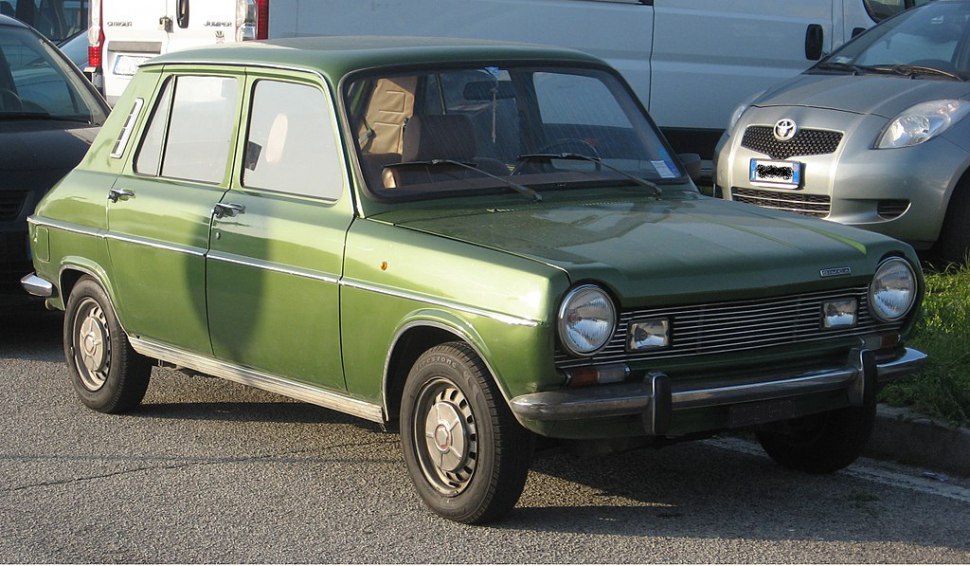
The Talbot Simca 1100 was a small family car produced between 1967 and 1979, initially by Simca, and later by Chrysler Europe (after Simca was acquired) and finally by Peugeot after the Chrysler Europe assets were purchased. The 1100, and its derivatives, represented a significant departure for Simca, moving away from their traditionally more basic offerings towards a more modern and sophisticated vehicle. The model gained a reputation for its innovative transverse engine layout and independent suspension, features typically found on more expensive cars at the time. This article focuses on the later Talbot-branded versions, specifically the 1.1 LS and GLS models produced between 1973 and 1977, which represent a refinement of the original design and were sold primarily in Europe.
The Talbot Simca 1100: A European Compact
Following Chrysler’s acquisition of Simca in 1967, the Simca 1100 underwent rebranding as the Talbot Simca 1100 in 1978, though the core design remained largely unchanged from the 1973-1977 models discussed here. The Talbot name was intended to evoke a sense of British luxury and quality, despite the car being designed and built in France. The 1100 competed in the small family car segment, a market dominated by vehicles like the Ford Escort, Renault 5, and Fiat 128. It was known for its practicality, comfortable ride, and relatively spacious interior for its size. The 1.1 LS and GLS trims represented the higher end of the 1100 range, offering improved equipment levels and a slightly more refined driving experience. The car was never officially sold in the United States, but it was a popular choice for European drivers seeking a reliable and economical vehicle.
Origins and Market Position
The Simca 1100 was a groundbreaking vehicle for its time, largely due to its innovative engineering. The transverse engine layout, with the engine mounted sideways and driving the front wheels, maximized interior space and improved handling. This configuration was relatively uncommon in the late 1960s and early 1970s, and the 1100 helped to popularize it. In its primary European market, the 1100 was positioned as a practical and affordable family car, appealing to buyers who needed a reliable vehicle for everyday use. The LS and GLS models added a touch of sophistication with features like upgraded upholstery, additional trim, and improved sound insulation.
Engine & Performance
The Talbot Simca 1100 1.1 LS and GLS models were powered by a 1.1-liter (1097cc) inline-four cylinder, naturally aspirated gasoline engine. This engine produced 54 horsepower (Hp) at its peak, providing adequate performance for everyday driving. While not a particularly powerful engine by modern standards, it was well-suited to the car’s lightweight construction and intended purpose. The engine featured a single overhead camshaft and a two-barrel carburetor. The transmission was a four-speed manual gearbox, offering a direct and engaging driving experience. Performance figures were modest, with a top speed of around 85 miles per hour and acceleration from 0 to 60 mph taking approximately 16 seconds. However, the 1100 was not designed for outright speed but rather for fuel efficiency and practicality. The engine’s relatively small displacement and simple design contributed to its reliability and low running costs.
Powertrain Details
The engine’s design prioritized fuel economy and durability. The use of a single overhead camshaft simplified the valve train, reducing maintenance requirements. The carburetor provided a reliable and consistent fuel supply, while the four-speed manual transmission allowed drivers to optimize engine performance for different driving conditions. The front-wheel-drive layout contributed to good traction, particularly in wet or slippery conditions. The suspension system, featuring independent front suspension and a torsion beam rear suspension, provided a comfortable ride and predictable handling. The braking system consisted of disc brakes on the front wheels and drum brakes on the rear wheels, offering adequate stopping power for the car’s weight and performance.
Design & Features
The Talbot Simca 1100 was a five-door hatchback, offering a practical and versatile body style. The hatchback configuration provided easy access to the cargo area, making it convenient for loading and unloading groceries or luggage. The car’s exterior design was relatively simple and understated, reflecting the prevailing design trends of the early 1970s. The LS and GLS models featured some cosmetic enhancements, such as chrome trim and upgraded interior materials. The interior was designed with practicality in mind, offering comfortable seating for five passengers and a reasonably spacious cargo area. The dashboard layout was functional and easy to use, with clearly labeled controls. Safety features were limited by the standards of the time, but the 1100 did offer basic features such as seat belts and a collapsible steering column. The GLS trim level typically included features like a vinyl roof, upgraded upholstery, and a more comprehensive instrument panel.
Interior and Practicality
The interior of the Talbot Simca 1100 was designed to maximize space and comfort. The front seats were adjustable, allowing drivers to find a comfortable driving position. The rear seats offered adequate legroom for passengers, although it could be somewhat cramped for taller individuals. The cargo area was surprisingly spacious for a car of its size, thanks to the hatchback configuration and the efficient use of interior space. The car’s relatively small turning circle made it easy to maneuver in tight urban environments. The 1100 was also known for its good visibility, thanks to its large windows and relatively upright seating position.
Technical Specifications
| Brand | Talbot |
| Model | Simca 1100 |
| Generation | Simca 1100 Hatchback |
| Type (Engine) | 1.1 LS, GLS (54 Hp) |
| Start of production | 1973 |
| End of production | 1977 |
| Powertrain Architecture | Internal Combustion engine |
| Body type | Hatchback |
| Fuel Type | Petrol (Gasoline) |
| Engine Power | 54 Hp |
| Engine Aspiration | Naturally aspirated engine |