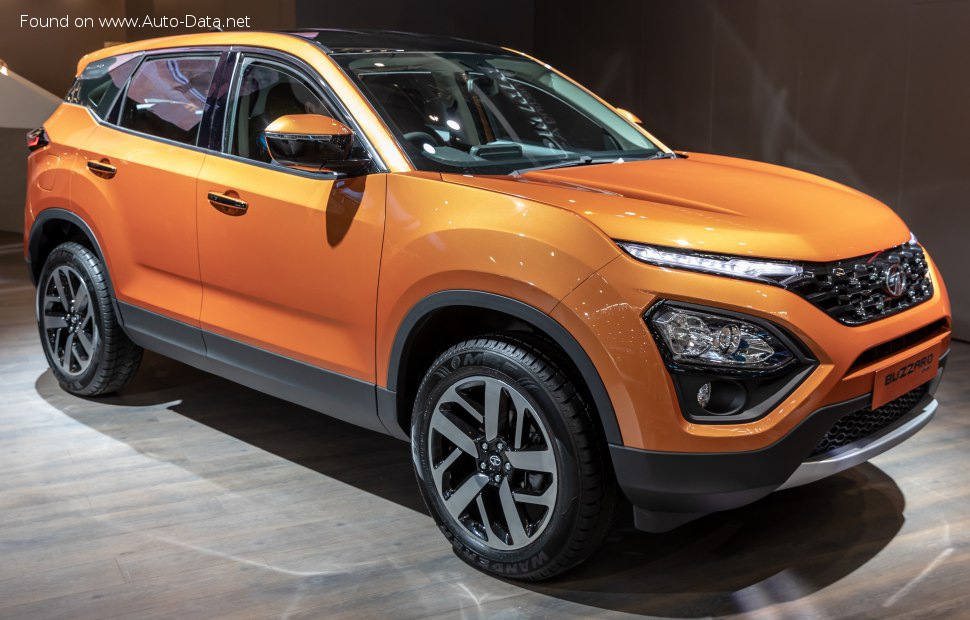
The Tata Harrier 2.0d (170 Hp) Automatic is a five-seater SUV produced by the Indian manufacturer Tata Motors between 2020 and 2023. While not officially sold in the United States, the Harrier represents a significant step forward for Tata in terms of design, technology, and overall build quality, primarily targeting the competitive Indian and emerging market SUV segments. It’s built on the D8 platform, derived from Land Rover’s D8 architecture (Tata owns Jaguar Land Rover), offering a robust and capable chassis. The Harrier aimed to provide a premium SUV experience at a relatively accessible price point, challenging established players in its class.
The Tata Harrier 2.0d: A Detailed Overview
The Harrier was conceived as a flagship SUV for Tata Motors, intended to elevate the brand’s image and appeal to a more discerning customer base. It filled a gap in the market for a spacious, well-equipped, and stylish SUV that offered a compelling alternative to established international brands. The introduction of the automatic transmission in 2020 further broadened its appeal, catering to drivers seeking convenience and ease of use. The vehicle’s design language, heavily influenced by Land Rover, contributed to its modern and sophisticated aesthetic.
Engine & Performance
The heart of the Tata Harrier 2.0d Automatic is a 2.0-liter, four-cylinder Kryotec diesel engine. This engine produces 170 horsepower at 3750 rpm and 350 Nm (258.15 lb.-ft.) of torque between 1750 and 2500 rpm. The engine is transversely mounted at the front of the vehicle and utilizes a turbocharger with an intercooler to enhance performance and efficiency. Power is delivered to the front wheels via a six-speed automatic transmission. While not a performance-oriented vehicle, the Harrier offers adequate power for everyday driving and highway cruising. The engine is designed to balance fuel economy with usable power, making it suitable for both urban and long-distance journeys. The BS6 Ph 2 emission standard compliance indicates a focus on reducing harmful emissions, aligning with increasingly stringent environmental regulations.
Design & Features
The Tata Harrier boasts a striking SUV design, characterized by its bold front grille, sculpted body lines, and distinctive LED lighting. The vehicle’s profile is dominated by its large windows and muscular wheel arches, giving it a robust and imposing stance. Inside, the Harrier offers a spacious and well-appointed cabin with seating for five passengers. The interior features a modern dashboard layout with a touchscreen infotainment system, comfortable seats, and ample storage space. Key features include an automatic climate control system, power windows, and a multi-function steering wheel. Safety features, crucial in modern vehicles, include ABS (Anti-lock Braking System) and disc brakes on all four wheels. The Harrier’s trunk space ranges from a minimum of 425 liters (15.01 cu. ft.) to a maximum of 810 liters (28.6 cu. ft.) with the rear seats folded down, providing ample room for luggage and cargo. The vehicle’s dimensions – 4598 mm (181.02 in.) in length, 1894 mm (74.57 in.) in width, and 1706 mm (67.17 in.) in height – contribute to its spacious interior and commanding road presence.
Suspension and Handling
The Harrier utilizes an independent McPherson strut suspension system with coil springs and an anti-roll bar at the front, providing a comfortable and controlled ride. The rear suspension is a semi-independent coil spring setup. This combination aims to balance ride comfort with handling stability. The steering is an electric power-assisted rack and pinion system, offering precise and responsive steering feel. The vehicle is equipped with tires in sizes 235/70 R16, 235/65 R17, or 235/60 R18, depending on the trim level, and rides on 16, 17, or 18-inch wheel rims.
Technical Specifications
| General Information | |
| Brand | Tata |
| Model | Harrier |
| Generation | Harrier |
| Type (Engine) | 2.0d (170 Hp) Automatic |
| Start of production | February, 2020 |
| End of production | October, 2023 |
| Powertrain Architecture | Internal Combustion engine |
| Body type | SUV |
| Seats | 5 |
| Doors | 5 |
| Performance Specs | |
| Fuel Type | Diesel |
| Emission standard | BS6 Ph 2 |
| Power | 170 Hp @ 3750 rpm |
| Power per litre | 86.9 Hp/l |
| Torque | 350 Nm @ 1750-2500 rpm / 258.15 lb.-ft. @ 1750-2500 rpm |
| Engine Specs | |
| Engine layout | Front, Transverse |
| Engine Model/Code | Kryotec |
| Engine displacement | 1956 cm3 / 119.36 cu. in. |
| Number of cylinders | 4 |
| Engine configuration | Inline |
| Number of valves per cylinder | 4 |
| Fuel injection system | Diesel Commonrail |
| Engine aspiration | Turbocharger, Intercooler |
| Engine oil capacity | 5 l / 5.28 US qt | 4.4 UK qt |
| Coolant | 7 l / 7.4 US qt | 6.16 UK qt |
| Engine systems | Start & Stop System |
| Space, Volume and Weights | |
| Trunk (boot) space – minimum | 425 l / 15.01 cu. ft. |
| Trunk (boot) space – maximum | 810 l / 28.6 cu. ft. |
| Fuel tank capacity | 50 l / 13.21 US gal | 11 UK gal |
| Dimensions | |
| Length | 4598 mm / 181.02 in. |
| Width | 1894 mm / 74.57 in. |
| Height | 1706 mm / 67.17 in. |
| Wheelbase | 2741 mm / 107.91 in. |
| Drivetrain, Brakes and Suspension Specs | |
| Drivetrain Architecture | The Internal combustion engine (ICE) drives the front wheels of the vehicle. |
| Drive wheel | Front wheel drive |
| Number of gears and type of gearbox | 6 gears, automatic transmission |
| Front suspension | Independent, type McPherson with coil spring and anti-roll bar |
| Rear suspension | Semi-independent, coil spring |
| Front brakes | Disc |
| Rear brakes | Disc |
| Assisting systems | ABS (Anti-lock braking system) |
| Steering type | Steering rack and pinion |
| Power steering | Electric Steering |
| Tires size | 235/70 R16; 235/65 R17; 235/60 R18 |
| Wheel rims size | 16; 17; 18 |