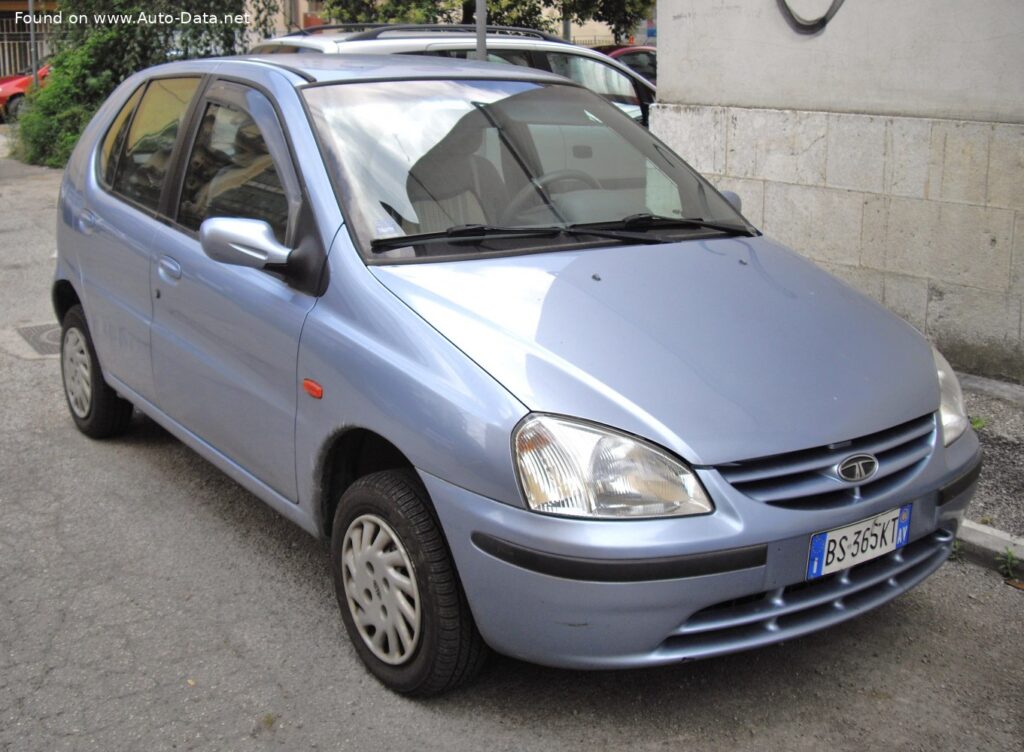
The Tata Indica is a supermini car that was initially launched by the Indian manufacturer Tata Motors in 1998. Representing a significant moment for the Indian automotive industry, the Indica was conceived as an affordable, domestically produced alternative to the then-dominant foreign brands in the market. While not officially sold in the United States, the Indica played a crucial role in establishing Tata Motors as a major player in the global automotive landscape, particularly in emerging markets. The 1.4 D variant, powered by a diesel engine producing 49 horsepower, was a popular choice for its fuel efficiency and practicality. This article details the specifications and characteristics of the Tata Indica 1.4 D (49 Hp) produced between 1998 and 2008.
The Tata Indica 1.4 D: A Detailed Overview
The Indica was a watershed moment for Tata Motors, marking their entry into independent car design and manufacturing. Prior to the Indica, Tata primarily produced licensed versions of foreign vehicles. The car was designed to offer a modern, spacious, and reliable option for Indian consumers, focusing on value for money. The 1.4 D model specifically targeted buyers seeking a fuel-efficient and economical vehicle for daily commuting and family use. It became a common sight on Indian roads and helped to democratize car ownership in the country.
Engine & Performance
The Tata Indica 1.4 D is powered by a 1.4-liter inline four-cylinder diesel engine. This engine produces a maximum power output of 49 horsepower at 5000 rpm and a torque of 85 Nm (62.69 lb.-ft.) at 2500 rpm. The engine utilizes a precombustion chamber injection system, a common technology for diesel engines of that era, designed to improve combustion efficiency. The naturally aspirated engine delivers power to the front wheels via a five-speed manual transmission. Performance figures reflect the engine’s modest output; acceleration from 0 to 100 km/h (0-62 mph) takes approximately 17 seconds, while 0 to 60 mph is achieved in 16.2 seconds. The vehicle has a top speed of 140 km/h (86.99 mph). The weight-to-power ratio is 20.5 kg/Hp, and the weight-to-torque ratio is 11.8 kg/Nm, indicating a focus on practicality over outright performance.
Design & Features
The Tata Indica 1.4 D is a five-door hatchback with a seating capacity of five passengers. Its design, while simple, prioritized interior space and practicality. The car’s dimensions – 3660 mm (144.09 in) in length, 1625 mm (63.98 in) in width, and 1485 mm (58.46 in) in height – provide a relatively spacious cabin for its class. The wheelbase measures 2400 mm (94.49 in), contributing to a comfortable ride. Features were basic but functional, reflecting the car’s target market. Safety features included disc brakes on the front wheels and drum brakes on the rear, along with an available Anti-lock Braking System (ABS) on some models. The steering system is a rack and pinion type, providing reasonable handling characteristics. Trunk space ranges from a minimum of 215 liters (7.59 cu. ft.) to a maximum of 610 liters (21.54 cu. ft.) with the rear seats folded down, offering good cargo capacity for a supermini.
Technical Specifications
| General Information | |
| Brand | Tata |
| Model | Indica |
| Generation | Indica |
| Type (Engine) | 1.4 D (49 Hp) |
| Start of production | 1998 |
| End of production | 2008 |
| Powertrain Architecture | Internal Combustion engine |
| Body type | Hatchback |
| Seats | 5 |
| Doors | 5 |
| Performance Specs | |
| Fuel Type | Diesel |
| Acceleration 0 – 100 km/h | 17 sec |
| Acceleration 0 – 62 mph | 17 sec |
| Acceleration 0 – 60 mph | 16.2 sec |
| Maximum speed | 140 km/h (86.99 mph) |
| Weight-to-power ratio | 20.5 kg/Hp |
| Weight-to-torque ratio | 11.8 kg/Nm |
| Engine Specs | |
| Power | 49 Hp @ 5000 rpm |
| Power per litre | 34.9 Hp/l |
| Torque | 85 Nm @ 2500 rpm (62.69 lb.-ft. @ 2500 rpm) |
| Engine layout | Front, Transverse |
| Engine displacement | 1405 cm3 (85.74 cu. in.) |
| Number of cylinders | 4 |
| Engine configuration | Inline |
| Cylinder Bore | 75 mm (2.95 in.) |
| Piston Stroke | 79.5 mm (3.13 in.) |
| Compression ratio | 22:1 |
| Number of valves per cylinder | 2 |
| Fuel injection system | Precombustion chamber injection |
| Engine aspiration | Naturally aspirated engine |
| Space, Volume and Weights | |
| Kerb Weight | 1005 kg (2215.65 lbs.) |
| Max. weight | 1405 kg (3097.49 lbs.) |
| Max load | 400 kg (881.85 lbs.) |
| Trunk (boot) space – minimum | 215 l (7.59 cu. ft.) |
| Trunk (boot) space – maximum | 610 l (21.54 cu. ft.) |
| Fuel tank capacity | 37 l (9.77 US gal | 8.14 UK gal) |
| Dimensions | |
| Length | 3660 mm (144.09 in.) |
| Width | 1625 mm (63.98 in.) |
| Height | 1485 mm (58.46 in.) |
| Wheelbase | 2400 mm (94.49 in.) |
| Front track | 1400 mm (55.12 in.) |
| Rear (Back) track | 1400 mm (55.12 in.) |
| Drivetrain, Brakes and Suspension | |
| Drivetrain Architecture | ICE drives front wheels |
| Drive wheel | Front wheel drive |
| Number of gears and type of gearbox | 5 gears, manual transmission |
| Front suspension | Coil spring |
| Rear suspension | Coil spring |
| Front brakes | Disc |
| Rear brakes | Drum |
| Assisting systems | ABS (Optional) |
| Steering type | Steering rack and pinion |
| Tires size | 155/70 R13 |
The Tata Indica 1.4 D, while not a performance car, represented a significant step forward for the Indian automotive industry. Its affordability, fuel efficiency, and practicality made it a popular choice for a wide range of buyers, and it played a key role in establishing Tata Motors as a credible car manufacturer. Although not sold in the US market, understanding the Indica provides insight into the development of the automotive industry in a rapidly growing economy and the challenges and innovations involved in creating vehicles tailored to specific regional needs.