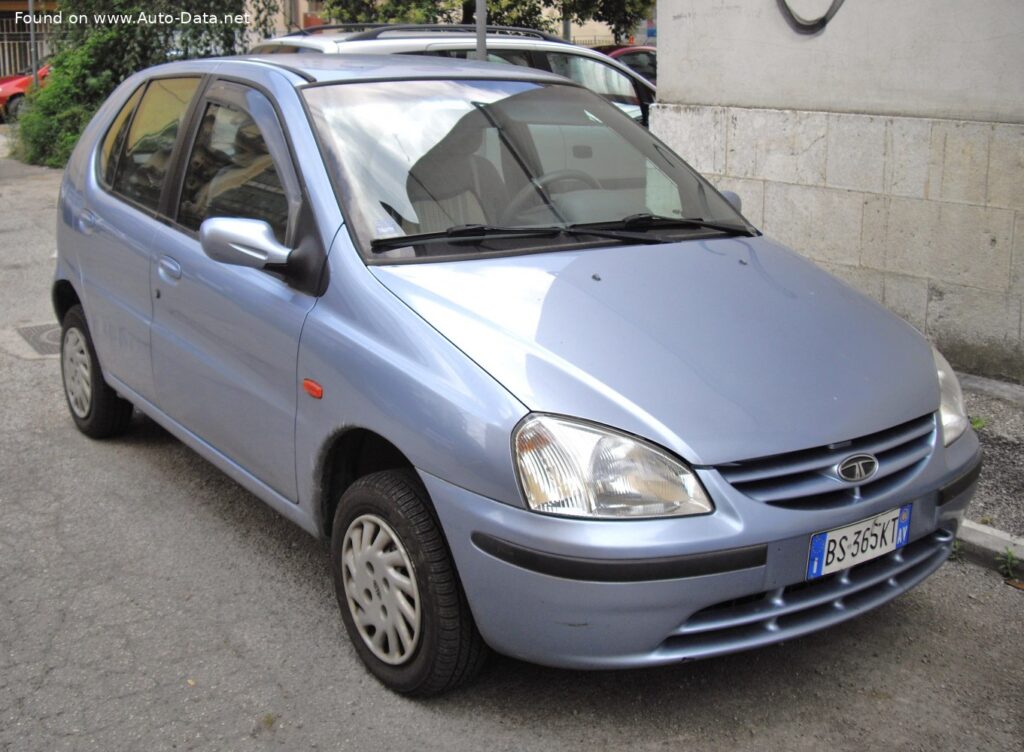
The Tata Indica Sedan 1.4 i (85 Hp), produced between 2002 and 2008, represents a significant step in the development of the Indian automotive industry. The Indica, launched in 1998 as a hatchback, was Tata Motors’ first foray into creating a completely indigenous passenger car. The sedan variant, introduced in 2002, aimed to broaden the Indica’s appeal by offering a more traditional body style and increased practicality. While not officially sold in the United States, the Indica played a crucial role in democratizing car ownership in India, offering a relatively affordable and reliable option for a growing middle class. It competed primarily with other domestically produced sedans and entry-level offerings from international manufacturers in the Indian market.
The Tata Indica Sedan 1.4 i: A Detailed Overview
The Indica Sedan was designed with a focus on maximizing interior space and fuel efficiency, key considerations for the Indian market. It was positioned as a family car, offering seating for five passengers and a reasonably sized trunk. The 1.4 i variant, powered by a 1.4-liter gasoline engine, was a popular choice due to its balance of performance and economy. The vehicle’s design, while not overtly stylish, prioritized functionality and affordability. It represented a departure from the previously dominant designs of imported vehicles and established Tata as a serious player in the automotive sector.
Engine & Performance
The heart of the Tata Indica Sedan 1.4 i is a 1.4-liter inline four-cylinder gasoline engine. This naturally aspirated engine produces 85 horsepower at 5500 rpm and 120 Nm (88.51 lb.-ft.) of torque at 3000 rpm. The engine features a multi-port fuel injection system, contributing to improved fuel efficiency and smoother operation. Power is delivered to the front wheels via a five-speed manual transmission. Performance figures indicate a 0-100 km/h (0-62 mph) acceleration time of 12.6 seconds and a top speed of 160 km/h (99.42 mph). The weight-to-power ratio of 12.5 kg/Hp and weight-to-torque ratio of 8.8 kg/Nm reflect the car’s modest but adequate performance for its intended market. The engine’s 9:1 compression ratio was a standard configuration for the time, balancing performance and fuel economy.
Design & Features
The Tata Indica Sedan is a four-door, five-seater sedan with a conventional three-box design. Its dimensions – 4150 mm (163.39 in) in length, 1625 mm (63.98 in) in width, and 1540 mm (60.63 in) in height – place it in the subcompact sedan category. The vehicle’s interior prioritizes space and practicality, offering comfortable seating for passengers. Features were relatively basic, reflecting the car’s affordability. However, the inclusion of an Anti-lock Braking System (ABS) was a notable safety feature for the time, particularly in the Indian market. The suspension system utilizes coil springs on both the front and rear axles, providing a reasonably comfortable ride. Hydraulic power steering assists with maneuverability. Trunk space is a useful 500 liters (17.66 cu. ft.), providing ample room for luggage and other cargo. The 175/65 R14 tires were standard for the vehicle.
Technical Specifications
| Brand | Tata |
| Model | Indica |
| Generation | Indica Sedan |
| Type (Engine) | 1.4 i (85 Hp) |
| Start of production | 2002 |
| End of production | 2008 |
| Powertrain Architecture | Internal Combustion engine |
| Body type | Sedan |
| Seats | 5 |
| Doors | 4 |
| Fuel Type | Petrol (Gasoline) |
| Acceleration 0 – 100 km/h | 12.6 sec |
| Acceleration 0 – 62 mph | 12.6 sec |
| Acceleration 0 – 60 mph | 12 sec |
| Maximum speed | 160 km/h (99.42 mph) |
| Weight-to-power ratio | 12.5 kg/Hp |
| Weight-to-torque ratio | 8.8 kg/Nm |
| Power | 85 Hp @ 5500 rpm |
| Power per litre | 60.5 Hp/l |
| Torque | 120 Nm @ 3000 rpm (88.51 lb.-ft. @ 3000 rpm) |
| Engine layout | Front, Transverse |
| Engine displacement | 1405 cm3 (85.74 cu. in.) |
| Number of cylinders | 4 |
| Engine configuration | Inline |
| Cylinder Bore | 75 mm (2.95 in.) |
| Piston Stroke | 79.5 mm (3.13 in.) |
| Compression ratio | 9:1 |
| Number of valves per cylinder | 2 |
| Fuel injection system | Multi-port manifold injection |
| Engine aspiration | Naturally aspirated engine |
| Kerb Weight | 1060 kg (2336.9 lbs.) |
| Max. weight | 1500 kg (3306.93 lbs.) |
| Max load | 440 kg (970.03 lbs.) |
| Trunk (boot) space – minimum | 500 l (17.66 cu. ft.) |
| Fuel tank capacity | 37 l (9.77 US gal | 8.14 UK gal) |
| Length | 4150 mm (163.39 in.) |
| Width | 1625 mm (63.98 in.) |
| Height | 1540 mm (60.63 in.) |
| Wheelbase | 2450 mm (96.46 in.) |
| Front track | 1400 mm (55.12 in.) |
| Rear (Back) track | 1400 mm (55.12 in.) |
| Drivetrain Architecture | ICE drives front wheels |
| Drive wheel | Front wheel drive |
| Number of gears and type of gearbox | 5 gears, manual transmission |
| Front suspension | Coil spring |
| Rear suspension | Coil spring |
| Front brakes | Ventilated discs |
| Rear brakes | Drum |
| Assisting systems | ABS (Anti-lock braking system) |
| Steering type | Steering rack and pinion |
| Power steering | Hydraulic Steering |
| Tires size | 175/65 R14 |
The Tata Indica Sedan 1.4 i, while not a groundbreaking vehicle in terms of technology or performance, was a pivotal model for Tata Motors and the Indian automotive industry. It provided a viable and affordable transportation solution for a large segment of the population, contributing to the growth of car ownership in India and establishing Tata as a significant automotive manufacturer.