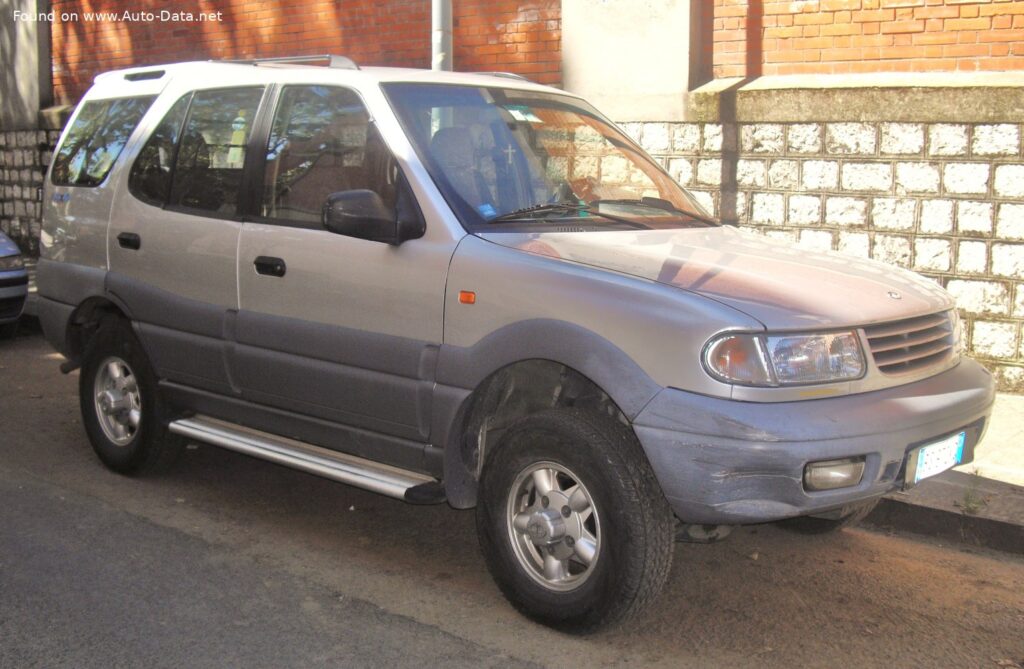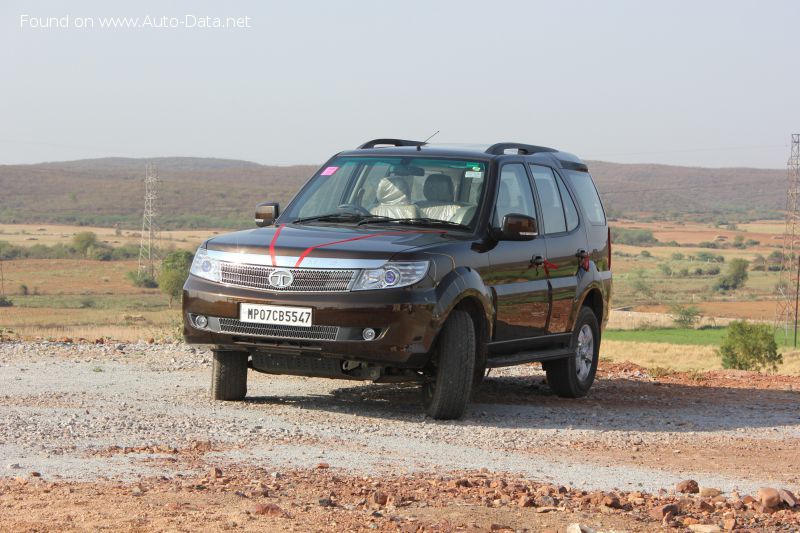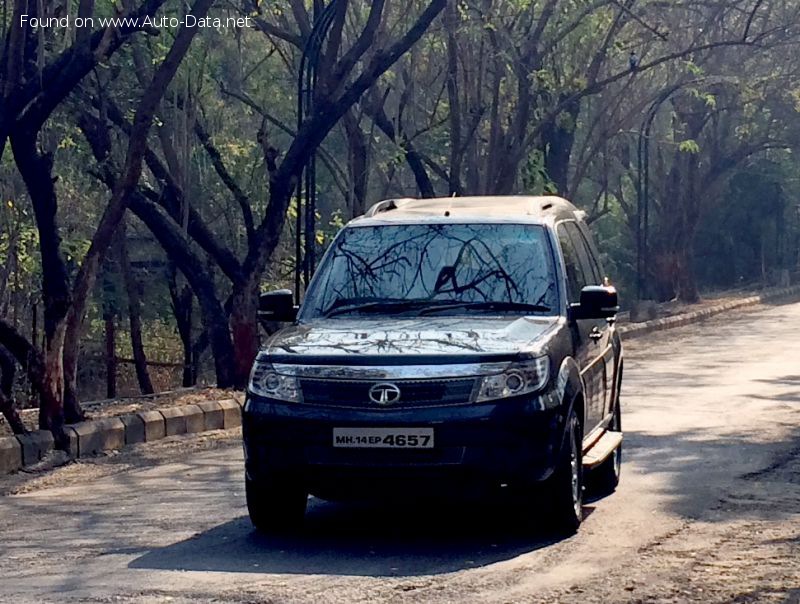
The Tata Safari II 2.0L Turbo (170 Hp), produced from January 2021 to October 2023, represents a significant iteration in Tata Motors’ long-running Safari lineage. While the original Safari, introduced in 1988, was a rugged, utilitarian SUV based on the Mercedes-Benz G-Wagen, the Safari II aimed to blend the robust character of its predecessor with modern comfort and technology. Importantly, the Safari is primarily a model for the Indian market, where Tata Motors holds a substantial share. It caters to the demand for spacious, family-oriented SUVs capable of handling varied road conditions. This generation of the Safari is built on the D8 platform, shared with the Tata Harrier, offering a more refined driving experience and improved safety features compared to earlier models. The Safari II distinguishes itself with a focus on passenger comfort, offering seating for up to seven occupants, and a turbocharged diesel engine designed for both performance and fuel efficiency.
The Tata Safari II 2.0L Turbo: A Detailed Overview
The Safari II 2.0L Turbo occupies a unique position in the Indian automotive landscape. It’s positioned as a larger, more premium alternative to compact SUVs, offering a compelling combination of space, features, and affordability. Unlike many SUVs sold in North America or Europe, the Safari II is specifically engineered to address the needs of Indian roads and driving conditions, which often include rough terrain and congested city streets. The vehicle’s design reflects this, prioritizing ground clearance and a robust build quality. While not officially sold in the United States, understanding its specifications and features provides insight into the evolving automotive market in India and Tata Motors’ engineering capabilities.
Engine & Performance
At the heart of the Tata Safari II 2.0L Turbo lies the Kryotec 2.0-liter turbocharged diesel engine. This four-cylinder, inline engine produces 170 horsepower at 3750 rpm and 350 Nm (258.15 lb.-ft.) of torque between 1750 and 2500 rpm. The engine utilizes a diesel commonrail fuel injection system and an intercooler to optimize combustion and enhance power delivery. The power-to-weight ratio stands at 10.7 kg/Hp or 93.2 Hp/tonne, while the torque-to-weight ratio is 5.2 kg/Nm or 191.8 Nm/tonne. This configuration provides a balance between responsive acceleration and reasonable fuel economy. The engine is mated to a 6-speed manual transmission, driving the front wheels. The inclusion of a Start & Stop system further contributes to improved fuel efficiency, particularly in urban driving conditions. The engine displacement is 1956 cm3 (119.36 cu. in.), and each cylinder features four valves, enhancing volumetric efficiency.
Design & Features
The Tata Safari II is a five-door SUV offering seating for six or seven passengers, depending on the configuration. Its body style is characterized by a tall, commanding presence, reflecting its robust construction. The vehicle’s dimensions are 4661 mm (183.5 in.) in length, 1894 mm (74.57 in.) in width, and 1786 mm (70.31 in.) in height, with a wheelbase of 2741 mm (107.91 in.). The interior is designed with practicality and comfort in mind, featuring ample legroom and headroom for all occupants. Trunk space is configurable, offering a minimum of 447 liters (15.79 cu. ft.) with all seats in place and expanding to 1658 liters (58.55 cu. ft.) with the rear seats folded down. Safety features include ABS (Anti-lock Braking System), providing enhanced braking control. The suspension system comprises an independent McPherson strut setup with coil springs and an anti-roll bar at the front, and a semi-independent coil spring arrangement at the rear. The Safari II is equipped with disc brakes on all four wheels. Tire sizes vary depending on the trim level, with options including 235/70 R16 and 235/60 R18, mounted on 16 or 18-inch wheel rims.
Technical Specifications
| Brand | Tata |
| Model | Safari |
| Generation | Safari II |
| Type (Engine) | 2.0L Turbo (170 Hp) |
| Start of production | January, 2021 |
| End of production | October, 2023 |
| Powertrain Architecture | Internal Combustion engine |
| Body type | SUV |
| Seats | 6-7 |
| Doors | 5 |
| Fuel Type | Diesel |
| Emission standard | BS6 |
| Weight-to-power ratio | 10.7 kg/Hp, 93.2 Hp/tonne |
| Weight-to-torque ratio | 5.2 kg/Nm, 191.8 Nm/tonne |
| Power | 170 Hp @ 3750 rpm |
| Power per litre | 86.9 Hp/l |
| Torque | 350 Nm @ 1750-2500 rpm / 258.15 lb.-ft. @ 1750-2500 rpm |
| Engine layout | Front, Transverse |
| Engine Model/Code | Kryotec |
| Engine displacement | 1956 cm3 / 119.36 cu. in. |
| Number of cylinders | 4 |
| Engine configuration | Inline |
| Number of valves per cylinder | 4 |
| Fuel injection system | Diesel Commonrail |
| Engine aspiration | Turbocharger, Intercooler |
| Engine oil capacity | 5 l / 5.28 US qt | 4.4 UK qt |
| Coolant | 7 l / 7.4 US qt | 6.16 UK qt |
| Kerb Weight | 1825 kg / 4023.44 lbs |
| Trunk (boot) space – minimum | 447 l / 15.79 cu. ft |
| Trunk (boot) space – maximum | 1658 l / 58.55 cu. ft |
| Fuel tank capacity | 50 l / 13.21 US gal | 11 UK gal |
| AdBlue tank | 15 l / 3.96 US gal | 3.3 UK gal |
| Length | 4661 mm / 183.5 in |
| Width | 1894 mm / 74.57 in |
| Height | 1786 mm / 70.31 in |
| Wheelbase | 2741 mm / 107.91 in |
| Drivetrain Architecture | ICE, Front wheel drive |
| Number of gears and type of gearbox | 6 gears, manual transmission |
| Front suspension | Independent, type McPherson with coil spring and anti-roll bar |
| Rear suspension | Semi-independent, coil spring |
| Front brakes | Disc |
| Rear brakes | Disc |
| Assisting systems | ABS (Anti-lock braking system) |
| Steering type | Steering rack and pinion |
| Tires size | 235/70 R16; 235/60 R18 |
| Wheel rims size | 16; 18 |