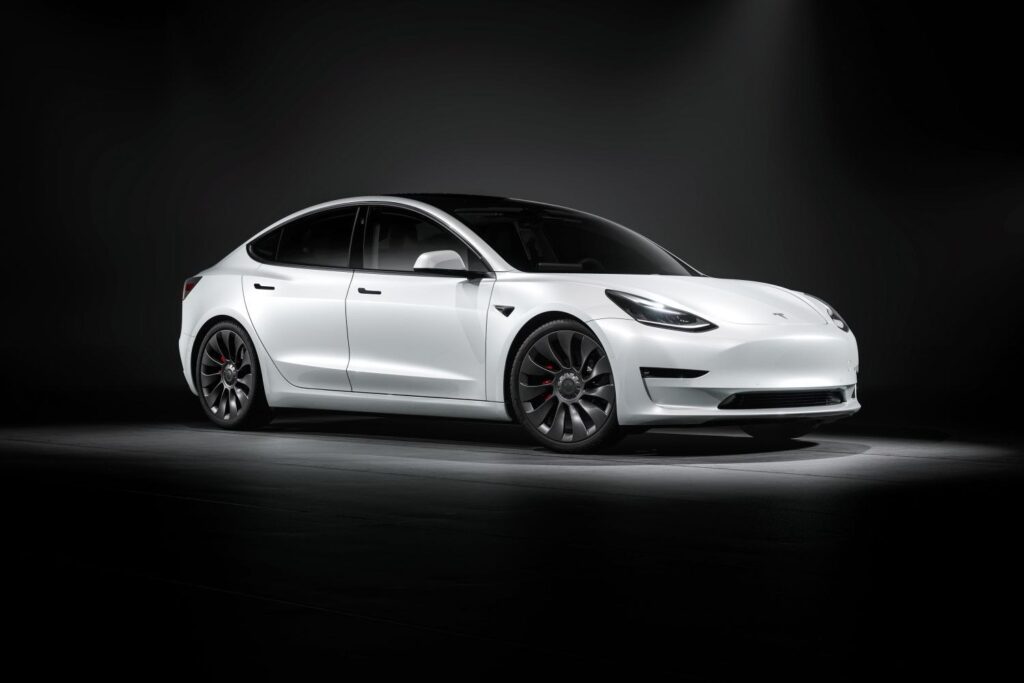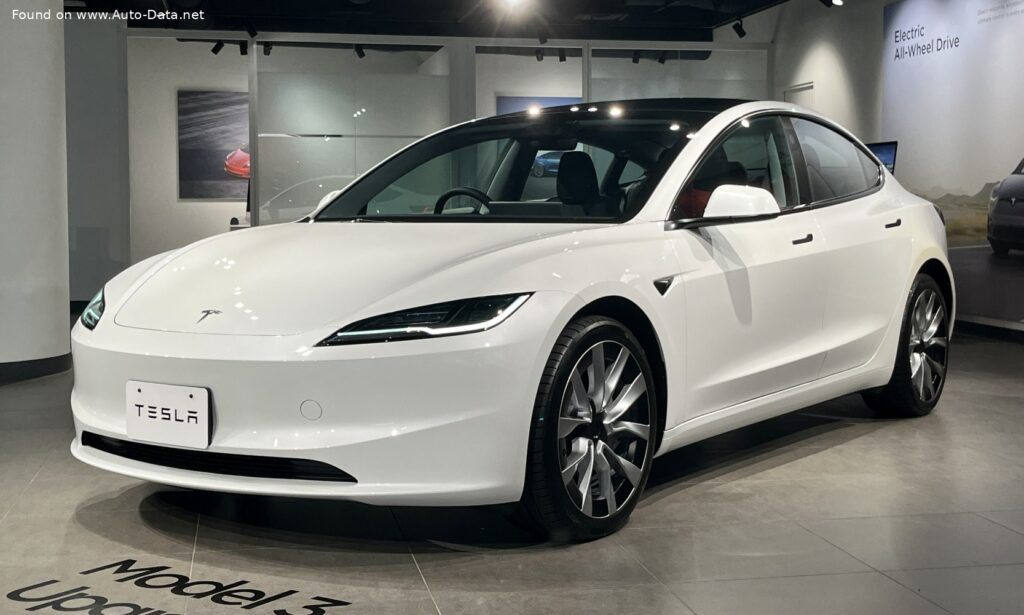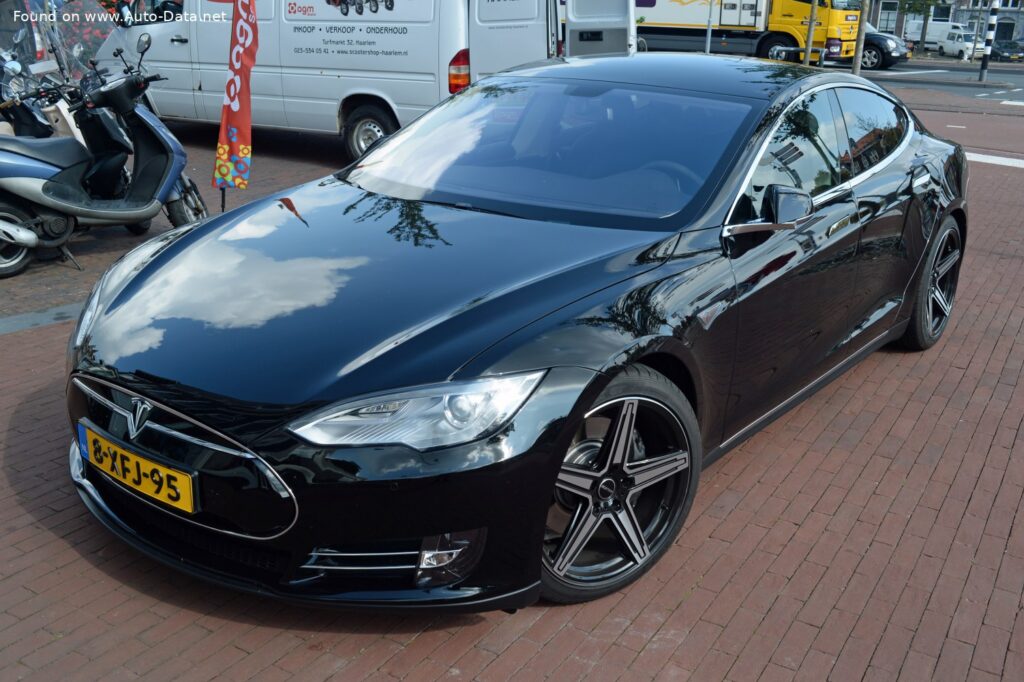
The Tesla Model S P85, produced from 2012 to November 2014, represents a pivotal moment in the automotive industry. As one of the first fully electric luxury vehicles to achieve widespread recognition, the P85 established Tesla as a serious contender and helped pave the way for the broader adoption of electric vehicles. Positioned in the premium large car segment, the Model S P85 offered a compelling combination of performance, range, and technology, challenging conventional notions of what an electric car could be. It was initially offered as a direct sales model, bypassing the traditional dealership network, a strategy that remains central to Tesla’s business model.
Tesla Model S P85: A Technological Leap
The Model S P85 was not merely an electric version of an existing car; it was designed from the ground up as an electric vehicle. This allowed Tesla to optimize the vehicle’s architecture for battery placement, weight distribution, and aerodynamic efficiency. The “P85” designation refers to the Performance version equipped with an 85 kWh battery pack, offering increased power and range compared to the standard Model S. This model played a crucial role in demonstrating that electric vehicles could deliver exhilarating performance without compromising practicality or range, addressing key concerns of potential EV buyers.
Engine & Performance
The Tesla Model S P85 utilizes a single electric motor located on the rear axle, delivering 416 horsepower and 600 Nm (442.54 lb.-ft.) of torque. This instant torque provides rapid acceleration, enabling the vehicle to sprint from 0 to 60 mph in just 4.2 seconds, and 0 to 100 km/h in 4.4 seconds. The motor’s maximum revolutions are capped at 16,000 rpm. The powertrain architecture is a Battery Electric Vehicle (BEV), meaning it relies solely on electricity for propulsion. The weight-to-power ratio is an impressive 5 kg/Hp, translating to 198.1 Hp/tonne, contributing to its responsive handling. The weight-to-torque ratio is 3.5 kg/Nm, or 285.7 Nm/tonne. The system power and torque mirror the electric motor’s output, showcasing the direct drive nature of the powertrain. The single-speed automatic transmission simplifies operation and maximizes efficiency.
Design & Features
The Model S P85 features a distinctive liftback body style, offering a blend of sedan elegance and hatchback practicality. With seating for up to seven passengers and five doors, it provides ample space for both occupants and cargo. The battery pack is strategically located beneath the floor, lowering the center of gravity and enhancing stability. The interior is minimalist and technologically advanced, dominated by a large central touchscreen that controls most vehicle functions. Key features included regenerative braking, which recaptures energy during deceleration, extending the vehicle’s range. Safety was also a priority, with features like ABS (Anti-lock Braking System) and a robust structural design. The trunk offers a versatile 745 liters (26.31 cu. ft.) of space, expandable to 1645 liters (58.09 cu. ft.) with the rear seats folded down. The drag coefficient of 0.24 contributes to its aerodynamic efficiency and range.
Technical Specifications
| Brand | Tesla |
| Model | Model S |
| Generation | Model S |
| Type (Engine) | P85 85 kWh (416 Hp) |
| Start of production | 2012 |
| End of production | November, 2014 |
| Powertrain Architecture | BEV (Electric Vehicle) |
| Body type | Liftback |
| Seats | 7 |
| Doors | 5 |
| Fuel Type | Electricity |
| Acceleration 0 – 100 km/h | 4.4 sec |
| Acceleration 0 – 62 mph | 4.4 sec |
| Acceleration 0 – 60 mph | 4.2 sec |
| Maximum speed | 210 km/h (130.49 mph) |
| Weight-to-power ratio | 5 kg/Hp, 198.1 Hp/tonne |
| Weight-to-torque ratio | 3.5 kg/Nm, 285.7 Nm/tonne |
| Gross battery capacity | 85 kWh |
| Battery voltage | 366 V |
| Battery technology | Lithium-ion (Li-Ion) |
| Battery location | Below the floor |
| All-electric range (NEDC) | 502 km (311.93 mi) |
| Average Energy consumption (NEDC) | 17.7 kWh/100 km (28.49 kWh/100 mi) |
| MPGe | 118 |
| km/kWh | 5.6 |
| mi/kWh | 3.5 |
| Electric motor power | 416 Hp @ 5000-8600 rpm |
| Electric motor Torque | 600 Nm @ 0-5100 rpm (442.54 lb.-ft. @ 0-5100 rpm) |
| Maximum revolutions of the electric motor | 16000 rpm |
| Electric motor location | Rear axle, Transverse |
| System power | 416 Hp @ 5000-8600 rpm |
| System torque | 600 Nm @ 0-5100 rpm (442.54 lb.-ft. @ 0-5100 rpm) |
| Kerb Weight | 2100 kg (4629.71 lbs.) |
| Max. weight | 2590 kg (5709.97 lbs.) |
| Max load | 490 kg (1080.27 lbs.) |
| Trunk (boot) space – minimum | 745 l (26.31 cu. ft.) |
| Trunk (boot) space – maximum | 1645 l (58.09 cu. ft.) |
| Max. roof load | 75 kg (165.35 lbs.) |
| Length | 4970 mm (195.67 in.) |
| Width | 1963 mm (77.28 in.) |
| Width including mirrors | 2189 mm (86.18 in.) |
| Height | 1427 mm (56.18 in.) |
| Wheelbase | 2960 mm (116.54 in.) |
| Front track | 1661 mm (65.39 in.) |
| Rear (Back) track | 1699 mm (66.89 in.) |
| Front overhang | 929 mm (36.57 in.) |
| Rear overhang | 1080 mm (42.52 in.) |
| Ride height (ground clearance) | 155 mm (6.1 in.) |
| Drag coefficient (Cd) | 0.24 |
| Minimum turning circle (turning diameter) | 11.3 m (37.07 ft.) |
| Drivetrain Architecture | One electric motor drives the rear wheels. |
| Drive wheel | Rear wheel drive |
| Number of gears and type of gearbox | 1 gears, automatic transmission |
| Front suspension | Double wishbone, Transverse stabilizer |
| Rear suspension | Independent multi-link suspension |
| Front brakes | Ventilated discs, 355×32 mm |
| Rear brakes | Ventilated discs, 365×28 mm |
| Assisting systems | ABS (Anti-lock braking system) |
| Steering type | Steering rack and pinion |
| Power steering | Electric Steering |
| Tires size | Front wheel tires: 245/45 R19; 245/35 R21Rear wheel tires: 245/45 R19; 245/35 R21; 265/35 R21 |
| Wheel rims size | Front wheel rims: 8J x 19; 8.5J x 21Rear wheel rims: 8J x 19; 8.5J x 21; 9J x 21 |
The Tesla Model S P85 was more than just a car; it was a statement. It demonstrated that electric vehicles could be desirable, high-performing, and practical, challenging the status quo and accelerating the transition towards sustainable transportation. Its legacy continues to influence the development of electric vehicles today, and it remains a significant milestone in automotive history.