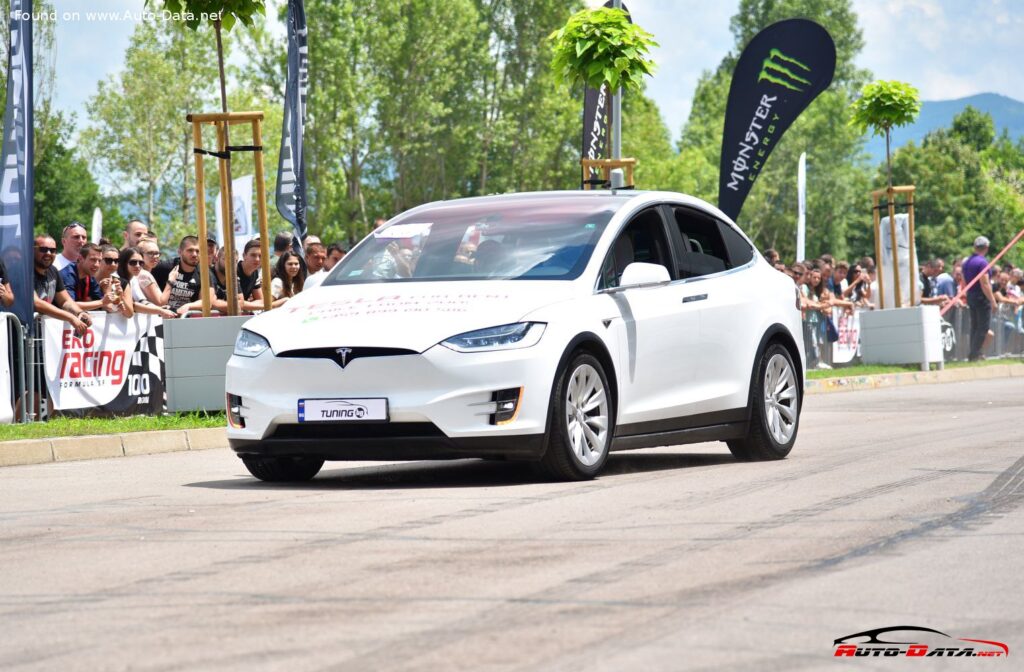
The Tesla Model X 90D, produced from October 2015 to June 2017, represents a pivotal moment in the evolution of electric SUVs. As the second vehicle in Tesla’s lineup, following the Model S, the Model X aimed to combine the practicality of a sport utility vehicle with the performance and zero-emission benefits of a battery electric vehicle (BEV). The 90D variant, equipped with a 90 kWh battery pack, offered an extended range and performance profile, solidifying Tesla’s position as a leader in the burgeoning EV market. It distinguished itself with its distinctive Falcon Wing doors and a focus on spaciousness and technology, targeting families and those seeking a premium electric vehicle experience.
Tesla Model X 90D: A Technological Leap
The Model X 90D was a significant departure from traditional SUV design and engineering. Its all-electric powertrain, dual-motor all-wheel drive system, and advanced battery technology set new standards for performance and efficiency. The “90D” designation refers to the battery pack capacity of 90 kilowatt-hours, which provided a substantial increase in range compared to earlier Model X versions. The dual-motor configuration, with one motor powering the front wheels and another powering the rear, delivered instant torque and precise control, contributing to its impressive acceleration capabilities. The vehicle’s low center of gravity, due to the battery pack being located under the floor, enhanced handling and stability.
Engine & Performance
The Tesla Model X 90D utilizes a dual-motor, all-wheel drive (AWD) powertrain. Each motor independently delivers 262 horsepower and 330 Nm (243.4 lb.-ft.) of torque, resulting in a combined system output of 525 horsepower and 660 Nm (486.79 lb.-ft.) of torque. This configuration allows for rapid acceleration; the Model X 90D can accelerate from 0 to 60 mph in 4.8 seconds, and 0 to 100 km/h in 5 seconds, with a maximum speed of 155.34 mph (250 km/h). The powertrain’s weight-to-power ratio is 4.6 kg/Hp, or 219.8 Hp/tonne, and the weight-to-torque ratio is 3.6 kg/Nm, or 276.3 Nm/tonne. The battery voltage is 350V, utilizing Lithium-ion (Li-Ion) technology. The all-electric range, measured using the New European Driving Cycle (NEDC), is 489 km (303.85 miles). Energy consumption is rated at 17.5 kWh/100 km (28.16 kWh/100 miles), equating to 120 MPGe, 5.7 km/kWh, or 3.6 mi/kWh.
Design & Features
The Tesla Model X 90D is a five-door SUV with seating for up to seven passengers. Its most recognizable feature is its Falcon Wing doors, which open vertically, providing easy access to the second and third-row seats, even in tight parking spaces. The vehicle’s exterior design is characterized by its sleek lines and aerodynamic profile, contributing to a drag coefficient of 0.24. Inside, the Model X 90D boasts a minimalist and technologically advanced cabin, dominated by a large 17-inch touchscreen display that controls most vehicle functions. Safety features include ABS (Anti-lock braking system) and a comprehensive suite of driver-assistance systems. The interior offers a flexible seating configuration, with ample cargo space ranging from a minimum of 357 liters (12.61 cu. ft.) to a maximum of 2166 liters (76.49 cu. ft.) with the rear seats folded down. The vehicle’s air suspension system provides a comfortable ride and adjustable ride height (183-223 mm or 7.2 – 8.78 in.).
Technical Specifications
| Brand | Tesla |
| Model | Model X |
| Generation | Model X |
| Type (Engine) | 90D 90 kWh (525 Hp) Dual Motor AWD |
| Start of production | October, 2015 |
| End of production | June, 2017 |
| Powertrain Architecture | BEV (Electric Vehicle) |
| Body type | SUV |
| Seats | 7 |
| Doors | 5 |
| Fuel Type | Electricity |
| Acceleration 0 – 100 km/h | 5 sec |
| Acceleration 0 – 62 mph | 5 sec |
| Acceleration 0 – 60 mph | 4.8 sec |
| Maximum speed | 250 km/h (155.34 mph) |
| Weight-to-power ratio | 4.6 kg/Hp, 219.8 Hp/tonne |
| Weight-to-torque ratio | 3.6 kg/Nm, 276.3 Nm/tonne |
| Gross battery capacity | 90 kWh |
| Battery voltage | 350 V |
| Battery technology | Lithium-ion (Li-Ion) |
| Battery location | Below the floor |
| All-electric range (NEDC) | 489 km (303.85 mi) |
| Average Energy consumption (NEDC) | 17.5 kWh/100 km (28.16 kWh/100 mi) |
| Electric motor 1 Power | 262 Hp |
| Electric motor 1 Torque | 330 Nm (243.4 lb.-ft.) |
| Electric motor 1 Max RPM | 18200 rpm |
| Electric motor 1 Location | Rear axle, Transverse |
| Electric motor 2 Power | 262 Hp |
| Electric motor 2 Torque | 330 Nm (243.4 lb.-ft.) |
| Electric motor 2 Max RPM | 18200 rpm |
| Electric motor 2 Location | Front axle, Transverse |
| System power | 525 Hp |
| System torque | 660 Nm (486.79 lb.-ft.) |
| Kerb Weight | 2389 kg (5266.84 lbs.) |
| Max. weight | 3020 kg (6657.96 lbs.) |
| Max load | 631 kg (1391.12 lbs.) |
| Trunk (boot) space – minimum | 357 l (12.61 cu. ft.) |
| Trunk (boot) space – maximum | 2166 l (76.49 cu. ft.) |
| Permitted trailer load with brakes (12%) | 2250 kg (4960.4 lbs.) |
| Permitted towbar download | 54 kg (119.05 lbs.) |
| Length | 5052 mm (198.9 in.) |
| Width | 1999 mm (78.7 in.) |
| Width with mirrors folded | 2017 mm (79.41 in.) |
| Width including mirrors | 2272 mm (89.45 in.) |
| Height | 1684 mm (66.3 in.) |
| Wheelbase | 2965 mm (116.73 in.) |
| Front track | 1711 mm (67.36 in.) |
| Rear (Back) track | 1723 mm (67.83 in.) |
| Front overhang | 989 mm (38.94 in.) |
| Rear overhang | 1098 mm (43.23 in.) |
| Ride height (ground clearance) | 183-223 mm (7.2 – 8.78 in.) |
| Drag coefficient (Cd) | 0.24 |
| Minimum turning circle (turning diameter) | 12.4 m (40.68 ft.) |
| Drivetrain Architecture | One electric motor drives the front wheels, one electric motor drives the rear wheels. |
| Drive wheel | All wheel drive (4×4) |
| Number of gears and type of gearbox | 1 gears, automatic transmission |
| Front suspension | Double wishbone, Transverse stabilizer, Air suspension |
| Rear suspension | Independent multi-link suspension, Air suspension, Transverse stabilizer |
| Front brakes | Ventilated discs, 355×32 mm |
| Rear brakes | Ventilated discs, 365×28 mm |
| Steering type | Steering rack and pinion |
| Power steering | Electric Steering |
| Tires size Front | 255/45 R20; 265/45 R20; 265/35 R22 |
| Tires size Rear | 275/45 R20; 285/35 R22 |
| Wheel rims size Front | 9J x 20; 9J x 22 |
| Wheel rims size Rear | 9.5J x 20; 10J x 20; 10J x 22 |
The Tesla Model X 90D was a groundbreaking vehicle that helped to accelerate the adoption of electric vehicles. Its combination of performance, range, practicality, and innovative features made it a compelling alternative to traditional gasoline-powered SUVs. While superseded by later Model X variants with increased battery capacity and performance, the 90D remains a significant milestone in Tesla’s history and a testament to the company’s commitment to sustainable transportation.