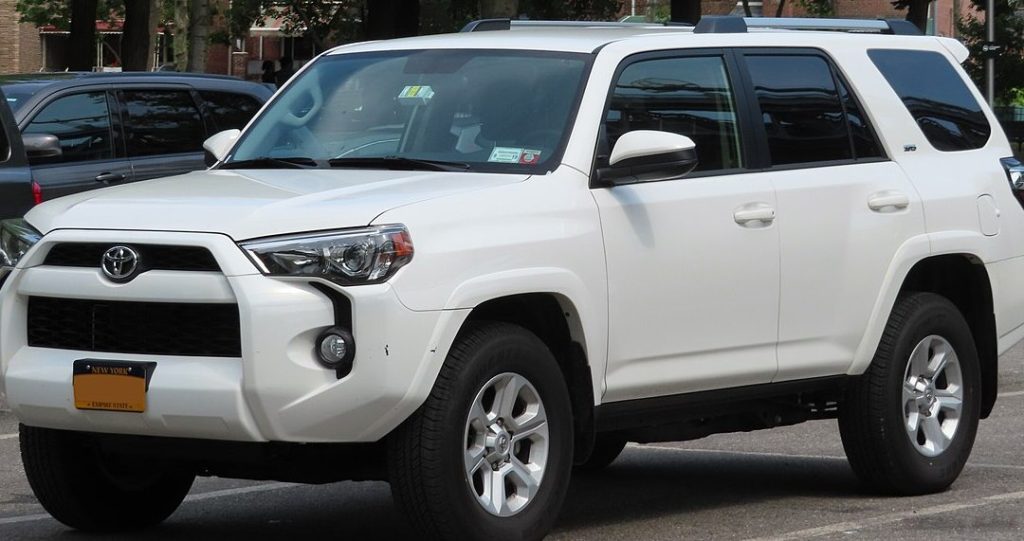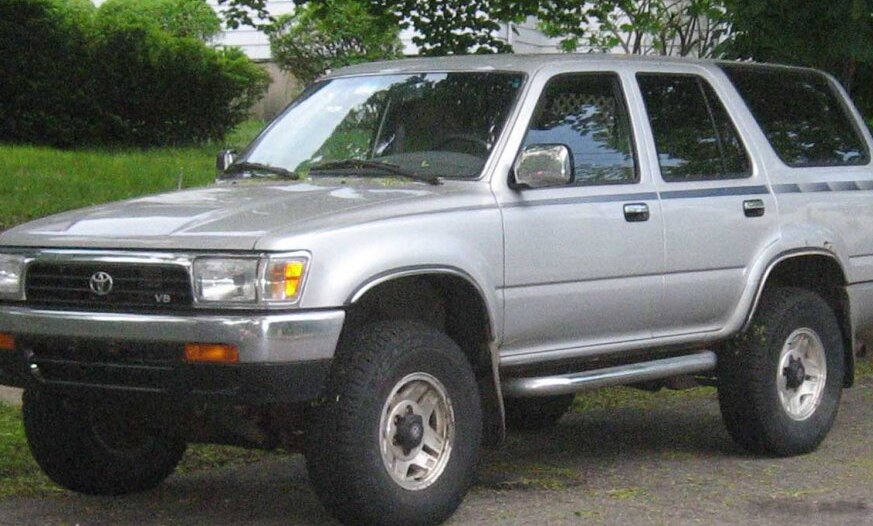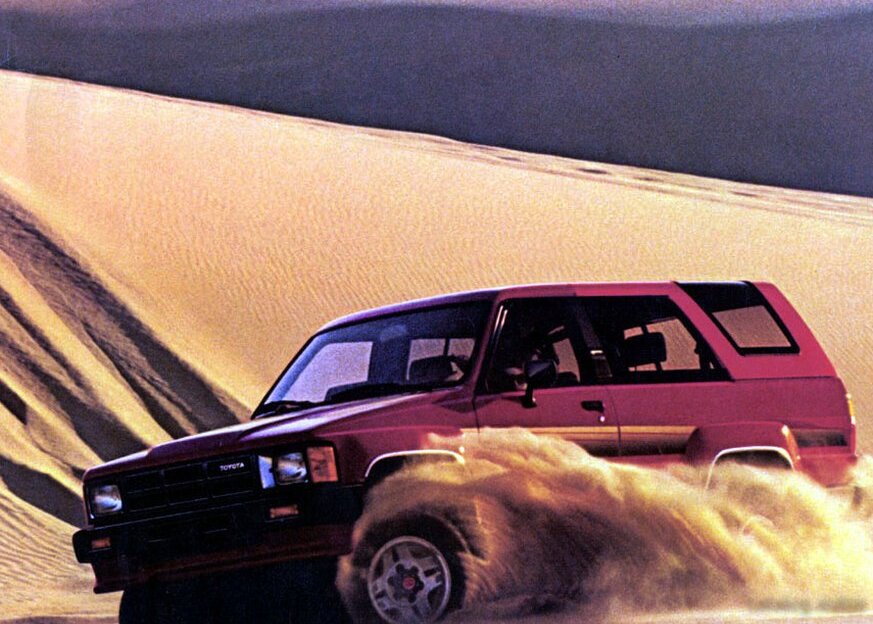
The Toyota 4Runner I 2.4i Turbo, produced between 1987 and 1989, represented a unique offering within the first generation (1984-1989) of Toyota’s popular SUV. Positioned as a more performance-oriented variant, it distinguished itself from the naturally aspirated models with the addition of a turbocharger to its 2.4-liter inline-four engine. This model was primarily aimed at the North American market, where buyers were increasingly seeking capable and versatile off-road vehicles. The 2.4i Turbo 4×4 Automatic occupied a mid-range position in the 4Runner lineup, offering a blend of power, convenience, and four-wheel-drive capability.
Technical Specifications
| Brand | Toyota |
| Model | 4Runner |
| Generation | 4Runner I |
| Type (Engine) | 2.4i Turbo (135 Hp) 4×4 Automatic |
| Start of production | 1987 |
| End of production | 1989 |
| Powertrain Architecture | Internal Combustion engine |
| Body type | SUV |
| Seats | 5 |
| Doors | 3 |
| Fuel consumption (urban) | 13.8 l/100 km (17 US mpg, 20.5 UK mpg) |
| Fuel consumption (extra urban) | 12.3 l/100 km (19.1 US mpg, 23 UK mpg) |
| Fuel Type | Petrol (Gasoline) |
| Power | 135 Hp @ 4800 rpm |
| Power per litre | 57.1 Hp/l |
| Torque | 134 Nm @ 2800 rpm (98.83 lb.-ft. @ 2800 rpm) |
| Engine layout | Front, Longitudinal |
| Engine Model/Code | 22R-TEC Turbo |
| Engine displacement | 2366 cm3 (144.38 cu. in.) |
| Number of cylinders | 4 |
| Engine configuration | Inline |
| Cylinder Bore | 92 mm (3.62 in.) |
| Piston Stroke | 89 mm (3.5 in.) |
| Compression ratio | 9.3:1 |
| Number of valves per cylinder | 2 |
| Fuel injection system | Multi-port manifold injection |
| Engine aspiration | Turbocharger |
| Valvetrain | SOHC |
| Engine oil capacity | 4.5 l (4.76 US qt | 3.96 UK qt) |
| Coolant | 9 l (9.51 US qt | 7.92 UK qt) |
| Max. weight | 2304 kg (5079.45 lbs.) |
| Trunk (boot) space – minimum | 1200 l (42.38 cu. ft.) |
| Trunk (boot) space – maximum | 2100 l (74.16 cu. ft.) |
| Fuel tank capacity | 65 l (17.17 US gal | 14.3 UK gal) |
| Length | 4435 mm (174.61 in.) |
| Width | 1689 mm (66.5 in.) |
| Height | 1679 mm (66.1 in.) |
| Wheelbase | 2625 mm (103.35 in.) |
| Front track | 1430 mm (56.3 in.) |
| Rear (Back) track | 1408 mm (55.43 in.) |
| Ride height (ground clearance) | 269 mm (10.59 in.) |
| Minimum turning circle (turning diameter) | 11.3 m (37.07 ft.) |
| Approach angle | 37° |
| Departure angle | 22.5° |
| Drive wheel | All wheel drive (4×4) |
| Number of gears and type of gearbox | 4 gears, automatic transmission |
| Front suspension | Independent torsion bar, double wishbone |
| Rear suspension | Leaf spring |
| Front brakes | Ventilated discs |
| Rear brakes | Drum |
| Steering type | Worm-reduction unit |
| Power steering | Hydraulic Steering |
| Tires size | 225/75 R15 |
| Wheel rims size | 15 |
Powertrain & Engine Architecture
The heart of the 4Runner 2.4i Turbo was the 22R-TEC engine, a 2.4-liter inline-four cylinder gasoline engine. The “TEC” designation signified Toyota Electronic Control, indicating the use of electronic fuel injection. This engine utilized a single overhead camshaft (SOHC) valvetrain with two valves per cylinder. The addition of a turbocharger significantly boosted power output compared to the naturally aspirated 22R engine found in other 4Runner models. The turbocharger, coupled with multi-port fuel injection, allowed the engine to produce 135 horsepower at 4800 rpm and 134 Nm (98.83 lb-ft) of torque at 2800 rpm. The engine was mounted longitudinally in the engine bay. The automatic transmission was a four-speed unit, designed to provide smooth and convenient shifting. While not known for its lightning-fast acceleration, the automatic transmission paired well with the turbocharger’s torque delivery, offering reasonable performance for everyday driving and off-road excursions.
Driving Characteristics
The 4Runner 2.4i Turbo Automatic offered a noticeably different driving experience compared to its naturally aspirated counterparts. The turbocharger provided a boost in power, particularly at lower and mid-range engine speeds, making it easier to accelerate and maintain speed on highways. However, the automatic transmission, while convenient, did result in some power loss compared to the available five-speed manual transmission. The four-speed automatic’s gear ratios were optimized for cruising and moderate off-road use, but it wasn’t as responsive as the manual in demanding situations. The 4×4 system, selectable via a lever inside the cabin, provided excellent traction in various off-road conditions. The vehicle’s relatively high ground clearance of 269 mm (10.59 in) further enhanced its off-road capabilities.
Equipment & Trim Levels
The 2.4i Turbo 4×4 Automatic trim typically included features such as power steering, a basic audio system, and cloth upholstery. Air conditioning was often an optional extra. The interior was functional and durable, designed to withstand the rigors of off-road use. The dashboard layout was straightforward, with clearly labeled controls. Depending on the package selected, buyers could add options like upgraded audio systems, sunroofs, and different wheel designs. The 4Runner’s interior prioritized practicality over luxury, focusing on providing a comfortable and functional space for both driver and passengers.
Chassis & Braking
The 4Runner I utilized a body-on-frame construction, providing a robust and durable chassis. The front suspension consisted of independent torsion bars with double wishbones, while the rear suspension employed leaf springs. This setup offered a good balance between ride comfort and off-road capability. The braking system featured ventilated discs on the front wheels and drum brakes on the rear. While adequate for the vehicle’s weight and intended use, the rear drum brakes were a point of criticism compared to the all-disc setups found on some competing SUVs. The steering system was a worm-reduction unit with hydraulic power assistance, providing reasonable steering feel and maneuverability.
Market Reception & Comparison
The 4Runner 2.4i Turbo 4×4 Automatic was generally well-received by automotive critics, who praised its combination of power, off-road capability, and convenience. However, some reviewers noted that the automatic transmission dulled the engine’s performance somewhat. Compared to the base 4Runner models with the naturally aspirated 22R engine, the 2.4i Turbo offered a significant performance upgrade. It also provided a more refined driving experience than some of its competitors, such as the Nissan Pathfinder and Isuzu Trooper. Fuel economy, however, was a drawback, with the turbocharger and automatic transmission contributing to a relatively high fuel consumption of 13.8 l/100 km (17 US mpg) in urban driving.
Legacy
The Toyota 4Runner I 2.4i Turbo 4×4 Automatic, while a relatively short-lived variant, holds a special place in the history of the 4Runner. It demonstrated Toyota’s willingness to experiment with forced induction and offer a more performance-oriented version of its popular SUV. Today, these models are sought after by collectors and enthusiasts who appreciate their unique combination of features and capabilities. The 22R-TEC engine, when properly maintained, is known for its reliability and durability. However, turbocharger components can be more prone to wear and tear than those of a naturally aspirated engine, requiring regular inspection and maintenance. Finding parts for these older models can sometimes be challenging, but a dedicated aftermarket support network exists to help owners keep their 4Runners on the road.