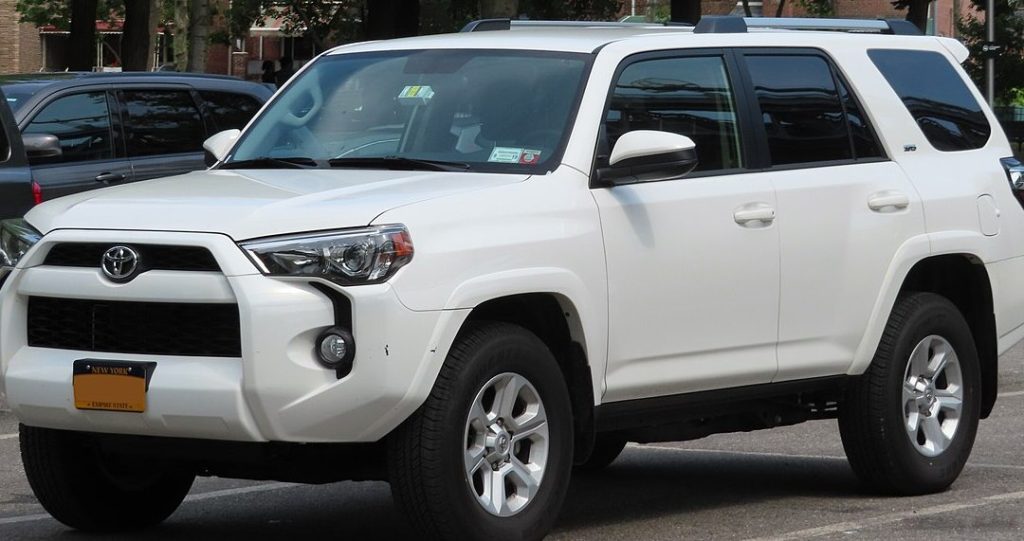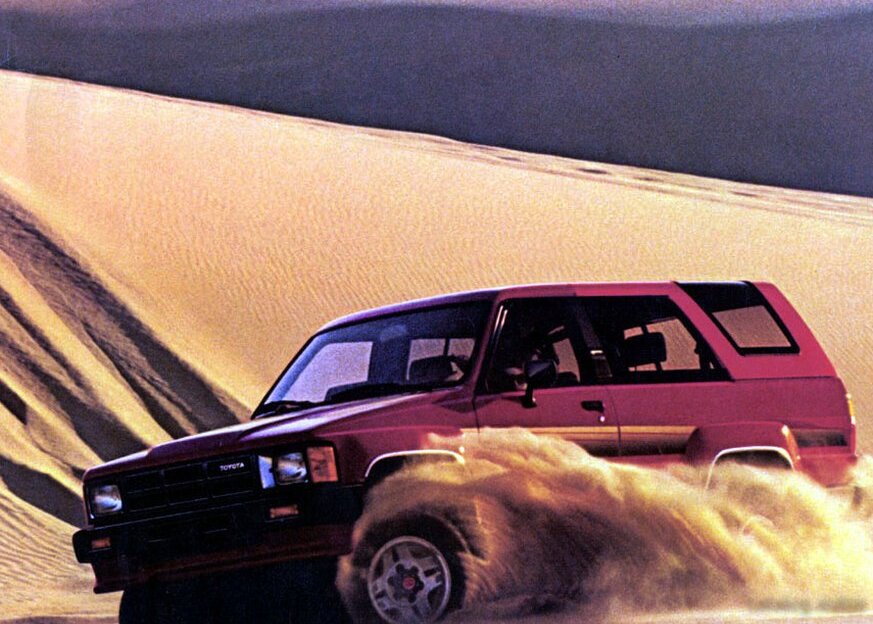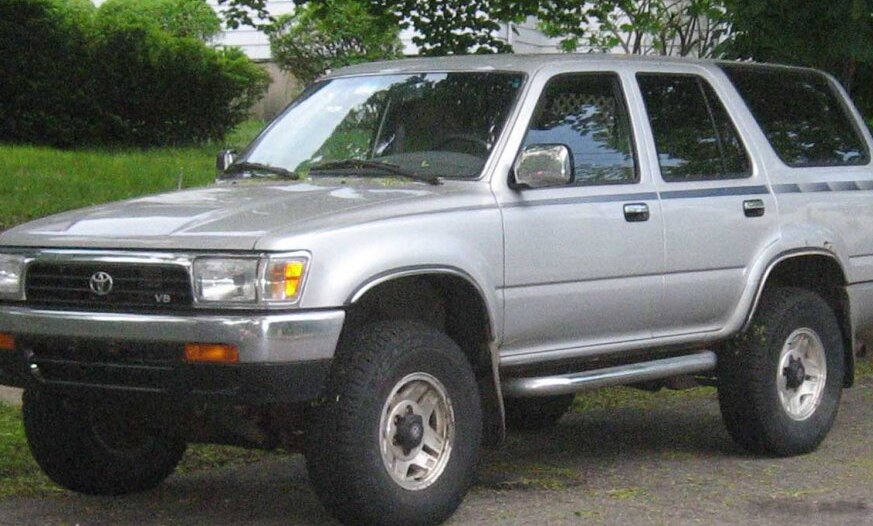
The Toyota 4Runner II, produced between 1990 and 1995, represented a significant evolution of Toyota’s popular SUV. The 3.0i V6 4×4 variant, specifically manufactured from 1991 to 1995, occupied a mid-range position within the 4Runner II lineup, offering a balance between performance, capability, and affordability. Built on the robust 130 series platform, this generation 4Runner aimed to provide a more refined and comfortable experience than its predecessor, while retaining the ruggedness expected of an off-road vehicle. It was primarily marketed in North America, Australia, and parts of Europe, catering to buyers seeking a versatile vehicle suitable for both daily driving and recreational adventures.
Technical Specifications
| Brand | Toyota |
| Model | 4Runner |
| Generation | 4Runner II |
| Type (Engine) | 3.0i V6 (143 Hp) 4×4 |
| Start of production | 1991 year |
| End of production | 1995 year |
| Powertrain Architecture | Internal Combustion engine |
| Body type | SUV |
| Seats | 5 |
| Doors | 5 |
| Fuel consumption (economy) – combined | 14.6 l/100 km |
| Fuel consumption (economy) – combined | 16.1 US mpg |
| Fuel consumption (economy) – combined | 19.3 UK mpg |
| Fuel consumption (economy) – combined | 6.8 km/l |
| Fuel Type | Petrol (Gasoline) |
| Acceleration 0 – 100 km/h | 15.3 sec |
| Acceleration 0 – 62 mph | 15.3 sec |
| Acceleration 0 – 60 mph | 14.5 sec |
| Maximum speed | 165 km/h |
| Maximum speed | 102.53 mph |
| Weight-to-power ratio | 13.3 kg/Hp |
| Weight-to-power ratio | 75.5 Hp/tonne |
| Weight-to-torque ratio | 7.9 kg/Nm |
| Weight-to-torque ratio | 126.6 Nm/tonne |
| Power | 143 Hp @ 4600 rpm |
| Power per litre | 48.3 Hp/l |
| Torque | 240 Nm @ 3400 rpm |
| Torque | 177.01 lb.-ft. @ 3400 rpm |
| Engine layout | Front, Longitudinal |
| Engine Model/Code | 3VZ-E |
| Engine displacement | 2959 cm3 |
| Engine displacement | 180.57 cu. in. |
| Number of cylinders | 6 |
| Engine configuration | V-engine |
| Cylinder Bore | 87.5 mm |
| Cylinder Bore | 3.44 in. |
| Piston Stroke | 82 mm |
| Piston Stroke | 3.23 in. |
| Compression ratio | 9:1 |
| Number of valves per cylinder | 2 |
| Fuel injection system | Multi-port manifold injection |
| Engine aspiration | Naturally aspirated engine |
| Valvetrain | SOHC |
| Engine oil capacity | 4.5 l |
| Engine oil capacity | 4.76 US qt |
| Engine oil capacity | 3.96 UK qt |
| Coolant | 10.3 l |
| Coolant | 10.88 US qt |
| Coolant | 9.06 UK qt |
| Kerb Weight | 1895 kg |
| Kerb Weight | 4177.76 lbs |
| Max. weight | 2510 kg |
| Max. weight | 5533.6 lbs |
| Max load | 615 kg |
| Max load | 1355.84 lbs |
| Trunk (boot) space – minimum | 1200 l |
| Trunk (boot) space – minimum | 42.38 cu. ft. |
| Trunk (boot) space – maximum | 2100 l |
| Trunk (boot) space – maximum | 74.16 cu. ft. |
| Fuel tank capacity | 65 l |
| Fuel tank capacity | 17.17 US gal |
| Fuel tank capacity | 14.3 UK gal |
| Length | 4490 mm |
| Length | 176.77 in. |
| Width | 1690 mm |
| Width | 66.54 in. |
| Height | 1775 mm |
| Height | 69.88 in. |
| Wheelbase | 2625 mm |
| Wheelbase | 103.35 in. |
| Front track | 1430 mm |
| Front track | 56.3 in. |
| Rear (Back) track | 1425 mm |
| Rear (Back) track | 56.1 in. |
| Ride height (ground clearance) | 210 mm |
| Ride height (ground clearance) | 8.27 in. |
| Drive wheel | All wheel drive (4×4) |
| Number of gears and type of gearbox | 5 gears, manual transmission |
| Front suspension | Double wishbone |
| Rear suspension | dependent spring suspension |
| Front brakes | Ventilated discs |
| Rear brakes | Drum |
| Steering type | Worm-reduction unit |
| Power steering | Hydraulic Steering |
| Tires size | 265/70 R15 |
| Wheel rims size | 15 |
Powertrain & Engine Architecture
The heart of the 4Runner II 3.0i 4×4 was the 3VZ-E engine, a 3.0-liter (2959 cc) naturally aspirated V6. This engine featured a single overhead camshaft (SOHC) valvetrain with two valves per cylinder. It utilized a multi-port fuel injection system, delivering fuel directly to each intake port for improved efficiency and power delivery. The 3VZ-E was known for its relatively smooth operation and decent power output for its time, producing 143 horsepower at 4600 rpm and 177 lb-ft of torque at 3400 rpm. The engine was mounted longitudinally in the chassis. The 5-speed manual transmission was the standard offering, providing drivers with full control over gear selection. This transmission was chosen for its durability and suitability for both on-road and off-road driving.
Driving Characteristics
The 4Runner II 3.0i with the manual transmission offered a reasonably engaging driving experience. While not a sports car, the V6 provided adequate power for highway cruising and tackling moderate off-road terrain. Acceleration to 60 mph took around 14.5 seconds, and the top speed was approximately 102.5 mph. The manual gearbox allowed for precise control, especially when navigating challenging trails. The gear ratios were well-suited for maintaining momentum in various conditions. Compared to the later 2.4-liter four-cylinder models, the 3.0i offered a noticeable performance advantage. However, it didn’t possess the outright power of the optional 3.4-liter V6 found in later 4Runner generations.
Equipment & Trim Levels
The 3.0i 4×4 trim typically included features such as power steering, air conditioning, and a basic audio system. Interior upholstery was usually cloth, with options for upgraded materials available. Dashboard configuration was functional and straightforward, prioritizing usability over luxury. Common optional extras included a sunroof, upgraded sound systems, and alloy wheels. The 4Runner II aimed for a balance between practicality and comfort, offering a reasonably well-equipped vehicle without the high price tag of more luxurious SUVs.
Chassis & Braking
The 4Runner II utilized a body-on-frame construction, providing a robust and durable platform for off-road adventures. The front suspension featured a double wishbone design, while the rear suspension employed a dependent spring setup with a solid axle. This configuration offered a good balance of ride comfort and off-road capability. Braking duties were handled by ventilated discs at the front and drum brakes at the rear. While adequate for most driving situations, the rear drum brakes were a point of criticism compared to the all-disc setups found in some competitors.
Market Reception & Comparison
The 4Runner II 3.0i 4×4 was generally well-received by automotive critics. It was praised for its reliability, off-road capability, and comfortable ride. However, some reviewers noted its relatively slow acceleration and somewhat dated interior compared to newer SUVs. Fuel economy, at around 16.1 US mpg, was considered average for the time. Compared to the four-cylinder models, the 3.0i offered a significant performance boost, making it a popular choice for buyers who frequently towed trailers or ventured off the beaten path.
Legacy
The 3VZ-E engine, while not without its quirks, proved to be a durable and reliable powerplant when properly maintained. Today, well-maintained 4Runner II 3.0i models are sought after by enthusiasts and collectors. The 4Runner II established the 4Runner as a capable and dependable SUV, paving the way for the continued success of the model line. Common issues with these vehicles often relate to age-related wear and tear, such as rust, worn suspension components, and potential oil leaks from the engine. However, parts availability remains relatively good, making it a viable option for those seeking a classic and capable SUV.