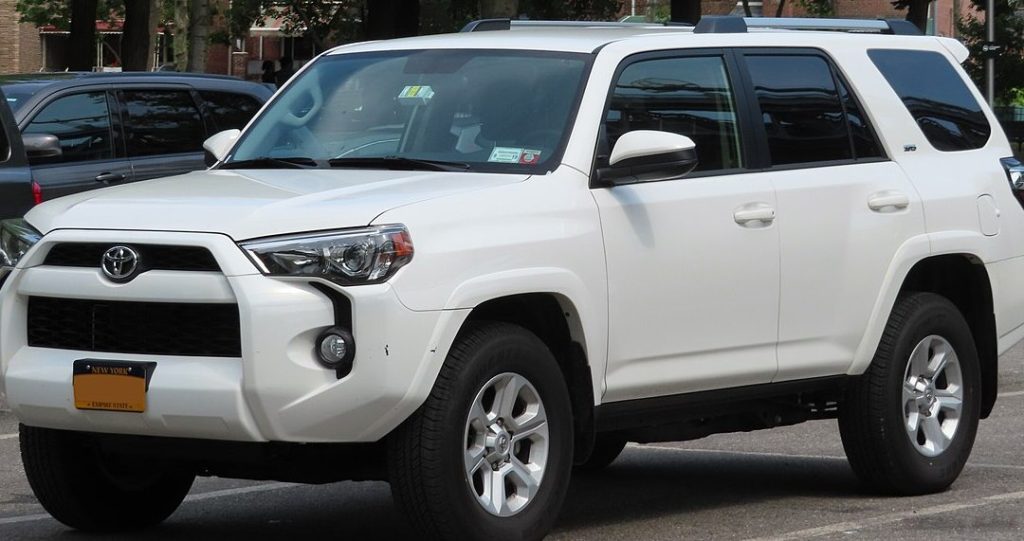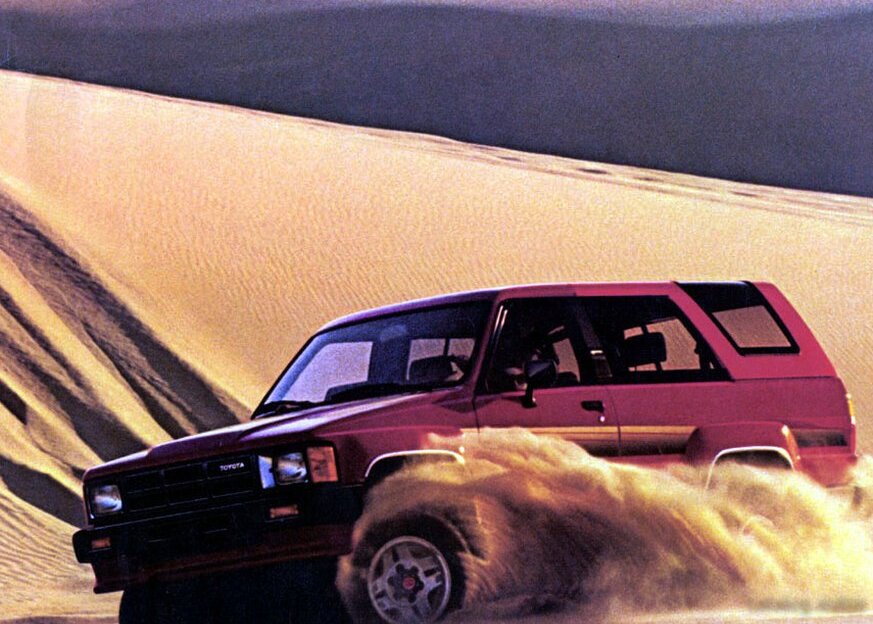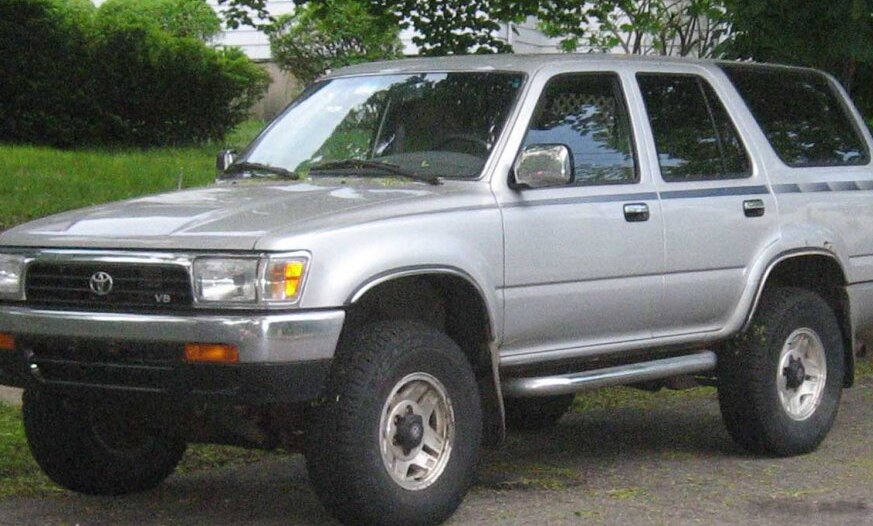
The Toyota 4Runner II, produced between 1990 and 1995, represented a significant evolution of Toyota’s popular SUV. The 3.0i V6 4×4 Automatic variant, manufactured from 1991 to 1995, occupied a mid-range position within the 4Runner II lineup, offering a balance between performance, capability, and comfort. Built on the 180-series platform, this generation 4Runner aimed to provide a more refined and capable off-road experience compared to its predecessor, while also improving on-road manners. This model was primarily sold in markets outside of North America, where the demand for smaller, more fuel-efficient SUVs was higher.
Technical Specifications
| Brand | Toyota |
| Model | 4Runner |
| Generation | 4Runner II |
| Type (Engine) | 3.0i V6 (143 Hp) 4×4 Automatic |
| Start of production | 1991 year |
| End of production | 1995 year |
| Powertrain Architecture | Internal Combustion engine |
| Body type | SUV |
| Seats | 5 |
| Doors | 5 |
| Fuel consumption (economy) – urban | 16.1 l/100 km (14.6 US mpg, 17.5 UK mpg, 6.2 km/l) |
| Fuel consumption (economy) – extra urban | 10.7 l/100 km (22 US mpg, 26.4 UK mpg, 9.3 km/l) |
| Fuel consumption (economy) – combined | 15.5 l/100 km (15.2 US mpg, 18.2 UK mpg, 6.5 km/l) |
| Fuel Type | Petrol (Gasoline) |
| Acceleration 0 – 100 km/h | 15.5 sec |
| Acceleration 0 – 62 mph | 15.5 sec |
| Acceleration 0 – 60 mph | 14.7 sec |
| Maximum speed | 155 km/h (96.31 mph) |
| Weight-to-power ratio | 12.6 kg/Hp, 79.4 Hp/tonne |
| Weight-to-torque ratio | 7.5 kg/Nm, 133.3 Nm/tonne |
| Power | 143 Hp @ 4600 rpm |
| Power per litre | 48.3 Hp/l |
| Torque | 240 Nm @ 3400 rpm (177.01 lb.-ft. @ 3400 rpm) |
| Engine layout | Front, Longitudinal |
| Engine Model/Code | 3VZ-E |
| Engine displacement | 2959 cm3 (180.57 cu. in.) |
| Number of cylinders | 6 |
| Engine configuration | V-engine |
| Cylinder Bore | 87.5 mm (3.44 in.) |
| Piston Stroke | 82 mm (3.23 in.) |
| Compression ratio | 9:1 |
| Number of valves per cylinder | 2 |
| Fuel injection system | Multi-port manifold injection |
| Engine aspiration | Naturally aspirated engine |
| Valvetrain | SOHC |
| Engine oil capacity | 4.5 l (4.76 US qt | 3.96 UK qt) |
| Coolant | 10.3 l (10.88 US qt | 9.06 UK qt) |
| Kerb Weight | 1800 kg (3968.32 lbs.) |
| Max. weight | 2510 kg (5533.6 lbs.) |
| Max load | 710 kg (1565.28 lbs.) |
| Trunk (boot) space – minimum | 1200 l (42.38 cu. ft.) |
| Trunk (boot) space – maximum | 2100 l (74.16 cu. ft.) |
| Fuel tank capacity | 65 l (17.17 US gal | 14.3 UK gal) |
| Length | 4490 mm (176.77 in.) |
| Width | 1690 mm (66.54 in.) |
| Height | 1775 mm (69.88 in.) |
| Wheelbase | 2625 mm (103.35 in.) |
| Front track | 1430 mm (56.3 in.) |
| Rear (Back) track | 1425 mm (56.1 in.) |
| Ride height (ground clearance) | 210 mm (8.27 in.) |
| Drive wheel | All wheel drive (4×4) |
| Number of gears and type of gearbox | 4 gears, automatic transmission |
| Front suspension | Double wishbone |
| Rear suspension | dependent spring suspension |
| Front brakes | Ventilated discs |
| Rear brakes | Drum |
| Steering type | Worm-reduction unit |
| Power steering | Hydraulic Steering |
| Tires size | 265/75 R15 |
| Wheel rims size | 15 |
Powertrain & Engine Architecture
The heart of the 4Runner II 3.0i Automatic is the 3VZ-E engine, a 3.0-liter (2959 cc) naturally aspirated V6. This engine utilizes a single overhead camshaft (SOHC) valvetrain with two valves per cylinder. The 3VZ-E featured multi-port fuel injection, improving fuel atomization and combustion efficiency compared to earlier carbureted systems. The engine produced 143 horsepower at 4600 rpm and 240 Nm (177 lb-ft) of torque at 3400 rpm. The automatic transmission was a four-speed unit, designed to provide smooth shifts and ease of use, particularly in off-road conditions. This transmission was not known for its sportiness, prioritizing durability and reliability over rapid acceleration. The engine is longitudinally mounted, contributing to a more balanced weight distribution.
Driving Characteristics
The 4Runner II 3.0i Automatic offered a comfortable, if not particularly exhilarating, driving experience. The automatic transmission, while smooth, did detract from the engine’s potential. Acceleration from 0-60 mph took around 14.7 seconds, and top speed was limited to 155 km/h (96 mph). Compared to the five-speed manual version of the same engine, the automatic suffered a noticeable performance penalty. The gear ratios were optimized for low-end torque and off-road crawling, rather than outright speed. The 4×4 system, typically part-time with a shift-on-the-fly transfer case, provided good traction in various terrains. The suspension, while comfortable on paved roads, could feel somewhat soft and prone to body roll during aggressive cornering.
Equipment & Trim Levels
The 3.0i V6 Automatic trim typically included features such as power windows and locks, air conditioning, and a basic audio system. Interior upholstery was usually cloth, with options for upgraded materials available. Dashboard configuration was functional and straightforward, prioritizing usability over aesthetics. Optional extras could include a sunroof, upgraded audio systems, and alloy wheels. The level of standard equipment was generally comparable to other mid-range SUVs of the era. Safety features were relatively basic, consisting primarily of seatbelts and a collapsible steering column.
Chassis & Braking
The 4Runner II utilized a body-on-frame construction, providing robust durability and off-road capability. The front suspension featured a double wishbone design, while the rear suspension employed a dependent spring setup with a solid axle. Braking consisted of ventilated discs at the front and drum brakes at the rear. The braking system was adequate for normal driving conditions, but lacked the stopping power of more modern systems. The hydraulic power steering provided reasonable assistance, making maneuvering easier, especially in off-road situations. Ground clearance of 210mm (8.27 inches) was sufficient for moderate off-road obstacles.
Market Reception & Comparison
The 4Runner II 3.0i V6 Automatic was generally well-received as a practical and reliable SUV. Critics praised its off-road capability and comfortable ride, but noted its relatively slow acceleration and somewhat dated interior. Compared to the 2.4-liter four-cylinder versions, the 3.0i V6 offered a significant performance upgrade, albeit at the cost of slightly lower fuel economy. Against competitors like the Mitsubishi Pajero and Nissan Patrol, the 4Runner II offered a good balance of features and value. Fuel economy was a weak point, averaging around 15.5 l/100 km (15.2 US mpg) in combined driving.
Legacy
The 3VZ-E engine, when properly maintained, proved to be a durable and reliable powerplant. However, it is known to be susceptible to head gasket failures, particularly as mileage increases. The automatic transmission, while robust, can require more frequent servicing than the manual counterpart. Today, the 4Runner II 3.0i V6 Automatic is a relatively affordable and capable used SUV. Its popularity among enthusiasts is growing, driven by its classic styling and reputation for reliability. Finding well-maintained examples can be challenging, but these vehicles offer a unique blend of practicality, durability, and off-road capability.