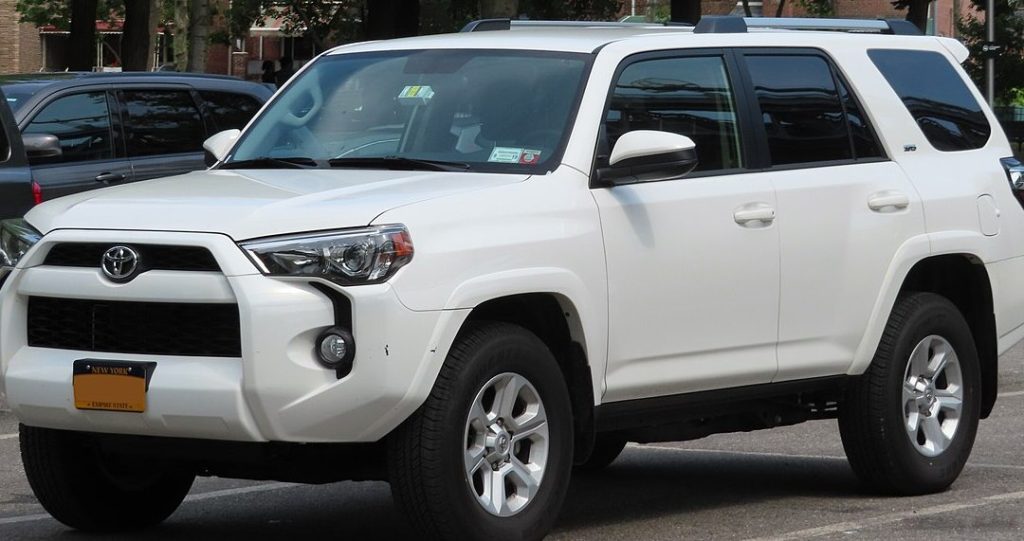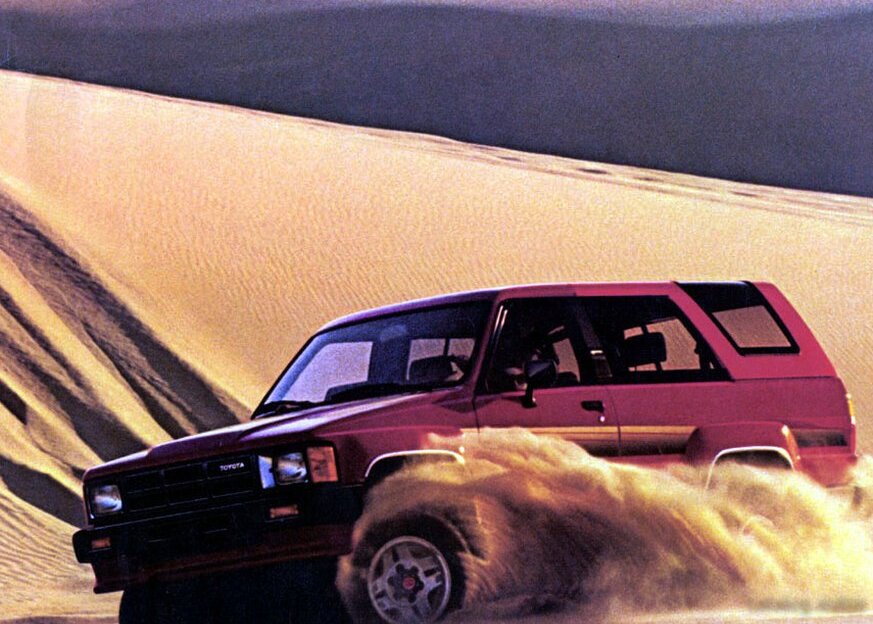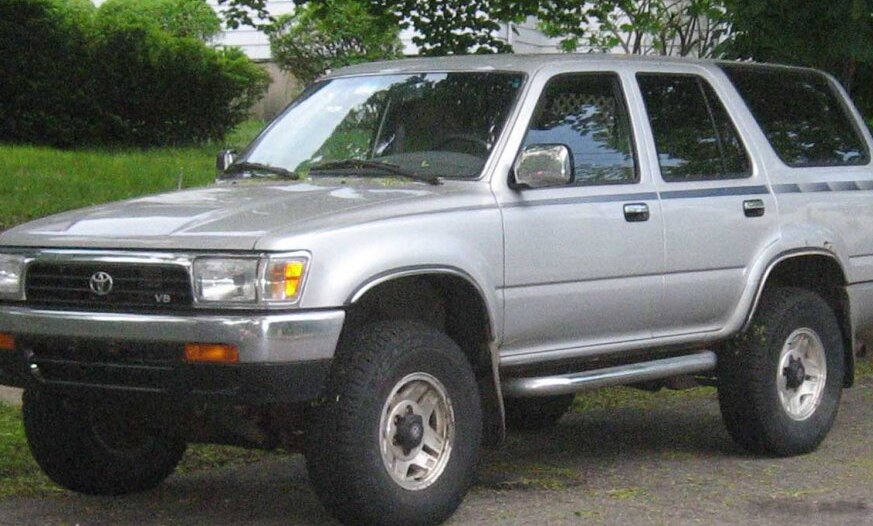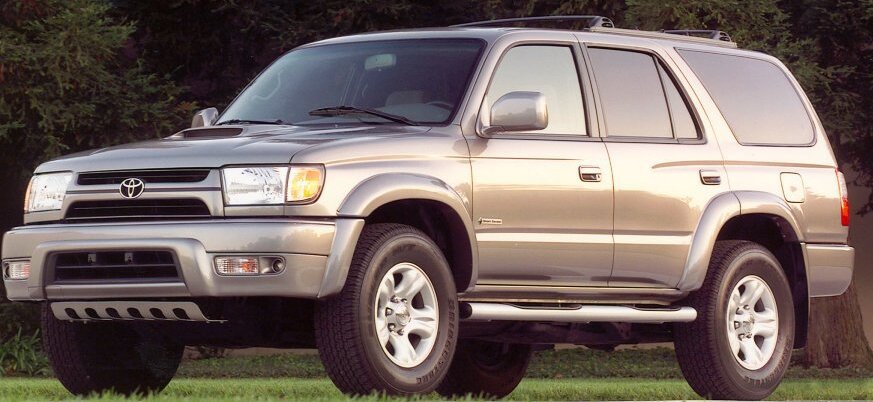
The Toyota 4Runner III, specifically the facelifted version produced from 1999 to 2002, represented a significant evolution of Toyota’s popular mid-size SUV. This generation, internally designated as the 180 series, continued the 4Runner’s reputation for rugged reliability and off-road capability while incorporating refinements in comfort and technology. The 3.4 V6 24V (183 Hp) 4×4 variant occupied a sweet spot in the lineup, offering a balance of power, fuel efficiency, and affordability. It served as a popular choice for families and individuals seeking a versatile vehicle capable of both daily commuting and weekend adventures. This model year saw a refresh to the exterior styling, including revised headlights and taillights, along with minor interior updates.
Technical Specifications
| Brand | Toyota |
| Model | 4Runner |
| Generation | 4Runner III (facelift 1999) |
| Type (Engine) | 3.4 V6 24V (183 Hp) 4×4 |
| Start of production | 1999 |
| End of production | 2002 |
| Powertrain Architecture | Internal Combustion engine |
| Body type | SUV |
| Seats | 5 |
| Doors | 5 |
| Fuel Type | Petrol (Gasoline) |
| Weight-to-power ratio | 9.5 kg/Hp, 105.2 Hp/tonne |
| Weight-to-torque ratio | 5.9 kg/Nm, 169 Nm/tonne |
| Power | 183 Hp @ 4800 rpm |
| Power per litre | 54.2 Hp/l |
| Torque | 294 Nm @ 3600 rpm, 216.84 lb.-ft. @ 3600 rpm |
| Engine layout | Front, Longitudinal |
| Engine Model/Code | 5VZ-FE |
| Engine displacement | 3378 cm3, 206.14 cu. in. |
| Number of cylinders | 6 |
| Engine configuration | V-engine |
| Cylinder Bore | 93.5 mm, 3.68 in. |
| Piston Stroke | 82 mm, 3.23 in. |
| Compression ratio | 9.6:1 |
| Number of valves per cylinder | 4 |
| Fuel injection system | Multi-port manifold injection |
| Engine aspiration | Naturally aspirated engine |
| Valvetrain | DOHC |
| Engine oil capacity | 5.2 l, 5.49 US qt | 4.58 UK qt |
| Coolant | 8 l, 8.45 US qt | 7.04 UK qt |
| Kerb Weight | 1740 kg, 3836.04 lbs |
| Max. weight | 2381 kg, 5249.21 lbs |
| Max load | 641 kg, 1413.16 lbs |
| Trunk (boot) space – minimum | 1263 l, 44.6 cu. ft. |
| Trunk (boot) space – maximum | 2257 l, 79.71 cu. ft. |
| Fuel tank capacity | 70 l, 18.49 US gal | 15.4 UK gal |
| Permitted trailer load with brakes (12%) | 2268 kg, 5000.08 lbs |
| Length | 4656 mm, 183.31 in. |
| Width | 1690 mm, 66.54 in. |
| Height | 1715-1740 mm, 67.52 – 68.5 in. |
| Wheelbase | 2675 mm, 105.31 in. |
| Front track | 1505 mm, 59.25 in. |
| Rear (Back) track | 1495-1510 mm, 58.86 – 59.45 in. |
| Minimum turning circle (turning diameter) | 11.4 m, 37.4 ft. |
| Drive wheel | All wheel drive (4×4) |
| Number of gears and type of gearbox | 5 gears, manual transmission |
| Front suspension | Double wishbone |
| Rear suspension | Independent multi-link suspension |
| Front brakes | Ventilated discs |
| Rear brakes | Drum |
| Assisting systems | ABS (Anti-lock braking system) |
| Steering type | Steering rack and pinion |
| Power steering | Hydraulic Steering |
| Tires size | 225/75 R15; 265/70 R16 |
| Wheel rims size | 7J x 15; 7J x 16 |
Powertrain & Engine Architecture
The heart of the 1999-2002 Toyota 4Runner 3.4 V6 4×4 is the 5VZ-FE engine. This 3.4-liter, naturally aspirated V6 is a robust and well-regarded powerplant known for its durability. It features a cast iron block and aluminum cylinder heads, contributing to its longevity. The 5VZ-FE utilizes a multi-port fuel injection system, delivering fuel directly to each intake port for improved combustion efficiency. The engine employs a double overhead camshaft (DOHC) valvetrain, operating 24 valves (four per cylinder) to optimize airflow and enhance performance. The 5VZ-FE produces 183 horsepower at 4800 rpm and 294 lb-ft of torque at 3600 rpm. The manual transmission option featured a five-speed gearbox, providing drivers with direct control over gear selection.
Driving Characteristics
The 4Runner 3.4 V6 with a manual transmission offered a responsive and engaging driving experience. While not a sports car, the engine provided ample power for everyday driving and confident highway merging. The five-speed manual allowed drivers to maximize engine efficiency and control, particularly when tackling challenging terrain. The gear ratios were well-suited for both on-road and off-road conditions, providing a balance of acceleration and crawl capability. Compared to the base 2.7-liter four-cylinder engine, the 3.4 V6 offered a significant performance upgrade, making it a more desirable choice for those who frequently tow or venture off the beaten path. While the V6 wasn’t as fuel-efficient as the four-cylinder, the added power and capability were often considered a worthwhile trade-off.
Equipment & Trim Levels
The 1999-2002 Toyota 4Runner 3.4 V6 4×4 was typically offered in SR5 and Limited trim levels. The SR5 served as the mid-range option, featuring standard amenities such as air conditioning, power windows and locks, and an AM/FM stereo. The Limited trim added luxury features like leather upholstery, heated front seats, and a premium sound system. Optional extras included a sunroof, upgraded audio systems, and a rear limited-slip differential. Interior upholstery was typically cloth on the SR5 and leather on the Limited. The dashboard layout was functional and straightforward, prioritizing ease of use over flashy design.
Chassis & Braking
The 4Runner III utilized a body-on-frame construction, providing a robust and durable platform for off-road adventures. The front suspension featured a double wishbone design, while the rear employed an independent multi-link setup. This suspension configuration delivered a comfortable ride quality on paved roads while maintaining excellent articulation for off-road capability. Braking duties were handled by ventilated discs at the front and drum brakes at the rear. An Anti-lock Braking System (ABS) was standard, enhancing safety and control during emergency braking situations. The hydraulic power steering provided responsive and precise steering feel.
Market Reception & Comparison
The 1999-2002 Toyota 4Runner 3.4 V6 4×4 was well-received by automotive critics and consumers alike. It was praised for its reliability, durability, and off-road capability. Fuel economy was considered adequate, though not exceptional, for a vehicle of its size and type. Compared to competitors like the Jeep Cherokee and Nissan Pathfinder, the 4Runner offered a compelling combination of features and value. The 3.4 V6 engine was particularly lauded for its smooth power delivery and long-term reliability. The manual transmission version was favored by enthusiasts who appreciated its engaging driving experience.
Legacy
The 5VZ-FE engine, found in the 1999-2002 Toyota 4Runner 3.4 V6 4×4, has earned a reputation as one of Toyota’s most durable and reliable powerplants. Properly maintained examples continue to provide years of dependable service. In the used car market, these 4Runners hold their value well, reflecting their enduring popularity and reputation for longevity. While newer SUVs offer more advanced technology and features, the 4Runner III remains a popular choice for those seeking a rugged, reliable, and capable vehicle that can handle a wide range of tasks. The manual transmission variants are particularly sought after by enthusiasts and collectors.