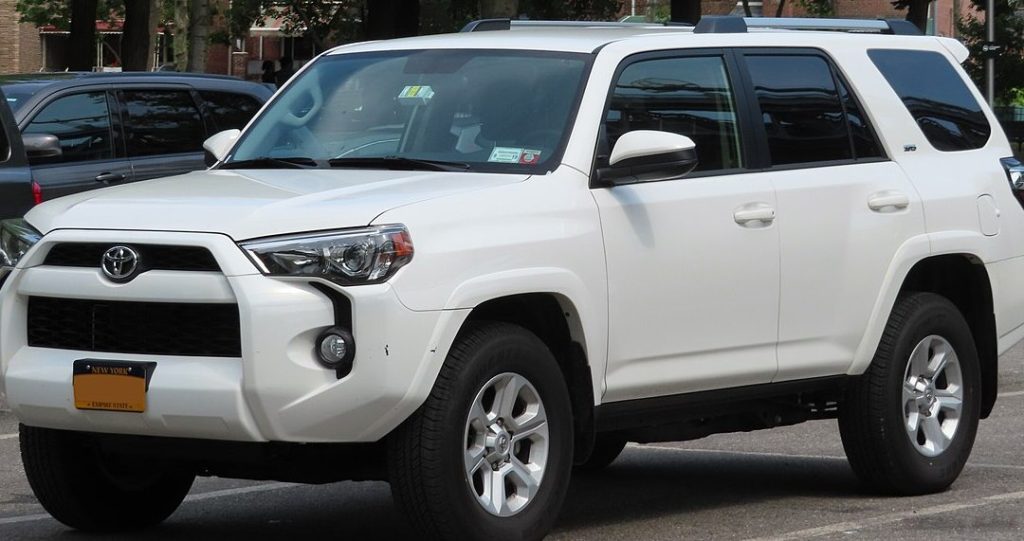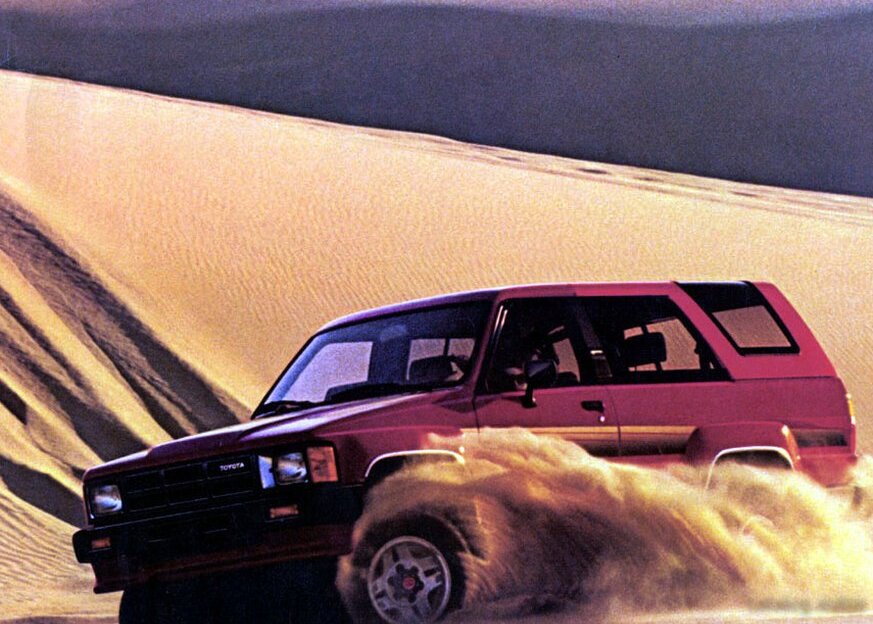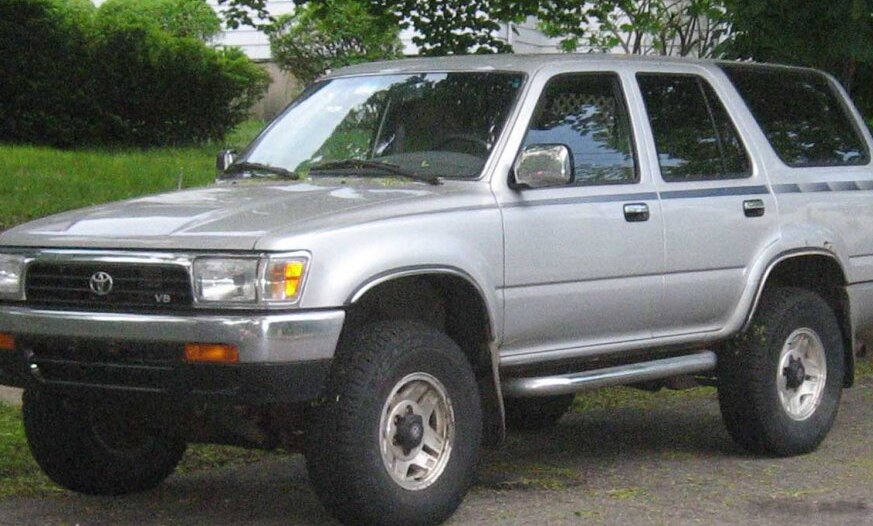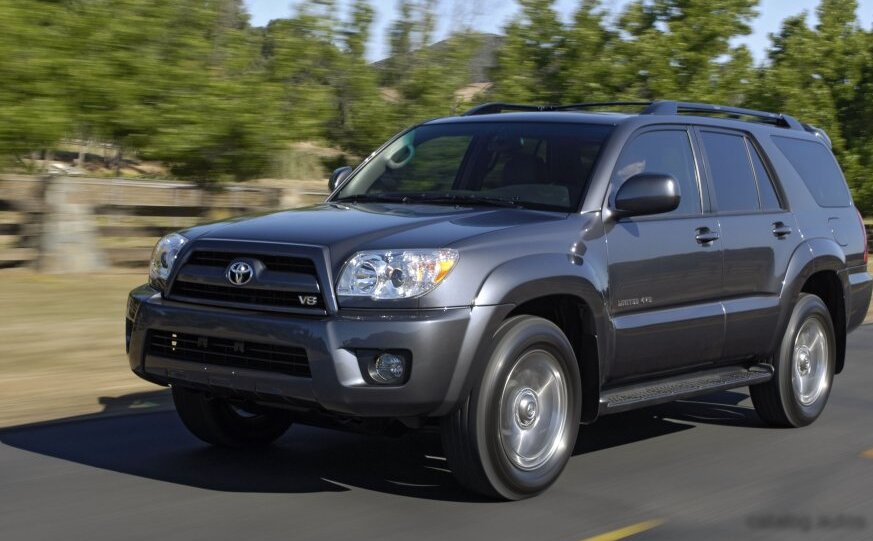
The Toyota 4Runner IV, specifically the facelifted version produced from 2005 to 2009, represented a significant evolution of Toyota’s popular mid-size SUV. This generation, internally designated as the J120 series, continued the 4Runner’s reputation for rugged capability and reliability, while adding a greater degree of refinement and on-road comfort. The 4.0i V6 24V (236 Hp) 4×4 Automatic variant occupied a prominent position in the lineup, offering a balance of power, convenience, and off-road prowess. It was positioned as a step up from the base 2.7-liter four-cylinder models, appealing to buyers who needed more torque for towing or navigating challenging terrain, but didn’t necessarily require the more expensive and fuel-thirsty options.
Technical Specifications
| Brand | Toyota |
| Model | 4Runner |
| Generation | 4Runner IV (facelift 2005) |
| Type (Engine) | 4.0i V6 24V (236 Hp) 4×4 Automatic |
| Start of production | 2005 |
| End of production | 2009 |
| Powertrain Architecture | Internal Combustion engine |
| Body type | SUV |
| Seats | 7 |
| Doors | 5 |
| Fuel consumption (urban) | 13.8 l/100 km (17 US mpg, 20.5 UK mpg) |
| Fuel consumption (extra urban) | 11.2 l/100 km (21 US mpg, 25.2 UK mpg) |
| Fuel Type | Petrol (Gasoline) |
| Weight-to-power ratio | 8.3 kg/Hp, 121 Hp/tonne |
| Weight-to-torque ratio | 5.4 kg/Nm, 185.1 Nm/tonne |
| Power | 236 Hp @ 5200 rpm |
| Power per litre | 59.7 Hp/l |
| Torque | 361 Nm @ 3800 rpm (266.26 lb.-ft. @ 3800 rpm) |
| Engine layout | Front, Longitudinal |
| Engine Model/Code | 1GR-FE |
| Engine displacement | 3956 cm3 (241.41 cu. in.) |
| Number of cylinders | 6 |
| Engine configuration | V-engine |
| Cylinder Bore | 94 mm (3.7 in.) |
| Piston Stroke | 95 mm (3.74 in.) |
| Compression ratio | 10:1 |
| Number of valves per cylinder | 4 |
| Fuel injection system | Multi-port manifold injection |
| Engine aspiration | Naturally aspirated engine |
| Valvetrain | DOHC |
| Engine oil capacity | 5.2 l (5.49 US qt | 4.58 UK qt) |
| Coolant capacity | 9.8 l (10.36 US qt | 8.62 UK qt) |
| Kerb Weight | 1950 kg (4299.01 lbs.) |
| Max. weight | 2531 kg (5579.9 lbs.) |
| Max load | 581 kg (1280.89 lbs.) |
| Trunk (boot) space – minimum | 343 l (12.11 cu. ft.) |
| Trunk (boot) space – maximum | 1036 l (36.59 cu. ft.) |
| Fuel tank capacity | 87 l (22.98 US gal | 19.14 UK gal) |
| Permitted trailer load with brakes (12%) | 2268 kg (5000.08 lbs.) |
| Length | 4805 mm (189.17 in.) |
| Width | 1910 mm (75.2 in.) |
| Height | 1760-1805 mm (69.29 – 71.06 in.) |
| Wheelbase | 2790 mm (109.84 in.) |
| Front track | 1575 mm (62.01 in.) |
| Rear (Back) track | 1575 mm (62.01 in.) |
| Ride height (ground clearance) | 231 mm (9.09 in.) |
| Minimum turning circle (turning diameter) | 11.3 m (37.07 ft.) |
| Approach angle | 30° |
| Departure angle | 24-26° |
| Ramp-over (brakeover) angle | 24-28° |
| Drive wheel | All wheel drive (4×4) |
| Number of gears and type of gearbox | 5 gears, automatic transmission |
| Front suspension | Double wishbone |
| Rear suspension | Independent multi-link suspension |
| Front brakes | Ventilated discs |
| Rear brakes | Ventilated discs |
| Assisting systems | ABS (Anti-lock braking system) |
| Steering type | Steering rack and pinion |
| Tires size | 265/70 R16; 265/65 R17; 265/60 R18 |
| Wheel rims size | 7.0J x 16; 7.5J x 17; 7.5J x 18 |
Powertrain & Engine Architecture
The heart of this 4Runner variant is the 1GR-FE 4.0-liter V6 engine. This engine is a member of Toyota’s GR family, known for its durability and relatively simple design. It features a cast-iron block and aluminum cylinder heads, contributing to its robust nature. The 1GR-FE utilizes a dual overhead camshaft (DOHC) valvetrain with four valves per cylinder, optimizing airflow for improved performance. Fuel delivery is managed by a multi-port fuel injection system, providing precise fuel metering. The engine produces 236 horsepower at 5200 rpm and 361 lb-ft of torque at 3800 rpm. This torque output is particularly important for a vehicle intended for towing and off-road use. The engine is paired with a five-speed automatic transmission, offering smooth and convenient shifting. This transmission was chosen for its balance of efficiency and usability, catering to a broader range of drivers.
Driving Characteristics
The 4.0i V6 with the five-speed automatic delivers a comfortable and capable driving experience. While not a performance-oriented setup, the engine provides ample power for everyday driving and highway cruising. Acceleration is adequate, though not particularly brisk. The automatic transmission is well-tuned, offering smooth gear changes and responsive downshifts when needed. Compared to the available manual transmission, the automatic prioritizes convenience over outright performance. The automatic’s gear ratios are optimized for fuel economy and towing capacity, rather than maximizing acceleration. The 4×4 system, selectable via a rotary dial, provides excellent traction in various conditions, making it a capable off-road vehicle. The relatively high ground clearance of 9.09 inches further enhances its off-road abilities.
Equipment & Trim Levels
The 4Runner 4.0i V6 Automatic typically came well-equipped, though specific features varied depending on the package selected. Standard features generally included air conditioning, power windows and locks, a CD player, and cloth upholstery. Higher trim levels added features such as leather upholstery, a sunroof, upgraded audio systems, and automatic climate control. Optional extras included a navigation system, rear-seat entertainment, and running boards. The interior design was functional and durable, prioritizing practicality over luxury. The 4Runner’s spacious interior comfortably accommodated up to seven passengers, making it a versatile family vehicle.
Chassis & Braking
The 4Runner IV utilizes a body-on-frame construction, providing a robust and durable chassis. The front suspension features a double wishbone design, while the rear suspension employs an independent multi-link setup. This suspension configuration provides a comfortable ride and good handling characteristics. Braking duties are handled by ventilated disc brakes on all four wheels, providing ample stopping power. An Anti-lock Braking System (ABS) is standard, enhancing safety and control during emergency braking situations. The steering system is a rack-and-pinion setup, offering precise and responsive steering feel.
Market Reception & Comparison
The 4Runner 4.0i V6 Automatic was generally well-received by critics and consumers alike. It was praised for its reliability, durability, and off-road capability. Fuel economy, however, was a common criticism, with the V6 engine consuming a significant amount of fuel, especially in urban driving conditions (17 mpg). Compared to the base 2.7-liter four-cylinder model, the V6 offered a substantial increase in power and torque, making it a more capable towing vehicle. However, it came at the cost of increased fuel consumption and a higher price tag. Compared to competitors like the Jeep Grand Cherokee and Ford Explorer, the 4Runner stood out for its exceptional reliability and strong resale value.
Legacy
The 1GR-FE engine, in particular, has earned a reputation for exceptional longevity and reliability. Many 4Runners equipped with this engine have surpassed 200,000 miles with minimal maintenance. The five-speed automatic transmission, while not as sophisticated as some modern transmissions, has also proven to be durable and dependable. In the used car market, the 4Runner 4.0i V6 Automatic remains a popular choice, commanding a premium price due to its reputation for reliability and off-road capability. Its enduring popularity is a testament to Toyota’s engineering prowess and the 4Runner’s timeless appeal.