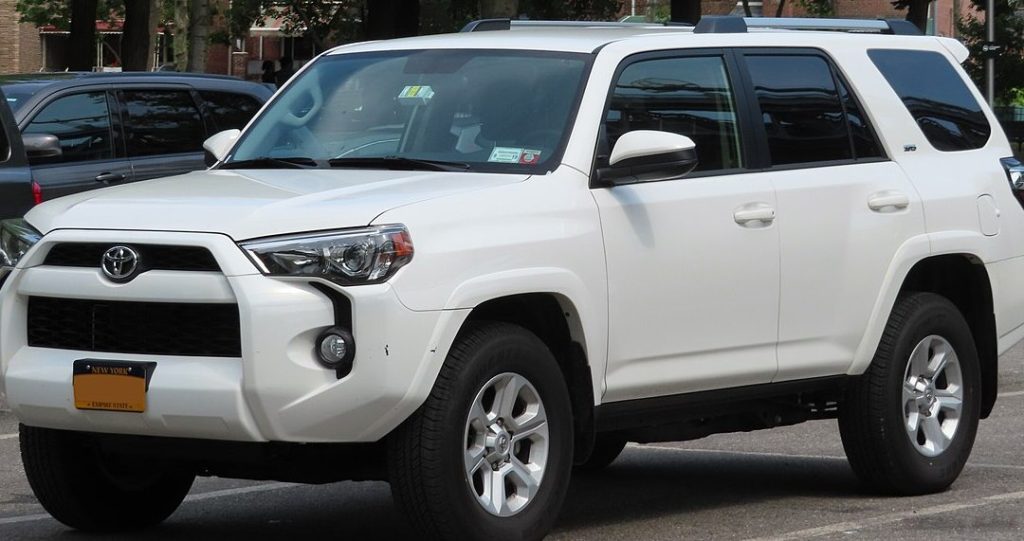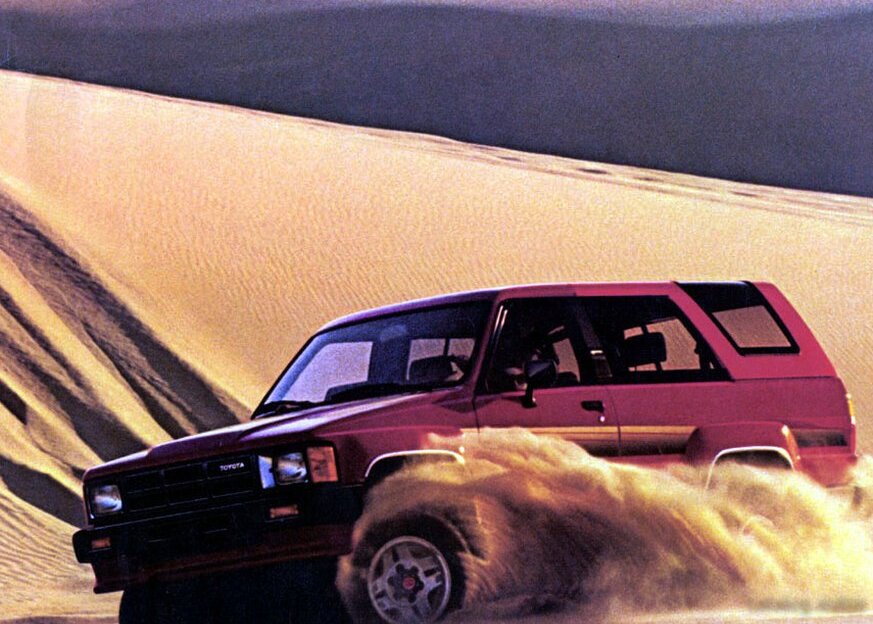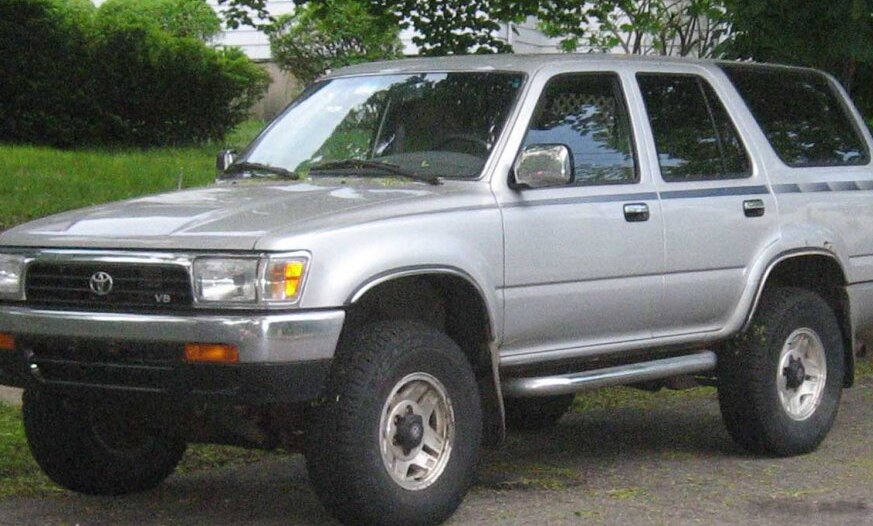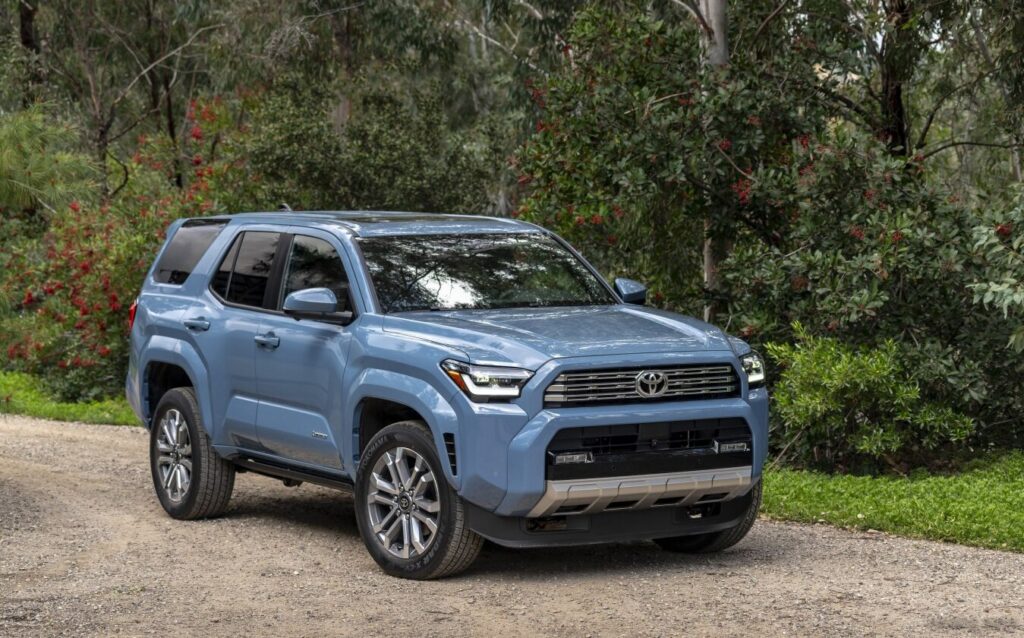
The Toyota 4Runner VI 2.4 i-FORCE, introduced in December 2024, represents the latest iteration of Toyota’s iconic SUV. This variant, equipped with a 2.4-liter turbocharged four-cylinder engine producing 278 horsepower and paired with a sophisticated 8-speed automatic transmission with ECT-i (Electronic Controlled Transmission – intelligent) technology, is positioned as a mainstream offering within the sixth-generation 4Runner lineup. It builds upon the 4Runner’s longstanding reputation for ruggedness and off-road capability while incorporating modern powertrain advancements. The 4Runner VI continues to be a body-on-frame SUV, appealing to buyers seeking a durable and versatile vehicle capable of both daily driving and adventurous excursions.
Technical Specifications
| Brand | Toyota |
| Model | 4Runner |
| Generation | 4Runner VI |
| Type | 2.4 i-FORCE (278 Hp) 4WD ECT-i |
| Start of production | December, 2024 |
| Powertrain Architecture | Internal Combustion engine |
| Body type | SUV |
| Seats | 5-7 |
| Doors | 5 |
| Fuel consumption (urban) | 12.4 l/100 km (19 US mpg, 22.8 UK mpg, 8.1 km/l) |
| Fuel consumption (extra urban) | 9.4 l/100 km (25 US mpg, 30.1 UK mpg, 10.6 km/l) |
| Fuel consumption (combined) | 11.2 l/100 km (21 US mpg, 25.2 UK mpg, 8.9 km/l) |
| Fuel Type | Petrol (Gasoline) |
| Weight-to-power ratio | 7.6 kg/Hp, 130.8 Hp/tonne |
| Weight-to-torque ratio | 4.9 kg/Nm, 202.4 Nm/tonne |
| Power | 278 Hp @ 6000 rpm |
| Power per litre | 116.2 Hp/l |
| Torque | 430 Nm @ 1700 rpm (317.15 lb.-ft. @ 1700 rpm) |
| Engine layout | Front, Longitudinal |
| Engine Model/Code | Dynamic Force / T24A-FTS |
| Engine displacement | 2393 cm3 (146.03 cu. in.) |
| Number of cylinders | 4 |
| Engine configuration | Inline |
| Cylinder Bore | 87.5 mm (3.44 in.) |
| Piston Stroke | 99.5 mm (3.92 in.) |
| Compression ratio | 11:1 |
| Number of valves per cylinder | 4 |
| Fuel injection system | Direct injection and Multi-port manifold injection |
| Engine aspiration | Twin-scroll turbo, Intercooler |
| Valvetrain | DOHC, Dual VVT-i |
| Engine oil capacity | 5.6 l (5.92 US qt | 4.93 UK qt) |
| Kerb Weight | 2125-2200 kg (4684.82 – 4850.17 lbs.) |
| Max. weight | 2756-2901 kg (6075.94 – 6395.61 lbs.) |
| Max load | 631-701 kg (1391.12 – 1545.44 lbs.) |
| Trunk (boot) space (min) | 343 l (12.11 cu. ft.) |
| Trunk (boot) space (max) | 2554 l (90.19 cu. ft.) |
| Fuel tank capacity | 72 l (19.02 US gal | 15.84 UK gal) |
| Permitted trailer load (braked) | 2722 kg (6000.98 lbs.) |
| Length | 4950 mm (194.88 in.) |
| Width | 1979 mm (77.91 in.) |
| Height | 1844-1869 mm (72.6 – 73.58 in.) |
| Wheelbase | 2850 mm (112.2 in.) |
| Front track | 1666-1687 mm (65.59 – 66.42 in.) |
| Rear track | 1669-1689 mm (65.71 – 66.5 in.) |
| Ride height (ground clearance) | 206-231 mm (8.11 – 9.09 in.) |
| Minimum turning circle | 12 m (39.37 ft.) |
| Approach angle | 18-19° |
| Departure angle | 22-24° |
| Ramp-over angle | 23-24° |
| Drivetrain Architecture | All wheel drive (4×4). ICE drives rear wheels, front wheels engaged via clutch. |
| Drive wheel | All wheel drive (4×4) |
| Number of gears | 8 |
| Gearbox type | Automatic transmission ECT-i |
| Front suspension | Coil spring, Double wishbone, Transverse stabilizer |
| Rear suspension | Rigid axle suspension, Transverse stabilizer, Coil spring |
| Front brakes | Ventilated discs, 340 mm |
| Rear brakes | Ventilated discs, 335 mm |
| Assisting systems | ABS (Anti-lock braking system) |
| Steering type | Steering rack and pinion |
| Power steering | Electric Steering |
| Tires size | 265/70 R17; 245/70 R18; 265/70 R18; 265/55 R20 |
| Wheel rims size | 17; 18; 20 |
Powertrain & Engine Architecture
The heart of the 4Runner VI 2.4 i-FORCE is Toyota’s Dynamic Force 2.4-liter inline-four cylinder engine, designated T24A-FTS. This engine represents a significant departure from the previous generation’s V6 offerings, prioritizing efficiency and modern performance. It utilizes a combination of direct injection and multi-port fuel injection to optimize combustion, and a twin-scroll turbocharger with an intercooler to minimize turbo lag and maximize power output. The engine also features a Dual VVT-i (Variable Valve Timing – intelligent) system, which independently controls the intake and exhaust valve timing for improved responsiveness and fuel economy. The 8-speed automatic transmission, branded ECT-i, is designed to provide smooth and efficient shifting, with intelligent programming that adapts to driving conditions.
Driving Characteristics
The 278-horsepower and 317 lb-ft of torque delivered by the 2.4-liter i-FORCE engine provides a noticeable improvement in acceleration compared to earlier 4Runner models. While not a sports car, the 4Runner VI offers ample power for highway merging, passing maneuvers, and tackling moderate off-road terrain. The 8-speed automatic transmission contributes to a more refined driving experience, with well-spaced gear ratios that keep the engine in its optimal power band. Compared to potential higher-output trims (if offered), this variant prioritizes fuel efficiency and everyday usability over outright performance. The automatic transmission, while convenient, may not offer the same level of driver engagement as a manual transmission, but its intelligent shift programming helps to mitigate this.
Equipment & Trim Levels
The 2.4 i-FORCE trim typically includes standard features such as Toyota Safety Sense 3.0, which encompasses a suite of advanced driver-assistance systems like pre-collision system with pedestrian detection, lane departure alert, and dynamic radar cruise control. Interior features generally include comfortable cloth upholstery, an 8-inch touchscreen infotainment system with Apple CarPlay and Android Auto compatibility, and a rearview camera. Higher trim levels offer upgrades like leather upholstery, a larger touchscreen display, premium audio systems, and additional convenience features. Optional extras often include a sunroof, upgraded wheels, and various off-road packages.
Chassis & Braking
The 4Runner VI maintains its traditional body-on-frame construction, providing a robust and durable platform for both on-road and off-road driving. The suspension system consists of a coil spring, double wishbone setup at the front and a rigid axle suspension with coil springs and a transverse stabilizer bar at the rear. This configuration balances ride comfort with off-road capability. Braking duties are handled by ventilated disc brakes on all four wheels, providing ample stopping power. The 4Runner’s robust chassis and braking system are designed to handle the vehicle’s weight and provide confident control in various driving conditions.
Market Reception & Comparison
The introduction of the 2.4-liter i-FORCE engine in the 4Runner VI has been generally well-received. Critics have praised the engine’s improved fuel economy and responsive performance compared to the previous V6. However, some have noted that the engine’s sound is not as characterful as the V6. In terms of fuel economy, the 2.4 i-FORCE variant offers a modest improvement over older 4Runner models. Compared to potential higher-output trims, this variant represents a more affordable and fuel-efficient option, appealing to buyers who prioritize practicality and value.
Legacy
The Toyota 4Runner has a long-standing reputation for reliability and durability, and the 2.4 i-FORCE powertrain is expected to continue this tradition. While it is still relatively early to assess the long-term reliability of this specific engine and transmission combination, Toyota’s track record suggests that it will prove to be a dependable and long-lasting powertrain. On the used car market, the 4Runner consistently holds its value, and the 2.4 i-FORCE variant is likely to be a desirable option for buyers seeking a capable and reliable SUV.